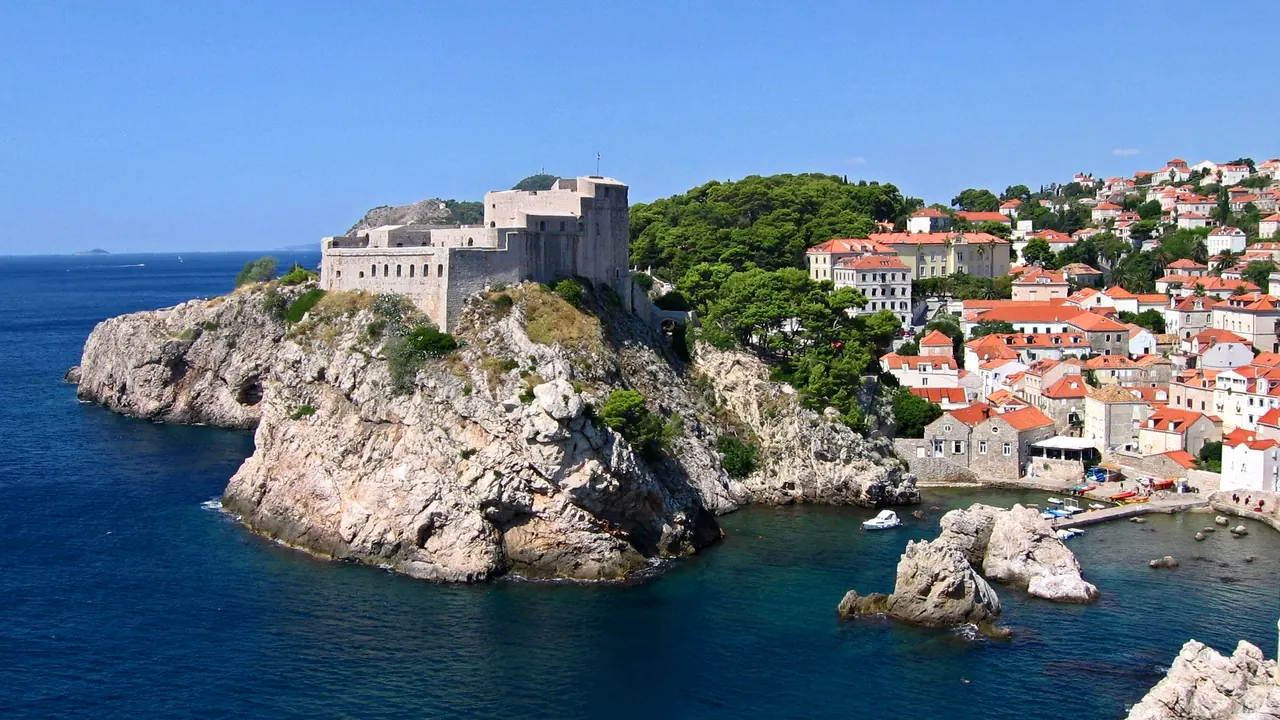
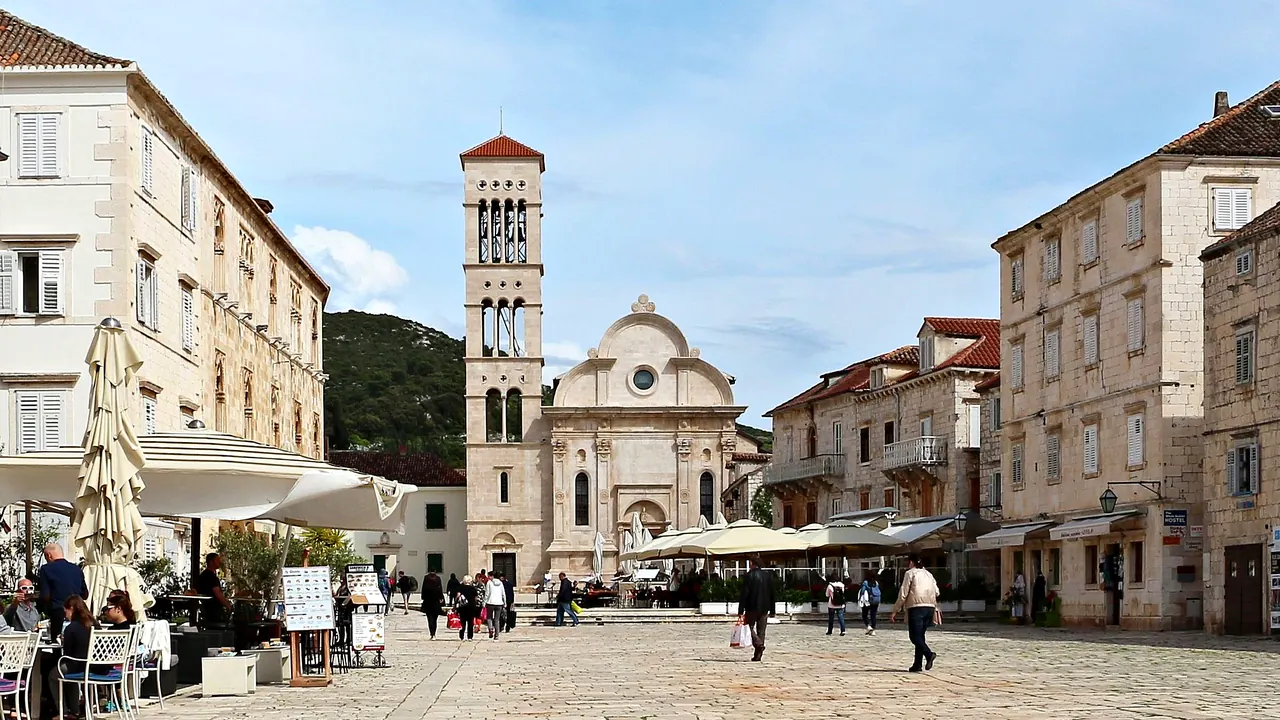
Photos: Dubrovnik by Natalia Semenova, CC BY 3.0, cropped; Hvar by Bernard Gagnon, CC BY-SA 4.0, cropped.
Dubrovnik or Hvar?
Our verdict in twelve categories, each scored against the same fixed benchmark cities, and the climate month by month, so you can choose for your trip.
Choose Dubrovnik for
- culture and sights
- nature and the outdoors
- getting around
Dubrovnik suits a trip built around sightseeing and scenery. The walled Old Town and its palaces and monasteries are the finest set of sights on this stretch of coast, mountains fall straight into the sea behind it, and Kotor, Trebinje and the Elafiti islands are all within a day. You can manage without a car. The trade-off is quiet evenings and crowded summer days in the centre.
Choose Hvar for
- nightlife
- food and drink
- wellness
Choose Hvar if the sea, the table and the nights matter more than monuments. Its coves and the Pakleni Islands give the better swimming, village konobas and family cellars serve more of what the island produces, and in July and August Hvar Town has the parties Dubrovnik lacks. If you want peace, stay in Jelsa, Stari Grad or Vrboska instead. Expect to plan around ferry times or hire a car, and know that the sights fill only a few days.
Scoreboard
Twelve categories on one fixed scale from 0 to 100. The shaded stretch is the gap between the two.
Your match
Pick a travel style or drag the sliders, and both match scores follow your weighting.
Too close to call, 2 points apart
Wins on culture and sights and nature and the outdoors with your weighting.
Wins on nightlife and food and drink with your weighting.
What matters to you?
Category by category
What the scores mean for a trip.
Beaches & swimming
Both coasts are pebble and rock with very clear water, and sand is rare in either, the small cove at Sunj on Lopud being Dubrovnik's one exception. In Dubrovnik you swim in town, off the rocks below the walls, at Banje or in the Lapad coves, with Lokrum and the Elafiti islands a boat ride away when you want somewhere quieter.
Hvar has more shoreline to choose from, and that puts it ahead. Taxi boats run to the pine-backed bays of the Pakleni Islands, the steep south coast has quieter coves, and the north side around Jelsa and Vrboska has calmer, shallower water. Its best-known bays fill with yachts in high summer, much as Dubrovnik's town beaches fill with people.
Food & drink
The cooking is the same Dalmatian repertoire in both places, with grilled fish, octopus and pašticada, so the real difference is how easily you eat well. In Dubrovnik that takes some effort. The tables along the Stradun cater to day visitors, and the better meals are in the konobas of Lapad, Gruz and Konavle, or with Ston's oysters and a glass of Peljesac red at the farms where they are raised.
Hvar has the edge because more of what reaches the plate comes from the island itself. Village konobas in Velo Grablje, Brusje and Pitve cook peka lamb with vegetables from their own land, and cellars around Ivan Dolac and Stari Grad pour Plavac Mali and Bogdanjuša on the spot. Its main town is also easier to eat in than Dubrovnik's Old Town. Hvar Town has tourist menus on the harbour too, but the island's most serious cooking is there as well, while in Dubrovnik the good food is mostly outside the walls.
Culture & sights
This is where Dubrovnik leads most clearly. Its Old Town is a complete walled city, with almost 2km of walls to walk. The Rector's Palace, the Sponza Palace, the Franciscan and Dominican monasteries and Fort Lovrijenac all stand inside or just beside them, and the museum on Mount Srd tells the story of the siege the city went through during Croatia's war of independence.
Hvar's sights are attractive but smaller in scale. Hvar Town has its Venetian square and cathedral, one of Europe's oldest public theatres above the Arsenal, and the Fortica fortress. Stari Grad has the Tvrdalj and the Greek field boundaries of its UNESCO-listed plain. These are spread across the island instead of gathered in one place, so they suit a few unhurried days rather than a sightseeing trip.
Nightlife
In July and August, Hvar Town has a real party scene, which Dubrovnik does not. The night moves from sundowners on the waterfront to packed cocktail bars around the harbour, and day parties at the Pakleni beach clubs carry on after dark, with taxi boats carrying people back and forth.
Dubrovnik offers a quieter evening: a sunset drink at the bars in the rocks below the seaward walls, small wine bars off the Stradun and the club inside the Revelin fortress. That suits a late drink on a warm night, but anyone after serious dancing will be happier on Hvar. Both go quiet outside summer.
Nature & outdoors
Dubrovnik has the more dramatic setting, with limestone mountains falling straight into a sea dotted with islands. There is also more to do outdoors: you can ride the cable car or walk the path up Mount Srd, kayak round the walls to Lokrum, or take a trip to the saltwater lakes and pine forest of Mljet's national park.
Hvar is gentler: a long ridge of dry-stone terraces, abandoned villages and lavender fields, with the walk up Sveti Nikola as its high point and the Pakleni Islands for snorkelling and sailing. On both, summer heat limits walking to early mornings, and spring and autumn are the seasons for longer outings.
Day trips
With two borders close by, Dubrovnik has the wider choice of day trips. You can visit Kotor and Perast in Montenegro, Trebinje's Ottoman bridge in Bosnia and Herzegovina, or Mostar on a long day, with Ston and Cavtat closer to hand. The catch is border queues in summer.
From Hvar, day trips go by catamaran: to Split and Diocletian's Palace in about an hour, to Korčula, to Vis and Komiža, or to Bol on Brač. The island's own towns make easy outings too, but the boat timetables decide every trip off the island, and there are fewer options after the summer.
Good for families
Neither destination is built around children, so the choice comes down to the kind of days you want. Dubrovnik has a little more to keep them busy: the cable car, the walls, the small aquarium in the St John fortress and boats to Lokrum's peacocks. Its stairs make pushchairs hard work, and families do best staying in Lapad or Babin Kuk.
Hvar offers simpler seaside days in the north-side towns of Jelsa, Stari Grad and Vrboska, with calm, shallow bays and promenades for evening walks but no attractions as such. Hvar Town, with its stepped lanes and late-night party crowd, is best avoided with small children.
Getting around
Dubrovnik is easier to manage without a car. The Old Town is car-free and takes minutes to cross. City buses link Lapad, Babin Kuk and Gruz to the Pile gate, and boats from Gruz and the Old Harbour serve Lokrum, Cavtat and the Elafiti islands. The steep ground does make walking between districts slower than it looks.
Hvar always takes a boat to reach. Split is the main departure point, with car ferries landing at Stari Grad and catamarans running to Hvar Town and Jelsa. On the island, buses along the spine are infrequent, and taxi boats serve the Pakleni Islands. For the south coast, the hill villages and the eastern end you really need a car or scooter, and the roads are narrow and winding.
Shopping & style
Neither is worth visiting for the shopping. Dubrovnik's better buys are crafts sold among the Old Town's souvenir shops, such as Konavle embroidery and coral and filigree jewellery, plus figs and candied peel from the Gunduliceva Poljana market. Hvar's come mostly from the land, such as lavender oil, honey and cellar-door wine, along with lace made by Benedictine nuns and a few resort boutiques selling linen and swimwear.
Affordability
Both are expensive in summer, but Hvar is somewhat easier on the budget. In Dubrovnik, rooms near the Old Town cost as much as in a Western European capital, and the walls, the cable car and boat trips soon add up, though staying in Lapad, Gruz or Cavtat helps.
On Hvar, the high prices are concentrated in Hvar Town, which is priced for the yacht crowd. A family-run apartment in Jelsa, Stari Grad or Vrboska and wine bought at the cellar door keep costs lower. In both places, the months either side of July and August are much cheaper.
Live music & performing arts
Dubrovnik has the one real draw here, the Summer Festival. Since 1950 it has staged theatre, concerts and dance in Fort Lovrijenac, the Rector's Palace atrium and the city's squares, and the city's symphony orchestra plays through the rest of the year.
Hvar has the remarkable 1612 Arsenal theatre, but it has no regular season. Instead there are summer concerts in churches and the Franciscan cloister, and klapa singing at village feasts. Outside summer, neither has much on.
Wellness & relaxation
In Dubrovnik, spa treatments mostly mean the larger hotels in Lapad, Babin Kuk and along the coast towards Ploce. The city only really calms down in spring and autumn, so a peaceful summer stay usually means moving out to Cavtat or the Elafiti islands.
Hvar edges ahead because rest is easier to find without leaving. Besides the hotel spas in Hvar Town and Jelsa, there is yoga and massage in season, and in June and September the whole island slows down, not only its quieter corners. Hvar Town in July and August is the one time and place that works against a quiet stay.
When should you go?
Pick your month. The climate figures are measured averages, not a forecast.
Dubrovnik in July
Hvar in July
Daytime high, °C
Rainfall in the month, mm
Where the figures come from
Dubrovnik has no rain gauge within 25 km of the centre, so its rainfall comes from a gridded climate dataset read at the destination rather than from a gauge further away.
Dubrovnik's sunshine is measured 83 km from the centre, at Mostar.
Hvar's temperatures are measured 38 km from the centre, at Split / Marjan.
Hvar has no rain gauge within 25 km of the centre, so its rainfall comes from a gridded climate dataset read at the destination rather than from a gauge further away.
Hvar's sunshine is measured 38 km from the centre, at Split / Marjan.
Temperature and rainfall are climate normals, averaged over the years shown. Dubrovnik: 1999-2020 (sunshine 1991-2020, rainfall 1991-2020) normals, Dubrovnik / Cilipi (15.3 km from centre). Hvar: 1991-2020 (sunshine 1971-2000) normals, Split / Marjan (38.2 km from centre).
Both follow the same Adriatic rhythm, with swimming from June to September and the sea at its warmest in August, about 26°C off Dubrovnik and a degree cooler off Hvar. Around Hvar Town midsummer is the hotter of the two, with highs of 31°C, so July and August are better spent in the water than walking. Dubrovnik peaks a little lower, but its stepped streets are just as tiring at midday. May and late September are the comfortable months for sightseeing and walking in both.
The real difference comes in autumn and winter. Dubrovnik is much the wetter place. Rain picks up sharply from September, and November brings around 179mm, against roughly 116mm on Hvar, which also gets more sunshine all year. For a trip in spring or autumn, Hvar usually has the drier and brighter weather.
Which traveller are you?
On a culture and arts trip, Dubrovnik is the clear choice. Its unbroken walls, the Rector's Palace, two monasteries and Fort Lovrijenac far outweigh Hvar's modest sights, and the Summer Festival stages theatre and concerts in those same historic spaces.
For a food and nightlife trip, Hvar is the better pick. Hvar Town's harbour bars and the Pakleni beach clubs make a real summer night out, and inland konobas serving peka lamb with their own Plavac Mali give the island the better table.
On a relaxing and wellness trip, Hvar again suits better, as long as you stay in Vrboska, Stari Grad or the hill villages, where days revolve around long lunches and the evening walk along the waterfront. Dubrovnik's centre is crowded and tiring in summer.
Before you go
| Measure | Dubrovnik | Hvar |
|---|---|---|
| Official language | Croatian | Croatian |
| Currency | Euro (EUR) | Euro (EUR) |
| Sockets | CF230 V, 50 Hz | CF230 V, 50 Hz |
| Driving side | Right | Right |
| Time zone | UTC+1, UTC+2 in summer | UTC+1, UTC+2 in summer |
| Emergency number | 112 | 112 |
| Elevation | 10 m | - |
| Main airport | Dubrovnik Ruđer Bošković Airport (DBV)16 km from centre76 non-stop destinations | Split Saint Jerome Airport (SPU)69 non-stop destinations |
| Public holidays this year | 14 days | 14 days |
By the numbers
| Measure | Dubrovnik | Hvar |
|---|---|---|
| Population | 41,562 | - |
| Museums within 10 km | 7 | - |
| UNESCO World Heritage sites within 50 km | 3 | - |
| Swim season, months above 21 °C | 5 months | 4 months |
Where else could you go?
Every comparison below shares a destination with this one, so you can follow Dubrovnik or Hvar somewhere new.