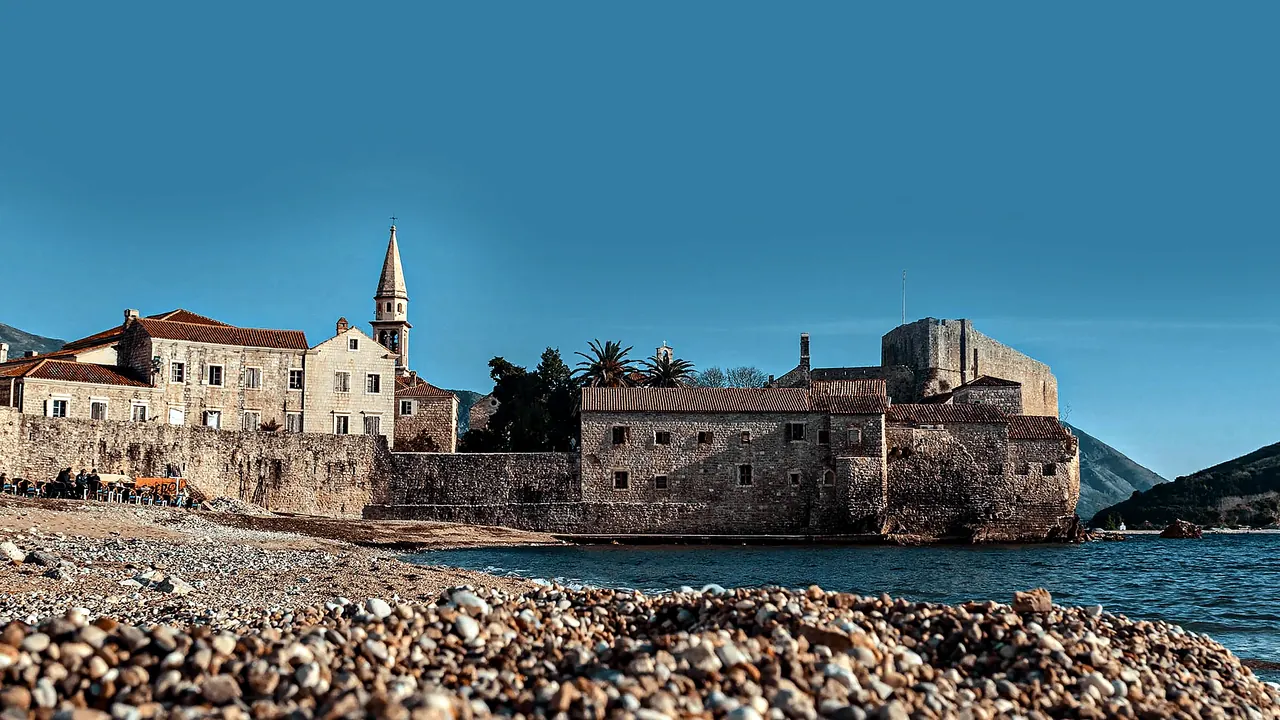
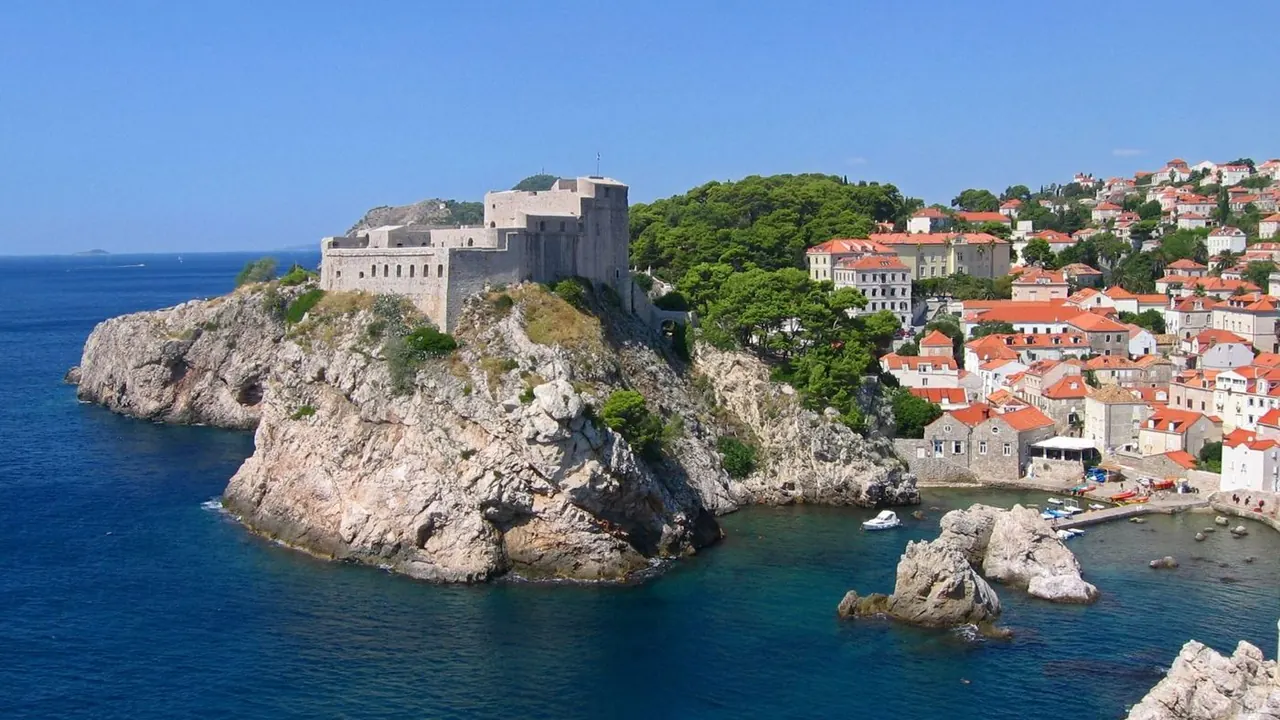
Photos: Budva by Ender Vatan, Pexels License; Dubrovnik by Natalia Semenova, CC BY 3.0, cropped.
Budva or Dubrovnik?
Our verdict in twelve categories, each scored against the same fixed benchmark cities, and the climate month by month, so you can choose for your trip.
Choose Budva for
- prices
- nightlife
- day trips
Budva is the better pick for a sun-and-sea week with long nights out. The beaches start at the edge of town, the seafront clubs keep going until dawn in summer, and Kotor, Lovcen and Lake Skadar are all close enough for easy outings. You also spend noticeably less than across the border, which matters over a week or more. The trade-off is a small old town that takes a morning to see, and food that is rarely the reason to come.
Choose Dubrovnik for
- culture and sights
- getting around
- food and drink
Choose Dubrovnik if the town itself is the point of the trip. The walls, the Stradun, the monasteries and the palaces give it a depth of history that Budva's little peninsula cannot match. The cooking repays a little effort, and the car-free centre is easy to take in over a long weekend. Expect to pay well for all of this, and expect your evenings to be a drink with a view rather than a club.
Scoreboard
Twelve categories on one fixed scale from 0 to 100. The shaded stretch is the gap between the two.
Your match
Pick a travel style or drag the sliders, and both match scores follow your weighting.
Too close to call, 2 points apart
Wins on prices and nightlife with your weighting.
Wins on culture and sights and getting around with your weighting.
What matters to you?
Category by category
What the scores mean for a trip.
Beaches & swimming
Both are strong on the sea, but in different ways. Budva has its beaches in town: Slovenska Plaza along the front, the Mogren coves under the cliffs, and then the long curve of Becici and the pinkish sand facing Sveti Stefan. The shore is fine pebble or coarse sand, often lined with sunbeds and music.
Dubrovnik's swimming is rockier. People swim off the rocks below the walls, at Banje beach, at the concrete platforms and from the coves of Lapad. The best bays are a boat ride away on Lokrum and the Elafiti islands, where Lopud's cove at Sunj offers real sand.
Food & drink
Both coasts serve grilled fish and black risotto, but Dubrovnik gives the keener eater more to work with. There are oysters and mussels from Ston, Plavac Mali and Dingac from Peljesac, a morning fish market at Gruz, and konobas in Konavle that are worth the drive.
Budva's high points are its mountain foods, Njegusi ham and cheese, along with Vranac red and the day's catch at family konobas. Beyond those, the promenade menus are uneven and the choice is narrower. In both towns, the restaurants on the busiest strip are the ones to skip.
Culture & sights
This is where the two differ most. Dubrovnik's Old Town is intact and enclosed by almost 2km of walls you can walk all the way round. Inside are the Stradun, the Franciscan pharmacy, the Sponza and Rector's palaces and the Dominican paintings, with Lovrijenac standing on its own rock outside. It takes two or three days to see properly.
Budva's Stari Grad is attractive but small, and much of its stonework was rebuilt after 1979. A walk past St John's, the Citadel and the archaeological museum takes an hour or two. The serious heritage near Budva lies in Kotor and Cetinje rather than in the town.
Nightlife
Budva is the place for a big night out. In summer the Slovenska Plaza front fills with beach bars and terrace clubs, the open-air club on the hill runs until dawn, and the old town bars stay busy late. It suits groups of friends who want loud pop and house.
Dubrovnik's evenings are gentler. Most nights mean a sunset drink at the bars in the rocks below the walls, then wine or cocktails in the lanes off the Stradun, with dancing at Revelin if you want it. Both towns largely shut down out of season.
Nature & outdoors
Budva's outdoors runs inland, and Dubrovnik's runs out to sea. Behind Budva the bare limestone climbs to Lovcen, about an hour up serpentine roads, with beech forest and high trails above the Bay of Kotor. Lake Skadar offers birdwatching and kayaking among the reeds and water lilies, and nearer town there are coastal paths between the bays and paragliding off the hills above Becici.\n\nFrom Dubrovnik the best days are spent on the water and the islands. You can kayak round the walls to Lokrum's botanical garden, walk or cycle between villages on the Elafiti islands, or visit the saltwater lakes and pine forest of Mljet. The cable car up Mount Srd gives you the view over all of it.
Day trips
Budva has the edge because the best of Montenegro is so close. Kotor is about half an hour away, with Perast just beyond. Cetinje and the Lake Skadar wine villages are under an hour inland, and Stari Bar and Ulcinj lie down the coast, with no border to cross for any of them.
Dubrovnik's outings cross borders. Kotor is a two-hour drive with a border on the way, Trebinje and Mostar are in Bosnia, and summer queues can cost hours. Closer to Dubrovnik, Cavtat, Ston's walls and the ferry-hop Elafiti islands are easy days out.
Good for families
Neither is built around children, and they come out about even. Budva is the simpler beach vacation, with gently shelving town beaches, calm water at Becici and a water park, though the nights are loud in July and August.
Dubrovnik gives children more to do: the walls, the cable car, boats to Lokrum and a small aquarium. Its endless stairs make pushchairs hard work, though, and families tend to stay in Lapad near the beaches.
Getting around
Dubrovnik is easier to get around without a car. A city bus network links Lapad, Babin Kuk and Gruz to the Pile gate, and ferries and taxi boats run to Lokrum, the islands and Cavtat. The steep streets are the main effort.
Budva's centre, marina and promenade are flat and close together, and coast buses reach Kotor. Away from that strip, though, Lovcen, Cetinje and the quieter bays are hard to reach without a car or a tour, and the single coast road jams in summer.
Shopping & style
Neither is a shopping destination. The difference is in what you bring home. Dubrovnik has more distinctive local crafts: Konavle embroidery, coral, lavender, and dried figs and candied orange peel from the Gunduliceva Poljana market. Budva mostly sells beachwear and vacation essentials, along with filigree silver, olive oil, honey and rakija.
Affordability
Budva is much cheaper. Even though it is the priciest place in Montenegro, bakeries, grill houses, café drinks and apartments a few streets back cost less than on most western Mediterranean coasts, and June or September brings prices down further.
Dubrovnik is costly by any Mediterranean measure. Summer rooms near the Old Town are priced like a major Western European capital, and the walls, the cable car and boat trips all add to the bill. Staying in Lapad or Cavtat helps, but only to a point.
Live music & performing arts
Both rely on a summer festival, and Dubrovnik's is the stronger. Its Summer Festival has run every July and August since 1950, with theatre, classical music and dance at Lovrijenac and in the Rector's Palace atrium. The symphony orchestra also gives concerts through the year.
Budva's Grad Teatar brings theatre and concerts to the old town squares in summer. Outside the festival, live music in Budva mostly means cover bands on the seafront.
Wellness & relaxation
A summer stay in Budva is hard to make restful. Music from the seafront carries late into the night, so the calm lies in the quieter villages down the coast or behind the doors of the resort spas at Becici and around Sveti Stefan.\n\nDubrovnik's escapes are by water. A few days on the Elafiti islands or in Cavtat, where life follows the harbour and the afternoon heat, slow the pace more than the hotel spas in Lapad and Babin Kuk, which are all the city has in that line. In both towns, the restful weeks are the ones outside high summer.
When should you go?
Pick your month. The climate figures are measured averages, not a forecast.
Budva in July
Dubrovnik in July
Daytime high, °C
Rainfall in the month, mm
Where the figures come from
Budva has no rain gauge within 25 km of the centre, so its rainfall comes from a gridded climate dataset read at the city rather than from a gauge further away.
Budva's sunshine is measured 40 km from the centre, at Podgorica-Grad.
Dubrovnik has no rain gauge within 25 km of the centre, so its rainfall comes from a gridded climate dataset read at the city rather than from a gauge further away.
Dubrovnik's sunshine is measured 83 km from the centre, at Mostar.
Temperature and rainfall are climate normals, averaged over the years shown. Budva: 1991-2020 normals, Tivat (15.8 km from centre). Dubrovnik: 1999-2020 (sunshine 1991-2020, rainfall 1991-2020) normals, Dubrovnik / Cilipi (15.3 km from centre).
The two follow the same pattern, with dry, sunny summers and wet winters, but Budva runs hotter and wetter. In August it reaches about 32°C against Dubrovnik's 29°C, which makes walking through the middle of the day harder in Budva. The sea is the same along both coasts. It is warm enough for swimming from June, peaks around 26°C in August and stays pleasant until early October.
Rain comes back hard in both from September, and late autumn is the wettest time. Budva can see over 200mm in November, a good deal more than Dubrovnik. For sightseeing on foot, May, June and late September are the most comfortable months in either place. From November to March both are mild but often grey and wet.
Which traveller are you?
On a culture and arts trip, Dubrovnik is the clear choice. Walking the walls, the Rector's Palace, the Dominican monastery's paintings and the summer festival at Fort Lovrijenac fill several days. Budva's old town and small museum fill a morning.
For a trip on a tight budget, Budva is the far easier place. Private apartments a few streets back, bakeries, grill houses and coast buses all cost little. Dubrovnik is expensive even away from the Old Town, especially in summer.
For a short city break, Dubrovnik works better. The car-free Old Town is compact, the city buses and boats to Lokrum make everything easy, and two or three days cover the main sights. Budva is a beach resort that needs a longer stay to make sense.
Before you go
| Measure | Budva | Dubrovnik |
|---|---|---|
| Official language | Montenegrin | Croatian |
| Currency | Euro (EUR) | Euro (EUR) |
| Sockets | CF230 V, 50 Hz | CF230 V, 50 Hz |
| Driving side | Right | Right |
| Time zone | UTC+1, UTC+2 in summer | UTC+1, UTC+2 in summer |
| Emergency number | 112 | 112 |
| Elevation | 3 m | 10 m |
| Main airport | Tivat Airport (TIV)17 km from centre42 non-stop destinations | Dubrovnik Ruđer Bošković Airport (DBV)16 km from centre76 non-stop destinations |
| Public holidays this year | - | 14 days |
By the numbers
| Measure | Budva | Dubrovnik |
|---|---|---|
| City population | 13,338 | 41,562 |
| People per km² | 109 | - |
| Museums within 10 km | 0 | 7 |
| UNESCO World Heritage sites within 50 km | 3 | 3 |
| Swim season, months above 21 °C | 5 months | 5 months |
Where else could you go?
Every comparison below shares a destination with this one, so you can follow Budva or Dubrovnik somewhere new.