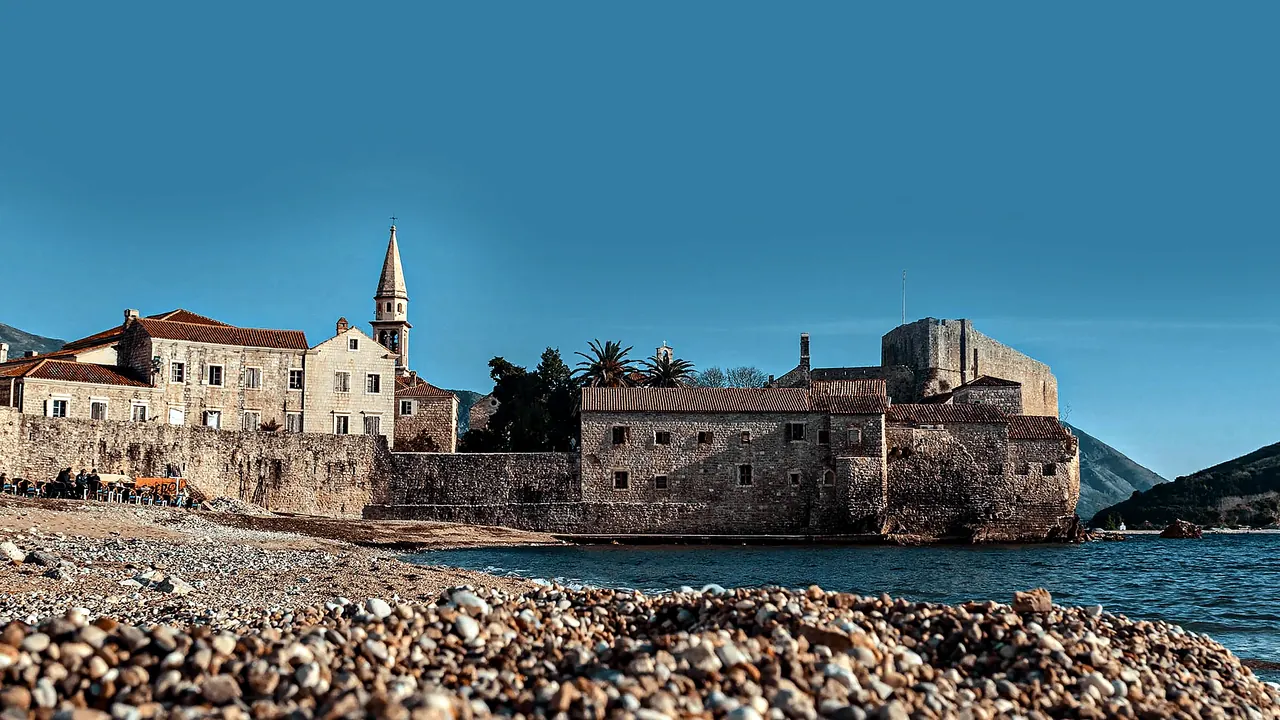
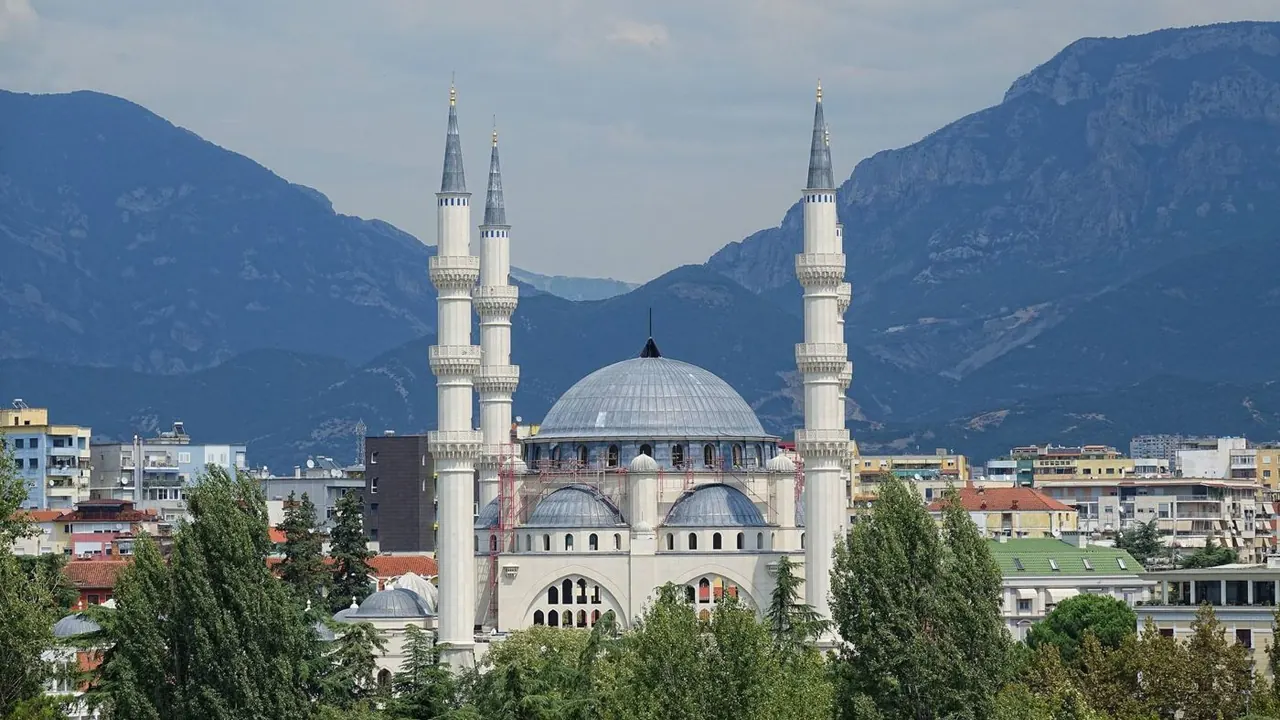
Photos: Budva by Ender Vatan, Pexels License; Tirana by Bjørn Christian Tørrissen, CC BY-SA 4.0, cropped.
Budva or Tirana?
Our verdict in twelve categories, each scored against the same fixed benchmark cities, and the climate month by month, so you can choose for your trip.
Choose Budva for
- beaches
- families
- nature and the outdoors
Budva is the choice for a vacation built around the sea. The beaches start at the edge of the old town and run on down the coast to Becici and Sveti Stefan, and the limestone mountains rise straight up behind them. Kotor, Perast and Lovcen are all close enough for easy outings. It suits couples and groups who want to swim by day and stay out late in summer, and families happy with a beach-based trip. Expect resort prices in high season and not much culture inside the town itself.
Choose Tirana for
- food and drink
- prices
- culture and sights
Tirana suits travellers who want a real city rather than a resort. It has better everyday food, a modern history you can walk through in its bunkers and on its squares, and stylish bars in Blloku. Your money goes much further here. Berat and Kruja make strong day trips, and the coast at Durrës is close enough for a day by the sea, but it does not make a beach vacation.
Scoreboard
Twelve categories on one fixed scale from 0 to 100. The shaded stretch is the gap between the two.
Your match
Pick a travel style or drag the sliders, and both match scores follow your weighting.
Too close to call, 2 points apart
Wins on beaches and families with your weighting.
Wins on food and drink and prices with your weighting.
What matters to you?
Category by category
What the scores mean for a trip.
Beaches & swimming
Budva is built around its beaches. Slovenska Plaza runs right along the town front, and Mogren's two coves lie just past the old walls. Becici, Jaz and the sand facing Sveti Stefan are a short ride away. Most of it is fine pebble or coarse sand, and in high summer it is packed with sunbeds and music, but you can swim every day without planning.
From Tirana the sea is a day trip. Durrës has a long sandy beach under an hour away, with shallow water that suits children. It is lined with hotels, gets crowded on summer weekends, and the water near the port is not always clear. Albania's famous clear coves in the far south belong to a different trip.
Food & drink
Tirana is the better place to eat. Albanian farm cooking, such as tavë kosi, fërgesë, morning byrek and grilled meat with village bread, is easy to find in Blloku and around the Pazari i Ri market. The best meals are often at the farm restaurants on the hills outside town.
Budva's promenade mostly feeds the summer crowds, and quality varies. The good eating here is the sea itself, grilled squid and the day's catch at family-run konobas, along with Njegusi ham and Vranac red from the hinterland. Neither city has much high-end dining.
Culture & sights
Neither is a great sightseeing city, but Tirana gives you more to do. Its subject is the 20th century: Bunk'Art in its Cold War bunker, the House of Leaves where the secret police listened in, and Skanderbeg Square with the painted Et'hem Bey Mosque and the National History Museum. Together they fill a couple of absorbing days.
Budva's culture comes down to Stari Grad, a walled peninsula of marble lanes, small churches and the Citadel, much of it rebuilt after the 1979 earthquake. It takes an hour or two, plus a small archaeological museum. In both places the deeper heritage lies in the towns nearby.
Nightlife
The two are about level for a night out, but the nights are very different. Budva is a summer party resort. Beach bars and terrace clubs along Slovenska Plaza play loud pop and house, and the big open-air club on the hill runs until dawn. From October to May most of it closes.
Tirana's evenings centre on Blloku, a grid of cocktail bars, lounge terraces and small clubs filled with a young local crowd that starts late after dinner. People dress up and go to be seen, and a capital's bar scene does not depend on a beach season the way Budva's does.
Nature & outdoors
Budva has the edge, because it pairs the sea with mountains. Bare limestone rises straight behind the town. You can kayak the coast, take boat trips under the cliffs, walk the paths between bays and paraglide from above Becici. Lovcen's beech forests and Lake Skadar's reed beds are each about an hour away.
Tirana's outdoors starts at the city's edge. The cable car climbs Mount Dajti to about 1,000m in a quarter of an hour, where forest trails look out over the plain to the sea. The Bovilla gorge and Gamti mountain are within an hour or so. In both places, midsummer heat makes spring and autumn the seasons for walking.
Day trips
Budva makes the more convenient base. Kotor's walled town at the head of its bay is about half an hour away, and baroque Perast lies just beyond it. Cetinje, the old royal capital, is under an hour inland. Sveti Stefan, Stari Bar and Ulcinj are down the coast, and Dubrovnik works as a long day if the border is quiet.
Tirana's day trips are just as rewarding but take longer to reach. Kruja and its Skanderbeg castle are under an hour away, but Berat's white Ottoman houses, Shkodra's Rozafa castle and ancient Apollonia are each around two hours by road. These are full-day outings by car, minibus or tour.
Good for families
Budva works better with children, as long as the trip is about the beach. The town beaches shelve gently, Becici's bays are calmer, and there is a water park on the hill. July and August are loud at night, so families often stay a little down the coast or come in June or September.
Tirana is warm and welcoming to children, and the Grand Park's playgrounds and the Dajti cable car make good outings. Otherwise there is little for them beyond a small zoo, and heavy traffic and broken pavements make pushing a buggy hard work.
Getting around
Tirana is the easier of the two to get around. Its flat, compact centre puts Skanderbeg Square, Blloku, the Pyramid and the market within about a twenty-minute walk of each other. Cheap taxis cover the rest, which helps because the city buses are confusing and wide roads need care to cross.
Budva's centre is just as walkable, and Becici is a stroll along the shore. Beyond that you depend on a single coast road that jams in summer, and there is no railway. Boat taxis to the coves help, but Lovcen and Cetinje are far easier with a car or a driver.
Shopping & style
Neither is a shopping destination, but Tirana has a bit more. The Pazari i Ri market sells cheese, olives, honey, raki, carpets and copperware, and there are malls with high-street chains and boutiques around Blloku. Kruja's old bazaar is close by for felt hats and embroidery.
Budva's shops cover beachwear, sunglasses and souvenirs in the old town lanes, plus a modest centre near the marina. Silver filigree turns up in both places, so it is a good souvenir either way.
Affordability
Tirana is clearly cheaper. Coffee, byrek, grilled-meat dinners, taxis and museum entry all cost a fraction of Western European prices. Only the smarter Blloku bars and restaurants push the bill up.
Budva is the priciest place in Montenegro, and in July and August seafront rooms, sunbeds and promenade meals are charged at resort rates. Bakeries, grill houses and apartments a few streets back are still reasonable, and coming in June or September brings costs down.
Live music & performing arts
Tirana has a proper stage. The National Theatre of Opera and Ballet on Skanderbeg Square runs a season of opera, ballet and concerts, and tickets are easy to get. A few bars put on jazz. Plays are in Albanian, and the country's iso-polyphonic singing is rarely heard in the capital.
Budva has Grad Teatar, a long-running summer festival of theatre and concerts in the old town squares. The rest of the year there is little more than cover bands in seafront bars.
Wellness & relaxation
Both are weak for a wellness trip, and in both the spas are mostly inside large hotels, in Budva's case the resorts at Becici and around Sveti Stefan. What differs is how you unwind. In Budva the answer is timing: come in May, June or late September for a calm town and a sea that is still warm.
Tirana offers long hours over coffee on shaded terraces, the evening xhiro along the boulevards, Dajti's forest away from the traffic, and the old-fashioned sulphur baths at Llixha about an hour away.
When should you go?
Pick your month. The climate figures are measured averages, not a forecast.
Budva in July
Tirana in July
Daytime high, °C
Rainfall in the month, mm
Where the figures come from
Budva has no rain gauge within 25 km of the centre, so its rainfall comes from a gridded climate dataset read at the city rather than from a gauge further away.
Budva's sunshine is measured 40 km from the centre, at Podgorica-Grad.
Temperature and rainfall are climate normals, averaged over the years shown. Budva: 1991-2020 normals, Tivat (15.8 km from centre). Tirana: 1961-1990 normals, Tirana (3 km from centre).
Budva and Tirana have almost the same temperatures all year, so the real difference is what you do with the heat. In Budva the sea is warm enough to swim from June into October and reaches about 26°C in August. July and August are the driest and sunniest months, with highs around 31°C. That heat is fine for lying on the beach but hard going for a walk around the old town. June and the first half of September give you the same warm sea in milder heat. In Tirana the same midsummer heat makes sightseeing on foot tiring in the middle of the day. Durrës has much the same sea, but from Tirana a swim is always a day out.
Autumn is where the two part ways. Budva gets wet from mid-September and has over 210mm of rain by November. Tirana stays fairly dry and sunny through September, with under 80mm, so that is the best month for a city trip there. In both cities, late April and May are pleasant for walking. Winters are mild but rainy, and neither city is at its best then.
Which traveller are you?
On a beach and sun trip, Budva wins easily. Slovenska Plaza and the Mogren coves are a short walk from your room, with Becici and Sveti Stefan close by. From Tirana the sea means an hour's ride to a crowded strip at Durrës.
For a food and nightlife trip, Tirana is the better bet. Its slow-baked lamb, fërgesë and farm restaurants in the hills beat Budva's uneven promenade menus. Blloku's cocktail bars also suit people who like to dress up, more than Budva's loud summer beach clubs do.
On a tight budget, Tirana makes the money last. It is one of Europe's cheapest capitals, and meals, taxis and museum tickets cost little. Budva is Montenegro's most expensive resort, and its prices climb noticeably in July and August.
Before you go
| Measure | Budva | Tirana |
|---|---|---|
| Official language | Montenegrin | Albanian |
| Currency | Euro (EUR) | Lek (ALL) |
| Sockets | CF230 V, 50 Hz | CF220 V, 50 Hz |
| Driving side | Right | Right |
| Time zone | UTC+1, UTC+2 in summer | UTC+1, UTC+2 in summer |
| Emergency number | 112 | 112 |
| Elevation | 3 m | 110 m |
| Main airport | Tivat Airport (TIV)17 km from centre42 non-stop destinations | Tirana International Airport Mother Teresa (TIA)13 km from centre121 non-stop destinations |
| Public holidays this year | - | 14 days |
By the numbers
| Measure | Budva | Tirana |
|---|---|---|
| City population | 13,338 | 389,323 |
| People per km² | 109 | 9,314 |
| Museums within 10 km | 0 | 11 |
| UNESCO World Heritage sites within 50 km | 3 | 0 |
| Swim season, months above 21 °C | 5 months | 5 months |
Where else could you go?
Every comparison below shares a destination with this one, so you can follow Budva or Tirana somewhere new.