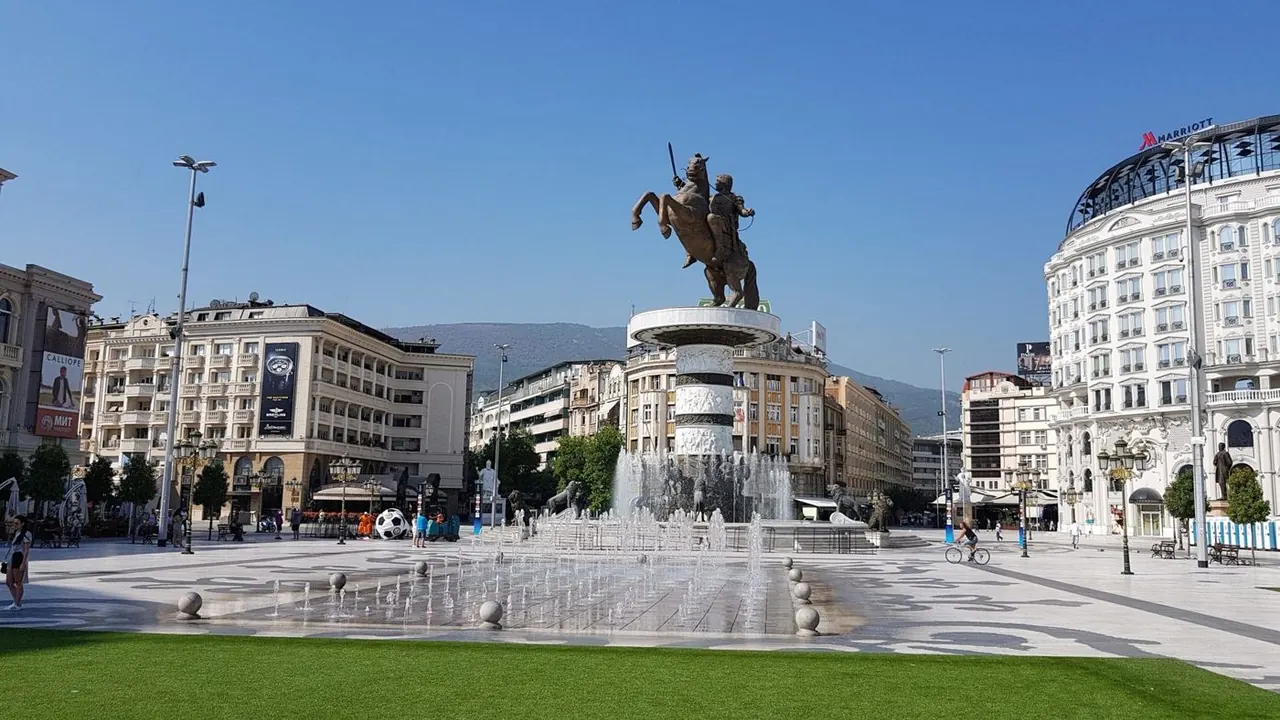
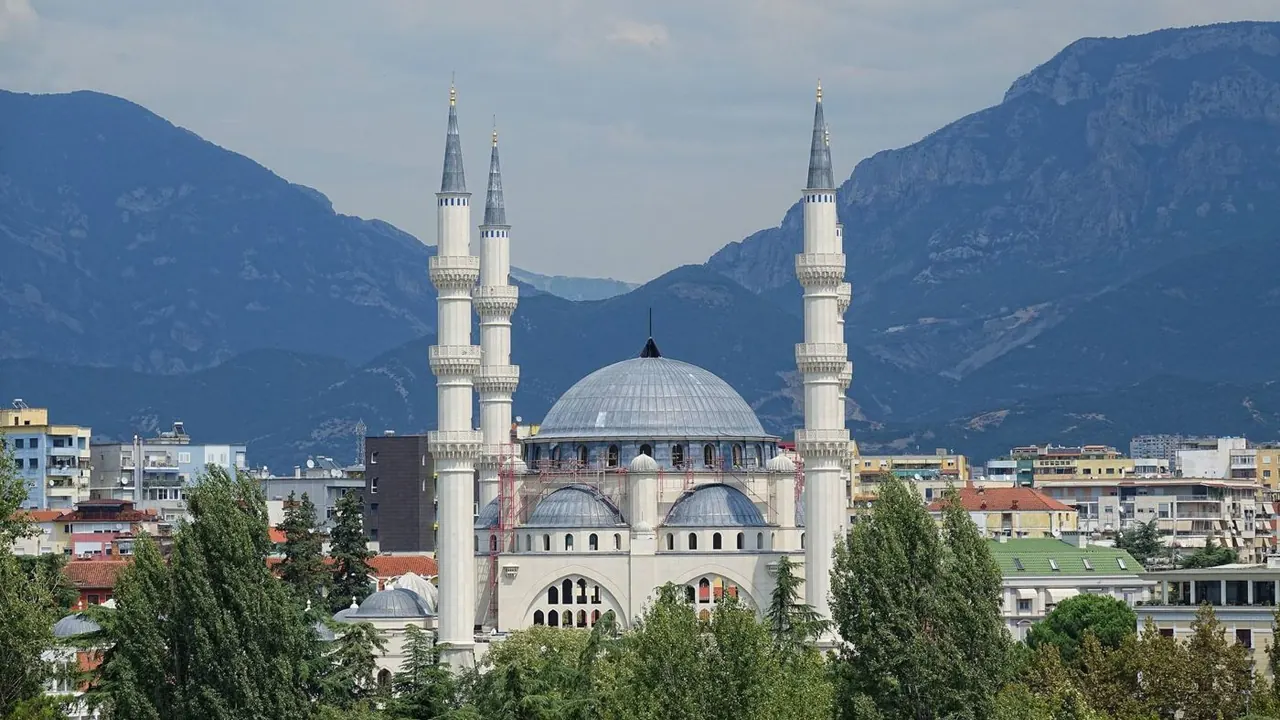
Photos: Skopje by George M. Groutas, CC BY 2.0, cropped; Tirana by Bjørn Christian Tørrissen, CC BY-SA 4.0, cropped.
Skopje or Tirana?
Our verdict in twelve categories, each scored against the same fixed benchmark cities, and the climate month by month, so you can choose for your trip.
Choose Skopje for
- culture and sights
- nature and the outdoors
- shopping
Skopje suits travellers who want old streets and mountains within easy reach. The Ottoman Old Bazaar, Kale Fortress and the carved iconostasis of the Holy Saviour give it more history inside the city than Tirana has. Mount Vodno and Matka Canyon are close enough for a half-day outing, and it is the slightly cheaper of two very cheap capitals. If you want to swim, add a stay at Lake Ohrid rather than looking for water near the city.
Choose Tirana for
- beaches
- nightlife
- getting around
Tirana is the better choice for travellers who care as much about their evenings as their days. Blloku has the livelier bar scene, the sand at Durrës is less than an hour away, and a ring of strong day trips to Berat, Kruja and Shkodra makes up for a thin historic centre. It also has much milder winters than Skopje, though they are far wetter.
Scoreboard
Twelve categories on one fixed scale from 0 to 100. The shaded stretch is the gap between the two.
Your match
Pick a travel style or drag the sliders, and both match scores follow your weighting.
Wins on culture and sights and nature and the outdoors with your weighting.
Wins on beaches and nightlife with your weighting.
What matters to you?
Category by category
What the scores mean for a trip.
Beaches & swimming
Skopje has no beach at all. Summer swimming means pools, and Matka's cold reservoir is better for kayaking. The nearest real swimming is at Lake Ohrid, which needs a stay of its own.
Tirana has the sea within reach. Durrës and the sandy strip towards Golem make an easy day out with warm, shallow water. It gets crowded and is not always clear, so think of it as a day at the beach rather than a beach vacation.
Food & drink
The two cities eat equally well and in a similar Balkan style, but the best places to eat are different. In Skopje, the best meals are kebapi and pastrmajlija in the Old Bazaar grill houses and long tavern dinners in Debar Maalo, where Tikves reds such as Vranec are a highlight.
Tirana's best meals are often in the farm restaurants on the hills outside town, with tavë kosi and fërgesë made from local produce. In the city, Blloku adds some Italian-leaning variety. Neither city has much fine dining.
Culture & sights
Skopje has more to see in the city itself. North of the Stone Bridge is a large surviving Ottoman bazaar with caravanserais, mosques and Kale Fortress above it. South of the river, the statues of the Skopje 2014 programme and the stopped clock of the old railway station make an odd but memorable contrast.
Tirana's sights are mostly about the 20th century. Bunk'Art and the House of Leaves tell the story of the communist years vividly, and the Et'hem Bey Mosque is lovely, but there is little older history in the city. Two days is enough for its sights.
Nightlife
Tirana is the better city for a night out. Blloku, once closed off for the communist leadership, is now a grid of cocktail bars, lounge terraces and small clubs. A few bigger venues near the Grand Park lake stay open into the early hours, and people dress up to be seen.
Skopje's evenings are gentler. Terraces in Debar Maalo move from coffee to rakija as the night goes on, and in summer the Old Bazaar courtyards stay busy, but there are only a few clubs and weeknights are quiet.
Nature & outdoors
Both cities have a mountain on their edge, but Skopje has more variety close by. You can walk or ride the cable car up Vodno, and Matka Canyon, about half an hour away, has limestone cliffs, kayaking, Vrelo Cave and monasteries on the rock faces. Further out, the Sar mountains and Mavrovo offer summer ridge walking and winter skiing.
Tirana's cable car climbs Dajti to about 1,000m through beech and pine forest, with views to the sea. The Bovilla reservoir and Gamti mountain are about an hour away, but the Albanian Alps are too far for a day.
Day trips
Tirana has better day trips, because so much of Albania's heritage is just outside it. Berat's white Ottoman houses and lived-in citadel are the highlight. Skanderbeg's castle at Kruja, the Roman amphitheatre at Durrës, Shkodra's lakeside fortress and Apollonia are all within about two hours.
Skopje has a wider spread but fewer famous names. You can visit the painted mosque at Tetovo, the Stobi mosaics with a stop at a Tikves winery, the crater town of Kratovo, or cross the border to Prizren. Ohrid is too far for a day trip.
Good for families
Neither city has much made specifically for children, so the real difference is natural water to cool off in. Skopje has no lake or sea nearby, so on hot days the choice is a hotel or public outdoor pool. The best outings are the Vodno cable car, a boat ride in Matka Canyon and summer evenings in City Park. Hot afternoons and uneven pavements soon tire young children, which is why many families add a few days at a lake.
Tirana has the sandy shallows at Durrës about an hour away, as well as playgrounds around the Grand Park lake and the open, traffic-free space of Skanderbeg Square. Pushing a buggy is just as hard here, with heavy traffic and obstructed pavements, and in both cities children are welcome in cafés and restaurants.
Getting around
Tirana's centre is the easier one to cover on foot, with pedestrianised streets around Skanderbeg Square. Skopje's core is short and flat too, with the Old Bazaar, the Stone Bridge, Macedonia Square and Debar Maalo along a pleasant stretch of the Vardar. Beyond that, the red double-decker buses are hard for a visitor to work out, so taxis are the way to reach Vodno, Matka or the bus station.
In Tirana, Blloku, the Pyramid and the market all lie within about twenty minutes' walk of the square, though assertive drivers mean wide roads need care to cross. Like Skopje, it has no metro or tram, and cheap taxis cover the trips out to Bunk'Art and the Dajti cable car.
Shopping & style
Skopje is the better place to buy something to take home. Small workshops in the Old Bazaar still make silver filigree and copperware, and Bit Pazar next door is a working market full of spices, cheese and peppers.
Tirana's best stop is the food stalls of Pazari i Ri for honey, olives and raki. For crafts, Kruja's bazaar has more choice. Both cities have only malls and chain stores for clothes.
Affordability
Both are among the cheapest capitals in Europe, and the difference between them barely matters. Skopje is a little cheaper in its traditional taverns and central hotels.
In Tirana, the main extra cost is Blloku's smarter restaurants and cocktail bars. Even these are cheap compared with most European capitals.
Live music & performing arts
Skopje has slightly more on stage, mainly because of its festivals. The Skopje Jazz Festival has been held every autumn since the early 1980s, and the summer festival puts on concerts at the fortress. Starogradska music plays in the Debar Maalo taverns most nights.
Tirana's main venue is its opera and ballet house on Skanderbeg Square, which makes for a good evening. You are unlikely to hear Albanian iso-polyphonic singing in the capital.
Wellness & relaxation
Neither city is a place for spa days. Their Ottoman baths are now galleries or have gone, and the spas are in the bigger hotels. Each has an old-fashioned thermal spa nearby: Katlanovska Banja is about half an hour from Skopje, while Llixha, near Elbasan, is about an hour from Tirana.
The slow pace of life is the real pleasure in both. In Skopje that means long coffees by the river. In Tirana it means the evening stroll along the boulevards, with the forests of Dajti as an escape from the traffic.
When should you go?
Pick your month. The climate figures are measured averages, not a forecast.
Skopje in July
Tirana in July
Daytime high, °C
Rainfall in the month, mm
Where the figures come from
Skopje has no rain gauge within 25 km of the centre, so its rainfall comes from a gridded climate dataset read at the city rather than from a gauge further away.
Skopje's sunshine is measured 68 km from the centre, at Stip.
Temperature and rainfall are climate normals, averaged over the years shown. Skopje: 1991-2020 (sunshine 1961-1990) normals, Skopje-Petrovec (18.3 km from centre). Tirana: 1961-1990 normals, Tirana (3 km from centre).
Both cities are hot in July and August, so in high summer you walk early, rest through the afternoon and go out again in the evening. May, June and September are the most comfortable months in both. Skopje is the drier of the two all year, but its winters are properly cold, with highs of about 5°C in January. Tirana stays near 12°C, which makes a winter city break pleasant on the days when it is not raining.
Rain is the real difference. Tirana's wet season runs from October to March and peaks at about 172mm in November, while Skopje never gets close to that. Only Tirana has the sea within reach: the Adriatic at Durrës warms to about 25°C in August and is pleasant for swimming from June to September. Skopje's high of 32°C in July has no sea nearby to cool off in. Both cities get plenty of summer sun, and Tirana gets a little more.
Which traveller are you?
For a beach and sun trip, choose Tirana. Durrës has a long sandy beach under an hour away, with warm, shallow Adriatic water in summer. From Skopje, the nearest swimming is at Lake Ohrid, which is a separate stay rather than a day out.
On a culture and arts trip, Skopje is the better base. It has the Ottoman bazaar quarter, the caravanserais, the fortress and the earthquake story within one walk, and a jazz festival every autumn. Tirana's sights centre on its communist past, and the older heritage is outside the city.
For a food and nightlife trip, Tirana has the edge. The cooking is about as good in both cities, but after dinner Blloku's cocktail bars, terraces and late clubs keep the streets busy well past midnight. Skopje's cafe-bars in Debar Maalo are friendly but more low-key.
Before you go
| Measure | Skopje | Tirana |
|---|---|---|
| Official language | Albanian, Macedonian | Albanian |
| Currency | Denar (MKD) | Lek (ALL) |
| Sockets | CF230 V, 50 Hz | CF220 V, 50 Hz |
| Driving side | Right | Right |
| Time zone | UTC+1, UTC+2 in summer | UTC+1, UTC+2 in summer |
| Emergency number | 112 | 112 |
| Elevation | 251 m | 110 m |
| Main airport | Skopje International Airport (SKP)16 km from centre52 non-stop destinations | Tirana International Airport Mother Teresa (TIA)13 km from centre121 non-stop destinations |
| Public holidays this year | 12 days | 14 days |
By the numbers
| Measure | Skopje | Tirana |
|---|---|---|
| City population | 422,540 | 389,323 |
| People per km² | 739 | 9,314 |
| Museums within 10 km | 17 | 11 |
| UNESCO World Heritage sites within 50 km | 0 | 0 |
| Swim season, months above 21 °C | - | 5 months |
Where else could you go?
Every comparison below shares a destination with this one, so you can follow Skopje or Tirana somewhere new.