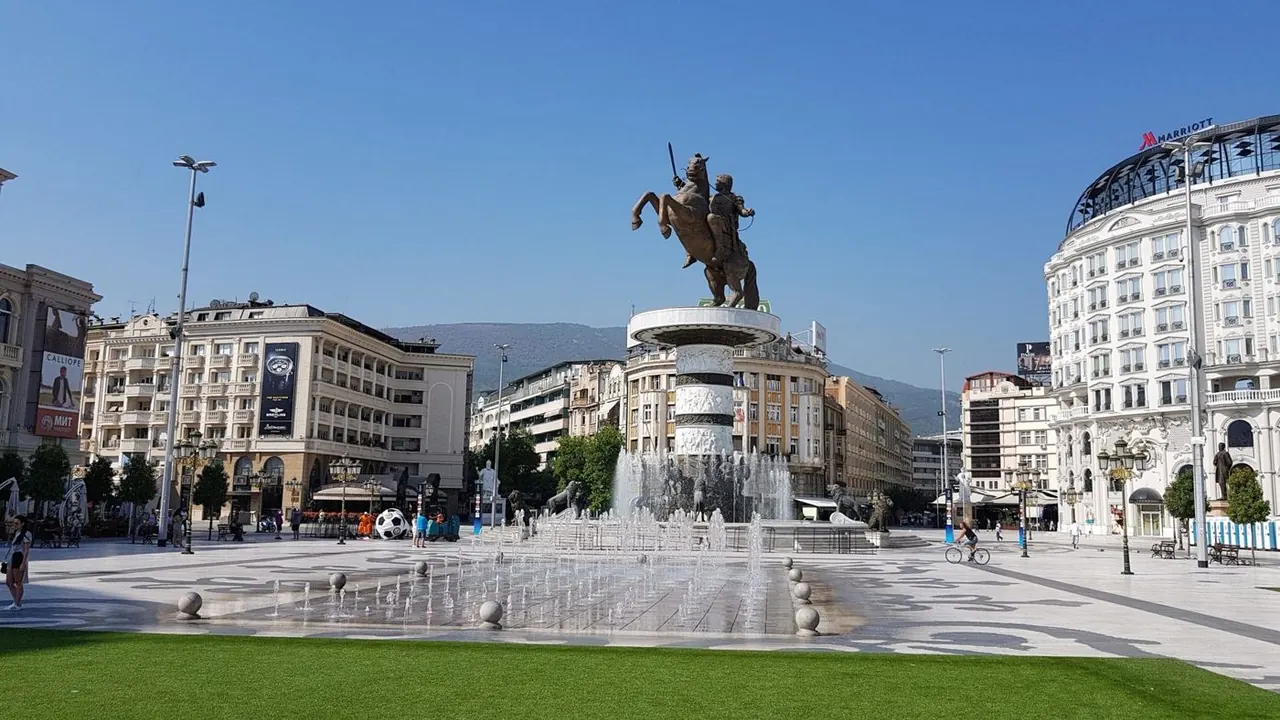
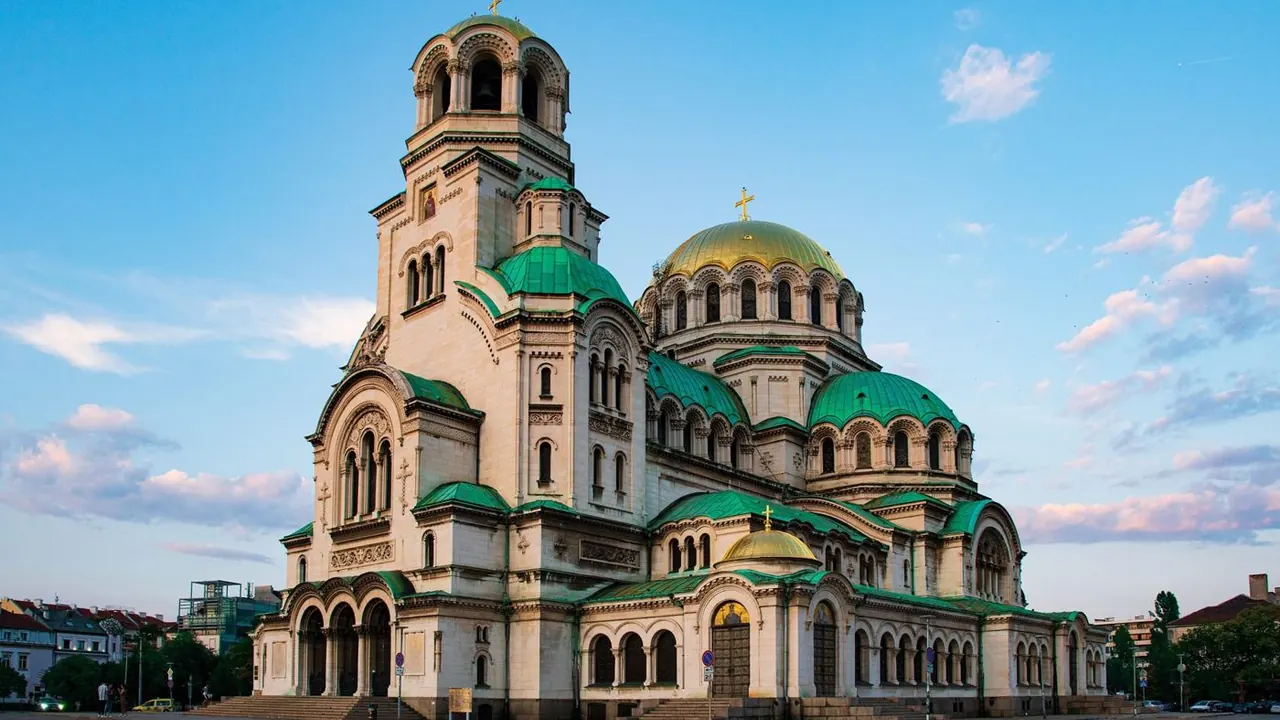
Photos: Skopje by George M. Groutas, CC BY 2.0, cropped; Sofia by Jose Ligero Loarte, CC BY-SA 4.0, cropped.
Skopje or Sofia?
Our verdict in twelve categories, each scored against the same fixed benchmark cities, and the climate month by month, so you can choose for your trip.
Choose Skopje for
- food and drink
- shopping
- prices
Skopje suits travellers who want a cheap, compact city with a strong sense of place and good food at its heart. The Ottoman lanes of the Old Bazaar, the grill houses and long-table taverns of Debar Maalo and Tikves wine on every list make it a satisfying two or three days. It works best as one stop on a wider Macedonian trip that also includes Lake Ohrid.
Choose Sofia for
- getting around
- wellness
- live music and the arts
Sofia is the better base for anyone who wants mountains, a fuller evening calendar and an easier time getting around. Vitosha rises straight from the city, Rila and Plovdiv are good full days out, and the metro, opera, choral singing and Shishman's bars give a long weekend more variety.
Scoreboard
Twelve categories on one fixed scale from 0 to 100. The shaded stretch is the gap between the two.
Your match
Pick a travel style or drag the sliders, and both match scores follow your weighting.
Wins on food and drink and shopping with your weighting.
Wins on getting around and wellness with your weighting.
What matters to you?
Category by category
What the scores mean for a trip.
Beaches & swimming
Neither city is a place for a beach, and what differs is how far away the water is. From Skopje, Lake Ohrid is about three hours by road and deserves a few nights of its own. In the city itself, swimming means hotel and public pools, because Matka's reservoir stays too cold for much bathing.
Sofia has the closer option in Pancharevo, the lake on its south-eastern edge, as well as pools in its parks. The Black Sea, though, is a full day's drive away, so if you want sand you need a separate stay on the coast.
Food & drink
Both cities cook the same hearty Balkan food of grills, clay-pot dishes and cheese pastry for breakfast, but Skopje does more with it. Grill houses in the Old Bazaar, early burek bakeries and the long-table taverns of Debar Maalo give its meals a stronger sense of place, and Vranec and Temjanika from Tikves are on every list.
Sofia eats well too, with banitsa, shopska salad and rustic mehana rooms, and its bistros near Vitosha Boulevard offer a lighter touch. Its wine bars pouring Mavrud and Melnik are a quiet pleasure. Neither city offers much beyond its own cooking.
Culture & sights
Each city fills two or three days comfortably, and the difference is in what you see. Skopje's draw is the Old Bazaar, a large surviving Ottoman market quarter of caravanserais and mosques with Kale Fortress above it. Across the river are the statues and replica facades of Skopje 2014, and the 1963 earthquake runs through its museums.
Sofia's history is stacked in layers: Roman Serdica beside the metro, the Rotunda of St George and the gold domes of Alexander Nevsky Cathedral. It also has the stronger single treasures in Boyana Church's medieval frescoes and the Thracian gold in the National Museum of History, though the streets between them are plainer than Skopje's bazaar lanes.
Nightlife
Sofia gives you more choice after dark. The streets around Shishman and Tsar Ivan Asen are packed with small cocktail bars, craft beer pubs and wine bars. Cellar bars under old buildings fill with students and young professionals, and there are a few electronic clubs.
Skopje's nights centre on the café-bars of Debar Maalo, which move from coffee to rakija as the evening goes on, and in summer on the courtyards of the Old Bazaar. It is friendly and very local, but there are few clubs and weeknights are quiet.
Nature & outdoors
Both cities have a mountain at the end of the street, but Sofia's is bigger and the country around it grander. Vitosha climbs above 2,200m and you can reach it by city bus and gondola. It has boulder rivers, spruce forest and a summit walk, and the Rila Mountains, with the Seven Rila Lakes and Borovets skiing, are within a day out.
Skopje's Mount Vodno, with its cable car to the Millennium Cross, makes a fine half day, and Matka Canyon adds kayaking beneath limestone walls. The Sar mountains and Mavrovo are rewarding but really need a car, and the hot valley summers push hiking into spring and autumn.
Day trips
There is little to choose between them overall, but Sofia's day trips are bigger names and Skopje's cover a wider spread. From Sofia, Rila Monastery and Plovdiv, with its Roman theatre and painted old town, are each about two hours away and each worth a full day.
Skopje offers more variety in smaller doses: the Sarena Mosque in Tetovo, the mosaics at Stobi on the way to the Tikves wineries, Kratovo in its volcanic crater and Prizren across the border in Kosovo. In both countries the most famous town, Ohrid or Veliko Tarnovo, needs an overnight stay.
Good for families
Neither city is built around children, and Sofia is only slightly easier. It has big parks with playgrounds, a hands-on science centre and the gondola up Vitosha to fill the days, though pushchairs struggle on its broken pavements.
Skopje welcomes children warmly in cafés and on the riverside promenade, and the Vodno cable car and a boat ride at Matka are the highlights. Hot summers and busy roads make it better as a short stop before some time at a lake.
Getting around
Sofia is much easier to get around. Its clean metro runs from the airport through the centre to the railway station and the Vitosha foothills, with trams and trolleybuses filling the gaps. The historic core is walkable, though signs in Cyrillic and blocked pavements test your patience.
Skopje's main sights lie along a flat, pleasant walk beside the Vardar. Beyond that there is no metro or tram and the buses are hard for a newcomer to work out, so cheap taxis take visitors to Vodno, Matka and the bus station.
Shopping & style
Skopje's best buys come from the small workshops of the Old Bazaar, which sell silver filigree, copperware and embroidered textiles, while Bit Pazar next door is piled with spices, cheese and peppers for ajvar. Sofia shops along Vitosha Boulevard, a pedestrian street of international chains with the mountain at its end, and its local finds are rose oil, Troyan pottery and the icons and curiosities of the flea market by Alexander Nevsky Cathedral. Each fills an afternoon rather than a trip, and for fashion both leave you with malls and familiar brands.
Affordability
Both are among the cheapest capitals in Europe, so budget is no reason to choose one over the other. In Skopje a tavern meal with wine, a morning burek and a taxi to Matka all cost very little. In Sofia the cheap metro and inexpensive trips to Vitosha or Rila Monastery keep the extras low.
Live music & performing arts
Sofia has the fuller stage. The National Opera and Ballet performs through most of the year, the Philharmonic plays at Bulgaria Hall and the vast National Palace of Culture takes big touring shows. Bulgarian Orthodox and choral singing is the sound to seek out.
Skopje has its own opera, ballet and philharmonic on a smaller scale, so it is worth planning around its calendar. The long-running autumn Jazz Festival and the summer performances in the Old Bazaar and at the fortress are the highlights.
Wellness & relaxation
Sofia has a living spring culture. Locals fill bottles at the warm mineral taps beside the old Central Mineral Baths, and for real bathing there is Bankya, half an hour away, or resorts such as Velingrad further out.
Skopje's hamams are art galleries rather than baths, so beyond hotel spas there is only the sanatorium-style mineral pools of Katlanovska Banja. In both cities, the surest way to slow down is a long afternoon on a café terrace.
When should you go?
Pick your month. The climate figures are measured averages, not a forecast.
Skopje in July
Sofia in July
Daytime high, °C
Rainfall in the month, mm
Where the figures come from
Skopje has no rain gauge within 25 km of the centre, so its rainfall comes from a gridded climate dataset read at the city rather than from a gauge further away.
Skopje's sunshine is measured 68 km from the centre, at Stip.
Temperature and rainfall are climate normals, averaged over the years shown. Skopje: 1991-2020 (sunshine 1961-1990) normals, Skopje-Petrovec (18.3 km from centre). Sofia: 1991-2020 normals, Sofia Observ. (7.3 km from centre).
Skopje sits low in its valley and gets the hotter summer, with highs around 32°C in July and August. That is too hot for long days on foot. It is also the drier and slightly sunnier of the two. Sofia lies on a higher plain and peaks nearer 28°C, so midsummer there is still comfortable for walking the centre and hiking on Vitosha. Its wettest stretch is early summer, with about 78mm in June, mostly as showers.
Neither city has a beach, but outdoor pools and lakes are warm enough from June to early September. For sightseeing, Skopje is at its best in May and from September into October. Sofia is good from late May through September. Winters are cold in both, with daytime highs around 5°C, and that is the time to head for the snow on Sofia's mountains.
Which traveller are you?
For a short city break, Sofia is the easier choice. The metro runs from the airport into a walkable centre, the main sights sit close together, and an evening at the opera or in the bars around Shishman fills a weekend well.
On an outdoors trip, Sofia wins clearly. You can reach Vitosha's spruce forest and summit trails by city bus and gondola, and the Seven Rila Lakes and the Borovets slopes are a day away. Skopje's Vodno and Matka make good outings, but they are smaller.
On a food and nightlife trip, it depends which half matters more. Skopje is the place for evenings built around eating, with grills, Tikves wine and late starogradska music in Debar Maalo's taverns. Sofia has more bars to hop between, from cocktail and wine bars to clubs.
Before you go
| Measure | Skopje | Sofia |
|---|---|---|
| Official language | Albanian, Macedonian | Bulgarian |
| Currency | Denar (MKD) | Euro (EUR) |
| Sockets | CF230 V, 50 Hz | CF230 V, 50 Hz |
| Driving side | Right | Right |
| Time zone | UTC+1, UTC+2 in summer | UTC+2, UTC+3 in summer |
| Emergency number | 112 | 112 |
| Elevation | 251 m | 560 m |
| Main airport | Skopje International Airport (SKP)16 km from centre52 non-stop destinations | Sofia Airport (SOF)8 km from centre97 non-stop destinations |
| Public holidays this year | 12 days | 15 days |
By the numbers
| Measure | Skopje | Sofia |
|---|---|---|
| City population | 422,540 | 1,213,134 |
| People per km² | 739 | 2,466 |
| Museums within 10 km | 17 | 42 |
| UNESCO World Heritage sites within 50 km | 0 | 1 |
Where else could you go?
Every comparison below shares a destination with this one, so you can follow Skopje or Sofia somewhere new.