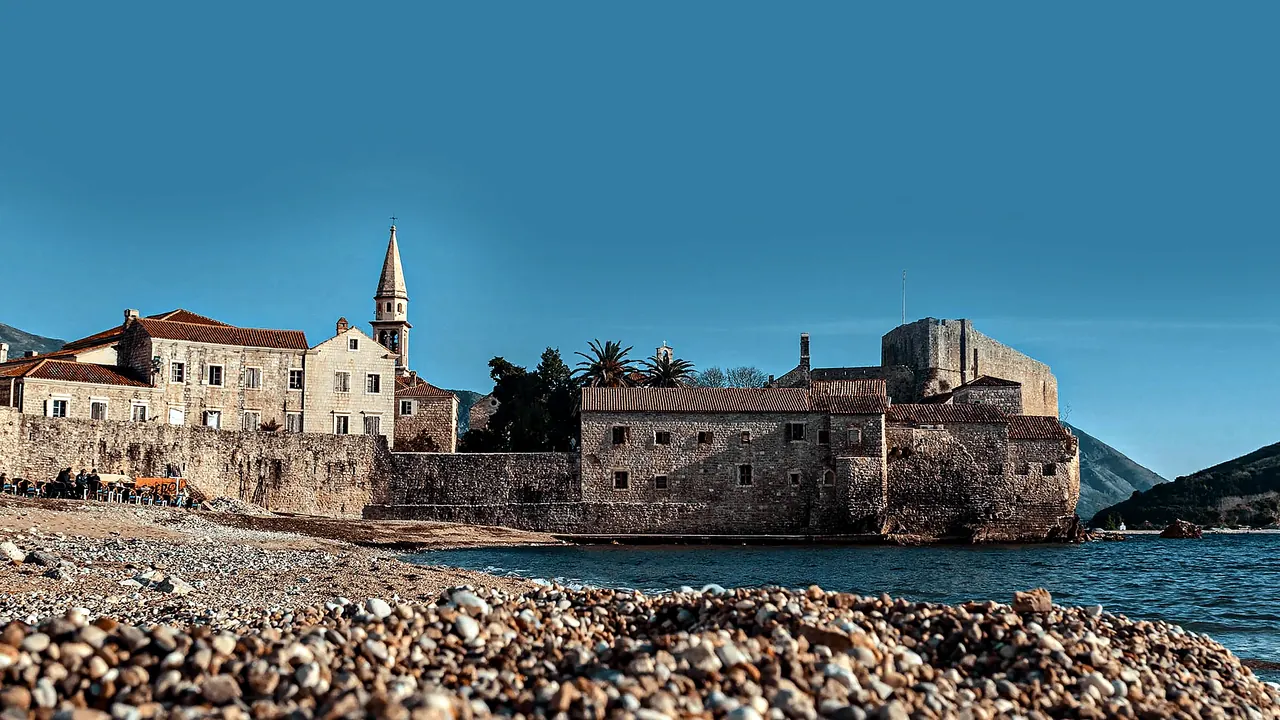
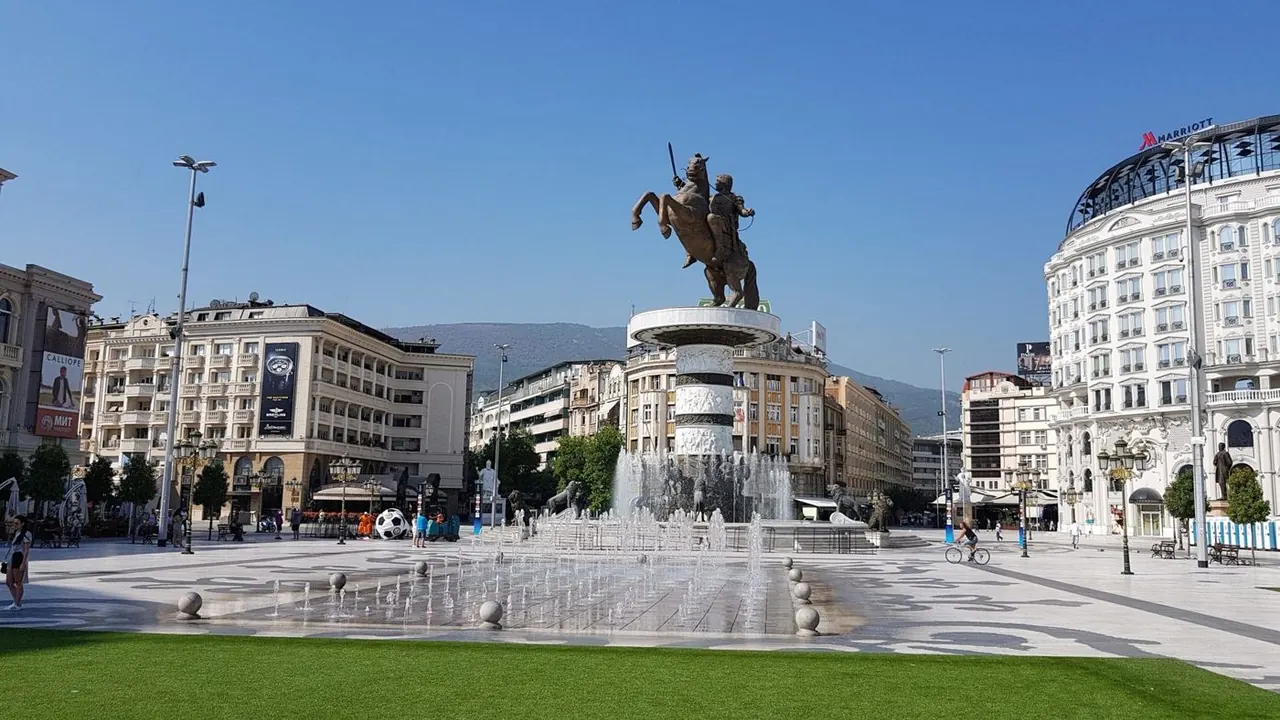
Photos: Budva by Ender Vatan, Pexels License; Skopje by George M. Groutas, CC BY 2.0, cropped.
Budva or Skopje?
Our verdict in twelve categories, each scored against the same fixed benchmark cities, and the climate month by month, so you can choose for your trip.
Choose Budva for
- beaches
- families
- day trips
Budva is the pick for a summer by the sea. It has town beaches and coves within walking distance, Kotor and the Bay of Kotor half an hour away, and loud seafront nights for groups who want them. It suits travellers who want to swim, take boats along the cliffs and use the coast as a base. It suits families with children too, as long as they avoid the noisiest weeks.
Choose Skopje for
- culture and sights
- prices
- live music and the arts
Skopje rewards a curious traveller more than a sunbather. It has an Ottoman bazaar and a capital still marked by its earthquake, and its tavern cooking is better than anything on Budva's promenade. Prices are among the lowest in Europe, and it has an opera, a philharmonic and a respected jazz festival. Choose it for a few inexpensive days of sights, food and mountain outings, not for swimming.
Scoreboard
Twelve categories on one fixed scale from 0 to 100. The shaded stretch is the gap between the two.
Your match
Pick a travel style or drag the sliders, and both match scores follow your weighting.
Too close to call, 1 point apart
Wins on beaches and families with your weighting.
Wins on culture and sights and prices with your weighting.
What matters to you?
Category by category
What the scores mean for a trip.
Beaches & swimming
This is where Budva wins outright. Slovenska Plaza runs along the town, Mogren's coves sit under the cliffs, and Becici, Jaz and the bay facing Sveti Stefan are a short ride away. The shore is fine pebble and coarse sand, crowded with sunbeds in high summer, but the water is warm from June to October.
Skopje has no sea, and swimming there means hotel or public pools. Matka's reservoir is for kayaks rather than bathing, and Lake Ohrid needs a separate stay.
Food & drink
Skopje is the better place to eat. You get tavche gravche in clay dishes, kebapi and pastrmajlija in the bazaar grill houses, and long tables in the Debar Maalo taverns, with Tikves wines on every list. The range is narrow, but the cooking is rooted in the place.
Budva's promenade serves resort menus of uneven quality. The rewards lie in its regional produce, such as Njegusi ham, mountain cheese and grilled squid at family konobas. Both places pour Vranec or Vranac red from their own vineyards.
Culture & sights
Skopje has much more to see. The Old Bazaar is one of the Balkans' largest Ottoman quarters, Kale Fortress stands above it, and the stopped clock of the old railway station tells the story of the 1963 earthquake. The bronze statuary of Skopje 2014 divides opinion but is worth seeing either way, and two or three days are well spent.
In Budva the walled Stari Grad, its churches and the Citadel fill an hour or two. The region's greater heritage lies along the coast, in towns such as Kotor.
Nightlife
Budva is the livelier place for a night out in summer. Beach bars and terrace clubs along Slovenska Plaza and a big open-air club on the hill keep groups out until dawn, though most of it shuts from October to May.
Skopje runs at a different pace. Its café-bars in Debar Maalo move from coffee to rakija on weekend nights, and the bazaar courtyards stay busy in summer. It is sociable and local rather than loud, and it carries on through the year.
Nature & outdoors
Both cities have mountains close by, but the setting differs. Budva puts limestone peaks behind the sea. Lovcen and Lake Skadar are each about an hour inland, and nearer to town there are coastal paths, sea kayaking and paragliding above Becici.
Skopje's outdoors is all on land. Vodno rises from the suburbs, with a cable car up to the Millennium Cross, and Matka Canyon has boat rides to Vrelo Cave. Further out, Mavrovo and the Sar mountains offer hiking in summer and skiing in winter, which Budva cannot match.
Day trips
Budva makes the better base for day trips. Kotor is half an hour away, with Perast beyond it, Cetinje is under an hour inland, and the coast continues down to Stari Bar and Ulcinj. Dubrovnik is possible as a long day.
Skopje's day trips are more scattered. Options include the painted mosque at Tetovo, the mosaics at Stobi, the Tikves wineries, crater-set Kratovo and Prizren across the border in Kosovo. They are rewarding, but a car helps, and Ohrid is too far for a day out.
Good for families
Budva works better with children because the beach does most of the work. The town beaches shelve gently, Becici's bays are calmer and there is a water park above town. Families do best in June or September, or by staying outside the loud centre.
Skopje welcomes children in cafés and in City Park, but its outings come down to a small zoo, the Vodno cable car and a boat in Matka. Hot summers and uneven pavements make long days with young children tiring.
Getting around
Both are easy on foot in the centre and harder beyond it, though for different reasons. In Budva, the old town, marina and beach lie close together and boat taxis reach the coves. The single coast road jams in summer, and there is no railway.
Skopje's sights sit along a flat walk by the Vardar. Its double-decker buses are confusing for newcomers, so cheap taxis are the usual way to get to Vodno and Matka.
Shopping & style
Skopje has more worth buying. Workshops in the Old Bazaar sell filigree silver, copperware and embroidery, Bit Pazar is a working market full of spices and cheese, and a few malls cover the chain stores.
Budva's shopping is limited to souvenirs, beachwear, olive oil and rakija, with a modest centre near the marina.
Affordability
Skopje is clearly cheaper. Tavern meals, coffee, taxis and central hotels all cost little, and the main sights are free or close to it.
Budva charges the most of anywhere in Montenegro, especially for seafront rooms and sunbeds in July and August. Apartments a few streets back, bakeries and grill houses still keep costs below most Western European coasts.
Live music & performing arts
Skopje has a real year-round calendar. The Macedonian Opera and Ballet, the Philharmonic and the National Theatre all run seasons, the jazz festival has been held every autumn since the early 1980s, and folk music plays in the Debar Maalo taverns.
Budva's one fixture is the Grad Teatar summer festival on the old town squares. Otherwise there are cover bands on the seafront.
Wellness & relaxation
Neither city has a bathing tradition, so for both, wellness means hotel spas. Budva's are in the big resorts at Becici and Sveti Stefan, and the town is only restful outside high summer.
Skopje adds the old-style mineral pools of Katlanovska Banja half an hour out, and long, slow afternoons on café terraces.
When should you go?
Pick your month. The climate figures are measured averages, not a forecast.
Budva in July
Skopje in July
Daytime high, °C
Rainfall in the month, mm
Where the figures come from
Budva has no rain gauge within 25 km of the centre, so its rainfall comes from a gridded climate dataset read at the city rather than from a gauge further away.
Budva's sunshine is measured 40 km from the centre, at Podgorica-Grad.
Skopje's sunshine is measured 68 km from the centre, at Stip.
Temperature and rainfall are climate normals, averaged over the years shown. Budva: 1991-2020 normals, Tivat (15.8 km from centre). Skopje: 1991-2020 (sunshine 1961-1990, rainfall 1981-2010) normals, Skopje-Petrovec (18.3 km from centre).
Budva's sea is warm enough to swim from June into October and peaks at about 26°C in August. Summers are dry and very sunny, and July and August are hot in town. In autumn the rain arrives, with November bringing around 212mm, so late autumn and winter are mild but wet and grey. June and September are the best months, with swimmable water and gentler heat. May is already warm and sunny for the old town and the coastal paths, but the sea is still too cool for most swimmers.
Skopje has an inland climate with bigger swings. Highs reach about 32°C in July and August, which is too hot for long walks around the bazaar. January is cold at around 5°C, far colder than Budva's damp but mild winter. Rain is modest and spread through the year, so Skopje stays drier than the coast from autumn to spring. For sightseeing and for walking on Vodno or in Matka Canyon, the best times are late spring and from late September into October.
Which traveller are you?
On a beach and sun trip, Budva is the only real choice. Slovenska Plaza, Mogren and the bays towards Sveti Stefan sit right on a warm Adriatic. Skopje is landlocked, and its nearest swimming is three hours away at Lake Ohrid.
For a culture and arts trip, Skopje gives far more. There is the Old Bazaar with its caravanserais and mosques, the carved iconostasis of the Holy Saviour and the earthquake museum, along with opera, ballet and an autumn jazz festival. Budva's walled old town takes a morning.
On a trip with a tight budget, Skopje goes further. Tavern meals with wine, burek, taxis and central hotels all cost little, even in summer. Budva is Montenegro's priciest resort, and July and August push up the cost of rooms, sunbeds and promenade meals.
Before you go
| Measure | Budva | Skopje |
|---|---|---|
| Official language | Montenegrin | Albanian, Macedonian |
| Currency | Euro (EUR) | Denar (MKD) |
| Sockets | CF230 V, 50 Hz | CF230 V, 50 Hz |
| Driving side | Right | Right |
| Time zone | UTC+1, UTC+2 in summer | UTC+1, UTC+2 in summer |
| Emergency number | 112 | 112 |
| Elevation | 3 m | 251 m |
| Main airport | Tivat Airport (TIV)17 km from centre42 non-stop destinations | Skopje International Airport (SKP)16 km from centre52 non-stop destinations |
| Public holidays this year | - | 12 days |
By the numbers
| Measure | Budva | Skopje |
|---|---|---|
| City population | 13,338 | 422,540 |
| People per km² | 109 | 739 |
| Museums within 10 km | 0 | 17 |
| UNESCO World Heritage sites within 50 km | 3 | 0 |
| Swim season, months above 21 °C | 5 months | - |
Where else could you go?
Every comparison below shares a destination with this one, so you can follow Budva or Skopje somewhere new.