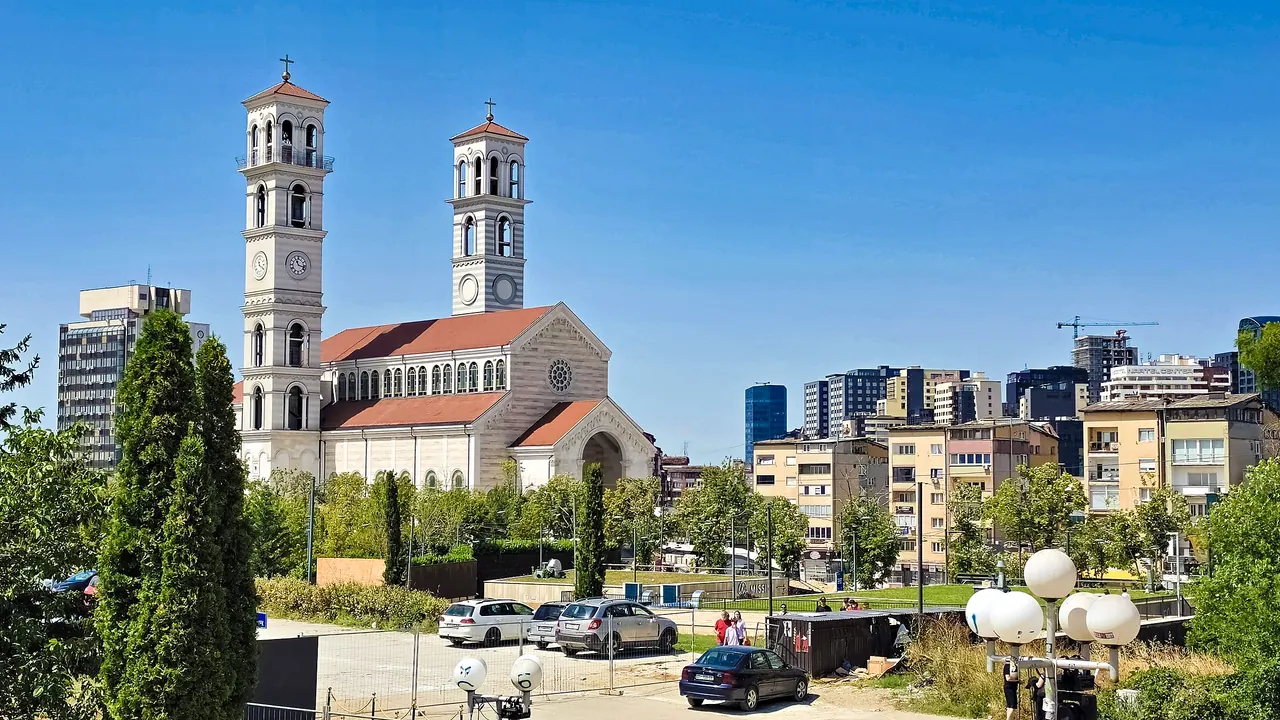
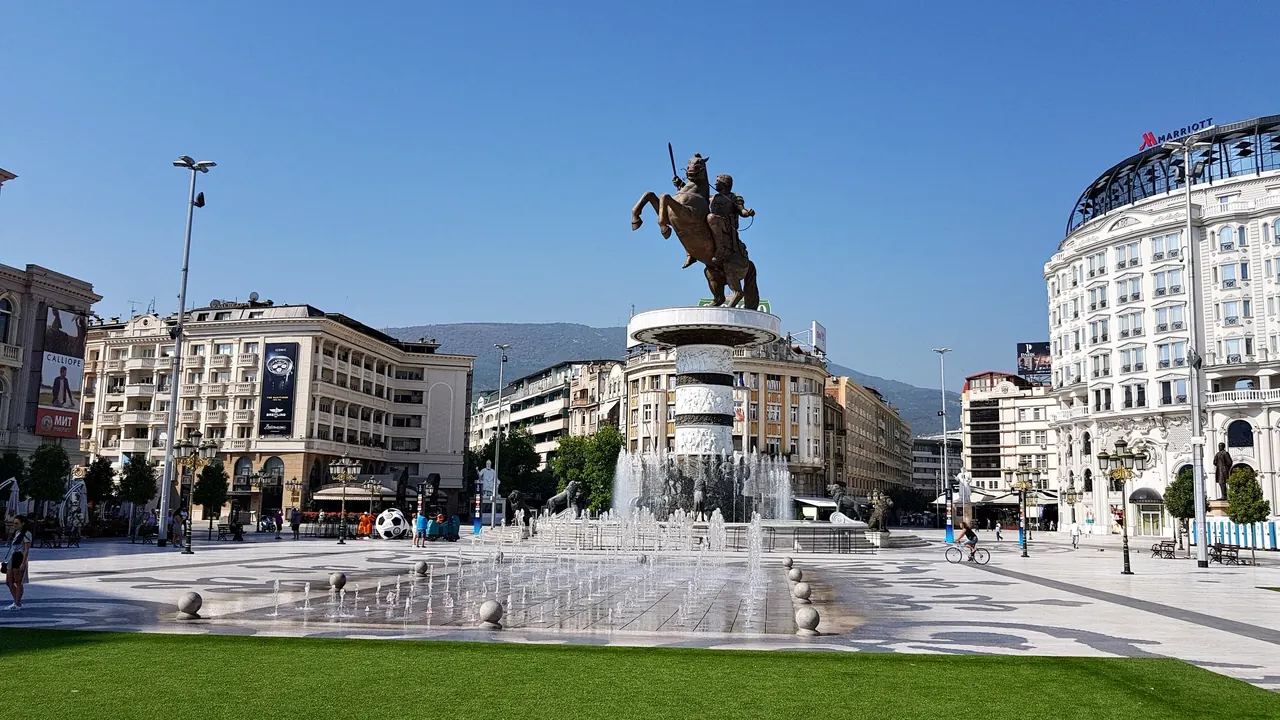
Photos: Pristina by Daciana Cristina Visan, Pexels License; Skopje by George M. Groutas, CC BY 2.0, cropped.
Pristina or Skopje?
Our verdict in twelve categories, each scored against the same fixed benchmark cities, and the climate month by month, so you can choose for your trip.
Choose Pristina for
- day trips
- getting around
- nightlife
Pristina is the better choice if you want a cheap, sociable base for seeing Kosovo rather than a city to explore for days. The centre takes a day at most. What brings people here is what lies within easy reach: Prizren's Ottoman old town, the frescoed monasteries at Peja and Decani, and Gracanica just outside town. In between, there are long macchiatos on a boulevard full of young people.
Choose Skopje for
- culture and sights
- nature and the outdoors
- shopping
Skopje gives you more to do without leaving the city. The Old Bazaar and Kale Fortress, the story of the 1963 earthquake, and the debate over the statues on Macedonia Square fill two or three days. Vodno and Matka Canyon are close enough for a morning in the hills, and the evenings in Debar Maalo's taverns bring better food, Tikves wine and live music. Choose it for a city stay with some outdoor time added on.
Scoreboard
Twelve categories on one fixed scale from 0 to 100. The shaded stretch is the gap between the two.
Your match
Pick a travel style or drag the sliders, and both match scores follow your weighting.
Wins on day trips and getting around with your weighting.
Wins on culture and sights and nature and the outdoors with your weighting.
What matters to you?
Category by category
What the scores mean for a trip.
Beaches & swimming
Neither city works for a beach vacation. Both are landlocked, and the differences are only in what stands in for the sea. From Pristina, people swim in summer at Lake Batlava, a reservoir about forty minutes away in wooded hills, and the Albanian Adriatic is a separate trip of several hours.
Skopje has public outdoor pools in town, but the water at Matka Canyon is too cold for comfortable swimming. Lake Ohrid, about three hours away, is the real swimming option and is better planned as a stay of a few days.
Food & drink
Pristina's food culture is built around coffee. People spend whole afternoons over a macchiato, and the meals are filling and simple: flija baked slowly under a lid, tavë in clay pots, and burek in the morning. You will eat well and cheaply, but the range is narrow.
Skopje gives you more for an evening out. In Debar Maalo you eat at long tavern tables to live starogradska music, and the Old Bazaar grill houses serve pastrmajlija and kebapi. Vranec and Temjanika wines from Tikves are on every list, and they are a step up from Pristina's Rahovec bottles. Neither city has much fine dining.
Culture & sights
The gap between the two is wide. In Pristina, the Imperial Mosque, the clock tower, the Emin Gjiku ethnographic houses and the lattice-wrapped National Library make a good day's walk. The sight of real weight is Gracanica Monastery, just outside the city.
Skopje's Old Bazaar is one of the largest Ottoman market quarters left in the Balkans. Kursumli An and Suli An, Kale Fortress and the carved walnut iconostasis of the Church of the Holy Saviour are all within a short walk of each other. Across the Stone Bridge, the bronze statues of Skopje 2014 and the ruined railway station, its clock stopped at 5:17, add a modern chapter that you can argue about over dinner.
Nightlife
Evenings are much the same in both cities: café-bars switch from coffee to drinks, the terraces fill at weekends, and there are only a few clubs. Pristina's crowd is noticeably young, centred on the boulevard and the student area, and summer is busiest, when people from the diaspora come home.
Skopje's evenings centre on Debar Maalo, where rakija and cocktails take over from coffee. In summer they spread into courtyards in the Old Bazaar, by the river and at open-air parties near the city park. Weeknights there are quiet.
Nature & outdoors
Skopje has the better outdoors close at hand. Mount Vodno rises straight from the southern suburbs, and you can climb through pine woods or take the cable car up to the Millennium Cross. Matka Canyon, half an hour away, has kayaking, a boat to Vrelo Cave and paths to monasteries on the cliffs. Mavrovo and the Sar ridges are further out.
Pristina's nearest green space is Germia Park, a large oak and beech forest with trails at the eastern edge of town. The Mirusha waterfalls are under an hour away. The high country of the Rugova Gorge, the Accursed Mountains and Brezovica takes a long day by car, on less developed trails.
Day trips
Pristina has the stronger list of day trips, because Kosovo is small and its best places are close together. Prizren's old town of mosques, hammams and stone bridges is about an hour and a quarter away. Peja's Patriarchate and the frescoes at Visoki Decani make a rewarding day in the west, and the Rahovec valley makes a wine outing.
Skopje has more variety but fewer highlights, since Ohrid is too far for a day out. You can still see the painted Sarena Mosque in Tetovo, Stobi's Roman mosaics on the way to the Tikves wineries, and Kratovo's stone bridges inside an old volcanic crater. Each city also makes an easy day trip from the other.
Good for families
Neither city is a family destination in itself. Both welcome children in cafés late into the evening but have little made for them. Pristina's pedestrian boulevard is a safe place for children to run, and Germia Park has playgrounds and a big outdoor pool in summer.
Skopje has slightly more to fill a day. Riding the cable car up Vodno or taking a boat in Matka Canyon will appeal to children, and there is a small zoo and a funfair by City Park. However, Skopje's hotter summers wear young children out faster.
Getting around
Getting around works in much the same way in both cities. The centre is walkable, the buses are confusing for visitors, and the taxis are cheap. In Pristina, Mother Teresa Boulevard is a pedestrian spine with most things within twenty minutes of it. Beyond it, cars parked on the pavements make walking awkward, but frequent intercity buses make Prizren and Peja easy to reach.
Skopje's centre is flat. A pleasant riverside walk along the Vardar links the Old Bazaar, Macedonia Square and Debar Maalo. Taxis cover Vodno and Matka, and a car becomes useful only for the wine country and the mountains.
Shopping & style
Skopje is the better place to shop, thanks to its bazaar. Workshops in the Old Bazaar sell silver filigree, copperware and embroidery. Next door, Bit Pazar is a working market piled with spices, cheese, peppers for ajvar and household goods.
In Pristina, the old bazaar quarter has only a few stalls, and fashion means the chains on the boulevard or the malls out on the highway. The best things to take home are plis felt caps, Prizren-style filigree and a bottle of Rahovec wine.
Affordability
Both are among the cheapest capitals in Europe, and money will hardly limit what you do in either. In Pristina, taxis cost so little that you can use them freely, and most museums are free or nearly so. The better central hotels charge regional rates rather than local ones.
Skopje's tavern dinners with wine are a particular bargain. The upmarket hotels and restaurants along the river charge more but are still modest by Western standards.
Live music & performing arts
Skopje offers visitors more to plan an evening around. The Skopje Jazz Festival has run every autumn since the early 1980s and has a strong reputation in the region. In summer, concerts and theatre are staged in the Old Bazaar and at the fortress. The opera, ballet and Philharmonic run full seasons, and folk and starogradska music play in the Debar Maalo taverns most nights.
Pristina has a National Theatre performing in Albanian, a philharmonic, a small opera and ballet company and a few small festivals. Most of it is aimed at local audiences, so on an ordinary night there is little for a visitor to plan around.
Wellness & relaxation
How far you must go for thermal water is the main difference between the two, since both are better for sitting still than for a spa break. From Pristina, the springs at Banja e Pejes and Kllokot are old-fashioned health resorts more than an hour away. The city's one Ottoman hammam no longer works as a bath, and spa treatments mostly mean the wellness area of a larger hotel. The long macchiato hours on the boulevard come with traffic and building noise.
Skopje's Katlanovska Banja, with mineral pools in a sanatorium setting, is only about half an hour out, close enough for an afternoon. The Daut Pasha and Cifte hamams in the Old Bazaar are art galleries now, and the hotel spas are much like Pristina's. The shaded terraces of Debar Maalo and the riverside are quieter places to spend a slow afternoon over coffee.
When should you go?
Pick your month. The climate figures are measured averages, not a forecast.
Pristina in July
Skopje in July
Daytime high, °C
Rainfall in the month, mm
Where the figures come from
Pristina has no weather station within reach, so its figures come from a gridded climate model rather than a measured record, and read a broad area rather than one spot.
Skopje's sunshine is measured 68 km from the centre, at Stip.
Temperature and rainfall are climate normals, averaged over the years shown. Pristina: 2001-2020 normals, NASA POWER reanalysis grid, no weather station within 90 km. Skopje: 1991-2020 (sunshine 1961-1990, rainfall 1981-2010) normals, Skopje-Petrovec (18.3 km from centre).
Both cities have cold winters and hot summers, but Skopje is warmer all year. In July and August it reaches about 32°C, which makes long afternoons of walking hard work. Pristina tops out nearer 29°C, so midsummer there is easier to bear. For sightseeing on foot, May, June and September are best in both cities. April and October suit Skopje well too, but Pristina is still cool in those months. From December to February Pristina stays close to freezing, and Skopje is only a little milder.
The cities also differ in rain. Pristina's rain is spread through the year, with the wettest spells in May and again in October and November, so a few grey days are likely in any season. Skopje is drier and very sunny in summer, with August the driest month at about 24mm. Its rain comes mostly in late autumn and early winter. Neither city has a beach, so the warmest months matter only for lakes and pools.
Which traveller are you?
For a culture and arts trip, Skopje is clearly ahead. Its Old Bazaar, caravanserais, Kale Fortress and earthquake museum fill several days, and the opera, ballet and autumn jazz festival add evenings. Pristina's sights can be covered in a day.
On an outdoors trip, Skopje wins because the hills start at the edge of town. You can walk or ride the cable car up Vodno, and Matka Canyon's kayaking and cliff-top monasteries are half an hour away. From Pristina, the serious mountains are a long day's drive.
For travellers touring medieval monasteries and Ottoman towns, Pristina is the better base. Gracanica, the Patriarchate of Pec, Visoki Decani and Prizren's old town are all within a short drive, and they are among the most important heritage sites in the Balkans.
Before you go
| Measure | Pristina | Skopje |
|---|---|---|
| Official language | Albanian, Serbian | Albanian, Macedonian |
| Currency | Euro (EUR) | Denar (MKD) |
| Sockets | F230 V, 50 Hz | CF230 V, 50 Hz |
| Driving side | Right | Right |
| Time zone | UTC+1, UTC+2 in summer | UTC+1, UTC+2 in summer |
| Emergency number | 112 | 112 |
| Elevation | 652 m | 251 m |
| Main airport | Priština Adem Jashari International Airport (PRN)15 km from centre42 non-stop destinations | Skopje International Airport (SKP)16 km from centre52 non-stop destinations |
| Public holidays this year | - | 12 days |
By the numbers
| Measure | Pristina | Skopje |
|---|---|---|
| Population | 227,466 | 422,540 |
| People per km² | 435 | 739 |
| Museums within 10 km | 4 | 17 |
| UNESCO World Heritage sites within 50 km | 1 | 0 |
Where else could you go?
Every comparison below shares a destination with this one, so you can follow Pristina or Skopje somewhere new.