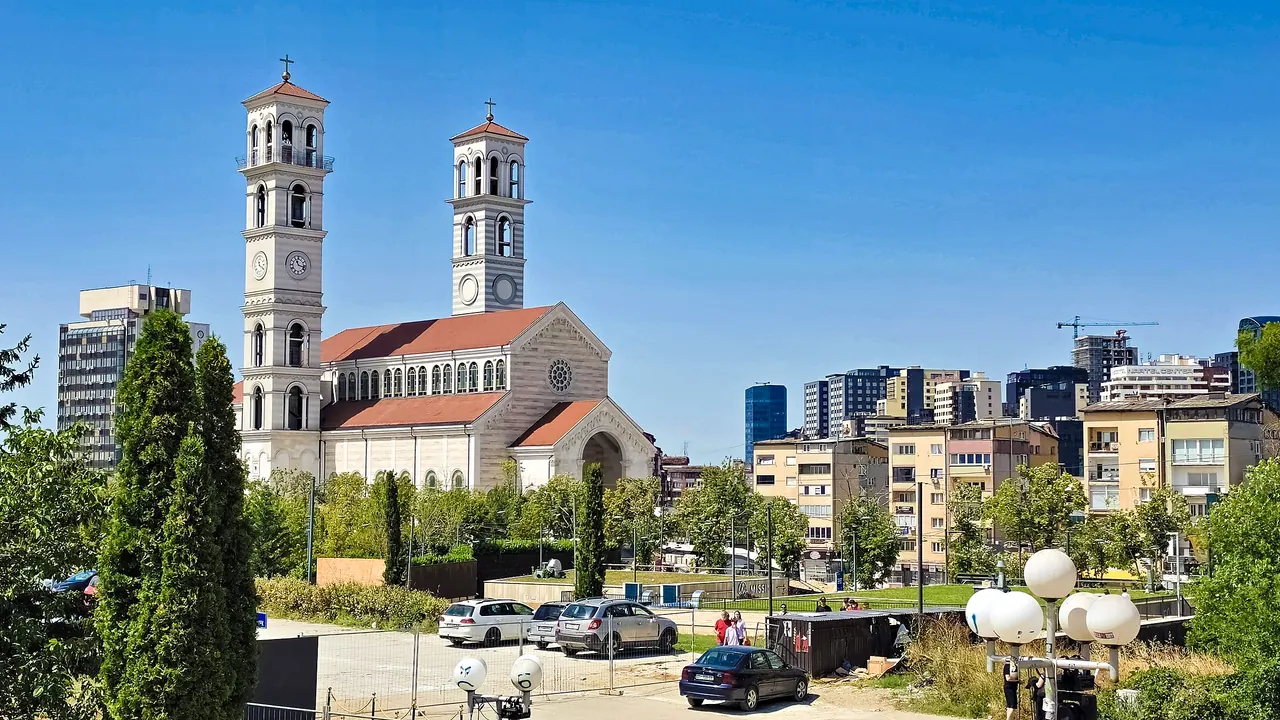
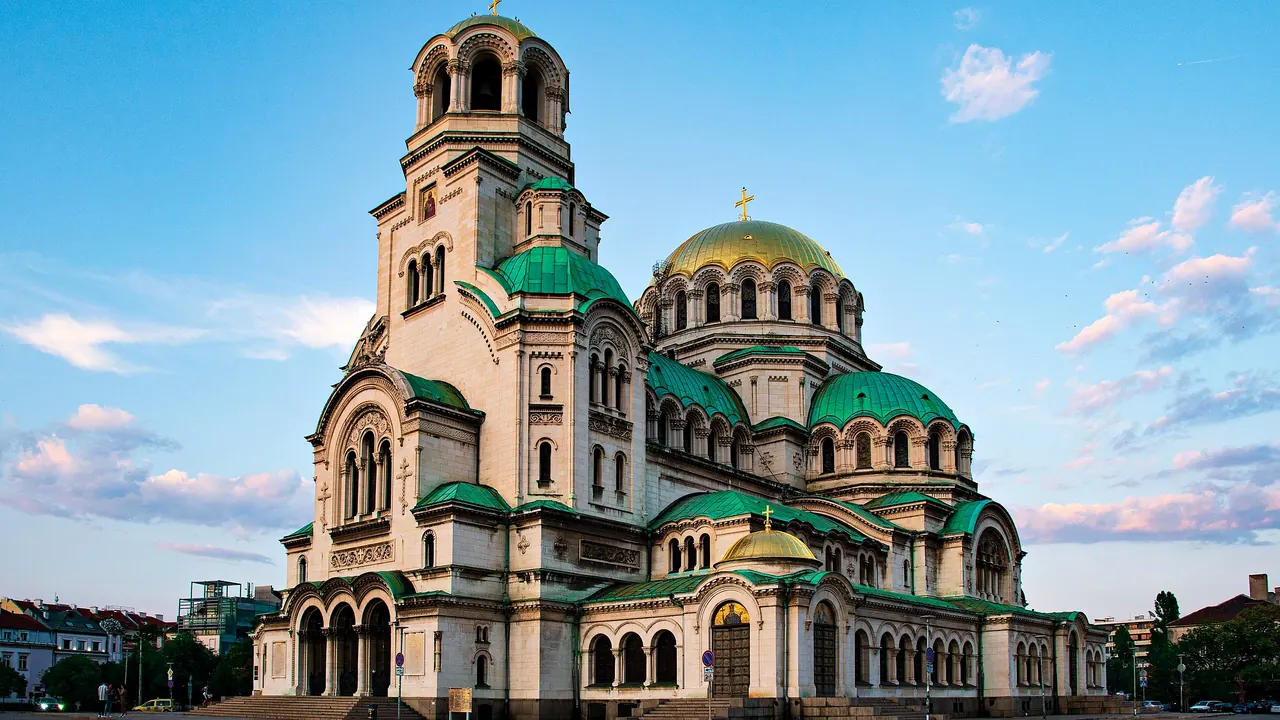
Photos: Pristina by Daciana Cristina Visan, Pexels License; Sofia by Jose Ligero Loarte, CC BY-SA 4.0, cropped.
Pristina or Sofia?
Our verdict in twelve categories, each scored against the same fixed benchmark cities, and the climate month by month, so you can choose for your trip.
Choose Pristina for
- prices
- day trips
- beaches
Pristina is for the traveller who wants to understand a young country rather than tick off sights. Its own centre takes a day: the Ottoman quarter, the Emin Gjiku houses and the latticed National Library. It works best as a cheap, sociable base with a café on every corner, from which Prizren, the monasteries of Peja and Decani, and Skopje are all easy to reach. It fits a Balkan circuit well, but has less to keep you in the city itself.
Choose Sofia for
- culture and sights
- nature and the outdoors
- live music and the arts
Sofia gives a longer stay more to work with. Roman Serdica, the Alexander Nevsky Cathedral and the Thracian gold fill two or three days, and the opera and philharmonic give you evenings to plan around. Then there is Vitosha, a real mountain you can reach by city bus and gondola. Choose it if you want culture, hiking and mineral springs in one trip, with a metro to tie it all together.
Scoreboard
Twelve categories on one fixed scale from 0 to 100. The shaded stretch is the gap between the two.
Your match
Pick a travel style or drag the sliders, and both match scores follow your weighting.
Wins on prices and day trips with your weighting.
Wins on culture and sights and nature and the outdoors with your weighting.
What matters to you?
Category by category
What the scores mean for a trip.
Beaches & swimming
Neither city is a beach destination, though the coast is somewhat closer from Pristina. The Albanian Adriatic is several hours away by road. That makes it a separate trip, but an easier one to add to a stay in Kosovo. Closer to home, Lake Batlava is a reservoir in low wooded hills about forty minutes from the city.
From Sofia, the Black Sea coast is a full day's drive or a domestic flight away, so the sea means a separate stay rather than an extra leg. In summer, swimming in the city means outdoor pools in the parks or Pancharevo lake on the south-eastern edge.
Food & drink
You will eat about equally well in either city, and in much the same hearty Balkan style: grilled qebapa or kebapche, and dishes slow-baked in clay pots. In Pristina, coffee is at the heart of things. The day is built around a macchiato on the boulevard, and flija is the dish to seek out.
Sofia's strength is wine. Mavrud and Melnik are poured in bars across the centre, and the mehana taverns serve the food with folk music. Small bistros around Vitosha Boulevard give Sofia slightly more range.
Culture & sights
Sofia has far more to see. Within a few minutes of Serdika you can walk past Roman streets, the fourth-century Rotunda of St George, a mosque and a cathedral, and then on to the gold domes of Alexander Nevsky and the icon museum in its crypt. Boyana's UNESCO frescoes, the Thracian treasures and the Museum of Socialist Art make it a full two or three days.
Pristina's sights fit into a single day. You have the clock tower and the Imperial Mosque, the Emin Gjiku houses, and the striking National Library. Gracanica Monastery just outside the city is its one sight of real weight.
Nightlife
Sofia has a little more going on after dark. Its Shishman street quarter is packed with cocktail bars, craft beer pubs and wine bars, there are bars in cellars below the old buildings, and a handful of electronic clubs. Pristina's evenings take place in the same café-bars that serve coffee by day. Its young crowd fills the terraces around the boulevard, and they are busiest in summer, when the diaspora comes home. Both scenes are relaxed rather than wild.
Nature & outdoors
Sofia sits under a mountain. Vitosha rises above 2,200m, and city buses and a gondola take you up to its boulder rivers, spruce forest and the summit of Cherni Vrah. The Rila lakes and the skiing at Borovets are about an hour and a half beyond.
Pristina lies on a farming plain. Germia Park's oak and beech woods and the Mirusha waterfalls are close by, but the high ground of the Rugova Gorge and the Sharr range is a long day out, with less developed trails when you get there.
Day trips
Both make good bases for day trips, and in both the highlights are Ottoman towns and painted monasteries. Pristina's are closer. Prizren's bridges and fortress are only about an hour and a quarter away, and Peja and Decani hold UNESCO-listed frescoes. Skopje, across the border, is an easy extra.
From Sofia the trips take about two hours each way, to Rila Monastery in its mountain valley and to Plovdiv's Roman theatre and painted merchant houses. Koprivshtitsa is a quieter third choice.
Good for families
Neither city does much for children, but Sofia has a little more. Borisova Gradina and South Park give children room to play, a gondola ride and forest walk on Vitosha make a proper day out, and there is a hands-on science centre and a mineral museum.
Pristina welcomes children warmly in its cafés until late, and Germia Park has a summer pool. Beyond that, there is little to fill the days. Pavements are hard going with a pushchair in both cities.
Getting around
Sofia is much easier to get around. A clean, simple metro runs from the airport through the centre to the railway station and the foothills of Vitosha, and trams fill the gaps. Signs outside the centre are mostly in Cyrillic, though.
In Pristina, you walk along Mother Teresa Boulevard and take taxis everywhere else, because the city buses are hard for a visitor to work out. Intercity buses to Prizren and Peja are frequent. For the mountains and monasteries, a car helps in both countries.
Shopping & style
Neither city is worth the trip for shopping, but Sofia fills an afternoon better. Vitosha Boulevard runs towards the mountain lined with chains, and the icon flea market by Alexander Nevsky and the Zhenski Pazar market add local colour. Rose oil and Troyan pottery are the things to bring home. Pristina's best buys are silver filigree, plis felt caps and Rahovec wine, and its old bazaar has only a few stalls.
Affordability
Both are among the cheapest capitals in Europe, and you will notice little difference between them. In Pristina, taxis cost almost nothing and most sights are free. In Sofia, the cheap metro and a good bottle of Bulgarian wine stretch a budget, and even its upmarket bistros feel moderately priced.
Live music & performing arts
Sofia gives you evenings worth booking. The National Opera and Ballet performs for most of the year, the Sofia Philharmonic plays at Bulgaria Hall, and Bulgarian choral and Orthodox singing is something you will hear nowhere else.
Pristina has a National Theatre, a philharmonic and a small opera company, but they mostly perform for locals, and theatre is in Albanian. On most nights, live bands in bars are all there is.
Wellness & relaxation
Sofia stands on mineral springs. Locals fill bottles at the warm taps by the old Central Mineral Baths, and you can bathe in the mineral pools at Bankya, about half an hour away. The resorts beyond have spa hotels of every grade. Pristina's hammam no longer works as a bath, and its thermal springs are dated health resorts more than an hour away. What Pristina offers is long hours over coffee, in a city whose traffic noise makes it hard to rest.
When should you go?
Pick your month. The climate figures are measured averages, not a forecast.
Pristina in July
Sofia in July
Daytime high, °C
Rainfall in the month, mm
Where the figures come from
Pristina has no weather station within reach, so its figures come from a gridded climate model rather than a measured record, and read a broad area rather than one spot.
Temperature and rainfall are climate normals, averaged over the years shown. Pristina: 2001-2020 normals, NASA POWER reanalysis grid, no weather station within 90 km. Sofia: 1991-2020 normals, Sofia Observ. (7.3 km from centre).
The two cities follow almost the same pattern through the year. Both are cold in winter, with daytime highs of only a few degrees in January, and both reach about 28°C to 29°C in July and August. Pristina is a touch colder in winter and a touch hotter at the height of summer. The most comfortable months for walking the streets and the hills are May, June and September, when afternoons sit in the low twenties. In high summer, a swim in the lake at Batlava or Pancharevo is the nearest either city comes to a beach.
The rain falls differently. Sofia has dry winters and gets most of its rain in early summer, peaking at 78mm in June, and it is very sunny from June to August. Pristina is wetter through most of the year, with its damper spells in May and again in October and November. That makes autumn a better bet in Sofia, while late summer is the drier window in Pristina.
Which traveller are you?
On a culture and arts trip, Sofia is clearly the better choice. It has layered Roman and medieval sights in its centre, the frescoes of Boyana and the Thracian gold. In the evenings there is a full season of opera, ballet and orchestral concerts, while Pristina's stage life mostly serves a local, Albanian-speaking audience.
For an outdoors trip, Sofia wins easily because Vitosha starts at the city's edge, with summit walks and winter skiing, and the Seven Rila Lakes are within reach. Pristina has Germia Park nearby, but its serious mountains, Rugova and Sharr, are long drives away.
On a tight budget, both cities stretch your money a long way, but Pristina has a slight edge. Most of its sights are free, taxis are cheap enough to take without thinking, and its central sights fit into one day, which leaves the budget for bus trips to Prizren and Peja.
Before you go
| Measure | Pristina | Sofia |
|---|---|---|
| Official language | Albanian, Serbian | Bulgarian |
| Currency | Euro (EUR) | Euro (EUR) |
| Sockets | F230 V, 50 Hz | CF230 V, 50 Hz |
| Driving side | Right | Right |
| Time zone | UTC+1, UTC+2 in summer | UTC+2, UTC+3 in summer |
| Emergency number | 112 | 112 |
| Elevation | 652 m | 560 m |
| Main airport | Priština Adem Jashari International Airport (PRN)15 km from centre42 non-stop destinations | Sofia Airport (SOF)8 km from centre99 non-stop destinations |
| Public holidays this year | - | 15 days |
By the numbers
| Measure | Pristina | Sofia |
|---|---|---|
| Population | 227,466 | 1,213,134 |
| People per km² | 435 | 2,466 |
| Museums within 10 km | 4 | 43 |
| UNESCO World Heritage sites within 50 km | 1 | 1 |
Where else could you go?
Every comparison below shares a destination with this one, so you can follow Pristina or Sofia somewhere new.