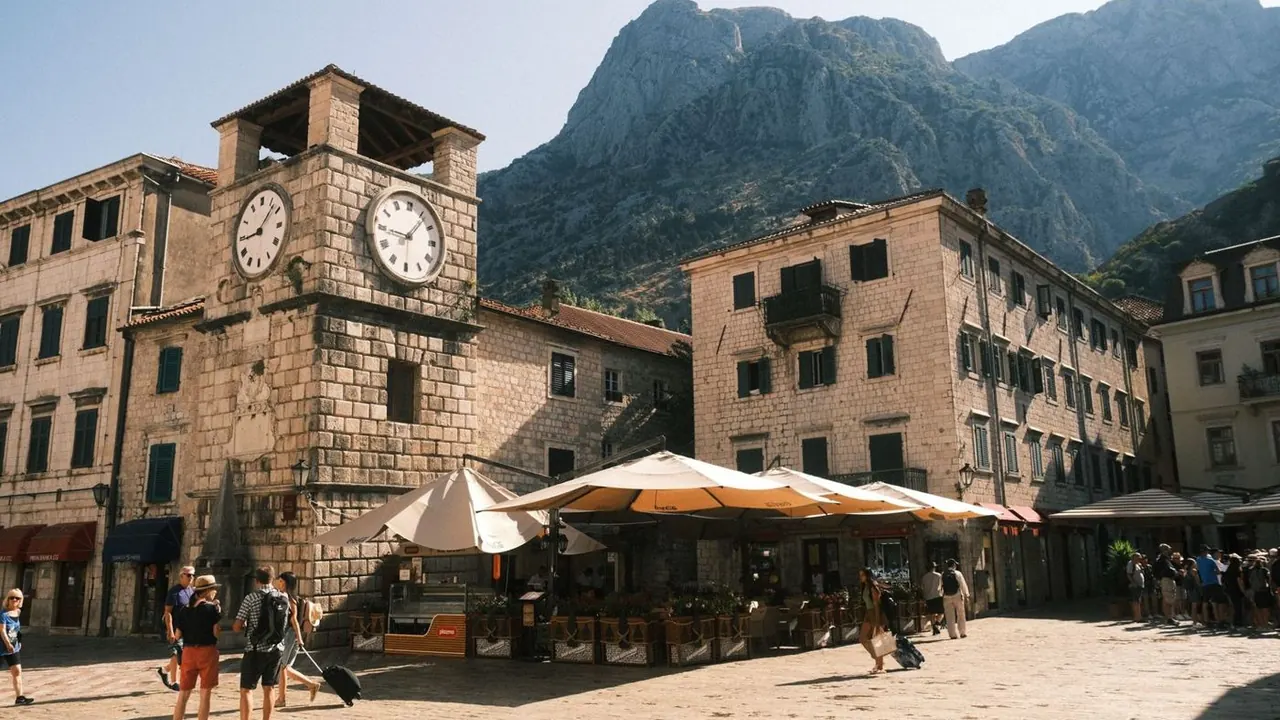
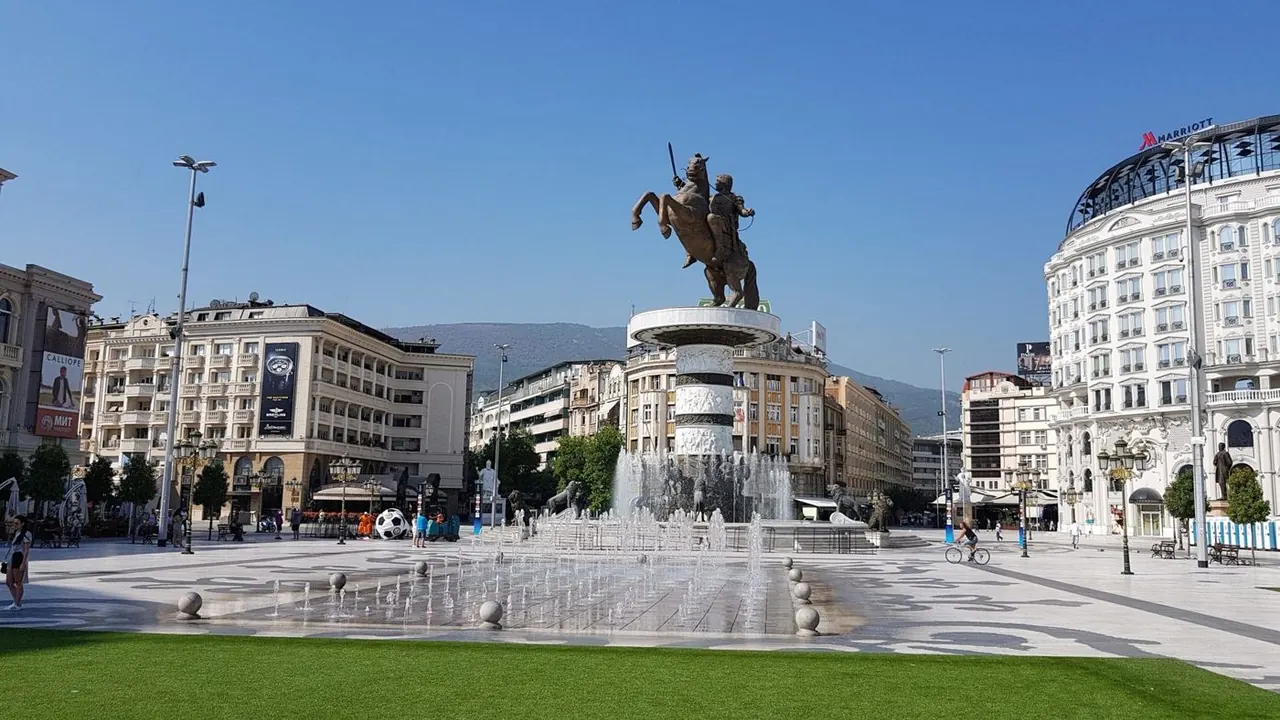
Photos: Kotor by Muhammed Fatih Beki, Pexels License; Skopje by George M. Groutas, CC BY 2.0, cropped.
Kotor or Skopje?
Our verdict in twelve categories, each scored against the same fixed benchmark cities, and the climate month by month, so you can choose for your trip.
Choose Kotor for
- beaches
- day trips
- nature and the outdoors
Kotor is for travellers who put scenery first. Its compact Venetian old town sits at the deepest point of a fjord-like bay, with limestone walls rising almost from the water. Summer days are for swimming off the jetties, and the bay villages, Budva's beaches and Lovcen National Park are all close. It suits a slower trip built around the water and walking, ideally with a car or driver for days out, and people who are happy with quiet evenings.
Choose Skopje for
- prices
- shopping
- live music and the arts
Skopje gives you more city for less money. It is much cheaper, the cooking in the Debar Maalo taverns and Old Bazaar grill houses is heartier, evenings in the café-bars are livelier, and there is a real opera and jazz calendar. There is no sea, so choose it for food, Ottoman and post-earthquake history and mountain walks on Vodno and at Matka, not for swimming.
Scoreboard
Twelve categories on one fixed scale from 0 to 100. The shaded stretch is the gap between the two.
Your match
Pick a travel style or drag the sliders, and both match scores follow your weighting.
Too close to call, 1 point apart
Wins on beaches and day trips with your weighting.
Wins on prices and shopping with your weighting.
What matters to you?
Category by category
What the scores mean for a trip.
Beaches & swimming
Kotor clearly comes out ahead, though even here swimming is something you head out for. In town you swim off concrete platforms and narrow pebble strips in the calm, sheltered inner bay. Jaz, the coves around Budva and the pink-pebble shores near Sveti Stefan are all within about half an hour.
Skopje has no sea at all. In summer, swimming means hotel or public pools, and Matka's reservoir is too cold for much more than kayaking. If you want a beach, plan separate nights at Lake Ohrid.
Food & drink
Both cities pour the same dark red grape, called Vranac in Kotor and Vranec in Skopje, but Skopje is the better place to eat. Kotor's strength is the bay's seafood: mussels, black cuttlefish risotto and grilled fish, best eaten at waterside konobas in Dobrota, Prcanj or Perast rather than on the uneven old-town squares, with Njegusi ham and cheese from the mountains behind.
Skopje's Balkan home cooking runs deeper. You can eat tavche gravche in clay dishes, kebapi and pastrmajlija in the Old Bazaar and burek with yoghurt at breakfast, then sit down to long tavern meals in Debar Maalo with Temjanika whites and rakija. Neither city has much fine dining or international food.
Culture & sights
The two are evenly matched, but they offer very different things. Kotor is a single, coherent townscape: UNESCO-listed Venetian walls, the twelfth-century Romanesque Cathedral of St Tryphon, the palazzi of seafaring families and the Maritime Museum, all packed into a marble-paved triangle below the fortress of St John.
Skopje is a city of contrasts. North of the Stone Bridge lies a large Ottoman bazaar of caravanserais and mosques, with Kale Fortress above it. South of the river are the bronze statues, neoclassical facades and replica galleons of a state-funded rebuilding scheme, and the City Museum, in the ruined railway station, tells the story of the 1963 earthquake. Kotor is about beauty and Skopje about history and argument, and each takes two or three days to see.
Nightlife
Skopje has the livelier evenings, though neither is a party destination. Kotor winds down to drinks on the old-town squares under the lit walls, with a few bars going late in summer. For anything louder, you head down the coast to Budva's beach clubs.
Skopje's scene runs on café-bars around Debar Maalo, where coffee turns to rakija and cocktails, and the weekend crowds are mostly local. In summer the Old Bazaar courtyards and riverside spots stay busy past midnight, but weeknights are quiet.
Nature & outdoors
Kotor has the more dramatic setting. Limestone walls rise more than 1,000m above the bay, and you can start walking from the town gates, on the Ladder of Kotor mule track, the fortress path or the hairpin road up into Lovcen's beech woods. Kayaking along the shore shows how close the mountains come to the water.
Skopje has its own green escapes close by. Mount Vodno rises from the suburbs and has a cable car, and Matka Canyon, half an hour away, has a boat ride to Vrelo Cave and cliff monasteries. Further out, the Sar mountains and Mavrovo add something Kotor cannot: skiing in winter. In both places the summer heat makes spring and autumn the seasons for hiking.
Day trips
Kotor has the richer and easier day trips, because so much lies around one bay. Perast and the islet church of Our Lady of the Rocks are twenty minutes away, then come Herceg Novi, Budva and Sveti Stefan, Cetinje and the Njegos mausoleum over Lovcen. Dubrovnik makes a longer day.
From Skopje, the country's highlight, Ohrid, is too far for a day out. The trips that remain are more scattered: Tetovo's painted mosque, the Roman mosaics at Stobi with Tikves wineries nearby, crater-town Kratovo, and Prizren across the Kosovo border.
Good for families
Neither city does much for children, and families come out about even. In Kotor the car-free old town is safe, the street cats are a hit and the bay water is calm for paddling. The fortress climb is too exposed for small legs in summer, though.
In Skopje the best outings are the Vodno cable car, the boat at Matka and evenings in City Park, with a small zoo and funfair. Busy roads, uneven pavements and no swimming beyond pools mean families usually pair it with a lake.
Getting around
Both are easy on foot at the centre and awkward beyond it. Kotor's old town is car-free and takes minutes to cross, but leaving it means patchy buses, water taxis between some villages and a single bay road that jams in summer, so most people hire a car or driver.
Skopje's sights sit along a flat stretch of the Vardar. Without a metro or tram, and with buses that confuse newcomers, visitors rely on plentiful, cheap taxis for Vodno and Matka.
Shopping & style
Skopje is the better place to shop. In the Old Bazaar workshops you can watch silver filigree and copperware being made, and Bit Pazar is a real everyday market of spices, cheese and peppers. Modern malls cover the chain stores.
Kotor's lanes mostly sell souvenirs, cat trinkets, lace and coral jewellery, and the best buys are edible: Vranac, Njegusi ham and bay olive oil from the green market. For brands, people go to the Tivat marina.
Affordability
Skopje is clearly the cheaper city. Taverns, coffee, taxis and central hotels cost very little even in summer, and most sights are free or nearly so.
Kotor is moderately priced, but rooms and the terrace restaurants inside the walls charge resort rates in July and August. To keep costs down, stay in Dobrota or Muo, eat away from the main squares and visit outside high summer.
Live music & performing arts
Skopje has a real season, which Kotor lacks. The Macedonian Opera and Ballet and the Philharmonic perform through the year, the Skopje Jazz Festival has run every autumn since the early 1980s, and the Debar Maalo taverns have live starogradska music.
Kotor's music is tied to occasions: the summer festival of recitals and choirs in churches and squares, concerts in the cathedral, and the masked carnival and Boka Night parades of lit boats on the bay. Outside summer, there is little more than a terrace musician.
Wellness & relaxation
Neither city has a bathing culture, so rest comes in different forms. Kotor's calm is on the water: early mornings on the bay, long village lunches and resort-hotel spas along the shore, with the crowded old town avoided at midday.
Skopje's Ottoman hamams serve as galleries, not baths. It does have Katlanovska Banja, an old-style thermal spa with mineral pools half an hour out, and unhurried hours over coffee on shaded terraces in Debar Maalo.
When should you go?
Pick your month. The climate figures are measured averages, not a forecast.
Kotor in July
Skopje in July
Daytime high, °C
Rainfall in the month, mm
Where the figures come from
Kotor has no rain gauge within 25 km of the centre, so its rainfall comes from a gridded climate dataset read at the city rather than from a gauge further away.
Kotor's sunshine is measured 42 km from the centre, at Podgorica-Grad.
Skopje has no rain gauge within 25 km of the centre, so its rainfall comes from a gridded climate dataset read at the city rather than from a gauge further away.
Skopje's sunshine is measured 68 km from the centre, at Stip.
Temperature and rainfall are climate normals, averaged over the years shown. Kotor: 1991-2020 normals, Tivat (4.2 km from centre). Skopje: 1991-2020 (sunshine 1961-1990) normals, Skopje-Petrovec (18.3 km from centre).
Kotor is at its best in late May and June, when the days are warm, sunny and still fairly dry, and the bay is already pleasant for swimming. July and August are the peak for the water, with the sea at about 26°C, but highs around 33°C make the fortress climb and the cliff paths a job for dawn. September keeps the sea warm, but it is often wet, with about 122mm of rain. From then on the rain sets in properly, and November is the wettest month at around 202mm, so late autumn and winter are grey and damp, though rarely cold.
Skopje is much drier all year but has harsher seasons. Its summer heat in the valley matches Kotor's, and in January highs drop to about 5°C, so winter sightseeing means cold, short days, although that is also the season for skiing in the nearby mountains. April, May, late September and October are the best months for walking the bazaar and climbing Vodno. In autumn Skopje has the edge, staying mostly dry and sunny while Kotor turns wet.
Which traveller are you?
For a beach and sun trip, Kotor is the obvious choice. You can swim in calm, warm bay water from jetties at Dobrota and Muo, and Budva's sandy and pebble beaches are half an hour away. Landlocked Skopje has only pools, and Lake Ohrid is three hours off.
On a trip on a tight budget, Skopje stretches your money much further. Tavern meals with wine, burek breakfasts, taxis and central hotels all cost little. In Kotor, rooms and terrace restaurants inside the walls charge resort rates in July and August.
For a food and nightlife trip, Skopje has more to offer. Debar Maalo's long-table taverns, Tikves wines and starogradska music lead on to café-bars that stay full on weekend nights. Kotor's evenings are calm terrace drinks, and a real night out means going to Budva.
Before you go
| Measure | Kotor | Skopje |
|---|---|---|
| Official language | Montenegrin | Albanian, Macedonian |
| Currency | Euro (EUR) | Denar (MKD) |
| Sockets | CF230 V, 50 Hz | CF230 V, 50 Hz |
| Driving side | Right | Right |
| Time zone | UTC+1, UTC+2 in summer | UTC+1, UTC+2 in summer |
| Emergency number | 112 | 112 |
| Elevation | 10 m | 251 m |
| Main airport | Tivat Airport (TIV)5 km from centre42 non-stop destinations | Skopje International Airport (SKP)16 km from centre52 non-stop destinations |
| Public holidays this year | - | 12 days |
By the numbers
| Measure | Kotor | Skopje |
|---|---|---|
| City population | 562 | 422,540 |
| People per km² | - | 739 |
| Museums within 10 km | 3 | 17 |
| UNESCO World Heritage sites within 50 km | 3 | 0 |
| Swim season, months above 21 °C | 5 months | - |
Where else could you go?
Every comparison below shares a destination with this one, so you can follow Kotor or Skopje somewhere new.