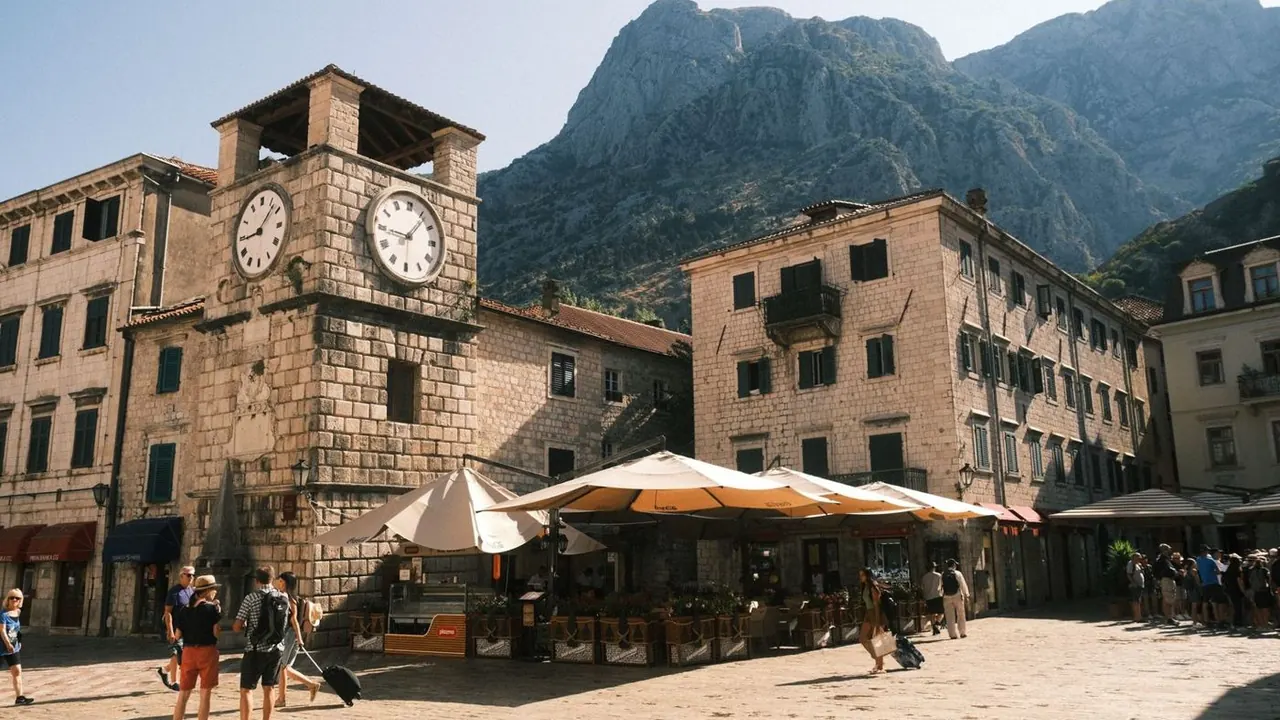
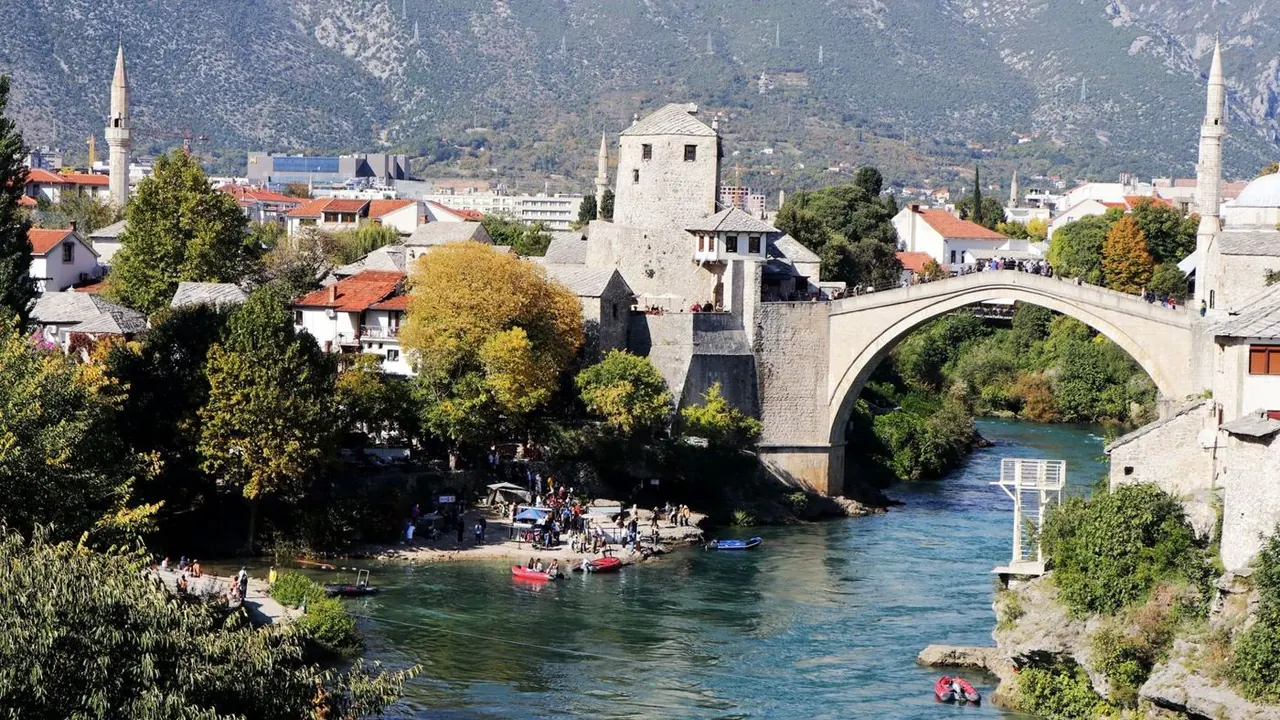
Photos: Kotor by Muhammed Fatih Beki, Pexels License; Mostar by Alan Wang, Pexels License.
Kotor or Mostar?
Our verdict in twelve categories, each scored against the same fixed benchmark cities, and the climate month by month, so you can choose for your trip.
Choose Kotor for
- beaches
- nature and the outdoors
- day trips
Kotor is the better choice for travellers who want scenery and water. The bay winds in between mountain walls, a hiking path starts at the town gate, you can swim off the jetties along the shore, and the Budva beaches and the boat out to Perast are both close. It suits a stay of several days built around being outside, with a small walled town to come back to in the evening.
Choose Mostar for
- prices
- shopping
- food and drink
Mostar suits a shorter, cheaper stop with a strong story at its centre. The Old Bridge, the Ottoman bazaar and the scars of the war give it a different weight from Kotor's maritime prettiness, and the Bosnian grills, Herzegovina wines and long coffees cost noticeably less. It works well for travellers on a budget, or as a night or two on a wider Balkan route that takes in Blagaj, Počitelj and the waterfalls at Kravica.
Scoreboard
Twelve categories on one fixed scale from 0 to 100. The shaded stretch is the gap between the two.
Your match
Pick a travel style or drag the sliders, and both match scores follow your weighting.
Wins on beaches and nature and the outdoors with your weighting.
Wins on prices and shopping with your weighting.
What matters to you?
Category by category
What the scores mean for a trip.
Beaches & swimming
Kotor at least gives you the sea. You swim from concrete platforms and small pebble strips towards Dobrota and Muo, in water that is warm and calm, if not crystal clear. For a real beach day the sand at Jaz and the coves of the Budva riviera are a short trip over the hill.
Mostar has nothing comparable. The Neretva is beautiful but bitingly cold, so swimming means a quick jump from the rocks or a trip to the pool under the Kravica falls. The nearest sea, at Neum, is an outing rather than part of daily life.
Food & drink
Neither city is a great food destination, and both have tourist terraces by the main sights where cooking is uneven. The difference is in what is on the plate. Kotor eats from the bay: mussels, octopus and black cuttlefish risotto with Venetian touches, smoked Njegusi ham from the mountains and dark Vranac wine. The better meals are in the shoreside konobas of Prcanj and Perast.
Mostar's cooking is Ottoman and meat-led, with charcoal-grilled ćevapi in somun bread, burek and slow-cooked stuffed peppers. The local wines are white Žilavka and red Blatina, and the Bosnian coffee ritual in a copper džezva is a pleasure in itself.
Culture & sights
These two are evenly matched, but the experience is different. Kotor's appeal is a whole walled townscape: marble lanes, the Romanesque Cathedral of St Tryphon, seafaring palazzi with the Maritime Museum, and walls climbing the cliff to St John's fortress.
Mostar is built around one famous monument and the story behind it: the Old Bridge, destroyed in 1993 and rebuilt stone by stone, with divers leaping from its arch. The Ottoman houses, the bazaar street and the war-damaged façades along the old front line give it a rawer, more recent history than Kotor's Venetian past.
Nightlife
Both are places for a quiet evening. Kotor's has a drink on a square under the lit walls, with a few bars open late in summer. Its advantage is Budva, half an hour down the coast, where the seafront clubs run until dawn in high season. Mostar has no such outlet nearby, so a late night there means a few cocktail bars and student clubs at the weekend.
Nature & outdoors
Kotor's landscape is the stronger draw, and you start walking from the town gate. Limestone walls rise more than 1,000m straight from the fjord-like bay, the Ladder of Kotor zigzags up the cliff, and Lovcen National Park's woods and meadows lie above. You can also kayak along the shore, which shows how tightly the mountains close in.
Mostar's surroundings are wilder but further from town. The Prenj and Velež ranges, rafting in the Neretva canyons, the Blidinje plateau and the Hutovo Blato wetland all need a drive. In both places summer heat on bare rock makes spring and autumn the time to hike.
Day trips
Kotor has the richer list, much of it on the water. You can take a boat to Perast and its island church, cross to Prcanj, or go round to Herceg Novi. The coast road reaches Budva and Sveti Stefan, Cetinje is over the Lovcen pass, and Dubrovnik is a long day away.
Mostar's outings are smaller and more intimate. There is the dervish house at Blagaj beside the Buna spring, the hillside village of Počitelj, and Stolac with its medieval tombstones. Konjic and Jablanica lie along the river, and Sarajevo is a scenic train ride away. Most of these need a car or a tour.
Good for families
Neither city does much for children, and in both places people are warm towards families. Kotor is the easier of the two on foot: its car-free old town is flat and full of street cats, and the jetties along the bay make calm swimming simple. Mostar's steep, polished lanes are hard work with a pushchair, and its best family day is the waterfall swim at Kravica.
Getting around
Both have small cores you can walk, with slippery stone underfoot, and both need a car for the sights further out. Kotor's old town is flat. Its coastal buses and water taxis reach the bay villages, but the one road round the bay jams in summer. Mostar is a short river walk from bridge to Austro-Hungarian centre, its city buses are of little use to visitors, and it has a rail link to Sarajevo that Kotor does not.
Shopping & style
Mostar has more to browse. The Kujundžiluk is an old coppersmiths' street where a few craftsmen still hammer coffee sets by hand, alongside kilims, embroidery and lamps, although much of the stock is imported.
In Kotor the lanes sell mostly souvenirs, filigree and coral, and the better buys are edible: Vranac, Njegusi ham or olive oil from the green market. For brand shopping you would have to go to the Tivat marina.
Affordability
Mostar is clearly the cheaper stay. Guesthouses, grilled meals, wine and coffee all cost little, and prices drop again a few streets back from the bridge.
Kotor is moderately priced for the Adriatic, but rooms inside the walls and the terraces on the main squares charge resort rates in July and August. An apartment in Dobrota or Muo and a trip outside high summer close some of the gap.
Live music & performing arts
Kotor's summer festival moves music into its churches and squares, with classical recitals, choirs, children's theatre and the occasional concert in the cathedral. Its most memorable occasions belong to the town's old traditions: carnival, with masked parades, and Boka Night, when decorated boats fill the bay.
Mostar has a stage of its own all year, with a national theatre and a long-established youth theatre, but they perform mostly in local languages. For a visitor, its open-air summer concerts are the easier way in. Outside the warm months, live music in both towns comes down to a musician on a restaurant terrace or a band in a café bar.
Wellness & relaxation
Neither town suits a spa break. There is no working bathing tradition in either, treatments mean a hotel spa, and rest comes from the pace of the place rather than from facilities. In both the old town fills at midday and calms down early and late, once the day visitors have gone.
What differs is where you find the quiet. In Kotor it is on the water: an early morning on the still bay, a slow lunch in a village along the shore, and a resort spa by the bay or at Tivat if you want one. Mostar's calm is on land, with a long coffee in the shade and the sound of the river coming back in the evening. Its Ottoman hammam by the bridge is a building to look round, not a bath to use.
When should you go?
Pick your month. The climate figures are measured averages, not a forecast.
Kotor in July
Mostar in July
Daytime high, °C
Rainfall in the month, mm
Where the figures come from
Kotor has no rain gauge within 25 km of the centre, so its rainfall comes from a gridded climate dataset read at the city rather than from a gauge further away.
Kotor's sunshine is measured 42 km from the centre, at Podgorica-Grad.
Temperature and rainfall are climate normals, averaged over the years shown. Kotor: 1991-2020 normals, Tivat (4.2 km from centre). Mostar: 1991-2020 normals, Mostar (0.9 km from centre).
The two cities share almost the same summer. July and August reach about 32°C in both, too hot for walking the lanes at midday or climbing bare limestone, so the best weeks for sightseeing and hiking are May, June and September. Kotor adds swimming. The bay is warm enough from June to September and peaks near 25°C, so early summer and September give you sea days without the worst of the heat.
Both turn wet in autumn, and Kotor gets more of it. Its November rain reaches about 202mm, when the mountains catch the weather coming off the Adriatic, and Mostar's winter months stay about as wet. Winters are cool and grey in both and neither has much sunshine then, so the cold months suit a quiet look at the old towns rather than a trip built around being outside.
Which traveller are you?
On a beach and sun trip, Kotor wins easily. You can swim off jetties in the calm bay right by town, and the sand at Jaz and the coves around Budva are half an hour away. Mostar's river is too cold, and the sea is over an hour off.
On a trip with a tight budget, Mostar goes further. Family guesthouses, plates of ćevapi and local wine all cost little. Kotor is moderately priced, but its rooms inside the walls charge resort rates in high summer.
For an outdoors trip, Kotor has the more dramatic ground right at the door: the Ladder of Kotor, the fortress walls, Lovcen's beech woods and kayaking along the bay. Mostar offers rafting and rugged mountains, but reaching them takes a drive.
Before you go
| Measure | Kotor | Mostar |
|---|---|---|
| Official language | Montenegrin | Croatian, Serbian, Bosnian |
| Currency | Euro (EUR) | Convertible Mark (BAM) |
| Sockets | CF230 V, 50 Hz | CF230 V, 50 Hz |
| Driving side | Right | Right |
| Time zone | UTC+1, UTC+2 in summer | UTC+1, UTC+2 in summer |
| Emergency number | 112 | 112 |
| Elevation | 10 m | 60 m |
| Main airport | Tivat Airport (TIV)5 km from centre42 non-stop destinations | Sarajevo International Airport (SJJ)68 km from centre38 non-stop destinations |
| Public holidays this year | - | 8 days |
By the numbers
| Measure | Kotor | Mostar |
|---|---|---|
| City population | 562 | 105,448 |
| People per km² | - | 90 |
| Museums within 10 km | 3 | 3 |
| UNESCO World Heritage sites within 50 km | 3 | 1 |
| Swim season, months above 21 °C | 5 months | - |
Where else could you go?
Every comparison below shares a destination with this one, so you can follow Kotor or Mostar somewhere new.