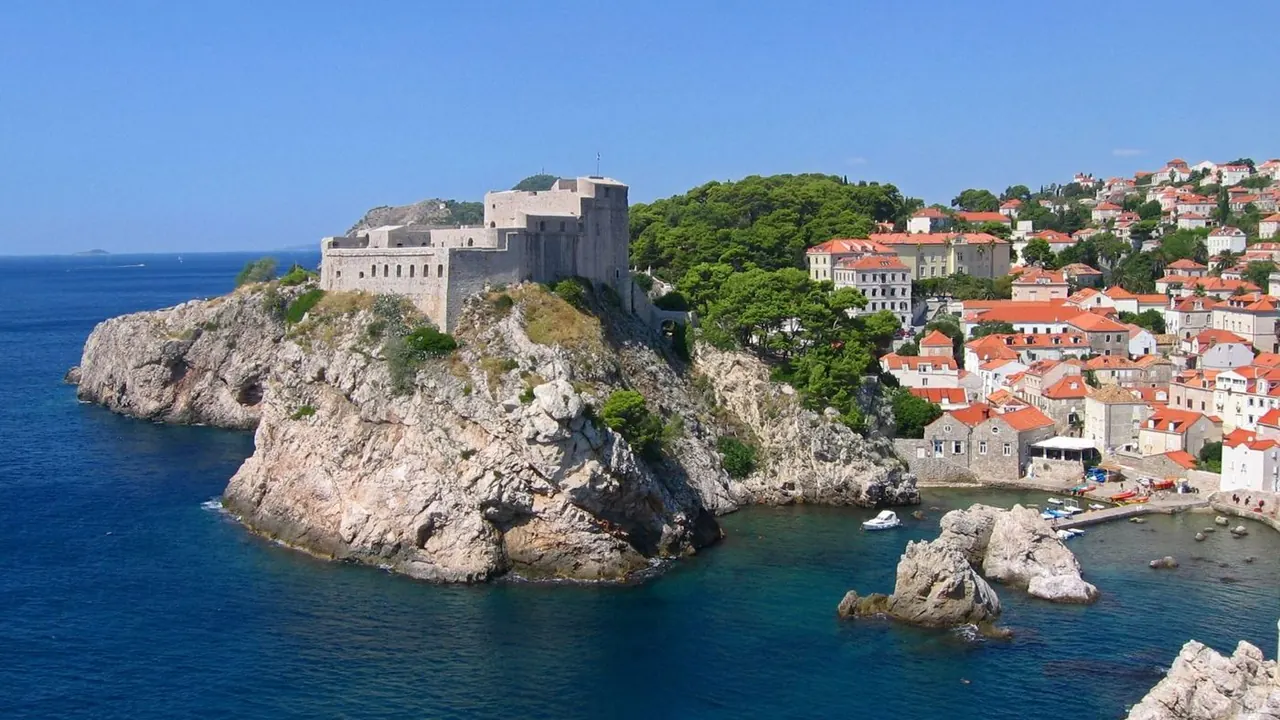
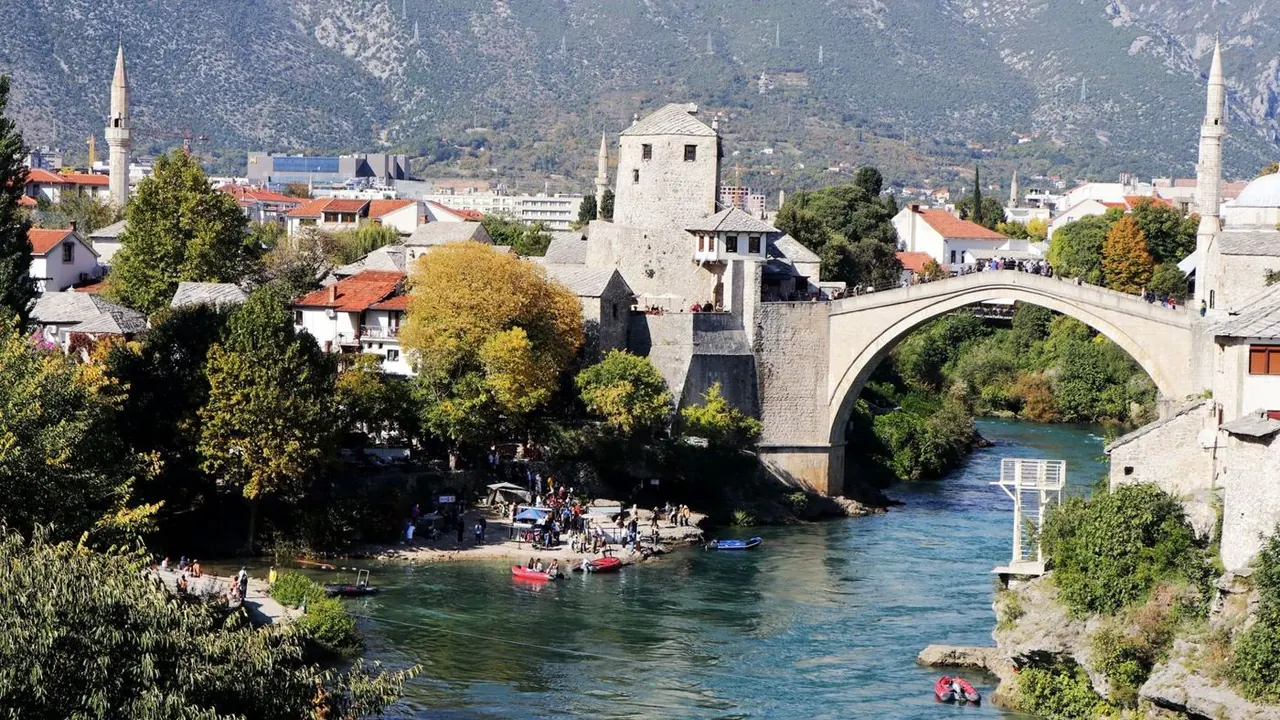
Photos: Dubrovnik by Natalia Semenova, CC BY 3.0, cropped; Mostar by Alan Wang, Pexels License.
Dubrovnik or Mostar?
Our verdict in twelve categories, each scored against the same fixed benchmark cities, and the climate month by month, so you can choose for your trip.
Choose Dubrovnik for
- beaches
- culture and sights
- families
Dubrovnik is the better choice for a summer vacation by the sea with a famous old town attached. You can swim off the rocks below the walls and take boat days to Lokrum and the Elafiti islands, and the walled city of palaces and monasteries is close by. That puts it ahead on most counts, as long as you can live with the cost and the crowds in the middle of the day.
Choose Mostar for
- prices
- shopping
Mostar suits someone who wants the Ottoman Balkans for far less money and is happy with a slower, smaller stay. The bridge, the bazaar and the Herzegovina valleys around it fill a few days well, and your money goes much further. On the other hand there is no sea, very little to do after dinner, and summer in the valley is fierce.
Scoreboard
Twelve categories on one fixed scale from 0 to 100. The shaded stretch is the gap between the two.
Your match
Pick a travel style or drag the sliders, and both match scores follow your weighting.
Wins on beaches and culture and sights with your weighting.
Wins on prices and shopping with your weighting.
What matters to you?
Category by category
What the scores mean for a trip.
Beaches & swimming
Dubrovnik is a real swimming destination. You can swim in clear sea off the rocks below the walls, at Banje beach by the Old Town and in the coves of Lapad and Babin Kuk. Better bays are a boat ride away on Lokrum, the Elafiti islands and Lopud, which has a sandy cove at Sunj. Expect pebble and concrete rather than sand, and beaches that fill early in summer.
Mostar has no beach life at all. The Neretva is cold and good only for a quick plunge from the rocks. The usual swim is at the Kravica waterfalls 40km south, and the coast at Neum is more than an hour's drive, so the sea is a day out rather than part of the stay.
Food & drink
Both kitchens have a narrow range, and in both the restaurants by the main sight cater to tourists: the Stradun in one, the bridge terraces in the other. Dubrovnik comes out a little ahead at its best, with grilled fish, black risotto, oysters eaten at the farms near Ston and Peljesac reds such as Dingac. Look for them in the konobas of Lapad, Gruz and Konavle.
Mostar's cooking is meat and pastry rather than seafood: charcoal-grilled ćevapi in somun bread, burek, stuffed peppers and slow stews. It goes with Žilavka and Blatina wines from the nearby valleys and the slow ritual of Bosnian coffee. The food is honest and filling, but the choice runs out sooner.
Culture & sights
Dubrovnik has more to see. The 2km circuit of the walls, the Stradun, the Rector's Palace, the Franciscan and Dominican monasteries and Fort Lovrijenac make up an intact walled city that takes two or three days. The crowds in summer daytime are the price.
Mostar's appeal rests on one great monument, the rebuilt Stari Most with divers leaping from its crown. Around it are the Kujundžiluk bazaar street, the Koski Mehmed Pasha Mosque and the old Ottoman houses. The war-scarred façades along the old front line give it a rawer feel than Dubrovnik's restored stone, and a day or two covers it.
Nightlife
Neither city suits a serious night out, but Dubrovnik gives a summer evening more to do. There are sunset drinks at the bars cut into the rocks outside the walls, small wine and cocktail bars in the lanes off the Stradun and a club inside the Revelin fortress. Most of it closes in winter.
In Mostar the evening is dinner and drinks facing the lit bridge, and the old town empties once the coach groups leave. Only a few cocktail bars and student clubs stay open late, mostly at weekends.
Nature & outdoors
Both cities sit among bare limestone mountains, but Dubrovnik's outdoors centre on the sea. You can kayak around the walls to Lokrum, take the cable car up Mount Srd for views over the islands, walk or cycle on the car-free Elafiti islands and visit the saltwater lakes and pine forest of Mljet. That variety gives it a slight edge.
Mostar's outdoors are river and mountain: rafting in the Neretva canyons, the Buna spring at Blagaj, the wild Prenj range, the Blidinje plateau and the birdlife of the Hutovo Blato wetland. The valley heat is harsher than on the coast, so spring and autumn matter even more there.
Day trips
Dubrovnik has the wider choice, helped by two borders close by. The Bay of Kotor in Montenegro, with Kotor and Perast, is the classic day out, Trebinje in Bosnia is under an hour away, and Mostar makes a long but realistic day. Closer in are the medieval walls of Ston and boat hops to Cavtat and the Elafiti islands, though border queues in summer can add hours.
The reverse trip is harder. From Mostar, Dubrovnik and the Dalmatian coast are better kept for an overnight stay. Mostar's own trips are smaller and close to home: the dervish tekke at Blagaj, the hillside village of Počitelj, the medieval tombstones at Stolac and Tito's bunker at Konjic. Sarajevo makes a long day by train through the Neretva gorge, and most of the rest needs a car or a tour.
Good for families
Dubrovnik works better with children, mostly because of the water. There are calm coves in Lapad, boat rides to Lokrum, the cable car and the small aquarium in the St John fortress, and Lapad and Babin Kuk make an easy base near the beaches. The stairs and summer crowds of the Old Town are the catch.
Mostar is fine for a day or two. Children enjoy the bridge divers, a minaret climb and swimming under the Kravica falls, and restaurants welcome them warmly. Over a longer stay, though, the slippery stone lanes and the valley heat are hard on small children.
Getting around
Dubrovnik is easier without a car. The car-free Old Town is small, city buses link Lapad, Babin Kuk and Gruz to the Pile gate, and ferries and taxi boats run to Lokrum, the Elafiti islands and Cavtat. The drawbacks are the steep stairways and summer traffic at Pile.
Mostar's sights fit into one stroll along the river. Beyond that, the buses serve residents rather than visitors, so reaching Blagaj, Počitelj or Kravica means a car, taxi or tour. Mostar does have the one thing Dubrovnik lacks, a railway, with trains to Sarajevo.
Shopping & style
Shopping is a small part of a visit to either city, but Mostar has the more interesting street for it. In the Kujundžiluk a few coppersmiths still hammer coffee sets by hand in their doorways, alongside kilims and lamps, though much of the stock is imported.
Dubrovnik's Old Town is mostly souvenir shops. The better buys are Konavle embroidery, filigree jewellery and the figs and candied peel from the morning market, and beyond those there is little more than a shopping centre in Gruz.
Affordability
This is where the two differ most. Dubrovnik is the most expensive place in Croatia. In summer, rooms near the Old Town cost as much as in a Western European capital, and the walls, cable car and boat trips add up. Staying in Lapad or Cavtat and coming outside summer helps only so much.
Mostar is among the cheaper places to travel in Europe. Rooms, meals, wine and coffee all cost little. Only the terraces with bridge views and old-town rooms in midsummer charge more, and prices drop again a few streets away.
Live music & performing arts
Dubrovnik has the one big event: the Summer Festival, held every July and August since 1950. It stages theatre, concerts and dance in Fort Lovrijenac, the Rector's Palace atrium and the city squares. The rest of the year there are symphony concerts and occasional chamber music in churches.
Mostar offers less. It has a national theatre and a youth theatre, both performing mostly in local languages, and some open-air concerts in summer. Otherwise, live music means the odd band in a café bar.
Wellness & relaxation
Neither city has a bathing tradition, and Mostar's hammam is a historic building rather than a working bath. Dubrovnik offers more, with spas in the larger hotels around Lapad and Babin Kuk. In spring and autumn a stay on the Elafiti islands or in Cavtat is properly restful.
In Mostar the rest comes from the slow pace: long coffees in the shade, and the quiet by the river after the coach groups have gone.
When should you go?
Pick your month. The climate figures are measured averages, not a forecast.
Dubrovnik in July
Mostar in July
Daytime high, °C
Rainfall in the month, mm
Where the figures come from
Dubrovnik has no rain gauge within 25 km of the centre, so its rainfall comes from a gridded climate dataset read at the city rather than from a gauge further away.
Dubrovnik's sunshine is measured 83 km from the centre, at Mostar.
Temperature and rainfall are climate normals, averaged over the years shown. Dubrovnik: 1999-2020 (sunshine 1991-2020, rainfall 1991-2020) normals, Dubrovnik / Cilipi (15.3 km from centre). Mostar: 1991-2020 normals, Mostar (0.9 km from centre).
Dubrovnik is at its best in summer. From June to September the sea is warm enough for long swims, around 23°C at the start of the season and still 24°C at the end. Daytime highs near 29°C in July and August are fine for walking the walls early or late. May and October are mild and good for sightseeing, though the water is cooler then.
Mostar is inland and much hotter, reaching 33°C in July and August, which makes its stone lanes hard going in the middle of the day. Its comfortable months for walking are May, June and late September into October. The two cities share the same pattern of rain and sunshine: long, dry, sunny summers, a wet turn in September and the heaviest rain in November and December, near 198mm a month. Winter days are a little colder in Mostar.
Which traveller are you?
For a beach and sun trip, Dubrovnik is the clear pick. It has clear Adriatic water, rock platforms below the walls, the coves of Lapad and boat hops to Lokrum and the sandy bay on Lopud. Mostar is inland, and its nearest good swim is a waterfall pool.
On a trip on a tight budget, Mostar goes much further. Guesthouses, ćevapi, local wine and coffee all cost little, and prices fall a few streets back from the bridge. Dubrovnik stays expensive even in Lapad or Gruz, and entry to the walls and boat trips soon add up.
For a culture and arts trip, Dubrovnik has more to fill the days. Its intact walled town of palaces, monasteries and forts rewards two or three days of exploring. Mostar's bridge, bazaar and Ottoman houses are absorbing but can be seen in a day or two.
Before you go
| Measure | Dubrovnik | Mostar |
|---|---|---|
| Official language | Croatian | Croatian, Serbian, Bosnian |
| Currency | Euro (EUR) | Convertible Mark (BAM) |
| Sockets | CF230 V, 50 Hz | CF230 V, 50 Hz |
| Driving side | Right | Right |
| Time zone | UTC+1, UTC+2 in summer | UTC+1, UTC+2 in summer |
| Emergency number | 112 | 112 |
| Elevation | 10 m | 60 m |
| Main airport | Dubrovnik Ruđer Bošković Airport (DBV)16 km from centre76 non-stop destinations | Sarajevo International Airport (SJJ)68 km from centre38 non-stop destinations |
| Public holidays this year | 14 days | 8 days |
By the numbers
| Measure | Dubrovnik | Mostar |
|---|---|---|
| City population | 41,562 | 105,448 |
| People per km² | - | 90 |
| Museums within 10 km | 7 | 3 |
| UNESCO World Heritage sites within 50 km | 3 | 1 |
| Swim season, months above 21 °C | 5 months | - |
Where else could you go?
Every comparison below shares a destination with this one, so you can follow Dubrovnik or Mostar somewhere new.