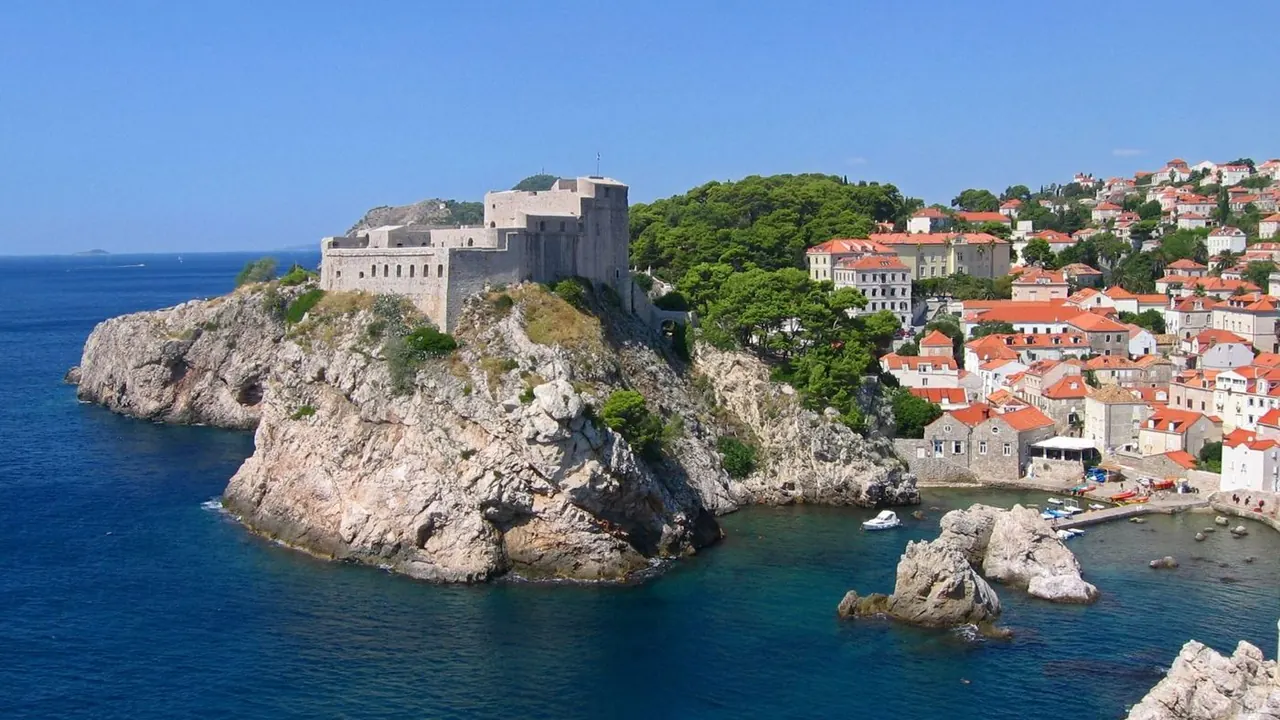
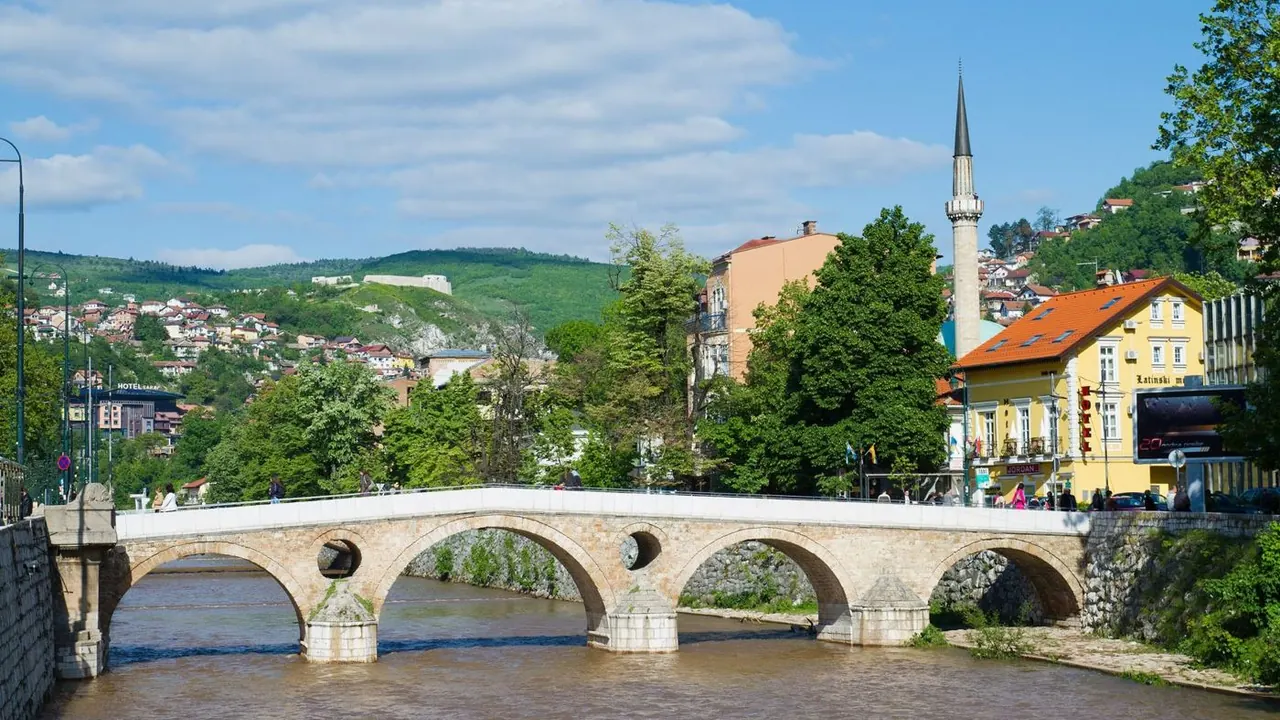
Photos: Dubrovnik by Natalia Semenova, CC BY 3.0, cropped; Sarajevo by Tumi-1983, CC0.
Dubrovnik or Sarajevo?
Our verdict in twelve categories, each scored against the same fixed benchmark cities, and the climate month by month, so you can choose for your trip.
Choose Dubrovnik for
- beaches
- families
- culture and sights
Dubrovnik is the choice for a summer trip built around the sea. You can swim off the rocks and in island coves, walk the walls of an Old Town that has survived almost intact, and spend days on boats to Lokrum and the Elafiti islands. It suits travellers who can cope with high prices and who care more about the setting than about variety in food or late nights.
Choose Sarajevo for
- prices
- shopping
- live music and the arts
Sarajevo suits the curious traveller with a smaller budget. It costs far less and its food is more distinctive. Real mountains are close by, from Trebević to the Olympic ski slopes, and the streets mix Ottoman and Austro-Hungarian history, with the siege always present. There is no beach, so it is the better pick for spring, autumn or a winter trip with some skiing.
Scoreboard
Twelve categories on one fixed scale from 0 to 100. The shaded stretch is the gap between the two.
Your match
Pick a travel style or drag the sliders, and both match scores follow your weighting.
Too close to call, 2 points apart
Wins on beaches and families with your weighting.
Wins on prices and shopping with your weighting.
What matters to you?
Category by category
What the scores mean for a trip.
Beaches & swimming
This is the widest gap between the two. Dubrovnik swims all summer, off the rocks below the seaward walls, at Banje and in the coves of Lapad and Babin Kuk. The swimming is better still by boat at Lokrum, the Elafiti islands or Cavtat, though the shore is pebble and concrete rather than sand.
Sarajevo has no sea at all. Summer swimming means cold mountain rivers, Jablanica lake or a pool. Anyone who wants the Adriatic should add a few days on the coast afterwards, and that coast could well be Dubrovnik's.
Food & drink
Sarajevo eats better, and with less effort. Ćevapi come off grills all over Baščaršija, pita bakeries sell burek by weight, traditional eateries serve slow dishes like begova čorba, and Bosnian coffee is a ritual. The table is distinctive, even if the range is narrow.
Dubrovnik's strengths come from the sea and the vineyards: Ston oysters, black risotto and Plavac Mali from Peljesac. The Old Town's tourist menus let it down, though, and eating well means finding konobas in Lapad, Gruz or Konavle.
Culture & sights
Dubrovnik has the more complete set piece: a walled city still almost whole. You can walk the full circuit of the walls, then the Stradun, the Rector's Palace, the old Franciscan pharmacy and Fort Lovrijenac on its rock. It works as one unified sight, best seen early before the summer crowds.
Sarajevo's sights are smaller but more varied in what they mean. Mosques, both cathedrals and the Old Synagogue stand within minutes of each other, and the Latin Bridge marks 1914. The siege is told through the Tunnel of Hope and the War Childhood Museum. The 1990s left a mark on both cities, but in Sarajevo they shape the whole visit.
Nightlife
Neither is a clubbing city, but Sarajevo gives you a fuller evening for more of the year. Café-bars fill from the afternoon, a student crowd keeps cellar bars and small clubs going at weekends, and cheap drinks make a long night easy.
Dubrovnik's evenings are about the setting: a sunset drink at the rock bars below the walls, wine bars in the lanes and a club inside the Revelin fortress. It is a summer scene, and from November to March much of it shuts.
Nature & outdoors
Both have mountains, but Sarajevo is ringed by them. The cable car to Trebević starts at the edge of the Old Town. The Olympic peaks of Jahorina and Bjelašnica, under an hour away, give winter skiing and summer ridge walks, and the shepherds' village of Lukomir sits above the Rakitnica canyon.
In Dubrovnik the outdoors is about mountains meeting the sea: kayaking round the walls, the view over the islands from Mount Srd, and the lakes and pine forest of Mljet. It is the better place to be on the water, but its bare hillsides are hard going in summer.
Day trips
Dubrovnik's outings cross borders and water. The Bay of Kotor in Montenegro, with the walled town of Kotor and the village of Perast, is the classic day, and Trebinje in Bosnia is under an hour away. Ferries also run to the car-free Elafiti islands and round to Cavtat. Mostar is a long day from here, and summer queues at the border can add hours.
Sarajevo's trips stay inside the country and follow river gorges. Mostar is about two hours away on the scenic train along the Neretva, with Konjic and Tito's bunker on the same line. Travnik lies to the north-west and the bridge at Višegrad to the east. The roads are slow and winding, so a car or a tour helps.
Good for families
Dubrovnik is the easier family base, mainly because of the water. Children have calm coves in Lapad, Lokrum's peacocks, the small aquarium and the cable car. The catch is the stairs and the summer crowds, so families do best staying near the beaches.
Sarajevo is warmly welcoming, and its flat Old Town is easy with a pushchair. The Trebević cable car, the streams of Vrelo Bosne and the small zoo make good outings. But most sights deal with history and war, and smoke from the grills and winter smog are hard on young children.
Getting around
Neither city needs a car for the sights, but they ask different things of your legs. Dubrovnik is a place of climbs and crossings. You will probably sleep outside the walls and ride in by bus, and the best swimming is reached by boat rather than on foot. The Stradun itself is level, but almost every lane off it turns into a staircase, so a day here involves far more climbing than the short distances on the map suggest.
Sarajevo is the easier city to wander. Its centre lies flat along the valley floor, and the tram runs straight down it from the bazaar out to Ilidža, so you rarely have to think about routes. The catch is that much lies off the line: the Tunnel of Hope and the ski mountains mean a taxi or a tour, in the same way that Dubrovnik's trips into Konavle and Montenegro are easier with a car.
Shopping & style
Sarajevo has more to buy, and more to watch being made. Coppersmiths hammer coffee sets on Kazandžiluk, the Bezistan and nearby lanes sell carpets and kilims, and ordinary malls cover practical needs. Dubrovnik offers little beyond souvenirs and a few local crafts, such as Konavle embroidery, coral jewellery and candied orange peel from the morning market.
Affordability
The difference is stark. Sarajevo is one of Europe's cheapest capitals. Meals, trams, taxis, museum entry and central guesthouses all cost little.
Dubrovnik is Croatia's most expensive city. Summer rooms near the Old Town cost as much as in a Western European capital, and the walls, cable car and boat trips add up. Staying in Lapad or Cavtat and coming outside summer helps, but it is still a costly trip.
Live music & performing arts
Sarajevo has a stage life through the season. The National Theatre puts on drama, opera and ballet, the Philharmonic plays regularly, MESS brings theatre in autumn and the jazz festival comes in November. You may also hear sevdah in traditional restaurants.
Dubrovnik's stage is essentially its Summer Festival in July and August, with theatre and concerts at Fort Lovrijenac and the Rector's Palace. Outside those weeks there is little to plan an evening around.
Wellness & relaxation
Sarajevo has a real place to go for it: the thermal springs at Ilidža, used since Roman times and reached by tram. The shaded avenue of Vrelo Bosne is nearby, and the long, slow coffee is a daily habit.
Dubrovnik has no bathing tradition and only hotel spas, and its Old Town in summer is crowded rather than calm. Rest there comes from timing and place: the quieter spring and autumn, or a stay on the Elafiti islands or in Cavtat.
When should you go?
Pick your month. The climate figures are measured averages, not a forecast.
Dubrovnik in July
Sarajevo in July
Daytime high, °C
Rainfall in the month, mm
Where the figures come from
Dubrovnik has no rain gauge within 25 km of the centre, so its rainfall comes from a gridded climate dataset read at the city rather than from a gauge further away.
Dubrovnik's sunshine is measured 83 km from the centre, at Mostar.
Temperature and rainfall are climate normals, averaged over the years shown. Dubrovnik: 1999-2020 (sunshine 1991-2020, rainfall 1991-2020) normals, Dubrovnik / Cilipi (15.3 km from centre). Sarajevo: 1991-2020 normals, Sarajevo-Bejelave (2 km from centre).
Dubrovnik is at its best from June to September, when the Adriatic warms to about 26°C at its peak and long, sunny days make swimming part of every day. July and August are hot for climbing stairways and walking the walls at midday, so May and early autumn are more comfortable for sightseeing. Heavy rain starts in September, and November and December are the wettest months, with 160mm to 180mm each, in a mild but grey winter.
Sarajevo's climate is continental. Winters are cold, with daytime highs around 4°C in December and January, which suits the ski slopes better than walking around the city. Rain is spread fairly evenly through the year with no real dry season. Summer is warm rather than scorching, at about 28°C in July and August. Late spring and September are the most comfortable times for the bazaar and the mountain trails.
Which traveller are you?
On a beach and sun trip, Dubrovnik is the obvious pick. The water is clear, you can swim straight off the rocks below the walls, and boats run to Lokrum and to Lopud's sandy cove, so the sea fills every day. Sarajevo is inland, three hours from any coast.
On a trip on a tight budget, your money goes much further in Sarajevo. Ćevapi, pastries and bazaar coffee cost little, trams and taxis are cheap, and central guesthouses sit far below Western European prices. Dubrovnik stays costly even if you sleep in Lapad.
On a family trip with children, Dubrovnik is the easier choice despite its stairways. The calm coves of Lapad, the boat to Lokrum, the aquarium and the cable car fill the days. Most of Sarajevo's sights deal with war, and winter smog is hard on small lungs.
Before you go
| Measure | Dubrovnik | Sarajevo |
|---|---|---|
| Official language | Croatian | Croatian, Serbian, Bosnian |
| Currency | Euro (EUR) | Convertible Mark (BAM) |
| Sockets | CF230 V, 50 Hz | CF230 V, 50 Hz |
| Driving side | Right | Right |
| Time zone | UTC+1, UTC+2 in summer | UTC+1, UTC+2 in summer |
| Emergency number | 112 | 112 |
| Elevation | 10 m | 518 m |
| Main airport | Dubrovnik Ruđer Bošković Airport (DBV)16 km from centre76 non-stop destinations | Sarajevo International Airport (SJJ)7 km from centre38 non-stop destinations |
| Public holidays this year | 14 days | 8 days |
By the numbers
| Measure | Dubrovnik | Sarajevo |
|---|---|---|
| City population | 41,562 | 275,524 |
| People per km² | - | 1,947 |
| Museums within 10 km | 7 | 25 |
| UNESCO World Heritage sites within 50 km | 3 | 1 |
| Swim season, months above 21 °C | 5 months | - |
Where else could you go?
Every comparison below shares a destination with this one, so you can follow Dubrovnik or Sarajevo somewhere new.