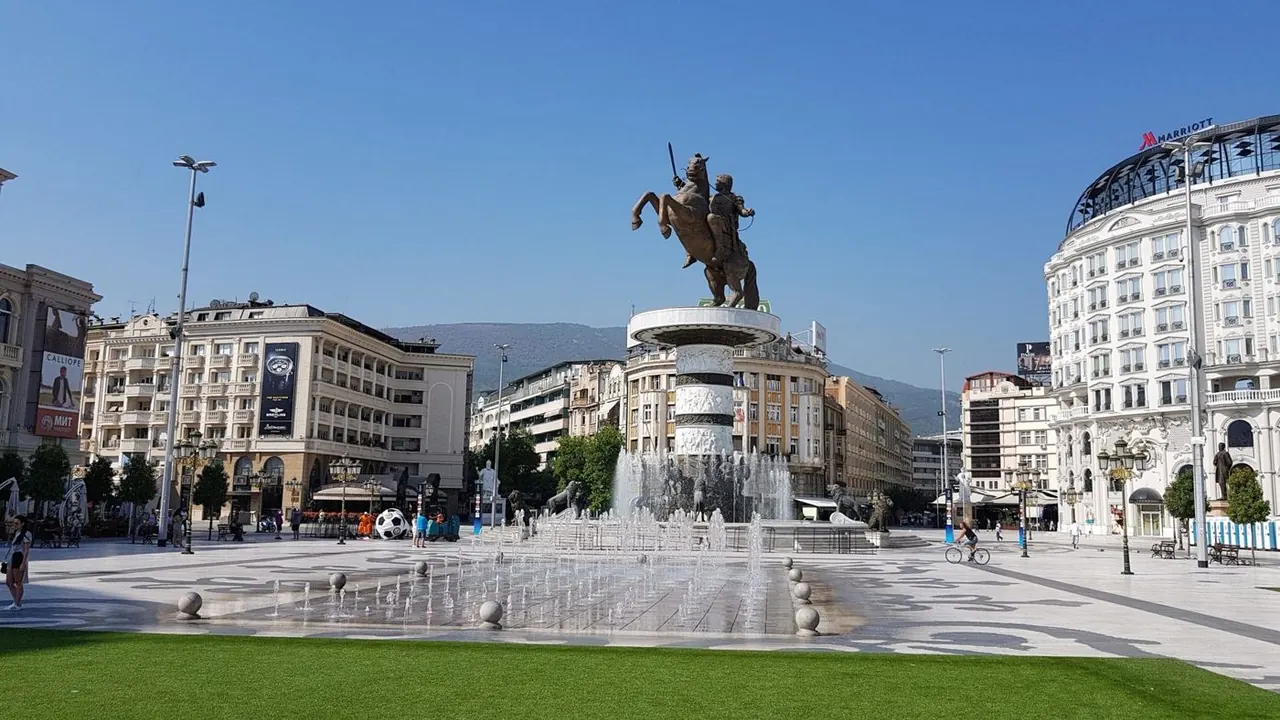
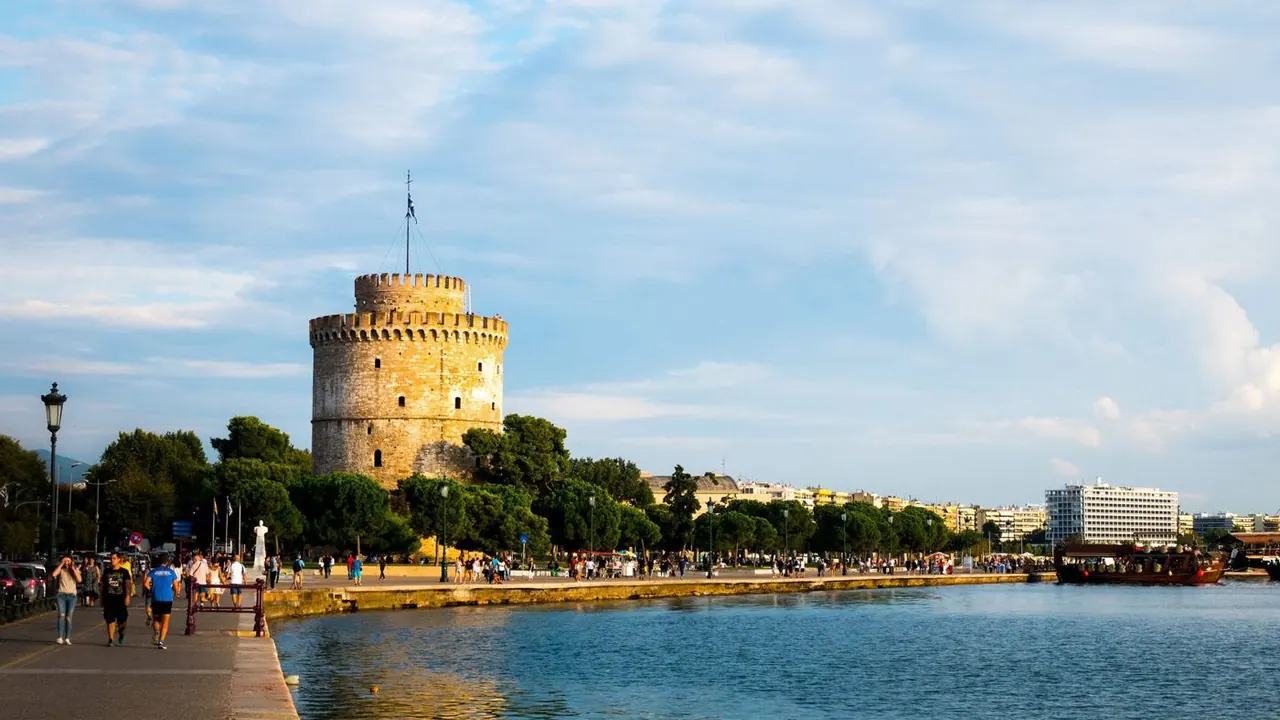
Photos: Skopje by George M. Groutas, CC BY 2.0, cropped; Thessaloniki by Destinygreece, CC BY-SA 4.0, cropped.
Skopje or Thessaloniki?
Our verdict in twelve categories, each scored against the same fixed benchmark cities, and the climate month by month, so you can choose for your trip.
Choose Skopje for
- prices
- nature and the outdoors
Skopje suits the traveller who wants a short, cheap and slightly unusual city break. In two or three days you get one of the Balkans' great Ottoman bazaars, a riverside centre crowded with bronze statues and grand facades from a building programme that came decades after the earthquake, and real mountain country starting at the edge of the suburbs. It works best as one stop on a wider Macedonian trip, with a few days at Ohrid added for the lake.
Choose Thessaloniki for
- beaches
- nightlife
- food and drink
For a longer stay built around eating well and going out late, Thessaloniki is the better choice. Its Byzantine churches and museums go deeper, the ancient Macedonian royal sites are close enough for day trips, and the beaches of Halkidiki can be reached by car. It costs noticeably more than Skopje, especially once you hire a car, but it is still good value for Southern Europe and gives you more to fill each day.
Scoreboard
Twelve categories on one fixed scale from 0 to 100. The shaded stretch is the gap between the two.
Your match
Pick a travel style or drag the sliders, and both match scores follow your weighting.
Wins on prices and nature and the outdoors with your weighting.
Wins on beaches and nightlife with your weighting.
What matters to you?
Category by category
What the scores mean for a trip.
Beaches & swimming
Here the two cities are far apart. Skopje has no beach at all. Summer swimming means pools, the Matka reservoir is too cold for bathing, and Lake Ohrid is about three hours away, so it belongs on the itinerary as a stay of its own.
Thessaloniki's own waterfront is not for swimming either, and the suburban beaches at Perea and Nea Michaniona are ordinary. Kassandra in Halkidiki is about an hour's drive away, though, with clear water and some of the best coves in Greece. If swimming matters, this is the city to pick, ideally with a hire car or a few nights on the coast.
Food & drink
Both cities eat in the hearty Balkan and Ottoman way, with grilled meat, peppers and a glass of something strong before the meal. Skopje's version is tavche gravche in clay dishes, kebapi in the Old Bazaar and long tavern tables in Debar Maalo, and its Tikves wines are a real find. But you will have tried most of it within a few days.
Thessaloniki has more variety and more to taste. Sephardic and Anatolian refugee influences add range to the meze tables, mornings bring bougatsa and trigona, and the Kapani and Modiano markets let you graze among the stalls. Neither city is about fine dining, but in Thessaloniki everyday eating is a reason to come.
Culture & sights
Skopje's sights divide at the Stone Bridge. North of it are the Ottoman lanes, caravanserais and mosques of the Old Bazaar, with Kale Fortress above and the carved walnut iconostasis of the Holy Saviour close by. South of it are the statues and neoclassical facades of the Skopje 2014 programme, which visitors either love or laugh at. The 1963 earthquake, remembered in the ruined railway station, explains much of the city, and two or three days covers it all.
Thessaloniki has more depth. Its UNESCO-listed Byzantine churches, from the Rotunda's mosaics to Agios Dimitrios, sit alongside Roman remains and two museums of real weight, one holding the gold of ancient Macedonia and one devoted to Byzantine culture. The catch is that these sights stand apart from one another in a modern centre rebuilt after a great fire early in the twentieth century, while Skopje's bazaar survives as a whole quarter.
Nightlife
Skopje's evenings happen on café-bar terraces in Debar Maalo, where coffee turns to rakija as the night goes on. In summer the bazaar courtyards stay busy late. It is friendly and local, but it mostly happens at weekends.
Thessaloniki is a student city that goes out from eleven until well past three, and it does so on weeknights too. You can move from meze bars in the Ladadika warehouses to the louder DJ bars around Valaoritou and the tables of the Bit Bazaar, and in summer there are open-air clubs on the edge of town. If nights out are a big part of the trip, it is the obvious pick.
Nature & outdoors
Both cities have good outdoors close by, but of different kinds. Skopje's is mountain and canyon, and very close: Vodno rises from the southern suburbs with a cable car to the summit cross, and Matka's limestone gorge, with kayaking and cliff-top monasteries, is half an hour out. Mavrovo and the Sar mountains add high ridges and beech forest further away.
Thessaloniki mixes mountains and sea. In town there are the Seich Sou pines and a long, flat waterfront for evening walks, and further out you have serious hiking on Olympus from Litochoro and sailing or kayaking around Halkidiki. Both have skiing within reach in winter. Skopje's wild country starts nearer the centre, while Thessaloniki's is more varied but needs a car.
Day trips
Thessaloniki has the stronger list of day trips. Within an hour or so you reach the royal tombs at Vergina, Alexander's birthplace at Pella and the sanctuary at Dion under Olympus. Waterfall-filled Edessa, the Naoussa vineyards and boat trips along the Mount Athos coast fill longer days.
From Skopje the best-known trip, Ohrid, is too far for a day. Still, the Roman mosaics at Stobi combine well with a Tikves winery visit, Kratovo sits inside its volcanic crater, and Ottoman Prizren is about two hours away across the Kosovo border. It is a decent spread, but none of it matches the ancient Macedonian sites around Thessaloniki.
Good for families
Neither city is built around children, but Thessaloniki gives families a bit more. The seafront promenade has playgrounds and a park strip for easy afternoons, and the Noesis science centre and planetarium is a proper outing. Halkidiki's beaches are within reach for swimming days.
In Skopje the best outings are the Vodno cable car and a boat into Matka Canyon, with a small zoo and funfair by City Park as extras. Uneven pavements and fierce summer heat wear small children out quickly in both cities, which is why families in each tend to pair the city with a lake or the coast.
Getting around
Each city has a compact, flat core for walking. In Skopje it runs along the Vardar from the bazaar to Macedonia Square and Debar Maalo. In Thessaloniki it is the strip behind the waterfront from the White Tower to the markets and Ladadika.
Beyond the centre, Thessaloniki is easier. A metro line runs under the centre and the buses cover the rest, slow as they are in traffic. Skopje has no metro or tram, and its double-decker buses are hard to make sense of, so visitors use taxis for Vodno and Matka. In both cities a hire car is the practical way to see the countryside.
Shopping & style
Thessaloniki is the more rounded place to shop. Tsimiski and the streets around it make a proper high street, and there are small independent shops near Valaoritou. The Kapani and Modiano markets are ideal for taking home olives, loukoumi and tsipouro.
Skopje has less range but a craft tradition Thessaloniki lacks. Workshops in the Old Bazaar still make silver filigree and copperware, and the Bit Pazar market is good for spices and peppers for ajvar. Outside the bazaar, though, you are down to a few malls of chain stores.
Affordability
Skopje is the cheaper of the two by a clear margin. Tavern dinners with wine, morning burek and coffee, taxis and central rooms all cost very little, and most sights are free or close to it.
Thessaloniki is good value by Southern European standards, because its tavernas and bars are priced for students and locals rather than tourists. Still, a week there costs noticeably more, especially once you add car hire for Vergina or Halkidiki.
Live music & performing arts
Both cities have the institutions of a modest capital, and plays in both are almost all in the local language. Thessaloniki has more to offer a visitor: the waterfront Concert Hall with its State Orchestra, summer concerts in the hillside theatre at Dasos, and late rebetiko and laika sessions that fill tavernas.
Skopje's high points depend on when you go. The long-running autumn jazz festival has a solid name in the region, and the summer festival uses the bazaar and fortress as stages. On other nights, starogradska songs in Debar Maalo's taverns are the most enjoyable live music.
Wellness & relaxation
Neither city is a spa destination, and in both the Ottoman hamams survive as monuments or galleries rather than working baths. Each has a simple thermal spring about half an hour out: Lagadas near Thessaloniki, and Katlanovska Banja, a sanatorium-style spa, near Skopje.
The difference lies in how you slow down. Thessaloniki has iced coffee by the sea and the long evening walk along the gulf, which gives it a slight edge for a restful stay. Skopje's version is hours on shaded terraces in Debar Maalo, pleasant but without the open water.
When should you go?
Pick your month. The climate figures are measured averages, not a forecast.
Skopje in July
Thessaloniki in July
Daytime high, °C
Rainfall in the month, mm
Where the figures come from
Skopje has no rain gauge within 25 km of the centre, so its rainfall comes from a gridded climate dataset read at the city rather than from a gauge further away.
Skopje's sunshine is measured 68 km from the centre, at Stip.
Temperature and rainfall are climate normals, averaged over the years shown. Skopje: 1991-2020 (sunshine 1961-1990) normals, Skopje-Petrovec (18.3 km from centre). Thessaloniki: 1991-2020 normals, Thessaloniki Airport (14 km from centre).
Skopje sits in an inland valley, so its seasons are more extreme. January highs reach only about 5°C, and July and August climb to 32°C, which makes midday sightseeing hard work. Late spring and September to October are the times to walk the bazaar and hike Vodno or Matka. December is the wettest month at 52mm, and May and October are nearly as wet, though none is truly rainy.
Thessaloniki has the same summer heat but much gentler winters, with highs around 10°C, so a winter city break there is more comfortable. Summer is also its driest and sunniest season, and the sea is at its best from late June to September, reaching 27°C in August. For a trip that mixes city and Halkidiki beaches, that is the window. For walking alone, spring and autumn suit both cities.
Which traveller are you?
For a beach and sun trip, Thessaloniki is the clear choice. Skopje is landlocked and its nearest swimming is hours away at Ohrid, while Halkidiki's clear, warm coves start about an hour's drive from Thessaloniki.
On a food and nightlife trip, Thessaloniki wins too. You get long meze evenings at ouzeri, bougatsa for breakfast and working food markets, then bars in Ladadika and Valaoritou that stay full past three, even on weeknights. Skopje goes quiet midweek.
On a trip with a tight budget, Skopje goes further. Tavern meals with local wine, taxis and central rooms all cost less than in Thessaloniki, most sights are free or nearly so, and even the smarter riverside places are modest by Western standards.
Before you go
| Measure | Skopje | Thessaloniki |
|---|---|---|
| Official language | Albanian, Macedonian | Greek |
| Currency | Denar (MKD) | Euro (EUR) |
| Sockets | CF230 V, 50 Hz | CF230 V, 50 Hz |
| Driving side | Right | Right |
| Time zone | UTC+1, UTC+2 in summer | UTC+2, UTC+3 in summer |
| Emergency number | 112 | 112 |
| Elevation | 251 m | 6 m |
| Main airport | Skopje International Airport (SKP)16 km from centre52 non-stop destinations | Thessaloniki Macedonia International Airport (SKG)14 km from centre90 non-stop destinations |
| Public holidays this year | 12 days | 15 days |
By the numbers
| Measure | Skopje | Thessaloniki |
|---|---|---|
| City population | 422,540 | 309,617 |
| People per km² | 739 | 16,042 |
| Museums within 10 km | 17 | 32 |
| UNESCO World Heritage sites within 50 km | 0 | 1 |
| Swim season, months above 21 °C | - | 5 months |
Where else could you go?
Every comparison below shares a destination with this one, so you can follow Skopje or Thessaloniki somewhere new.