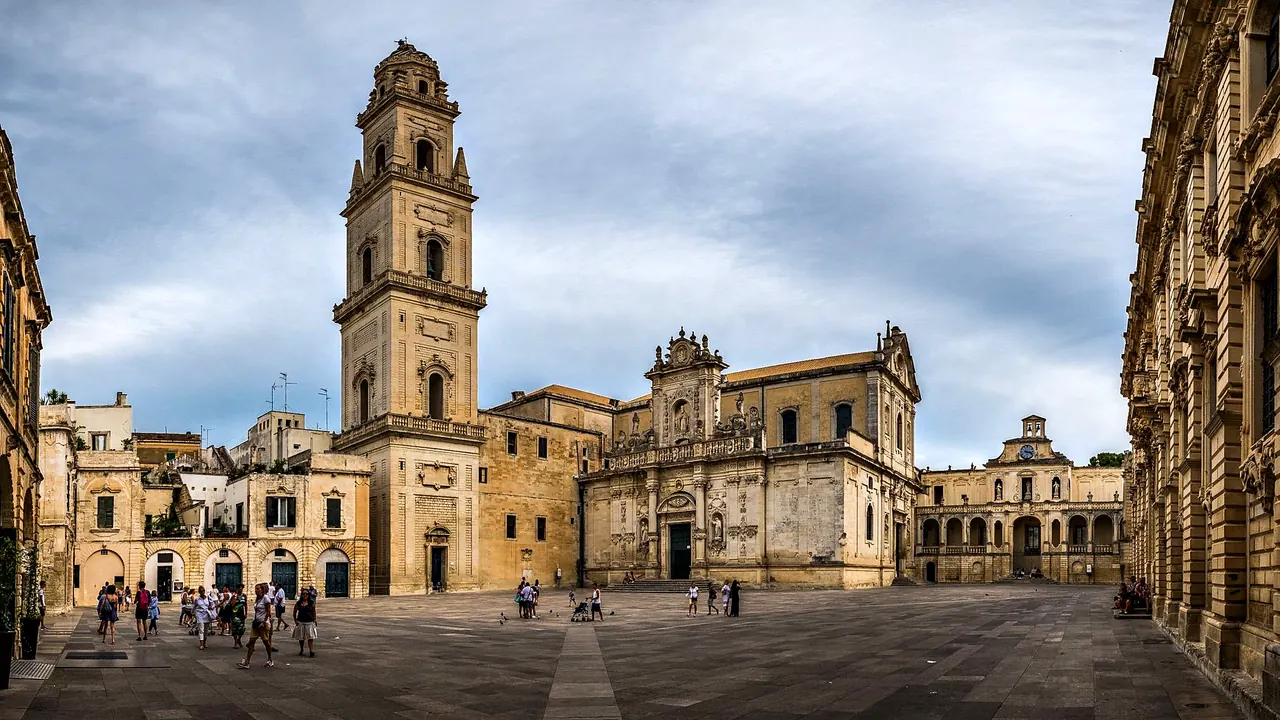
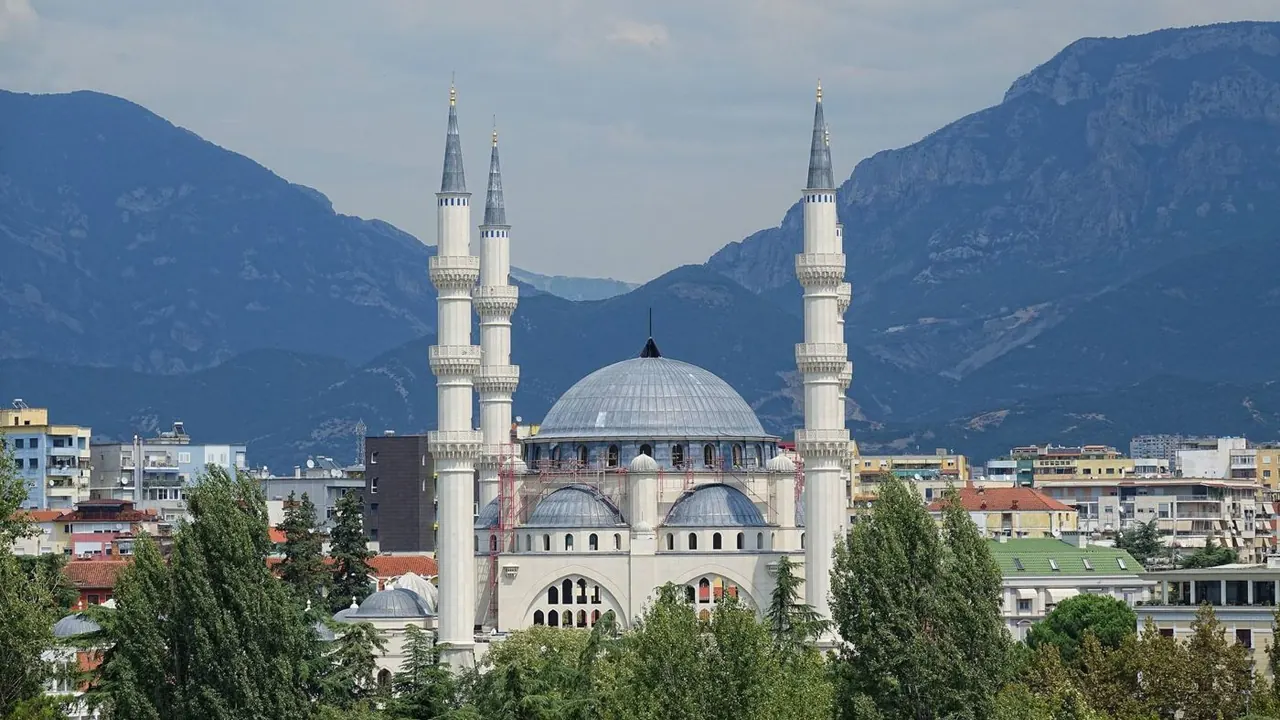
Photos: Lecce by Giuseppe Milo, CC BY 3.0, cropped; Tirana by Bjørn Christian Tørrissen, CC BY-SA 4.0, cropped.
Lecce or Tirana?
Our verdict in twelve categories, each scored against the same fixed benchmark cities, and the climate month by month, so you can choose for your trip.
Choose Lecce for
- culture and sights
- beaches
- wellness
Lecce suits a slower southern vacation built around the sea and good stone. The Baroque old town is a pleasure to walk at any hour, and the Salento coast within easy reach gives you sandy Ionian bays and Adriatic coves. It also has the gentler rhythm and the easier streets for children. Hire a car and it becomes a base for a fortnight of beaches, small towns and long dinners.
Choose Tirana for
- nightlife
- prices
- getting around
Tirana is the better pick for a cheap, lively city break with an edge of recent history. Its strengths are the communist-era sights, a late and stylish bar scene in Blloku, and real mountains starting at the edge of town. It costs noticeably less than Lecce. The seaside is only a side trip, though, and the city's own sights run out quickly, so treat it as a base for Berat, Kruja and Dajti rather than a place to linger.
Scoreboard
Twelve categories on one fixed scale from 0 to 100. The shaded stretch is the gap between the two.
Your match
Pick a travel style or drag the sliders, and both match scores follow your weighting.
Wins on culture and sights and beaches with your weighting.
Wins on nightlife and prices with your weighting.
What matters to you?
Category by category
What the scores mean for a trip.
Beaches & swimming
Lecce wins clearly. Both cities sit inland, but Lecce has two coasts within easy reach. There are fine sandy shallows at Porto Cesareo and Punta Prosciutto on the Ionian side, and pale coves and sea stacks at Torre dell'Orso on the Adriatic, so in summer the beach can shape the whole stay.
From Tirana the nearest swim is at Durrës, a long sandy strip lined with hotels and beach clubs where the water near the port is not always clear. Albania's famous southern coves around Ksamil are a separate trip of many hours.
Food & drink
Both kitchens are rooted in farm cooking, and Lecce's is the more rewarding to eat through. It has its own daily rhythm: a warm pasticciotto and iced almond coffee at breakfast, a rustico mid-morning, then ciceri e tria, orecchiette and dark Negroamaro at dinner, all served cheaply in old-town osterie.
Tirana's best meals are slow-baked tavë kosi, fërgesë and grilled meat, with the standout settings in the farm restaurants on the hills outside town. In both cities you eat the local food or not much else, as neither offers broad international range or many ambitious tables.
Culture & sights
Lecce is the far richer place for sightseeing. Its old town is a near-complete Baroque townscape carved in soft local limestone, from Santa Croce's crowded facade to the enclosed Piazza del Duomo at dusk, with a Roman amphitheatre half-buried below the main square. The pleasure lies in the streets themselves.
Tirana tells the twentieth century instead. Bunk'Art, the House of Leaves and the Pyramid make for some of the most striking visits in the Balkans, with the Et'hem Bey Mosque and the National History Museum on Skanderbeg Square. The older layers are thin, though, and two days covers the city.
Nightlife
Tirana has the stronger night out, and it is concentrated in one place. Blloku, once sealed off for the communist elite, is a grid of cocktail bars and lounge terraces where a young, well-dressed crowd stays out past midnight, with bigger clubs by the Grand Park lake.
Lecce's evenings are gentler: the passeggiata, an aperitivo on the piazzas, then wine bars in the old lanes, kept going by students at weekends. For dancing in summer you drive to the beach clubs around Gallipoli.
Nature & outdoors
Tirana has the edge because it has mountains. A cable car climbs Mount Dajti from the city's edge to beech and pine forest at about 1,000m, and the Bovilla reservoir gorge and the hiking around Gamti are within an hour or so.
Lecce's surroundings are a flat plain of olive groves, which is good only for easy cycling. Its outdoors is the sea: clifftop paths and sea caves between Otranto and Leuca, snorkelling and diving, and birdwatching at Le Cesine and the Alimini lakes.
Day trips
Both are natural bases, and Lecce has the slightly richer circuit. Otranto's walled town and cathedral mosaic, island Gallipoli and the frescoes of Galatina are close by, and Ostuni and the trulli of Alberobello are a longer drive north.
Tirana's trips go further back in time than the capital itself: Skanderbeg's castle at Kruja, the Roman amphitheatre at Durrës and, above all, Ottoman Berat, with Shkodra and Apollonia also around two hours away. Slow roads make these full days, and in both regions a car makes life far easier.
Good for families
Lecce is the easier city with young children. The old town is largely traffic-free, the piazzas fill with families in the evening, and the shallow sand at Porto Cesareo suits toddlers.
Tirana is just as welcoming in its cafés, and the Grand Park playgrounds and the Dajti cable car make good outings. Heavy traffic and broken pavements make pushing a buggy hard work, though. Neither city has a zoo or theme park worth the trip, and both need a midday rest in summer.
Getting around
Tirana is a little easier to manage. The flat centre puts Skanderbeg Square, Blloku and the market within a twenty-minute walk, and cheap taxis cover the outlying sights such as Bunk'Art and the cable car. Watch the assertive traffic on wide roads, and leave the confusing buses to locals.
Lecce's old town is even more pleasant on foot, with flat, partly pedestrian lanes and the station at its edge. Beyond the walls the slow Salento railways and summer-only beach buses leave most visitors hiring a car.
Shopping & style
Neither city is a shopping destination. They differ in what is worth carrying home. In Lecce that means craft: cartapesta saints and nativity figures from old-town workshops, carved limestone and Grottaglie ceramics. Tirana's best browsing is edible, at the Pazari i Ri market's cheese, honey and raki stalls, along with felt hats and filigree silver, while its fashion shopping is chains in malls.
Affordability
Tirana stretches a budget much further. Meals, coffee, local wine, taxis and museum tickets cost a fraction of Western European prices, and only the smarter Blloku bars feel at all expensive.
Lecce is good value by Italian standards, with cheap pastries, simple trattorias and fairly priced rooms in old palazzi. In August, though, the Salento fills up, rooms and beach loungers become expensive, and the car hire you will probably need adds to the bill. May, June and September are the better-value months there.
Live music & performing arts
Neither city has a deep stage scene, and Lecce has slightly more to offer, mostly in summer. Pizzica, the Salento's hypnotic tambourine dance, fills village festivals and peaks at the Notte della Taranta in Melpignano, alongside a modest opera and theatre season at the Politeama Greco and Paisiello.
Tirana's main draw is the National Theatre of Opera and Ballet on Skanderbeg Square, where tickets are easy to get. Albania's UNESCO-listed iso-polyphonic singing is rarely heard on the capital's stages.
Wellness & relaxation
Lecce is the more restful choice. The sulphur springs of Santa Cesarea Terme sit in grottoes and pools on the cliffs above the sea, and old fortified masserie on the plain have been turned into quiet spa retreats.
Tirana's thermal water at Llixha is a plainer, old-fashioned affair, and spas in the city are mostly in hotels. The calm there comes from long hours on café terraces and walks in the Grand Park or on Dajti, away from the traffic noise of the centre.
When should you go?
Pick your month. The climate figures are measured averages, not a forecast.
Lecce in July
Tirana in July
Daytime high, °C
Rainfall in the month, mm
Where the figures come from
Lecce's temperatures are measured 38 km from the centre, at Brindisi.
Lecce has no rain gauge within 25 km of the centre, so its rainfall comes from a gridded climate dataset read at the city rather than from a gauge further away.
Temperature and rainfall are climate normals, averaged over the years shown. Lecce: 1991-2020 (sunshine 1981-2010) normals, Brindisi (38 km from centre). Tirana: 1961-1990 normals, Tirana (3 km from centre).
Through the year the two cities warm and cool almost in step. July and August reach about 30°C in both, which is too hot for walking the streets at midday, so May, June, September and October are the comfortable months for sightseeing. Lecce has the drier, sunnier summer. From June to August rain is rare and the days are long and bright. The sea is warm enough for swimming from June well into October and peaks at around 26°C in August. The rain starts again in September and gets heavier through October and November.
Tirana is much the wetter of the two. Even its summer months get some rain, spring is showery, and winter is grey and wet, with about 172mm in November against around 102mm in Lecce. In summer the Adriatic at Durrës warms to much the same level as Lecce's coast. The gap between the two is widest in winter, when Lecce stays brighter and drier, though neither city is at its best then.
Which traveller are you?
On a beach and sun trip, choose Lecce. Within about 40 minutes you reach the clear, shallow sand of Porto Cesareo and the coves of Torre dell'Orso, and the summers are dry. From Tirana the sea means a crowded day at Durrës.
For a culture and arts trip, Lecce has more to see. Its honey-coloured Baroque churches, Roman amphitheatre and Otranto's mosaic within reach reward days of wandering. Tirana's communist-era bunkers and museums are memorable but take only about two days.
On a tight budget, Tirana goes further. Coffee, byrek, grilled meat and raki cost very little, and taxis and buses barely register. Lecce is fair value for Italy, but August rooms and a hire car push the costs up.
Before you go
| Measure | Lecce | Tirana |
|---|---|---|
| Official language | Italian | Albanian |
| Currency | Euro (EUR) | Lek (ALL) |
| Sockets | CFL230 V, 50 Hz | CF220 V, 50 Hz |
| Driving side | Right | Right |
| Time zone | UTC+1, UTC+2 in summer | UTC+1, UTC+2 in summer |
| Emergency number | 112 | 112 |
| Elevation | 49 m | 110 m |
| Main airport | Brindisi Airport (BDS)39 km from centre49 non-stop destinations | Tirana International Airport Mother Teresa (TIA)13 km from centre121 non-stop destinations |
| Public holidays this year | 13 days | 14 days |
By the numbers
| Measure | Lecce | Tirana |
|---|---|---|
| City population | 94,783 | 389,323 |
| People per km² | 393 | 9,314 |
| Museums within 10 km | 11 | 11 |
| UNESCO World Heritage sites within 50 km | 0 | 0 |
| Swim season, months above 21 °C | 4 months | 5 months |
Where else could you go?
Every comparison below shares a destination with this one, so you can follow Lecce or Tirana somewhere new.