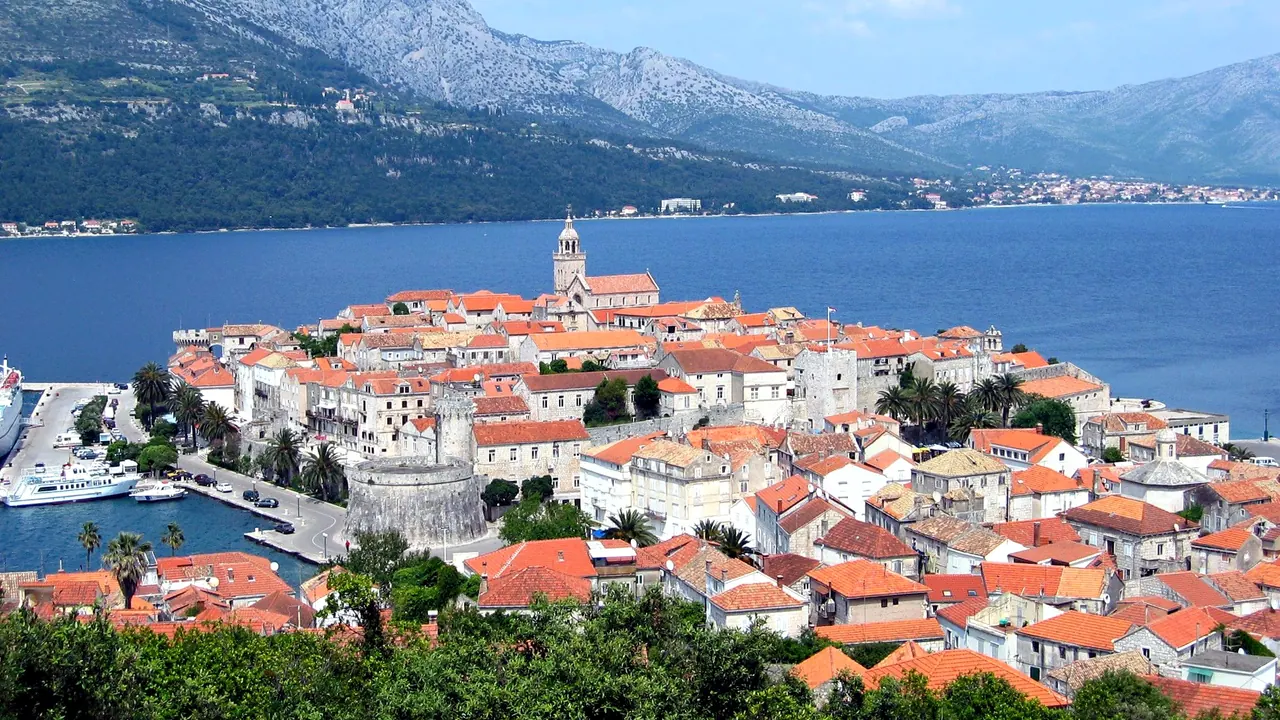
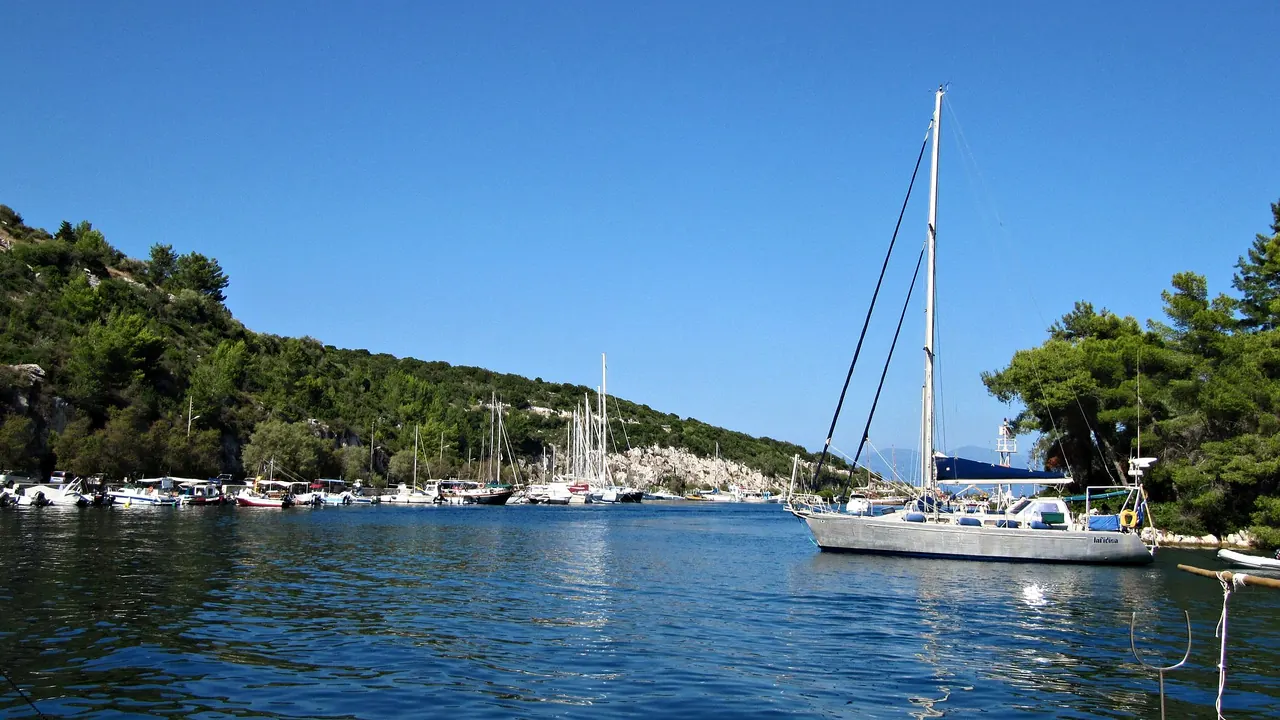
Photos: Korčula by Εὐθυμένης, CC BY-SA 3.0, cropped; Paxos by Poiesia, CC BY-SA 4.0, cropped.
Korčula or Paxos?
Our verdict in twelve categories, each scored against the same fixed benchmark cities, and the climate month by month, so you can choose for your trip.
Choose Korčula for
- culture and sights
- day trips
- nightlife
Korčula is the better choice if you want your swimming to come with a proper town. Korčula Town's walled peninsula, its cathedral and the Moreška sword dance give you something to do in the evenings and on cloudy afternoons. The Grk and Pošip vineyards make meals more interesting, and the short ferry to Pelješac takes you to Ston, the Dingač wineries and the windy strait at Viganj. It is also the easier of the two on the budget, especially from a base in Lumbarda or Vela Luka.
Choose Paxos for
- wellness
- beaches
Choose Paxos if the plan is to do very little and do it well. It is a small island covered in olive groves, with three harbour villages. Days go by on a hired motorboat between coves and the pale sand of Antipaxos, and evenings end with a drink beside the moored yachts. There is less to see and do than on Korčula, and it costs more, but for a quiet week in a villa the calm is the whole point.
Scoreboard
Twelve categories on one fixed scale from 0 to 100. The shaded stretch is the gap between the two.
Your match
Pick a travel style or drag the sliders, and both match scores follow your weighting.
Wins on culture and sights and day trips with your weighting.
Wins on wellness and beaches with your weighting.
What matters to you?
Category by category
What the scores mean for a trip.
Beaches & swimming
Both islands are swimming destinations first. The water is clear and warm from June, and pebble coves make up most of the shoreline on each, so the real difference is where the sand is. On Korčula you find it on the island itself, at Pržina and Bilin Žal near Lumbarda. Pupnatska Luka on the south coast is a deep pebble bay, and taxi boats run out to the flat rocks of Badija.
Paxos has its best sand offshore. Paxos itself has the east coast coves and the shallow bay at Lakka, but the real prize is Voutoumi and Vrika on Antipaxos, where day boats from Corfu crowd in at midday in high summer. Hiring a small motorboat to reach coves with no road is part of the daily routine here.
Food & drink
Korčula has the more rewarding table, mainly because of its wine. Grk from Lumbarda grows almost nowhere else, and Pošip comes from around Čara and Smokvica. The Dingač reds and the Ston oysters are a short crossing away, and slow-cooked peka dishes and Žrnovo's hand-rolled makaruni add a local touch.
Paxos eats well within a narrower range. Harbourside tavernas in Gaios, Lakka and Loggos serve grilled fish, bourdeto and sofrito with the island's olive oil, often cooked with more care than at a typical resort. Neither island is a place for fine dining, and on both many kitchens close once summer ends.
Culture & sights
This is the biggest gap between the two. Korčula Town is a walled medieval town worth a day of its own. It has St Mark's Cathedral and its Tintoretto, the treasury, the town museum and the house the town claims as Marco Polo's birthplace, and the prehistoric cave of Vela Spila at the far end of the island goes back much further.
Paxos has a ruined Venetian fort and a small monastery on the islets off Gaios, a modest museum of island life and old olive presses along the lanes. These are nice to come across on a walk, but anyone after real history takes the ferry to Corfu Town, about an hour away.
Nightlife
Neither island is a place to go out, but Korčula gives you a little more of an evening. Cocktail bars on the towers and walls of Korčula Town look across the channel, and a few harbour bars stay open late in high summer. On Paxos the night means dinner on the quay and a drink next to the yachts in Gaios or Lakka, with one or two places to dance in July and August, and the rest of the year the island goes quiet soon after dinner.
Nature & outdoors
Korčula has the more varied outdoors, partly thanks to its neighbours. The island is green with pine, oak and vineyards, good for walking and cycling, and the kayaking around the islets off Lumbarda is good. Across the channel, Pelješac has the steep climb up Sveti Ilija and the steady afternoon wind at Viganj for windsurfers and kitesurfers. The saltwater lakes of the national park on Mljet are a boat ride away.
Paxos is low and gentle, with olive groves, stone-walled mule tracks and one trail running the length of the island. Its best scenery is the white western cliffs at Erimitis, the Tripitos arch and the sea caves, all best seen by kayak or boat, and the snorkelling is good.
Day trips
Korčula has enough to fill a week of outings. Pelješac alone gives you the Dingač wineries, the monasteries above Orebić and the long walls of Ston. Mljet makes a full day with its monastery on a lake and the Roman remains at Polače, and Hvar Town is within reach by catamaran.
Paxos has a shorter list: Corfu Town about an hour away, Parga and the coves around Sivota on the mainland, and Antipaxos for its beaches. Every outing depends on the boats, and rough seas can cancel the plan.
Good for families
Both islands are safe and slow, and neither has anything built for children, so the choice comes down to the kind of seaside you want. Korčula's sandy, shallow bays at Lumbarda are the gentler choice for toddlers, though the stepped streets of Korčula Town are hard work with a pushchair. Paxos has the sheltered shallows at Lakka, but most of its beaches are pebble at the bottom of steep paths and many villas need a car, so it suits older children who like snorkelling and days on a boat.
Getting around
Getting around works in much the same way on both: walkable villages, infrequent buses, narrow roads, and a hired car or scooter doing most of the work. The difference is size. Korčula is long and narrow, with a single road from Lumbarda to Vela Luka, so the far end is a real drive, though taxi boats are handy around Korčula Town.
Paxos is only about 10km long. Nothing is far, footpaths link the villages, and a small hired boat is often more useful than a car. It has no airport, though, and the ferries from Corfu or the mainland can be cancelled in rough seas.
Shopping & style
Neither island is a shopping destination, and on both the best things to buy are edible. On Korčula that mostly means Grk and Pošip from the cellar door, plus fig liqueurs, cukarini biscuits and a few craft and jewellery studios in the old town lanes. Paxos has summer boutiques selling linen, beachwear and ceramics behind the harbours of Gaios and Lakka, and its olive oil and honey are the things to take home.
Affordability
Korčula is the cheaper of the two, though neither is a bargain in high summer. The old town charges resort prices, but private apartments in Lumbarda, Vela Luka and the villages, meals at inland konobas and wine from the cellar door bring costs down, and June and September cost less.
Paxos is one of the dearer Greek islands. Most places to stay are villas and small guesthouses, and the harbourside restaurants charge for their setting and their clientele. Boat or car hire and the ferry crossings add to the bill, so self-catering and the shoulder months make more difference here.
Live music & performing arts
Korčula has the one real draw of the two: the Moreška sword dance, performed in Korčula Town through the summer. Some villages keep up older sword dances on feast days, and klapa groups sing in churches and squares. Paxos offers a small chamber music festival at the end of summer and its saints' day feasts, above all the August feast of the Panagia in Gaios, with Greek music and dancing late into the night.
Wellness & relaxation
On Korčula, rest comes from the pace of the place rather than from anything built for it. The calmest stays are in the vineyard villages inland, with long lunches in the shade and evenings with nothing in them. If you want a treatment, the wellness areas of the larger hotels around Korčula Town are where you will find one. With the old town and the boats to Pelješac and Mljet so close, many visitors end up busier than they meant to be.
Paxos makes doing nothing the point of the trip, and it does that more fully. Its villas stand on their own among the olive groves, looking out to sea, so the quiet is yours alone rather than shared with a village. The harbours of Gaios and Lakka only come to life slowly through the morning. A massage is more likely to be offered at the villa or hotel where you are staying than in a spa you have to go out to.
When should you go?
Pick your month. The climate figures are measured averages, not a forecast.
Korčula in July
Paxos in July
Daytime high, °C
Rainfall in the month, mm
Where the figures come from
Korčula's temperatures are measured 69 km from the centre, at Mostar.
Korčula has no rain gauge within 25 km of the centre, so its rainfall comes from a gridded climate dataset read at the destination rather than from a gauge further away.
Paxos's temperatures are measured 52 km from the centre, at Kerkyra Airport.
Paxos has no rain gauge within 25 km of the centre, so its rainfall comes from a gridded climate dataset read at the destination rather than from a gauge further away.
Temperature and rainfall are climate normals, averaged over the years shown. Korčula: 1991-2020 normals, Mostar (69.2 km from centre). Paxos: 1991-2020 normals, Kerkyra Airport (52.1 km from centre).
The two islands keep much the same calendar. The sea is warm enough to swim from June until late September or beyond. In July and August daytime highs reach about 33°C, which makes walking around in the middle of the day hard work, so spring and autumn are the comfortable months for exploring on foot. On Korčula the summer is dry and sunny, but rain returns in September and builds through November.
Paxos keeps its summer a little longer and its winter a little milder. July and August there are almost rainless, the sun is slightly more generous all season, and the sea is still around 25°C in September and fine for swimming into October. Winter is the other side of that. January highs are about 14°C on Paxos against 9°C on Korčula, but the rain is much heavier, around 163mm in November. For a late-season swim, Paxos has the edge.
Which traveller are you?
On a culture and arts trip, Korčula is the clear pick. It has Korčula Town's herringbone lanes, St Mark's Cathedral with its Tintoretto and the summer Moreška. On Paxos the few sights sit at the harbour, and history lovers end up taking the boat to Corfu Town.
For a relaxing and wellness trip, Paxos suits better. Neither island has spas worth travelling for, but Paxos has fewer cars, no high-rise buildings, villas among the olive trees and yoga weeks on some estates. It is quietest of all in May, June and September.
On a trip on a tight budget, Korčula goes further. You can rent a private apartment in Lumbarda, Vela Luka or an inland village, eat at family konobas and buy wine at the cellar door. Paxos is mostly villas, and boat hire and ferries add up quickly.
Before you go
| Measure | Korčula | Paxos |
|---|---|---|
| Official language | Croatian | Greek |
| Currency | Euro (EUR) | Euro (EUR) |
| Sockets | CF230 V, 50 Hz | CF230 V, 50 Hz |
| Driving side | Right | Right |
| Time zone | UTC+1, UTC+2 in summer | UTC+2, UTC+3 in summer |
| Emergency number | 112 | 112 |
| Main airport | Dubrovnik Ruđer Bošković Airport (DBV)76 non-stop destinations | Corfu Ioannis Kapodistrias International Airport (CFU)88 non-stop destinations |
| Public holidays this year | 14 days | 15 days |
By the numbers
| Measure | Korčula | Paxos |
|---|---|---|
| Population | - | 2,300 |
| People per km² | - | 91 |
| Swim season, months above 21 °C | 5 months | 5 months |
Where else could you go?
Every comparison below shares a destination with this one, so you can follow Korčula or Paxos somewhere new.