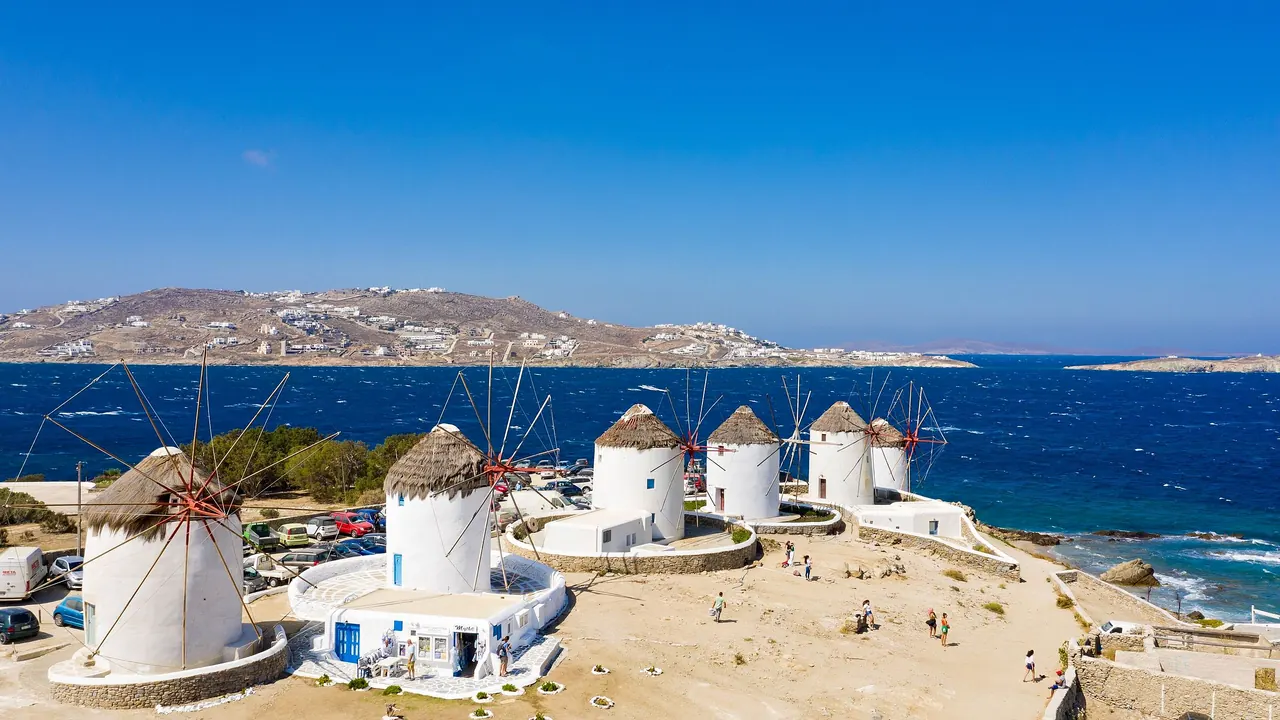
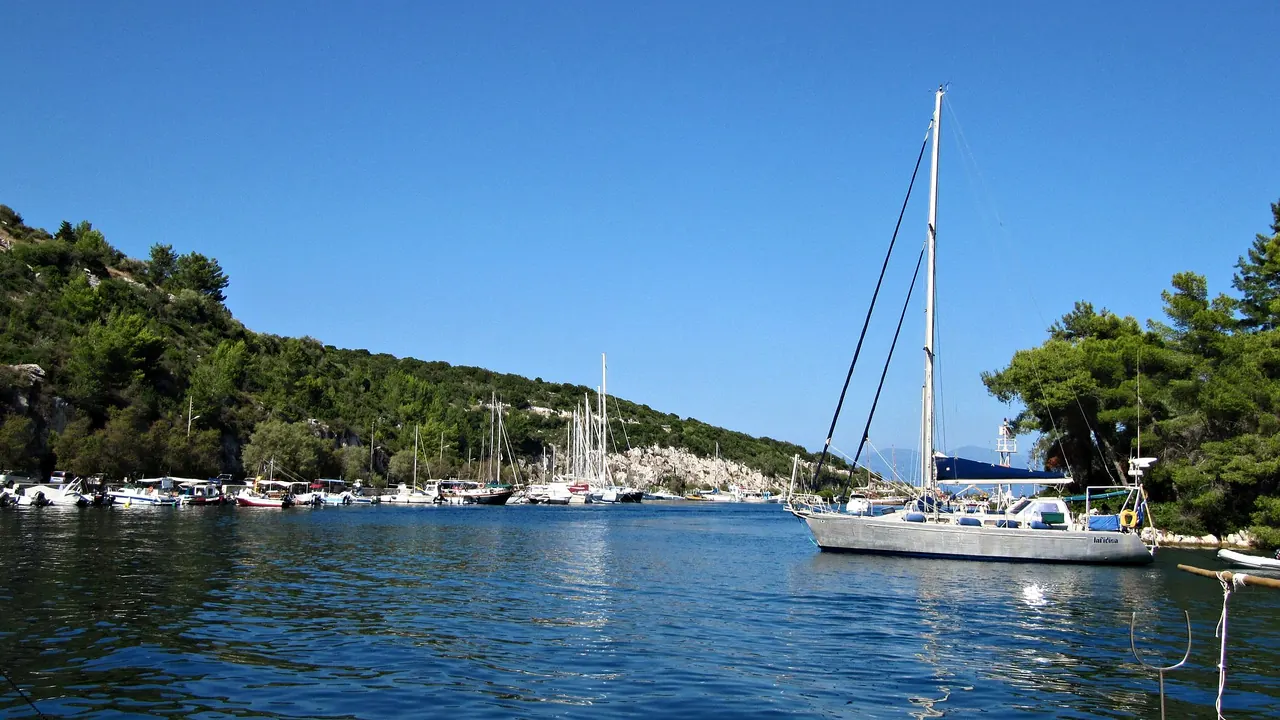
Photos: Mykonos by dronepicr, CC BY 2.0, cropped; Paxos by Poiesia, CC BY-SA 4.0, cropped.
Mykonos or Paxos?
Our verdict in twelve categories, each scored against the same fixed benchmark cities, and the climate month by month, so you can choose for your trip.
Choose Mykonos for
- nightlife
- culture and sights
- shopping
Mykonos is the island for travellers who want a lot going on. It has sandy south-coast bays with sunbeds and beach clubs, nights in Chora that run until sunrise, a wider choice of food and boutiques, and Delos, one of the great sites of the ancient Greek world, a short boat ride away. It suits groups of friends, couples who like a glamorous scene and anyone who wants to hop between Cycladic islands, as long as they accept that it is very expensive and very crowded in high summer.
Choose Paxos for
- prices
- wellness
- nature and the outdoors
Paxos is the quieter and slower choice, for people who want a villa among the olive groves, a hired boat and a long dinner on the harbour. Its strengths are clear water in pebble coves, the pale sand of Antipaxos, the cliffs and sea caves of the west coast, and an island pace that does the relaxing for you. You give up culture, nightlife and shopping almost completely, and getting there takes a ferry. In return you get calm, and the bill is lighter than on Mykonos.
Scoreboard
Twelve categories on one fixed scale from 0 to 100. The shaded stretch is the gap between the two.
Your match
Pick a travel style or drag the sliders, and both match scores follow your weighting.
Wins on nightlife and culture and sights with your weighting.
Wins on prices and wellness with your weighting.
What matters to you?
Category by category
What the scores mean for a trip.
Beaches & swimming
Both islands are made for swimming, and the difference lies in the kind of beach. Mykonos has proper sandy bays along its south coast. Some are sheltered and close to town, like Ornos, some are polished and lined with sunbeds, like Psarou, some are party beaches, like Paradise, and some are long enough to spread out on, like Elia and Kalafatis. Beach clubs line much of the shore.
On Paxos itself the beaches are mostly small pebble coves on the east coast, and the bay at Lakka has the only real sandy shallows. The pale sand is across the water at Voutoumi and Vrika on Antipaxos. That makes a hired motorboat part of the beach day in a way it never is on Mykonos.
Food & drink
Mykonos gives you more to eat, and more of it is worth seeking out. There is grilled octopus by the water in Little Venice, island specialities such as kopanisti cheese and cured louza, almond sweets from the bakeries in Chora, and more local tavernas around the square at Ano Mera. A large scene of sushi and celebrity-chef dining sits alongside all of this, though it is more about being seen than about the cooking.
Paxos eats well, but on a smaller scale. Its harbourside tavernas serve Ionian bourdeto and sofrito with the island's own olive oil, and the cooking is often careful. The menus look much alike from one village to the next, though, and many kitchens close once summer ends.
Culture & sights
Here Mykonos is well ahead, mainly because of Delos. The ruins of Apollo's sacred island, with the Terrace of the Lions and its mosaic-floored houses, easily fill a morning. Chora adds the windmills at Kato Mili, the Paraportiani church and a few small museums.
Paxos has the ruined Venetian fort on an islet off Gaios, a little museum of island life and olive farming, and old olive presses that you pass on walks. That is pleasant background rather than anything to plan a day around.
Nightlife
This is where the two islands differ most. On Mykonos the party starts in the afternoon at Paradise and Super Paradise and moves on to the dance bars in Chora's lanes, where there is a long-established gay scene. It ends in clubs that stay open until sunrise, with international DJs playing in high summer.
Evenings on Paxos are a long harbour dinner followed by a drink beside the yachts in Gaios or Lakka. There are only a couple of places to dance, even in August. For anyone who wants a quiet evening, that is the point of going.
Nature & outdoors
Paxos has more to offer outdoors. A waymarked trail runs the length of the island through ancient olive groves and along stone-walled mule tracks. The west coast has white limestone cliffs at Erimitis, the Tripitos arch and sea caves that you can explore by kayak.
Mykonos is bare and brown, and its walking is limited to country lanes in the north and east. Its strength is the wind. In summer the meltemi makes Korfos Bay and Kalafatis good for kitesurfing and windsurfing, which Paxos cannot match, and there are reefs and wrecks for divers.
Day trips
Mykonos has more islands within reach and more variety among them. Tinos, with its pilgrimage church and marble-carving villages, is about half an hour away. The neoclassical port of Ermoupoli on Syros is about an hour, and Paros and Naxos are also reachable in a day. All of these trips stay within the Cyclades.
From Paxos the choice is short: Corfu Town's Venetian old town about an hour away, the harbour at Parga below its castle on the mainland, and the beaches of Antipaxos. Rough seas can cancel crossings from both islands.
Good for families
Neither island is built around children, and they fall short in different ways. Mykonos has gentle sandy bays such as Agios Stefanos and Ornos, a water park near Elia and the Delos boat trip. Against that, the island is built around adult nights out, and Chora is loud late in summer.
Paxos is calmer and feels safer. The shallow bay at Lakka is ideal for toddlers, but most other beaches are pebble with steep paths down to them, and there is nothing to do on a bad day. It suits older children who love snorkelling from a boat.
Getting around
Mykonos is the easier of the two to get to and to get around. It has its own airport, buses from Chora to the south-coast beaches and Ano Mera, and sea taxis between the southern bays. The weak spots are a shortage of taxis and heavy traffic around Chora in July and August.
Paxos can only be reached by ferry, and boats may not sail in rough weather. Buses are rare, so most visitors hire a car or scooter. Many find a small boat the most useful transport of all, and footpaths through the olive groves link the three villages.
Shopping & style
Mykonos is clearly better for shopping, though only in one narrow line. Matoyianni Street and the lanes around it are full of resort wear, linen, Greek jewellery and galleries, and shops stay open late enough for browsing after dinner.
Paxos has a few boutiques behind the harbours in Gaios and Lakka. The best things to take home there are olive oil, honey and preserves, and for anything practical you have to go to Corfu.
Affordability
Neither island is cheap, but Paxos costs noticeably less. In summer Mykonos is among the dearest places to vacation in Europe, with hotel rates far above the Greek norm, and fashionable sunbeds and taxis add up quickly. Rooms inland or at Ano Mera and meals from gyros counters soften the bill only a little.
On Paxos the extra costs are ferries and boat or car hire. Self-catering in a villa and eating at simple tavernas bring the spending down more easily than on Mykonos, especially in May, June and September.
Live music & performing arts
Both islands are very thin on performance. On Mykonos the music comes from club DJs, with only the odd open-air concert or village festival in summer. Paxos has a couple of fixed dates worth timing a trip around: a small chamber music festival at the end of summer, held in churches and village squares, and the August feast of the Panagia in Gaios, with traditional music and dancing late into the night.
Wellness & relaxation
Paxos is the more restful island. With few cars, slow mornings in the harbours, quiet villas among the olive trees and yoga weeks on some estates, much of the island works as a retreat.
On Mykonos, wellness means the spas and sea-view yoga terraces of the upmarket hotels. Real quiet means staying near Agios Sostis or Ftelia, away from the beach-club rhythm of the south coast.
When should you go?
Pick your month. The climate figures are measured averages, not a forecast.
Mykonos in July
Paxos in July
Daytime high, °C
Rainfall in the month, mm
Where the figures come from
Mykonos has no weather station within reach, so its figures come from a gridded climate model rather than a measured record, and read a broad area rather than one spot.
Paxos's temperatures are measured 52 km from the centre, at Kerkyra Airport.
Paxos has no rain gauge within 25 km of the centre, so its rainfall comes from a gridded climate dataset read at the destination rather than from a gauge further away.
Temperature and rainfall are climate normals, averaged over the years shown. Mykonos: 2001-2020 normals, NASA POWER reanalysis grid, no weather station within 90 km. Paxos: 1991-2020 normals, Kerkyra Airport (52.1 km from centre).
The two islands have very different summers. Mykonos stays fairly mild, with highs of about 25°C in July and August and almost no rain from June to August, so walking around Chora is comfortable all through the season. The meltemi blows hardest in these months. The sea there is warm enough to swim in from June to early October. Paxos gets much hotter, at about 32°C in July and August, with long, very sunny days. That suits lying in a cove but makes midday walking on the olive-grove trail hard going.
At the end of summer the two part ways. Mykonos stays dry through September. On Paxos the rain comes back early, with about 91mm in September and heavier falls through October and November, even though its sea is the warmer of the two, reaching about 26°C in August. On Paxos, late May, June and early September are the best balance of warm water and bearable heat. On Mykonos, June and September give warm water without the peak crowds. Both islands are cool and wet in winter.
Which traveller are you?
On a food and nightlife trip, Mykonos is the obvious pick. A night out there can start at lunchtime and outlast the dark, and dinner can be as casual or as dressy as you like. Paxos goes quiet soon after dinner.
For a culture and arts trip, Mykonos is the better base. One of the great sanctuaries of antiquity lies a morning's boat ride away, and other Cycladic towns are close. From Paxos, serious history means a day in Corfu.
On a relaxing and wellness trip, Paxos is the clear choice, because the calm comes with the island rather than having to be booked. On Mykonos, rest is something you find by staying away from where the island's summer happens.
Before you go
| Measure | Mykonos | Paxos |
|---|---|---|
| Official language | Greek | Greek |
| Currency | Euro (EUR) | Euro (EUR) |
| Sockets | CF230 V, 50 Hz | CF230 V, 50 Hz |
| Driving side | Right | Right |
| Time zone | UTC+2, UTC+3 in summer | UTC+2, UTC+3 in summer |
| Emergency number | 112 | 112 |
| Main airport | Mykonos Island National Airport (JMK)44 non-stop destinations | Corfu Ioannis Kapodistrias International Airport (CFU)88 non-stop destinations |
| Public holidays this year | 15 days | 15 days |
By the numbers
| Measure | Mykonos | Paxos |
|---|---|---|
| Population | 10,134 | 2,300 |
| People per km² | 96 | 91 |
| Swim season, months above 21 °C | 5 months | 5 months |
Where else could you go?
Every comparison below shares a destination with this one, so you can follow Mykonos or Paxos somewhere new.