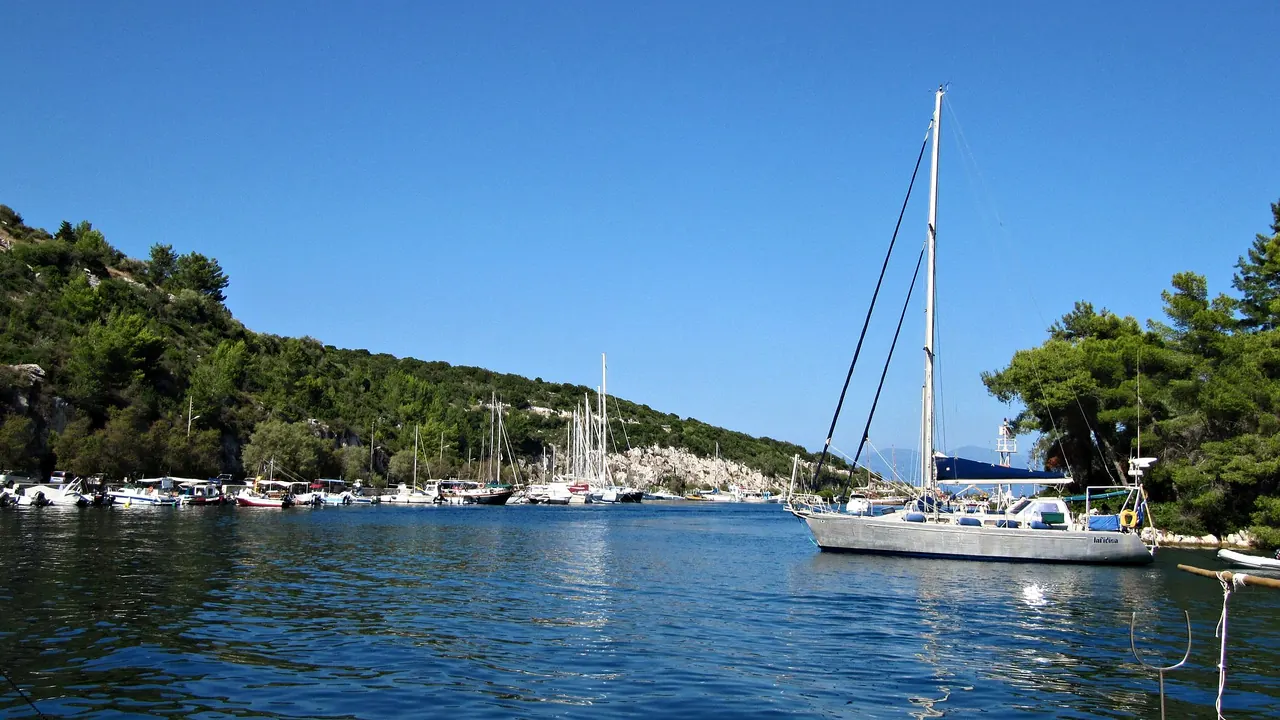
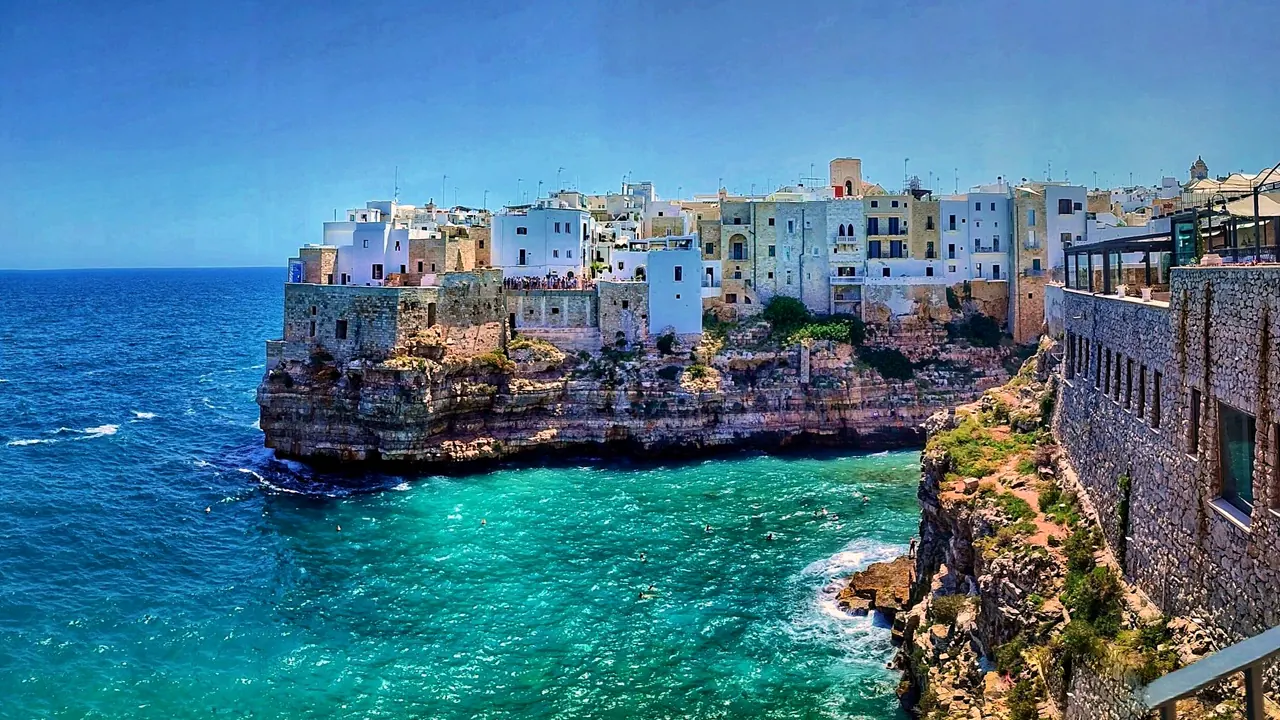
Photos: Paxos by Poiesia, CC BY-SA 4.0, cropped; Puglia by Acquario51, CC BY-SA 4.0, cropped.
Paxos or Puglia?
Our verdict in twelve categories, each scored against the same fixed benchmark cities, and the climate month by month, so you can choose for your trip.
Choose Paxos for
Paxos does not lead in any category we score.
Paxos suits travellers who want a small, quiet island and little else: clear water, pebble coves along the east coast, Antipaxos's sandy bays a short boat ride away, and evenings that end with a drink by the harbour. It works best when the boat is the main activity and you don't need museums, shops or a lively night to fill the days. Expect to pay for that calm, and accept that the island has little to offer once the sea is set aside.
Choose Puglia for
- culture and sights
- day trips
- nightlife
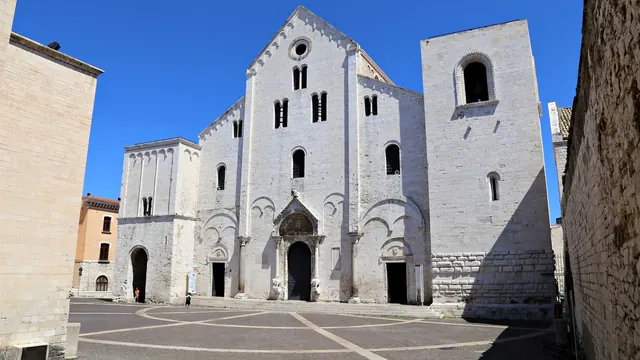
For a fuller trip, Puglia is the stronger choice. It has two coasts of beaches to match Paxos, plus the baroque of Lecce, the trulli of Alberobello, Romanesque cathedrals and a string of white towns, each a short drive from the last. The food is a reason to go in itself, families have more to do, and the money goes further. The cost is a long region and a car, so plan on moving around rather than settling into one bay.
Scoreboard
Twelve categories on one fixed scale from 0 to 100. The shaded stretch is the gap between the two.
Your match
Pick a travel style or drag the sliders, and both match scores follow your weighting.
Has no clear advantage with the weighting you have chosen.
Wins on culture and sights and day trips with your weighting.
What matters to you?
Category by category
What the scores mean for a trip.
Beaches & swimming
The two are close on the sea, and the difference is in the shoreline. Paxos has small pebble coves on its sheltered east coast and sand only at Lakka, so the best swimming is a boat ride away on Antipaxos, at Voutoumi and Vrika. A hired motorboat that takes you to coves the roads don't reach is the heart of a stay.
Puglia has far more coast and much more sand, especially on the Ionian shore of the Salento between Porto Cesareo and Pescoluse, where the shallows run a long way out. The Adriatic side adds rock platforms at Polignano a Mare and sea stacks at Torre dell'Orso. Expect paid lidos and Italian crowds in August, where Paxos's busiest moment is the midday boats at Antipaxos.
Food & drink
Puglia is the far better place to eat. Its cooking is a reason to travel in its own right: orecchiette with turnip tops, burrata from around Andria, raw sea urchins on the Bari waterfront, pasticciotto in Lecce, and butcher-grill houses in the Valle d'Itria where you choose your meat at the counter. Primitivo and Negroamaro go with all of it.
Paxos eats well but narrowly. Harbour tavernas in Gaios, Lakka and Loggos serve grilled fish, bourdeto and the island's olive oil, often with more care than a typical resort, but the menus repeat each other and many kitchens close out of season.
Culture & sights
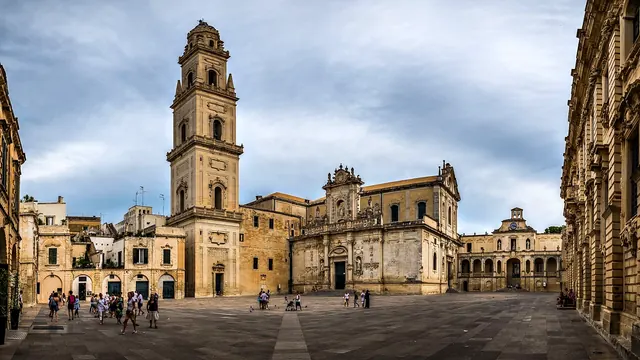
There is little contest here. Puglia's heritage is spread across its towns, with the honey-coloured baroque of Lecce, the trulli of Alberobello, Frederick II's octagonal castle at Castel del Monte and Otranto's twelfth-century floor mosaic. You will need to drive between them, as the museums themselves are modest.
On Paxos, the sights are the ruined Venetian fort and the Panagia monastery on the islets off Gaios, a small schoolhouse museum, and old olive presses found on a walk. Visitors who want serious history take the ferry to Corfu Town.
Nightlife
Puglia gives you a real night out, at least in summer. Gallipoli becomes a party town in July and August, with beach clubs going into the small hours, while Lecce's squares fill with drinkers and Bari's old town keeps bars open all year.
Paxos offers a slow dinner on the harbour and a drink beside the moored yachts in Gaios or Lakka, with one or two places to dance at the height of summer. That suits people who want quiet evenings, not anyone looking to go out.
Nature & outdoors
Puglia has more range. The Gargano in the north offers beech woods in the Foresta Umbra, white cliffs and the Tremiti islands for diving. The Salento has cliff paths near Otranto and Leuca, and the Valle d'Itria is gentle country for cycling among olive groves.
Paxos is smaller and narrower in what it offers, but it does one thing well. Its west coast of sheer limestone, with the Erimitis cliffs, the Tripitos arch and sea caves seen by kayak, sits behind an island-long trail through ancient olive groves.
Day trips
Day trips are where Puglia pulls far ahead. From one base you can visit Ostuni, Locorotondo and Martina Franca, drop down to Monopoli on the coast, or drive about an hour to Matera's cave dwellings, and from Lecce, Otranto and the Grecia Salentina are close.
From Paxos, every outing depends on a boat and the sea. Corfu Town's Venetian old town is about an hour by fast ferry, and Parga and the Sivota coves are reachable by excursion boat. After those and Antipaxos, there are few places left to go.
Good for families
Puglia makes the easier family trip. The shallow sandy beaches of the Salento suit small children, the safari and amusement park at Fasano gives them a day of their own, and Italian piazza life welcomes children until late.
Paxos works best with older children who love swimming and snorkelling. Apart from the calm bay at Lakka, the beaches are pebble with steep paths down, there is nothing made for children, and a wet day leaves little to do.
Getting around
Neither is easy without a car, though Puglia is slightly easier. Its main-line railway runs through Bari, Polignano a Mare, Monopoli and Lecce, so a car-free stay along that line is possible. The catch is length: the Gargano and the Salento are hours apart and need separate bases.
Paxos is only about 10km long, but getting there means a ferry that rough seas can cancel, buses are infrequent and the roads are narrow. Most visitors rely on a scooter, a car or a small boat, since the best coves can only be reached from the water.
Shopping & style
Shopping on Paxos is a quick browse rather than an activity. The harbour villages have a handful of seasonal boutiques with summer clothes and jewellery, but the things really worth taking home are edible: oil pressed from the olive groves you have been walking through, local honey and jars of preserves. If you need anything you forgot to pack, the nearest real choice is across the water in Corfu.
Puglia gives you a reason to set aside an afternoon for shopping. Its crafts belong to particular towns, so buying pottery in the ceramic quarter of Grottaglie or a papier-mache figure from a Lecce workshop fits into a day out, and the Valle d'Itria adds embroidered linen. There is more to take home as food too, with Primitivo and taralli as well as the oil. When you need ordinary clothes or basics, Bari's central shopping streets have them, but nobody comes to Puglia for designer labels.
Affordability
Puglia is easier on the budget. Trattoria meals, street snacks and local wine are good value, and inland towns are cheaper bases than the beachfront, though summer rooms by the Salento beaches and lido loungers add up.
Paxos is among the dearer Greek islands, with mostly villa accommodation, harbour restaurants that charge for the view, and ferries plus car or boat hire on top. In both, June and September cost noticeably less than the peak weeks.
Live music & performing arts
Puglia has a real calendar: opera and ballet at Bari's Teatro Petruzzelli, the Martina Franca summer festival of rare operas in a ducal courtyard, and pizzica at Salento village festivals, ending in August's Notte della Taranta at Melpignano. Paxos offers a small late-summer chamber music festival in its churches and squares and a night of Greek music and dancing at the August feast of the Panagia in Gaios. Otherwise, there is little.
Wellness & relaxation
Both are restful because of their pace rather than spa culture, but Puglia has slightly more on hand. Many of its masserie have their own spas and pools, and there are sulphur springs in the sea caves at Santa Cesarea Terme and mud treatments at Margherita di Savoia.
Paxos offers calm alone: few cars, no high-rise building, olive-grove villas with sea views, and yoga or retreat weeks on some estates. Its quietest months are May, June and September.
When should you go?
Pick your month. The climate figures are measured averages, not a forecast.
Paxos in July
Puglia in July
Daytime high, °C
Rainfall in the month, mm
Where the figures come from
Paxos's temperatures are measured 52 km from the centre, at Kerkyra Airport.
Paxos has no rain gauge within 25 km of the centre, so its rainfall comes from a gridded climate dataset read at the destination rather than from a gauge further away.
Puglia's temperatures are measured 64 km from the centre, at Brindisi.
Puglia has no rain gauge within 25 km of the centre, so its rainfall comes from a gridded climate dataset read at the destination rather than from a gauge further away.
Temperature and rainfall are climate normals, averaged over the years shown. Paxos: 1991-2020 normals, Kerkyra Airport (52.1 km from centre). Puglia: 1991-2020 (sunshine 1981-2010) normals, Brindisi (64.4 km from centre).
Both are summer sea destinations with almost the same season. The water warms enough for swimming in June and stays warm through September, peaking at about 26°C in August in both. Paxos keeps its sea warm a little longer into October. July and August are hot in both, reaching about 32°C on Paxos and slightly less in Puglia's main visitor areas, so long walks through towns or olive groves are hard going at midday. May, early June and late September are the comfortable months for exploring on foot.
The big difference is the wet season. On Paxos the rain comes back hard in September and builds to about 163mm in November, so winter there is damp and grey. Puglia is much drier through the colder months, with no more than about 83mm in its wettest month, which makes an autumn or spring trip to its towns a more reliable choice. Paxos is slightly sunnier at the height of summer, but the two differ little between May and September.
Which traveller are you?
On a culture and arts trip, Puglia is the clear choice. Lecce's baroque, the trulli of Alberobello, Castel del Monte and the sea-edge cathedral at Trani give it real depth, while Paxos has a ruined fort, a monastery islet and not much more.
For a food and nightlife trip, go to Puglia. Burrata, orecchiette, Primitivo and the grill houses of the Valle d'Itria beat Paxos's short taverna menus, and Gallipoli's summer beach clubs and Bari's old-town bars offer far more than a quiet harbour drink.
On a beach and sun trip, both have excellent water, so choose by style. Paxos suits those who want to hire a small boat and spend days between clear coves and Antipaxos's turquoise bays. Puglia suits those who prefer long sandy shores on the Salento.
Before you go
| Measure | Paxos | Puglia |
|---|---|---|
| Official language | Greek | Italian |
| Currency | Euro (EUR) | Euro (EUR) |
| Sockets | CF230 V, 50 Hz | CFL230 V, 50 Hz |
| Driving side | Right | Right |
| Time zone | UTC+2, UTC+3 in summer | UTC+1, UTC+2 in summer |
| Emergency number | 112 | 112 |
| Main airport | Corfu Ioannis Kapodistrias International Airport (CFU)88 non-stop destinations | Bari Karol Wojtyła International Airport (BRI)104 non-stop destinations |
| Public holidays this year | 15 days | 13 days |
By the numbers
| Measure | Paxos | Puglia |
|---|---|---|
| Population | 2,300 | 3,866,174 |
| People per km² | 91 | 198 |
| Swim season, months above 21 °C | 5 months | 4 months |
Where else could you go?
Every comparison below shares a destination with this one, so you can follow Paxos or Puglia somewhere new.