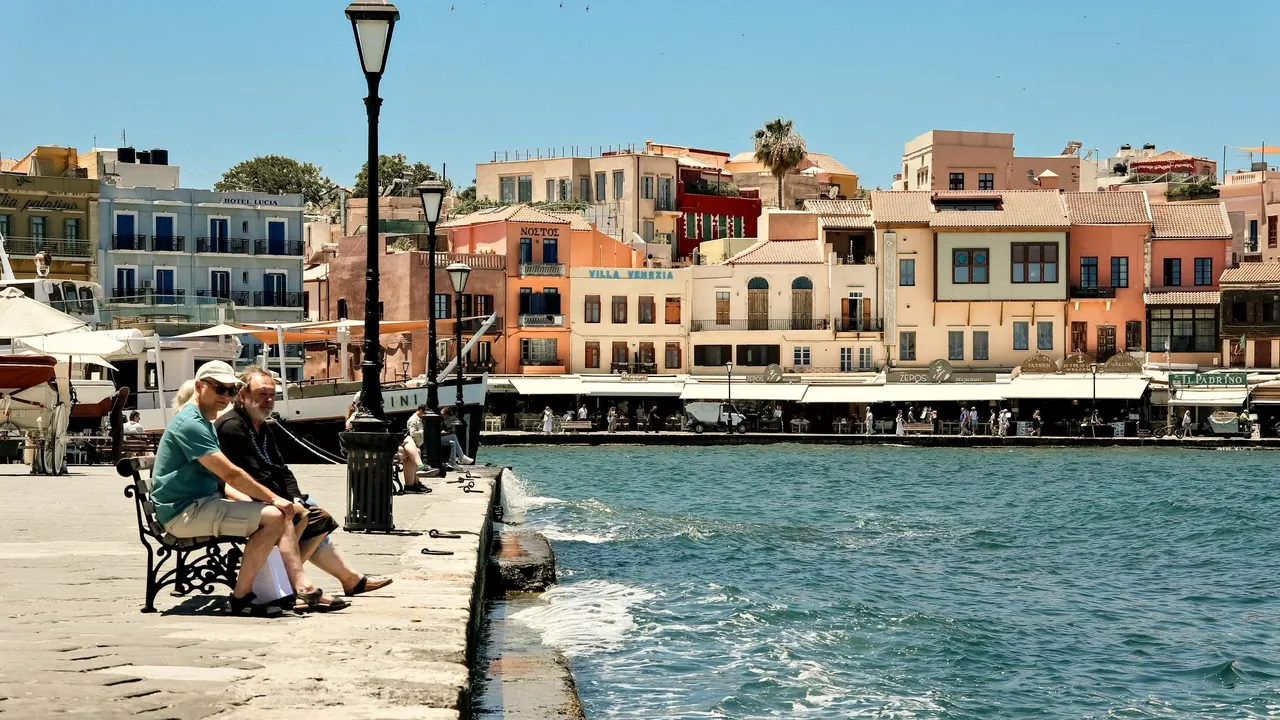
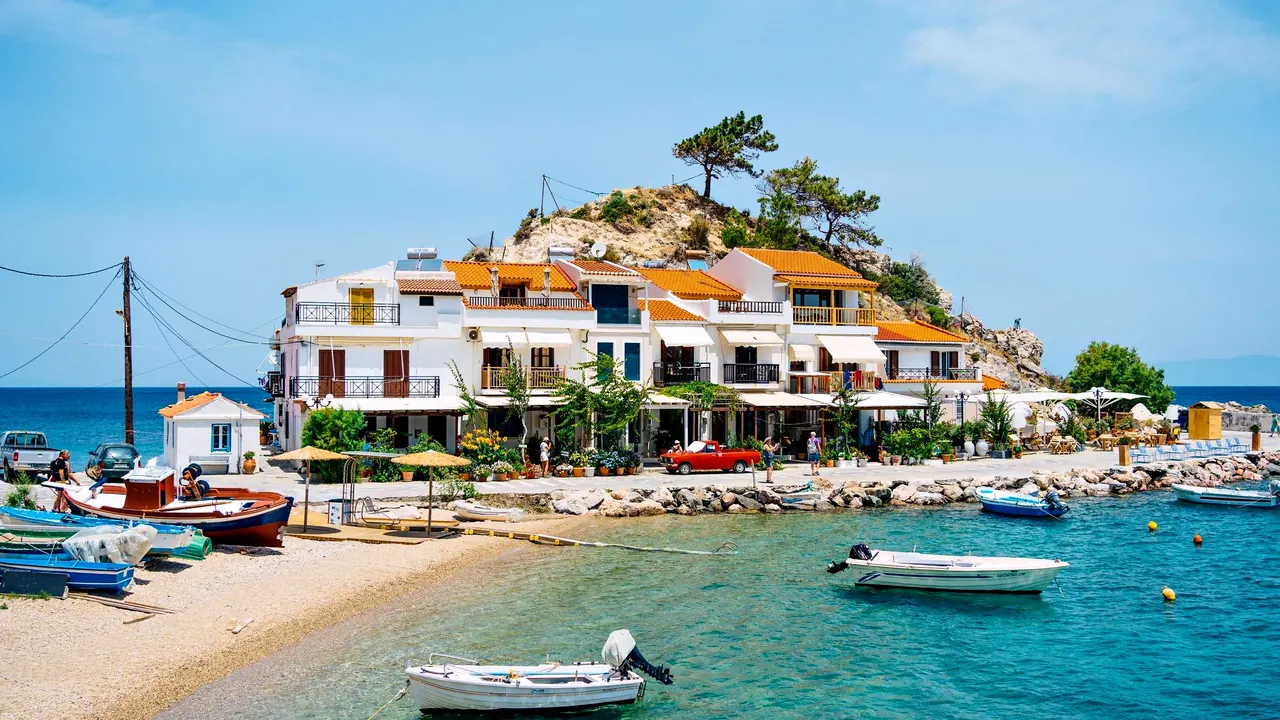
Photos: Crete by Piotr Baranowski, Pexels License; Samos by Thomas Ronveaux, Pexels License.
Crete or Samos?
Our verdict in twelve categories, each scored against the same fixed benchmark cities, and the climate month by month, so you can choose for your trip.
Choose Crete for
- nightlife
- food and drink
- shopping
Crete suits travellers who want an island big enough to fill a long trip, or to come back to. It has the broader beaches, from the lagoons of Elafonissi to the long family-friendly sands of the north coast. Add Minoan palaces and Venetian old towns, gorges and high mountains, and one of the Mediterranean's most distinctive cuisines, and it beats Samos on almost every front. The price is distance: seeing the island properly means long drives on winding roads.
Choose Samos for
- prices
Samos is the smaller, gentler choice, for people who want a green, unhurried island with clear water, a handful of major ancient sites and quiet hill villages. Nothing here matches Crete's scale. In return it is easy to get your bearings, and the evenings are calm. The boats across to Ephesus and over to Patmos give a short stay real variety. If you want a party, a big food scene or attractions for children, it will feel thin.
Scoreboard
Twelve categories on one fixed scale from 0 to 100. The shaded stretch is the gap between the two.
Your match
Pick a travel style or drag the sliders, and both match scores follow your weighting.
Wins on nightlife and food and drink with your weighting.
Wins on prices with your weighting.
What matters to you?
Category by category
What the scores mean for a trip.
Beaches & swimming
Crete has the greater range and the more famous names. In the west there are the pink-tinged sand and lagoons of Elafonissi, the turquoise bay at Balos and the open strand of Falassarna. The east has the palm-backed bay at Vai, and the south coast has boat-access coves such as Preveli. The long, easy resort beaches of the north coast round it out. The catch is midday crowds at the western stars in high summer.
Samos is a fine swimming island on a smaller scale. Its beaches are mostly fine pebble or sand and shingle, backed by pines and olive trees, with the most striking water at Kokkari and Lemonakia and the walk-in Seitani bays in the northwest. On both islands the meltemi wind can stir up the north coast. On Samos the sandy shallows of Psili Ammos in the south are the place to retreat to when it blows.
Food & drink
Crete eats better and with more depth. Its cuisine is a full regional tradition of wild greens, graviera and mizithra cheeses, snails, slow-cooked goat and dakos. You find it at its best in the village tavernas and the backstreets of Chania and Rethymno, and Heraklion adds a market street and wines from the vineyards to its south.
Samos offers honest taverna food, with grilled octopus on the harbours and goat in the hill villages, but the range is narrow. Its one famous product is the sweet Muscat wine from the terraces around Vourliotes and Manolates. Neither island has much fine dining, and on Crete you are best off avoiding the north-coast resort menus.
Culture & sights
Crete was the centre of Minoan civilisation, and that gives it a heritage Samos cannot match. Knossos and the Heraklion Archaeological Museum, with its frescoes and the Phaistos Disc, lead a list that also takes in Phaistos, Malia and Roman Gortyn. On top of that come Chania's Venetian harbour, Rethymno's fortress and Ottoman balconies, Spinalonga and Arkadi.
Samos has one superb cluster: the Heraion sanctuary and the Tunnel of Eupalinos around Pythagoreio, plus the giant kouros in the museum at Vathy. After that the sights thin out to monasteries and stone villages. Two or three days cover the island, while Crete's sights are spread across a long drive.
Nightlife
Crete has a real night out, in two forms. Malia and Hersonissos are loud party strips for young groups. The harbours and old quarters of Chania, Rethymno and Heraklion fill with students and locals at cocktail bars until late.
Samos has nothing like either. Pythagoreio's harbour bars stay busy past midnight in July and August, and Kokkari and Vathy have a short run of music bars, but there are no clubs. The best nights are often the village festivals with dancing in the square.
Nature & outdoors
Crete's outdoors is on a much bigger scale. The White Mountains and Psiloritis both climb above 2,400m and keep their snow into spring. Gorges cut through them, from the long descent of Samaria to quieter Imbros and Aradena, and a European long-distance footpath and the coast trail through Loutro and Sfakia allow serious walking over several days. Climbers come for the walls of Agiofarago, cyclists for the Lasithi plateau, and vultures and wild kri-kri goats live in the high country.
Samos is greener and on a smaller scale, with pine and chestnut forest on the Ampelos ridge, old mule paths between the wine villages and orchids in spring. Bare Mount Kerkis, at about 1,430m, makes a long day's climb. The wildest corner is the northwest, around the small waterfalls of the Potami gorge and the protected Seitani coast, where monk seals are sometimes seen.
Day trips
The two are fairly level here, but the outings point in different directions. On Crete the best days out stay on the island: another of its four main towns, the wine villages around Peza and Archanes, or the mountain villages of Anogia and the Amari valley. The fast ferry from Heraklion to Santorini is the one long trip off the island.
Samos looks outward. A ferry of about an hour and a half to Kusadasi puts Ephesus within a day, though you need a passport. Patmos and its monastery are a couple of hours away by fast boat, and Ikaria and Fourni suit a slower day. All of it depends on ferries and the weather.
Good for families
Both islands have shallow sandy water for small swimmers, but Crete has much more of it. The north coast and the bays around Chania give you long stretches of gently shelving sand with family hotels behind them, and in the far west the lagoon at Elafonissi is warm enough to paddle in all afternoon. When the children have had enough of the beach, Crete still has waterparks and the big aquarium at Gournes. What wears families down is the size of the island: hot midsummer afternoons, long winding drives, and ruins like Knossos that young children soon tire of.
On Samos the easy swimming is mostly in one place, the sandy shallows of Psili Ammos on the south coast, with level Pythagoreio close by for an evening walk along the harbour. Beyond that there is little laid on for children, and the north-coast bays are mostly pebble and exposed to the wind. Samos suits a quiet week of beach and taverna. A family that needs a change of scene every few days will find more of it on Crete.
Getting around
On both islands you will want a hired car, and buses only link the main towns. What differs is scale. Crete's highlights are spread across a large, mountainous island, so a trip from end to end takes most of a day, the south-coast roads are steep, and the north-coast highway is busy and demanding.
On Samos, Vathy, Kokkari and Pythagoreio are all within half an hour of each other, and the airport is beside Pythagoreio. Only the climbs into the hill villages and the far west around Kerkis are narrow and slow. On Samos, check which of the three ports a ferry leaves from.
Shopping & style
Neither is a shopping destination, but Crete gives you more to browse. Chania's old leather-makers' lane, its knife-makers and its cross-shaped market hall are worth a morning. Heraklion's market street and the potters of Margarites supply cheese, honey, raki and ceramics.
On Samos shopping comes down to taking home Muscat wine, thyme honey and olive oil, with a few ceramics and jewellery shops in Vathy's backstreets.
Affordability
Costs are much the same: both are mid-priced and kinder on the wallet than the famous Cyclades, with good-value family-run rooms and taverna meals. On Crete prices climb around Elounda's luxury resorts, Chania's old town and the best-known western beaches. Samos gets pricier in August, when Greek visitors fill the island.
On either island the car is the cost you cannot avoid. On Samos, ferry day trips are an extra, especially the crossing to Turkey. On Crete, the long distances mean more driving.
Live music & performing arts
Crete has a living music tradition that Samos cannot match. Musicians play the three-stringed lyra and the lute and improvise mantinades verses for fast circle dances. You hear it in the music tavernas of Rethymno and Chania, and the mountain village of Anogia is famous for its players. In summer, festivals in the fortresses and open-air theatres of Heraklion and Chania add more, though formal theatre and classical concerts are scarce.
On Samos, live performance is almost entirely a summer affair. There are open-air concerts and plays at the castle in Pythagoreio and around the Heraion, and village saints' day festivals in July and August with Greek bands and dancing. For the rest of the year there is little beyond the odd concert in Vathy.
Wellness & relaxation
Neither island has a bathing tradition, so the two are close. For proper spa treatment Crete has the edge, with its serious resort spas around Elounda and the Gulf of Mirabello. Samos has only a handful of treatment rooms in larger hotels near Pythagoreio and Kokkari.
On both islands, unwinding is really about slowing down. On Crete that means Loutro, which you reach by boat or on foot because no road runs to it, or the hill villages among the olive groves. On Samos it means shaded village squares and the south coast around Marathokampos. Because Samos is small, a quiet stay there involves less driving.
When should you go?
Pick your month. The climate figures are measured averages, not a forecast.
Crete in July
Samos in July
Daytime high, °C
Rainfall in the month, mm
Where the figures come from
Samos's sunshine is measured 82 km from the centre, at Aydin.
Temperature and rainfall are climate normals, averaged over the years shown. Crete: 1991-2020 normals, Heraklion Airport (3.6 km from centre). Samos: 1991-2020 normals, Samos Airport (2.4 km from centre).
Both islands have the classic Aegean pattern of dry, sunny summers and wet winters. The sea is warm enough for swimming from June to October. Where most visitors stay on Crete it is a degree or so warmer, holding at about 25°C from July to September, and Crete also has the longer sunshine hours in high summer. Samos gets hotter on land, with afternoons around 33°C in July and August that make walking the slopes and village lanes hard work. Crete's summer is a little milder.
May, June, late September and October are the best months on both islands for combining a swim with hiking or sightseeing. The rain returns from October and peaks in December. Samos has the wetter winter, at close to 147mm in December, and it is also a couple of degrees cooler, so Crete makes the better off-season escape. Even so, neither is a winter beach destination.
Which traveller are you?
On a food and nightlife trip, Crete is the clear choice. Its cooking of olive oil, mountain cheeses, slow-cooked lamb and village raki is richer, and the old towns of Chania and Rethymno combine good eating with late terraces. On Samos, evenings end quietly after dinner.
On a family trip with children, Crete gives you far more to work with: resort hotels with children's clubs, waterparks along the north coast, the aquarium at Gournes and Elafonissi's warm shallow lagoon. Samos has the sandy shallows of Psili Ammos, but little else built for children.
For a relaxing and wellness trip, Samos is the easier island for switching off. It is small, so you spend little time on the road, and the hill villages and the south coast around Marathokampos stay calm. Crete has the grander resort spas at Elounda, but more crowds.
Before you go
| Measure | Crete | Samos |
|---|---|---|
| Official language | Greek | Greek |
| Currency | Euro (EUR) | Euro (EUR) |
| Sockets | CF230 V, 50 Hz | CF230 V, 50 Hz |
| Driving side | Right | Right |
| Time zone | UTC+2, UTC+3 in summer | UTC+2, UTC+3 in summer |
| Emergency number | 112 | 112 |
| Main airport | Heraklion International Nikos Kazantzakis Airport (HER)129 non-stop destinations | Samos Airport (SMI)20 non-stop destinations |
| Public holidays this year | 15 days | 15 days |
By the numbers
| Measure | Crete | Samos |
|---|---|---|
| Population | 623,065 | 32,642 |
| People per km² | 75 | 69 |
| Swim season, months above 21 °C | 5 months | 5 months |
Where else could you go?
Every comparison below shares a destination with this one, so you can follow Crete or Samos somewhere new.