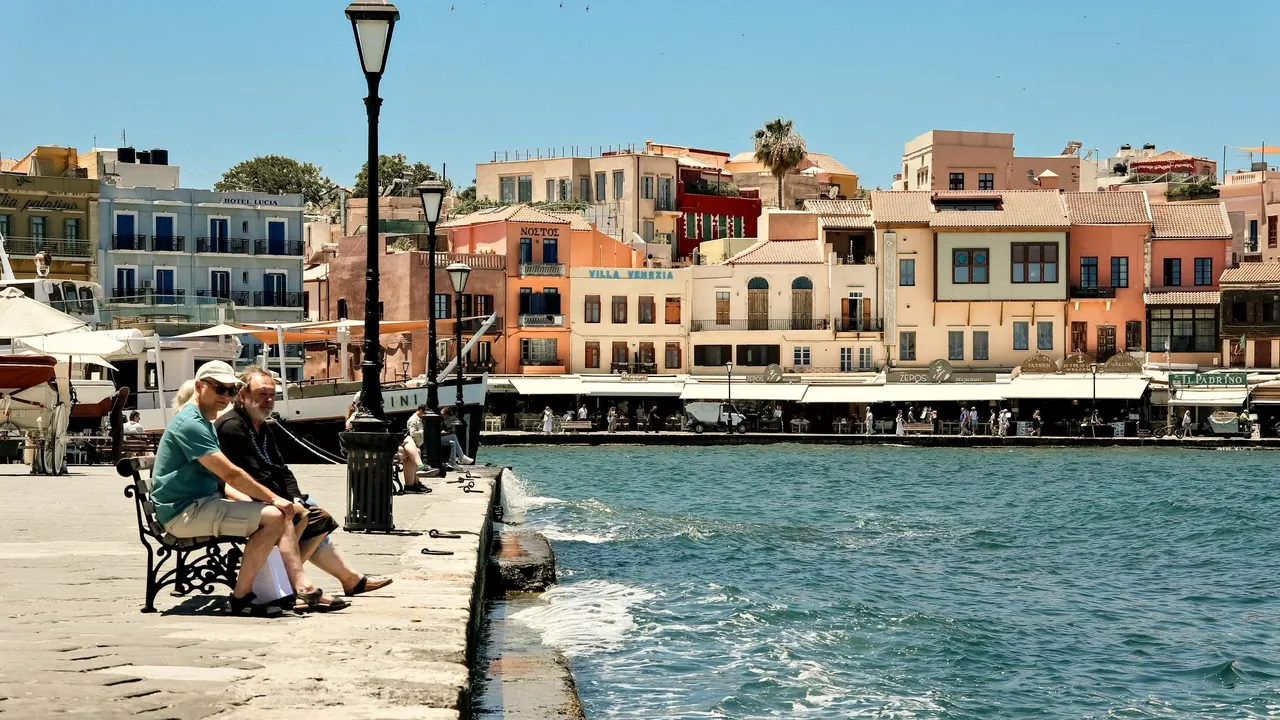
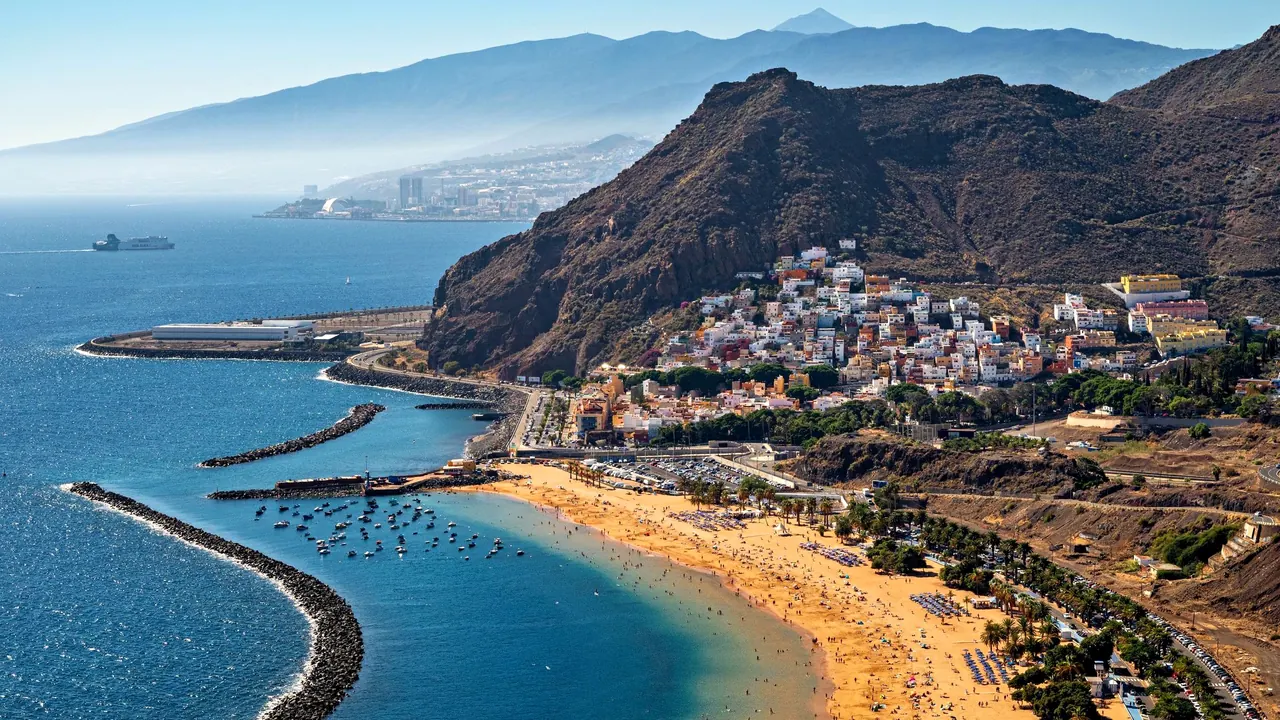
Photos: Crete by Piotr Baranowski, Pexels License; Tenerife by Harald Pippert, Pexels License.
Crete or Tenerife?
Our verdict in twelve categories, each scored against the same fixed benchmark cities, and the climate month by month, so you can choose for your trip.
Choose Crete for
- culture and sights
- beaches
- food and drink
Crete is the stronger choice for a summer trip that mixes swimming, history and eating well. Its beaches are the better set, from the lagoons of Elafonissi and Balos in the west to the boat-reached coves of the south coast. Inland, Knossos, Phaistos and Venetian Chania give it a depth of sights that Tenerife cannot match, and village tavernas serve one of the Mediterranean's most distinctive cuisines. The price is a car, long winding drives and a season that really runs from May to October.
Choose Tenerife for
- families
- live music and the arts
- nature and the outdoors
Tenerife wins on two counts that matter to many travellers: it is warm in every month, and its landscape is extraordinary. Teide's crater, the laurel forest of Anaga and the cliffs of Teno make it the better island for walkers. The sheltered bays and pool complexes of Costa Adeje and Los Cristianos make it the easier base with young children, especially in winter, when Crete has turned cool and wet.
Scoreboard
Twelve categories on one fixed scale from 0 to 100. The shaded stretch is the gap between the two.
Your match
Pick a travel style or drag the sliders, and both match scores follow your weighting.
Too close to call, 1 point apart
Wins on culture and sights and beaches with your weighting.
Wins on families and live music and the arts with your weighting.
What matters to you?
Category by category
What the scores mean for a trip.
Beaches & swimming
Crete has the better beaches, and by some distance. The pink-tinged sand and lagoons of Elafonissi, the turquoise bay at Balos and the long strand of Falassarna are among the best in Greece. The south coast adds pebble coves you reach on foot or by boat, and in summer the sea is properly warm.
Tenerife's beach life relies on man-made bays of pale sand behind breakwaters in the south, plus Las Teresitas near Santa Cruz and the windy natural sand at El Médano. The Atlantic water is cooler and the north coast is rough, though its natural rock pools at Garachico and Bajamar are a pleasure of their own. Its real advantage is that you can swim there in January.
Food & drink
Crete eats better. Its cooking is built on its own olive oil, mountain cheeses such as graviera, wild greens and slow-cooked lamb and goat, and it is at its best in village tavernas and in the backstreets of Chania and Rethymno, with a glass of raki to finish.
Tenerife's Canarian food is simpler: wrinkled potatoes with mojo, grilled goat cheese, and whole fish in the harbour villages. Its most memorable meals come from the farmhouse guachinches of the northern hills. On both islands the resort strips serve menus written for package tourists, but Tenerife has a small fine-dining tier in the Costa Adeje hotels, which Crete largely lacks.
Culture & sights
This is where the two islands differ most. Crete was home to Europe's first great civilisation, and the palaces of Knossos, Phaistos and Malia, together with the frescoes in the Heraklion museum, would justify a trip on their own. Add Chania's Venetian harbour, Rethymno's fortress and Ottoman balconies, Spinalonga and Arkadi, and you have more than a week of sightseeing.
Tenerife's heritage lies in the colonial grid of La Laguna, the carved balconies of La Orotava, Garachico and the Guanche mummies in Santa Cruz. All of it is worth a few days, but it fills the gaps between beach and mountain rather than shaping the trip.
Nightlife
The two islands are evenly matched for going out, and they are surprisingly alike in shape. Each has a loud party strip for young groups, Malia and Hersonissos on Crete and Playa de las Américas on Tenerife, and each has towns where the evening is more grown-up. The difference is timing. Crete's party resorts run only from early summer to early autumn, while Las Américas keeps going all year, and Santa Cruz's Carnival fills the streets for weeks in late winter.
For a more relaxed night, Crete's harbour terraces in Chania and Rethymno have a Greek student crowd. On Tenerife the equivalents are the student bars of La Laguna and the late Spanish evenings of Santa Cruz.
Nature & outdoors
Tenerife has the more dramatic outdoors. Teide rises to 3,715m from a vast crater of lava and pine forest, with clear skies for stargazing above the clouds. Anaga's laurel forest and the Masca gorge are a world away from the arid south, pilot whales live just offshore all year, and the walking season never really closes.
Crete is a serious mountain island too, with the White Mountains, Psiloritis, the walk down the Samaria gorge and the coast path from Loutro to Agia Roumeli. Its summer heat, though, limits hiking to spring and autumn.
Day trips
Crete offers more days out, mainly because it has four towns of real character. Chania, Rethymno, Heraklion and Agios Nikolaos each feel different, and between them lie wine villages around Archanes, potters at Margarites and mountain Anogia. A fast ferry can even take you to Santorini, though it makes a long day.
Tenerife's best outing is excellent: La Gomera, under an hour by ferry, with its terraced valleys and cloud forest. Gran Canaria's Vegueta quarter is a fuller day away. After those and a visit to the green north, the choice is mostly landscape rather than places.
Good for families
Tenerife is the easier island with children. The southern resorts have calm, breakwater-sheltered beaches, flat promenades and low-rise apartments with pools, and the climate rarely gets too hot. A well-known water park, the zoo and marine park at Puerto de la Cruz, whale-watching boats and the Teide cable car fill the other days.
Crete works for a beach-based family summer, with the warm lagoon at Elafonissi, waterparks and the aquarium at Gournes. Midsummer heat, long drives and ruins that soon bore small children make it a little harder going.
Getting around
Both islands really call for a hire car, but Tenerife is more manageable without one. Motorways link the southern resorts with Santa Cruz and the north, a tram runs from Santa Cruz to La Laguna, and buses reach as far as Teide National Park.
Crete is larger and more spread out. Its north-coast buses connect the main towns reliably, but the roads south are steep and slow, and some coastal villages can only be reached on summer boats. That makes a car close to essential if you want to see the gorges and remote beaches.
Shopping & style
Neither island is a shopping destination, but they offer different things. Crete is about produce and crafts: leather and knives in Chania's old lanes, thyme honey, olive oil and ceramics from Margarites. Tenerife has proper high-street shopping on Santa Cruz's pedestrian streets, plus a department store and duty-light electronics and perfume in the southern malls. Its local crafts, such as the calados lace of La Orotava, are a smaller part of the picture.
Affordability
Costs are broadly similar, and car hire is the unavoidable expense on both islands. Where they differ is the season. Crete is cheapest in May, June, September and October, and gets expensive around Elounda and the western beaches in high summer. Tenerife's peak is the winter sun season and school breaks, but low Canary Islands taxes keep drinks, petrol and buses cheap all year, and self-catering in Los Cristianos or Puerto de la Cruz helps the budget.
Live music & performing arts
Tenerife has the larger formal offer, centred on Santa Cruz. Its seafront Auditorio is home to a symphony orchestra and hosts a short opera season, Teatro Guimerá and La Laguna's Teatro Leal stage theatre and concerts, and the Carnival's satirical choirs are a tradition worth watching. All of this is about an hour's drive from the southern resorts.
Crete's strength is a living folk tradition rather than a concert hall: lyra and lute, improvised mantinades and circle dances in the music tavernas of Rethymno and Chania, at saints' day festivals in the villages, and above all in Anogia.
Wellness & relaxation
The islands are on a level here, and neither has its own bathing tradition. Serious spa time on Crete means the resorts around Elounda and the Gulf of Mirabello. On Tenerife it means the Costa Adeje hotels with their thalassotherapy pools. The real difference is how each island slows you down. Crete does it through boat-reached Loutro and long village dinners, best in spring and autumn. Tenerife relies on its mild climate in every season, with yoga fincas in the north and quiet villages such as Vilaflor and Garachico.
When should you go?
Pick your month. The climate figures are measured averages, not a forecast.
Crete in July
Tenerife in July
Daytime high, °C
Rainfall in the month, mm
Temperature and rainfall are climate normals, averaged over the years shown. Crete: 1991-2020 normals, Heraklion Airport (3.6 km from centre). Tenerife: 1991-2020 normals, Tenerife Sur (16.1 km from centre).
The two islands have almost opposite best seasons. Crete is a summer island. From June to September it is dry and hot, and the sea warms to about 25°C, staying pleasant for swimming into October. Midsummer heat makes long hikes and afternoons at the archaeological sites tiring, so spring and autumn suit walking better. The rain returns in October and is heaviest in December and January, when highs drop to around 15°C and the sea cools noticeably. The beaches are still there, but winter is for the towns and sights rather than for swimming.
Tenerife changes much less through the year. Around the southern resorts where most visitors stay, January still reaches about 22°C with little rain. High summer is as hot as Crete's, with both islands peaking around 29°C in August, but on Tenerife the warmth builds and fades more gently on either side. Crete's sea is warmer only from June to September, and then only slightly. From October through winter and spring the Atlantic is the warmer of the two, staying near 20°C while Crete's water turns chilly, so a winter swim on Tenerife is bracing but quite possible. Crete has more sunshine in midsummer and Tenerife far more in winter. That makes Crete the pick from June to September and Tenerife from November to April, with either island working in May or October.
Which traveller are you?
On a culture and arts trip, Crete is the clear pick. Knossos and the Heraklion Archaeological Museum hold the heart of Minoan civilisation, and Chania and Rethymno add Venetian and Ottoman townscapes. Tenerife's La Laguna and La Orotava are pleasant but lighter.
On a family trip with young children, Tenerife is easier. The breakwater-sheltered beaches of Costa Adeje, the large water park, whale-watching boats and a climate that rarely turns too hot all help, whereas Crete brings midsummer heat and long drives on winding roads.
For a beach and sun trip in summer, choose Crete. Its western sands, palm-backed Vai and the boat-reached coves of the south coast are a finer collection than Tenerife's man-made bays, and the sea is noticeably warmer. In winter, though, only Tenerife's beaches are usable.
Before you go
| Measure | Crete | Tenerife |
|---|---|---|
| Official language | Greek | Spanish |
| Currency | Euro (EUR) | Euro (EUR) |
| Sockets | CF230 V, 50 Hz | CF230 V, 50 Hz |
| Driving side | Right | Right |
| Time zone | UTC+2, UTC+3 in summer | UTC, UTC+1 in summer |
| Emergency number | 112 | 112 |
| Main airport | Heraklion International Nikos Kazantzakis Airport (HER)129 non-stop destinations | Tenerife Sur Airport (TFS)111 non-stop destinations |
| Public holidays this year | 15 days | 12 days |
By the numbers
| Measure | Crete | Tenerife |
|---|---|---|
| Population | 623,065 | 955,063 |
| People per km² | 75 | 470 |
| Swim season, months above 21 °C | 5 months | 7 months |
Where else could you go?
Every comparison below shares a destination with this one, so you can follow Crete or Tenerife somewhere new.
- La Gomeravs Tenerife
- Gran Canariavs Tenerife
- Santorinivs Crete
- La Palmavs Tenerife
- Iosvs Crete
- Milosvs Crete