Spain
Tenerife
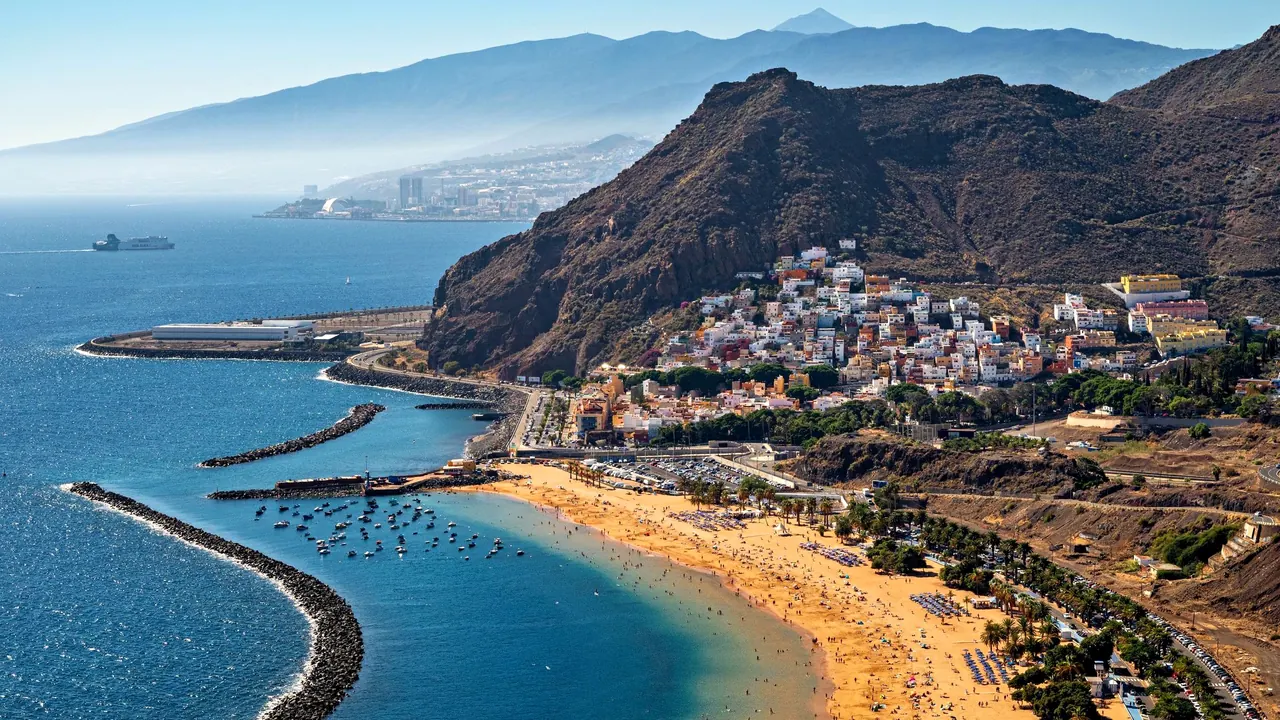
Playa de Las Teresitas at San Andrés
- Nature & outdoors88
- Families80
- Beaches70
Photo: Harald Pippert, Pexels License
Match
58
Every category weighted equally
- Beach & sun61
- Culture & arts53
- Food & nightlife53
- Family trip63
- Outdoors63
- Relax & unwind59
- Shopping & style53
- On a budget58
Tenerife in twelve categories
Our verdict on each, scored 0 to 100 against the same fixed benchmark cities, so a score means the same thing on every page.
Beaches & swimming. Scores 70 out of 100.
Food & drink. Scores 58 out of 100.
Culture & sights. Scores 52 out of 100.
Nightlife. Scores 55 out of 100.
Nature & outdoors. Scores 88 out of 100.
Day trips. Scores 56 out of 100.
Good for families. Scores 80 out of 100.
Getting around. Scores 48 out of 100.
Shopping & style. Scores 42 out of 100.
Affordability. Scores 58 out of 100.
Live music & performing arts. Scores 40 out of 100.
Wellness & relaxation. Scores 48 out of 100.
Tenerife category by category
Beaches & swimming
70Beach life is centred on the dry, sunny south and southwest. Along Costa Adeje, Playa de las Américas and Los Cristianos there is a run of sheltered, man-made bays with pale sand, breakwaters and calm water. Playa del Duque is the most polished of them. Further west, small black-sand coves sit under the cliffs of Los Gigantes. In the north, Las Teresitas near Santa Cruz is a long, palm-lined beach of golden sand brought from the Sahara, and El Médano in the southeast has the island's longest natural sand, though it is often windy.
This is the Atlantic, not a warm inland sea. The water is about 19°C in winter and rarely above 23°C in late summer, so swimming is refreshing rather than balmy, but it is possible in every month. The north coast is rougher and greener, with black-sand beaches and big swell. There, locals swim in natural rock pools and tidal pools, such as those at Garachico and Bajamar.
Food & drink
58Canarian cooking is simple and particular to the islands. It means wrinkled potatoes boiled in salty water with red and green mojo sauces, gofio made from toasted grain, grilled goat cheese, rabbit in salmorejo, and fish such as vieja and cherne served whole in the harbour villages. The island makes its own wines from old volcanic vineyards in the Tacoronte, La Orotava and Abona areas. In the northern hills, guachinches open in farmhouses and garages to pour the new wine with plates of home cooking. These are the most local way to eat on the island.
Where you stay matters a great deal. Much of the southern resort strip serves international menus aimed at package travellers. The best eating is in Santa Cruz, La Laguna, the fishing ports of the coast and the northern countryside. A small group of ambitious kitchens, several of them in the Costa Adeje hotels, adds a fine-dining tier.
Culture & sights
52The island's heritage is in its northern towns. San Cristóbal de La Laguna, the old capital, is a UNESCO-listed grid of colonial streets with mansions, convents and a cathedral. Its layout served as a model for towns founded across Spanish America. La Orotava has steep streets lined with houses with carved wooden balconies. Garachico, a harbour town partly buried by lava in 1706, keeps its old squares and churches. Santa Cruz adds the Museo de la Naturaleza y Arqueología, with its Guanche mummies, the TEA art centre and the white sail of the Auditorio on the seafront.
There is also the basilica at Candelaria with its giant statues of Guanche kings, the ancient dragon tree at Icod de los Vinos and the stepped pyramids of Güímar. All of this is pleasant and worth a few days, but none of it is a reason on its own to make the trip.
Nightlife
55Going out on Tenerife means different things in different places. In the south, Playa de las Américas has a dense strip of bars and clubs that run to dawn all year. The crowd is mostly young visitors, the music is mainstream and the drinks are strong. Costa Adeje is calmer, with lounge and cocktail bars facing the sea. La Laguna is a university town, and its old streets fill with students in bars on weekend nights. Santa Cruz is where locals go out, later and in Spanish style.
Once a year, in late winter, the Carnival of Santa Cruz takes over the capital for several weeks. Its night-time street parties draw huge crowds and are among the biggest anywhere. Away from these places, the north coast and rural areas go quiet after dinner.
Nature & outdoors
88The island rises from the sea to the 3,715m summit of Teide, a volcano set in a vast crater of lava fields, coloured rock and pine forest. It is a national park, and a cable car runs up to near the top. Above the clouds the skies are clear enough for some of the best stargazing in Europe. In the northeast, the Anaga mountains are wrapped in ancient laurel forest and cut by ridge paths down to remote hamlets and black beaches. In the northwest, the Teno massif drops into the Masca gorge and the sheer cliffs of Los Gigantes.
The contrasts are the draw, from the green, misty north to the arid south. Pilot whales and dolphins live in the strait off the southwest coast and can be watched all year. El Médano is a known spot for windsurfing and kitesurfing. There is also diving, paragliding over Adeje and good walking in every season, though Teide's summit can see snow in winter.
Day trips
56The best day out is La Gomera, under an hour by ferry from Los Cristianos. It is a steep, quiet island with the small capital of San Sebastián, terraced valleys, the whistled language of its shepherds and the cloud forest of Garajonay. Gran Canaria is a longer outing by fast ferry from Santa Cruz to Las Palmas, where the old Vegueta quarter and a long city beach make a full day.
On Tenerife itself, a stay in the south can be combined with days in the cooler, greener north: tasting wine in the Tacoronte and Orotava valleys, visiting Puerto de la Cruz and its seafront, or exploring the fishing villages of the coast. Beyond these, the options thin out, and most other excursions are into the landscape rather than to towns.
Good for families
80Tenerife is one of the easiest places in Europe for a winter-sun vacation with children. Costa Adeje and Los Cristianos have calm, man-made beaches protected by breakwaters, low-rise apartment complexes with pools and a gentle climate that rarely gets too hot or too cold. The south has one of Europe's best-known water parks, and there is a large zoo and marine park in Puerto de la Cruz. Smaller animal parks, boat trips to see whales and dolphins, and the cable car up Teide fill other days.
Spanish culture welcomes children in restaurants until late, and the resorts are safe and easy to manage. The north is harder going, with steep streets, rough seas and long, winding drives. For young children, a base in the south is the simpler choice.
Getting around
48The island is small, but its volcanic relief makes journeys slower than the map suggests. Two motorways link the southern resorts, Santa Cruz and the north coast. A tram runs between Santa Cruz and La Laguna, and green buses reach most towns, including Teide National Park. Within the southern resorts, the seafront promenades are long, flat and easy to walk.
To see much beyond your base, a hire car is the practical choice. The roads up to Teide and through Teno and Anaga are well made but winding, steep and often busy. The motorway around Santa Cruz and La Laguna jams at rush hour. The island has two airports, the southern one close to the main resorts.
Shopping & style
42Santa Cruz is where the real shopping is. Its pedestrian streets around Calle del Castillo have Spanish chains, local shops and a branch of the national department store. The Mercado de Nuestra Señora de África, a covered market built around arcaded courtyards, sells local produce, cheese and flowers. The southern resorts have open-air malls and long rows of electronics, perfume and souvenir shops, with prices helped by the islands' low tax.
Craft traditions survive in the north. These include drawn-thread lace called calados, basketwork and pottery in La Orotava and the villages, and weekend farmers' markets sell honey, wine and mojo. Fashion-led shopping and design boutiques are few.
Affordability
58Tenerife is moderately priced for Western Europe, and cheaper than the Spanish mainland's resort coasts on many everyday costs. The Canary Islands' low indirect tax keeps drinks, petrol and many goods inexpensive. Simple local food, especially in the northern villages and wine houses, costs little, and buses are cheap.
Accommodation is the main expense. Rooms in Costa Adeje, especially upmarket hotels, cost more in the winter high season and during school breaks. Self-catering apartments in Los Cristianos, Puerto de la Cruz or the countryside keep a stay affordable, and package deals are common. A hire car adds to the budget but is reasonable by European standards.
Live music & performing arts
40Performing arts are concentrated in Santa Cruz. The Auditorio de Tenerife, a white concrete wave on the seafront, is home to the Tenerife Symphony Orchestra and stages a short opera season, dance and touring productions. The nineteenth-century Teatro Guimerá in the old town and the Teatro Leal in La Laguna offer theatre and concerts, sung in Spanish. The Canary Islands Music Festival brings visiting orchestras in winter, and the Carnival's satirical choirs and competitions are a local tradition to watch.
The southern resorts offer mostly hotel shows, tribute acts and bar bands. A visitor who cares about music needs to plan evenings in the capital, which is about an hour's drive from the south.
Wellness & relaxation
48There is no traditional bathing culture on the island. Wellness is found in the large resort hotels of Costa Adeje, several of which have extensive spas with thalassotherapy pools, hydrotherapy circuits and treatment menus. Yoga and retreat stays use the quiet fincas and rural houses in the north and the hills above the south coast.
The island's calm comes from its climate, mild and even in every season, and from its slow pace away from the resort strips. Villages such as Garachico, Vilaflor or the hamlets of Anaga are quiet places to unwind. The party streets of Las Américas are not.
Where to stay in Tenerife
Most visitors stay in the dry, sunny south, close to the main airport. Costa Adeje is the most polished stretch, with calm bays such as Playa del Duque, quiet seafront bars and the island's big spa hotels. It suits couples and families who want comfort. Los Cristianos is a real town as well as a resort. With its sheltered beach, self-catering apartments and the ferry to La Gomera, it is an easy, affordable family base. Playa de las Américas, between the two, is the place for late nights and the wrong choice for a quiet stay.
The north is for people who care more about food, culture and walking than about beach days. Puerto de la Cruz, the old resort town on the north coast, has apartments, a seafront and a large zoo, and sits below the Orotava valley vineyards. La Laguna puts you among colonial streets and student bars, with the tram to Santa Cruz for the market, concerts and Carnival. For real quiet, choose Garachico, Vilaflor or a rural house near Anaga, and hire a car.
On a first visit, a single base in the south works well, with drives up to Teide and day trips north. On a second visit, base yourself in the north. For a longer trip, splitting the stay between south and north saves long, winding drives.
When should you go?
Pick a month to see what it is like. The climate figures are measured averages, not a forecast.
Tenerife in July
Daytime high, °C
Rainfall in the month, mm
The whole year
Shaded against this city’s own year: the deepest cell is its best month for that figure and the palest its weakest.
Temperature and rainfall are climate normals, averaged over the years shown. Tenerife: 1991-2020 normals, Tenerife Sur (16.1 km from centre).
Before you go
| Measure | Tenerife |
|---|---|
| Official language | Spanish |
| Currency | Euro (EUR) |
| Sockets | CF230 V, 50 Hz |
| Driving side | Right |
| Time zone | UTC, UTC+1 in summer |
| Emergency number | 112 |
| Main airport | Tenerife Sur Airport (TFS)111 non-stop destinations |
| Public holidays this year | 12 days |
By the numbers
| Measure | Tenerife |
|---|---|
| Population | 955,063 |
| People per km² | 470 |
| Swim season, months above 21 °C | 7 months |
Compare Tenerife with
Every comparison with a written verdict behind it.