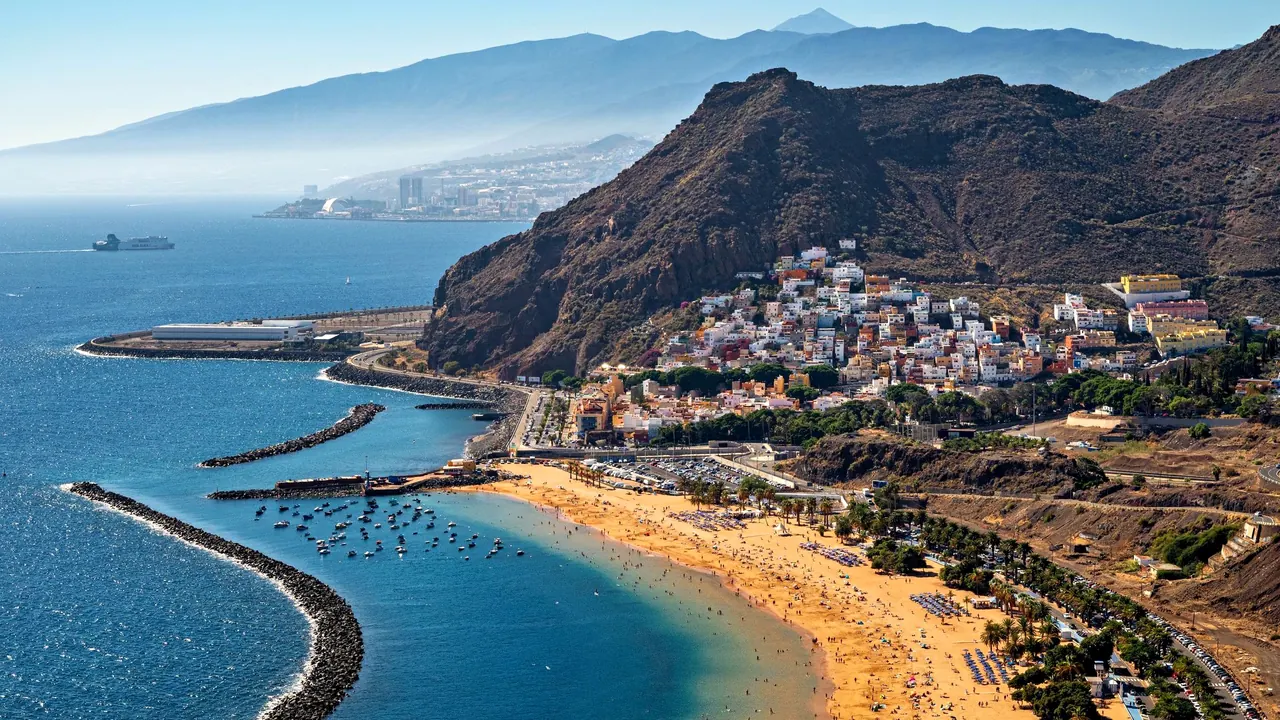
Photos: Tenerife by Harald Pippert, Pexels License.
La Gomera or Tenerife?
Our verdict in twelve categories, each scored against the same fixed benchmark cities, and the climate month by month, so you can choose for your trip.
Choose La Gomera for
La Gomera does not lead in any category we score.
La Gomera is for travellers who want to walk and slow down. Its outdoors stands level with its bigger neighbour: Garajonay's cloud forest, terraced ravines and a trail that circles the island. It comes with quiet villages, early nights and very little built for visitors. If you are happy with sunsets in Valle Gran Rey, long hikes and simple village meals, it fits well. If you need sandy beaches, varied restaurants or evenings out, it will soon feel too small.
Choose Tenerife for
- nightlife
- families
- shopping
Tenerife is the stronger all-round choice. It is the clear one for families, for a beach week on sheltered sand in the south, and for anyone who wants good food, nightlife and old towns as well as Teide and the Anaga mountains. It has the resorts, the water park, the streets of La Laguna and the concerts of Santa Cruz. What you give up is the quiet: the southern strip is busy, and finding the island's calm means heading north or into the hills.
Scoreboard
Twelve categories on one fixed scale from 0 to 100. The shaded stretch is the gap between the two.
Your match
Pick a travel style or drag the sliders, and both match scores follow your weighting.
Has no clear advantage with the weighting you have chosen.
Wins on nightlife and families with your weighting.
What matters to you?
Category by category
What the scores mean for a trip.
Beaches & swimming
Tenerife has far more to offer on a beach vacation. The southern resorts of Costa Adeje, Las Américas and Los Cristianos have pale-sand bays kept calm by breakwaters. Las Teresitas in the north and El Médano in the southeast add long stretches of golden sand.
La Gomera's beaches are dark coves of sand and pebble at the mouths of its ravines, often hit by swell. The best swimming is in sheltered spots such as La Playa and Charco del Conde in Valle Gran Rey, or in seawater pools. The water is the same mild Atlantic around both islands.
Food & drink
Both islands cook in the Canarian way, with wrinkled potatoes, mojo and grilled fish, but Tenerife offers much more choice. Guachinches in the northern hills pour new wine with home cooking, Santa Cruz and La Laguna eat well every day, and a few ambitious hotel kitchens in Costa Adeje add fine dining.
La Gomera's food is narrower but very much its own: almogrote on bread, palm syrup and watercress stew, served in family places in the villages and harbours. A curious eater will enjoy it for a week, but there is little beyond home cooking.
Culture & sights
La Gomera's sights fit into a single day in San Sebastián: the fifteenth-century Torre del Conde by the harbour, the church where Columbus's crew are said to have prayed, and the Casa de Colón. Its most remarkable heritage is something you hear rather than visit. Silbo Gomero, the whistled language once used across the ravines, is still taught in its schools.
Tenerife gives a visitor interested in history several days rather than one. La Laguna's UNESCO-listed colonial grid, the carved balconies of La Orotava, Garachico with its old squares after the lava of 1706, and the Guanche mummies in the museum at Santa Cruz make a fuller programme, though none of them is a reason for the trip on its own.
Nightlife
Tenerife wins easily. It has clubs that run until dawn in Playa de las Américas, cocktail bars facing the sea in Costa Adeje, student bars in La Laguna, late Spanish-style nights in Santa Cruz and the huge Carnival in late winter.
On La Gomera, a night out means watching the sunset from a seafront bar in Valle Gran Rey, sometimes to drums, and an early bed. The nearest clubs are a ferry ride away on Tenerife.
Nature & outdoors
Both islands are outstanding outdoors, and both have laurel forest and boat trips to see pilot whales and dolphins. The difference is in scale and drama. Tenerife has Teide's crater of lava and coloured rock, clear skies for stargazing, the Masca gorge, the cliffs of Los Gigantes and the wind at El Médano.
La Gomera is more compact and quieter. Garajonay's misty cloud forest sits at its heart, ravines stepped with terraces fall to the sea, and rock pillars such as Roque de Agando stand above them. Marked trails, including one around the whole island, make it the more natural choice for a walking vacation far from any resort.
Day trips
The ferry between the two islands takes under an hour, but the link works better in one direction. From La Gomera, Tenerife's best towns, La Laguna and Garachico, still lie well over an hour's drive beyond Los Cristianos, so the outing makes a long day. On the island itself, the trips are to Agulo, Hermigua and Vallehermoso, which are pleasant but small.
Going the other way, La Gomera itself is the finest day out from Tenerife's south, and the fast ferry from Santa Cruz to Las Palmas adds Gran Canaria's old Vegueta quarter. A base in the south can also spend days in the northern wine valleys and Puerto de la Cruz.
Good for families
Tenerife is one of Europe's easiest family destinations, and La Gomera is not. Tenerife's southern resorts have calm, sheltered beaches, pool complexes, a large water park and long, flat promenades, with the zoo and marine park in Puerto de la Cruz for another day.
La Gomera suits children who enjoy walking and boats. There are dolphin trips, easy forest paths in Garajonay and rock pools at Valle Gran Rey, and Playa de Santiago is the gentlest base. Nothing is made for children, though, and the winding roads can upset young passengers.
Getting around
On both islands the steep volcanic terrain makes journeys slower than the map suggests, but Tenerife is easier. Motorways link south and north, a tram runs between Santa Cruz and La Laguna, buses reach most towns and Teide, and the southern airport is close to the resorts.
Reaching La Gomera means a flight to Tenerife and then a ferry. On the island, the drive from San Sebastián to Valle Gran Rey takes about an hour. Buses are rare, so a hire car is close to essential unless you are walking from village to village.
Shopping & style
Only Tenerife works for a shopping trip, and even there the choice is modest. Santa Cruz has pedestrian streets, a department store and the arcaded Mercado de Nuestra Señora de África. The south has open-air malls and low-tax goods, and La Orotava keeps its traditions of lace and basketwork.
La Gomera offers food and crafts to take home: palm honey, almogrote, island wine and the pottery of El Cercado, shaped by hand without a wheel.
Affordability
Overall costs are broadly similar; what differs is where the money goes. On La Gomera, apartments and rural houses cost less than on the busier islands, and prices hardly change with the seasons, but the ferry and a hire car you can rarely do without add up.
On Tenerife, cheap buses, low-tax drinks and fuel, and plenty of package deals help. Rooms in Costa Adeje cost more in winter and during school breaks.
Live music & performing arts
Tenerife has a real stage scene, if a small one, centred on Santa Cruz. The symphony orchestra and a short opera season play at the Auditorio, there is theatre at the Teatro Guimerá and in La Laguna, a music festival in winter, and the satirical choirs of Carnival. From the south it is about an hour's drive each way.
La Gomera has no theatre or concert hall. Its music is the baile del tambor at village fiestas, with drums, chácaras and old ballads, and the processions for the Virgin of Guadalupe.
Wellness & relaxation
Neither island has a bathing tradition, and Tenerife has slightly more to offer. The large hotels of Costa Adeje have proper spas with thalassotherapy pools and hydrotherapy circuits. Rural fincas in the north and villages such as Vilaflor and Garachico are good for retreats.
La Gomera has few treatments but a slower pace across the whole island. Yoga and retreat houses sit among the terraces of Valle Gran Rey, and watching the sunset over the Atlantic is the evening ritual.
When should you go?
Pick your month. The climate figures are measured averages, not a forecast.
La Gomera in July
Tenerife in July
Daytime high, °C
Rainfall in the month, mm
Where the figures come from
La Gomera's temperatures are measured 54 km from the centre, at Tenerife Sur.
La Gomera has no rain gauge within 25 km of the centre, so its rainfall comes from a gridded climate dataset read at the destination rather than from a gauge further away.
Temperature and rainfall are climate normals, averaged over the years shown. La Gomera: 1991-2020 normals, Tenerife Sur (53.5 km from centre). Tenerife: 1991-2020 normals, Tenerife Sur (16.1 km from centre).
Measured around their main resort areas, the two islands have almost the same warmth all year. Daytime highs run from about 22°C in winter to 29°C in August. The sea is cool but swimmable in every month and warmest in September and October. Neither island is ever too cold for walking, and summer stays moderate, though the trails of Garajonay and the slopes of Teide are cooler than the coast. On both, summer is almost dry and July is the sunniest month.
The difference is winter rain. From October to February, La Gomera's measuring point gets noticeably more than Tenerife's, and it peaks in December at 56mm against 32mm. That is still little rain. Spring, when the showers have passed and the hills are green, is the best time for walking on either island. For a reliable winter-sun beach week, Tenerife is the safer bet.
Which traveller are you?
On a family trip with children, Tenerife is far easier. The south has calm beaches behind breakwaters, apartment pools and a well-known water park, and Puerto de la Cruz has a zoo and marine park. La Gomera has rock pools and dolphin trips but nothing built for children.
For a food and nightlife trip, Tenerife wins clearly. It has guachinches in the northern hills, harbour fish and a small fine-dining tier, plus the clubs of Las Américas and the student bars of La Laguna. La Gomera eats simply and goes quiet after dinner.
On an outdoors trip, both islands are excellent, so choose by style. La Gomera puts Garajonay's cloud forest at the centre of a small, uncrowded island, with marked trails reaching every village. Tenerife adds Teide, the Masca gorge, and kitesurfing at El Médano.
Before you go
| Measure | La Gomera | Tenerife |
|---|---|---|
| Official language | Spanish | Spanish |
| Currency | Euro (EUR) | Euro (EUR) |
| Sockets | CF230 V, 50 Hz | CF230 V, 50 Hz |
| Driving side | Right | Right |
| Time zone | UTC, UTC+1 in summer | UTC, UTC+1 in summer |
| Emergency number | 112 | 112 |
| Main airport | Tenerife Sur Airport (TFS)111 non-stop destinations | Tenerife Sur Airport (TFS)111 non-stop destinations |
| Public holidays this year | 12 days | 12 days |
By the numbers
| Measure | La Gomera | Tenerife |
|---|---|---|
| Population | 22,436 | 955,063 |
| People per km² | 61 | 470 |
| Swim season, months above 21 °C | 7 months | 7 months |
Where else could you go?
Every comparison below shares a destination with this one, so you can follow La Gomera or Tenerife somewhere new.
- La Palmavs La Gomera
- Gran Canariavs Tenerife
- La Palmavs Tenerife
- Gran Canariavs La Gomera
- Fuerteventuravs Tenerife
- Lanzarotevs Tenerife