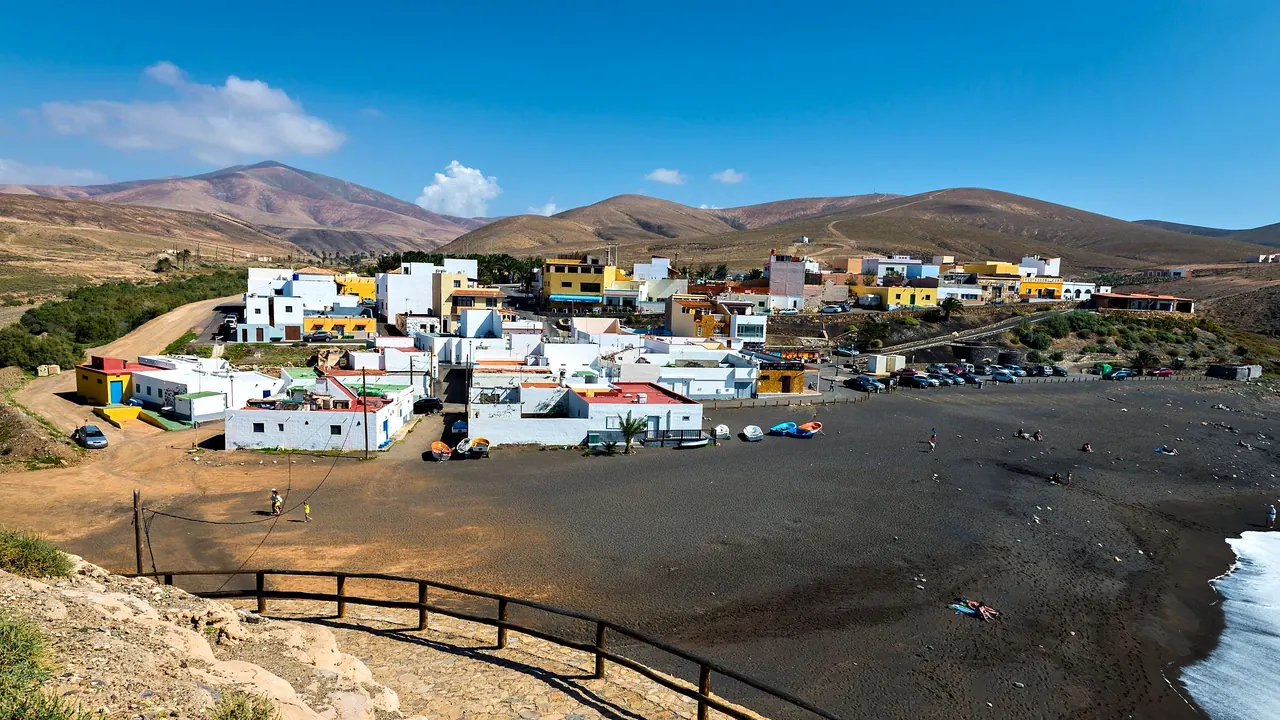
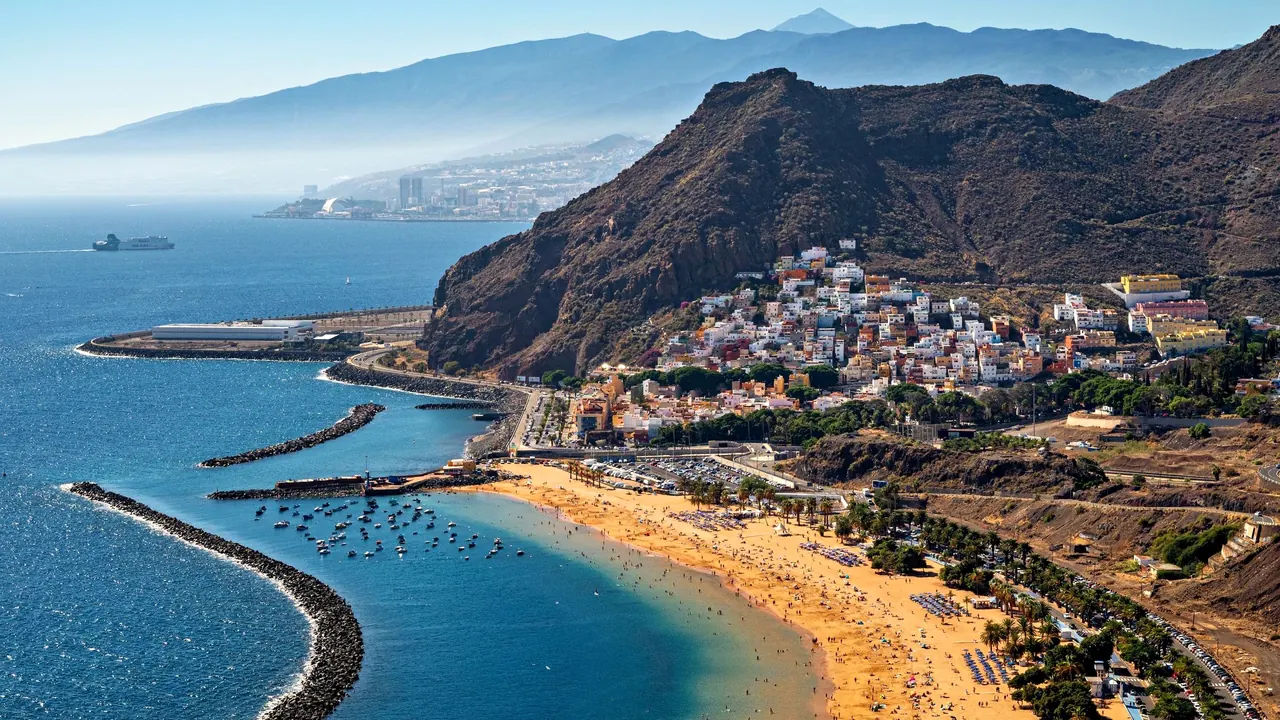
Photos: Fuerteventura by Magic K, Pexels License; Tenerife by Harald Pippert, Pexels License.
Fuerteventura or Tenerife?
Our verdict in twelve categories, each scored against the same fixed benchmark cities, and the climate month by month, so you can choose for your trip.
Choose Fuerteventura for
- beaches
- getting around
If the beach itself is the vacation, Fuerteventura is the island to pick. Its sands are long, natural and pale, from the Corralejo dunes in the north to the tidal lagoon at Sotavento on Jandía, and its steady trade winds draw windsurfers, kitesurfers and winter surfers. Evenings are quiet and there are few sights, which suits travellers who want sand, sea and very little else.
Choose Tenerife for
- culture and sights
- live music and the arts
- nightlife
Tenerife suits a trip with more variety. From a base in the south you have calm beaches, family attractions and the late bars of Playa de las Américas close by. Teide's volcanic park, the wine valleys and the colonial streets of La Laguna each make a full day out. Anaga's laurel forest lies beyond the capital, at least an hour away on winding mountain roads. The price is the beaches: mostly man-made bays that can't match Fuerteventura's sands.
Scoreboard
Twelve categories on one fixed scale from 0 to 100. The shaded stretch is the gap between the two.
Your match
Pick a travel style or drag the sliders, and both match scores follow your weighting.
Wins on beaches and getting around with your weighting.
Wins on culture and sights and live music and the arts with your weighting.
What matters to you?
Category by category
What the scores mean for a trip.
Beaches & swimming
This is Fuerteventura's strongest card. Its beaches are natural and huge. The Corralejo dunes run straight down to the sea, there are reef-sheltered lagoons at El Cotillo, and at Sotavento on Jandía the tide fills a vast shallow lagoon across mile after mile of pale sand.
Tenerife's main beaches in Costa Adeje and Los Cristianos are mostly man-made bays behind breakwaters. They are calm and well kept but small, and the alternatives are black-sand coves, the imported Saharan sand at Las Teresitas and rock pools on the rough north coast. The sea temperature is almost the same around both islands. Fuerteventura's wind is the main trade-off, so look for its east and south-facing shores.
Food & drink
The two islands share the same Canarian basics: wrinkled potatoes with mojo, gofio, goat cheese and whole grilled fish. Tenerife takes them much further. It makes its own wine in the volcanic vineyards of Tacoronte, La Orotava and Abona, the farmhouse guachinches in the northern hills serve home cooking with the new wine, and a few ambitious hotel kitchens in Costa Adeje add a fine-dining option.
Fuerteventura has its protected majorero cheese and good fish by the water at El Cotillo, Ajuy and Morro Jable, but not much else. It has no fine dining, and most of its wine is brought in from the neighbouring islands. On both islands the resort menus are mostly international, so it pays to eat away from them.
Culture & sights
Tenerife has real heritage to explore. La Laguna's colonial grid of streets served as a model for towns across Spanish America. La Orotava has its carved wooden balconies, and Garachico survived being partly buried by lava. Santa Cruz adds the Guanche mummies in its natural history and archaeology museum, as well as the TEA art centre.
On Fuerteventura, the old capital of Betancuria, the colonial manor house in La Oliva, the windmills and the sacred mountain of Tindaya fill an afternoon or two at most. Neither island is a culture destination, but Tenerife can fill several days of sightseeing.
Nightlife
Tenerife has a range of nightlife that Fuerteventura lacks. The bars and clubs of Playa de las Américas stay open until dawn all year. La Laguna's old streets fill with students at weekends, Santa Cruz goes out late with the locals, and its late-winter Carnival is one of the biggest street parties anywhere.
Fuerteventura's evenings centre on Corralejo, where pubs and cocktail bars around the old harbour fill with surfers. That is about it. It suits a relaxed drink at sunset rather than a night out.
Nature & outdoors
Tenerife's landscape is far more varied. Teide rises to 3,715m from a crater of lava and pine forest, with some of Europe's clearest skies for stargazing. Elsewhere you'll find the misty laurel forest of Anaga, the Masca gorge, the cliffs of Los Gigantes and pilot whales living offshore all year.
Fuerteventura offers one kind of landscape done on a grand scale: bare volcanic hills, the shifting dunes of Corralejo, the empty Cofete coast and the islet of Lobos. Its real strength is on the water. Sotavento and Flag Beach have reliable wind for kitesurfing, and the reefs around El Cotillo and Lajares draw surfers in winter. On land, though, it has little shade and less variety.
Day trips
Each island has one obvious trip by ferry. From Fuerteventura it is Lanzarote, about half an hour from Corralejo, with La Geria's vineyards and Teguise beyond. From Tenerife it is quiet La Gomera, with its terraced valleys, whistled language and the cloud forest of Garajonay.
Tenerife has more to offer on top of that. A stay in the south can easily include days in the green north, with wine valleys, Puerto de la Cruz and old fishing villages. Gran Canaria's Vegueta quarter is also within reach by fast ferry. Once Fuerteventura's drive through Betancuria and Ajuy is done, mostly empty landscape remains.
Good for families
Both islands work well with children, but Tenerife is easier. Its beaches in Costa Adeje and Los Cristianos sit behind breakwaters, so the water stays calm whatever the weather. It also has a well-known water park, the zoo and marine park at Puerto de la Cruz, whale-watching boats and the Teide cable car to fill the days.
Fuerteventura's shallow lagoons at Sotavento and El Cotillo are lovely for small children, and there are the zoo near La Lajita and the glass-bottom boat to Lobos. On windy days, however, there is less to fall back on, and the west coast has strong currents.
Getting around
On both islands a hire car is the practical choice, but driving is quite different. Fuerteventura is flat and quiet, about two hours from end to end on good empty roads. Only Cofete and parts of the west need dirt tracks, and buses are too infrequent for reaching beaches.
Tenerife has better public transport, with a tram between Santa Cruz and La Laguna and buses that reach Teide. However, its mountains make the roads steep and winding, and traffic around the capital builds up at rush hour.
Shopping & style
Tenerife has proper city shopping in the pedestrian streets of Santa Cruz around Calle del Castillo, plus the arcaded Mercado de Nuestra Señora de África for cheese and produce. The north adds calados lace, basketwork and farmers' markets.
Fuerteventura has surf shops in Corralejo, the weekly craft market at Lajares, and majorero cheese and aloe vera to take home. Neither island is a fashion destination.
Affordability
The two cost about the same, as both benefit from the Canaries' low taxes on drinks and fuel, and both need a hire car to be seen properly. Prices on Fuerteventura climb at the big all-inclusive resorts in the south. On Tenerife, rooms in upmarket Costa Adeje are the main expense. Cheap buses and simple meals at the northern wine houses help keep costs down.
Live music & performing arts
Tenerife has a real performing arts scene in Santa Cruz. The Auditorio on the seafront is home to the island's symphony orchestra and hosts a short opera season. Concerts and Spanish-language theatre run at the Teatro Guimerá and La Laguna's Teatro Leal, and a classical music festival brings visiting orchestras in winter.
On Fuerteventura you are limited to timple players at village fiestas, an occasional concert in Puerto del Rosario and cover bands in the resorts. On Tenerife, keep in mind that the capital is about an hour's drive from the southern beaches.
Wellness & relaxation
Neither island has a bathing tradition, so spa time on either one means resort hotels. Tenerife's large Costa Adeje hotels have the more extensive thalassotherapy and hydrotherapy circuits. Fuerteventura relies on simpler hotel spas and seawater pools.
The kind of quiet also differs. Fuerteventura's calm comes from empty roads and surf and yoga retreats around Lajares and El Cotillo. On Tenerife you will find it in rural fincas, Vilaflor and the hamlets of Anaga, well away from Las Américas.
When should you go?
Pick your month. The climate figures are measured averages, not a forecast.
Fuerteventura in July
Tenerife in July
Daytime high, °C
Rainfall in the month, mm
Where the figures come from
Fuerteventura's temperatures are measured 31 km from the centre, at Fuerteventura / Aeropuerto.
Fuerteventura has no rain gauge within 25 km of the centre, so its rainfall comes from a gridded climate dataset read at the destination rather than from a gauge further away.
Temperature and rainfall are climate normals, averaged over the years shown. Fuerteventura: 1991-2020 normals, Fuerteventura / Aeropuerto (31.1 km from centre). Tenerife: 1991-2020 normals, Tenerife Sur (16.1 km from centre).
Around the main resort areas both islands share a mild Atlantic climate with no cold month, so either one works for winter sun. Fuerteventura's winter days are a touch cooler, and from July to September highs reach about 28°C on both. That is good beach weather, but walking is another matter. Fuerteventura's bare, shadeless land makes summer walks hot work, so go early in the morning. Tenerife's south is just as warm, but its hills and green north make walking possible in every season. The sea stays cool all year. Fuerteventura's drops to 18°C in late winter and Tenerife's to 19°C. Both are warmest in September and October, Tenerife's slightly more so, and that is the best time to swim.
Rain is scarce on both islands and falls mostly between autumn and February. On Tenerife October is already as wet as November, and both islands get their most rain in December, about 32mm on Tenerife and a little less on Fuerteventura. Summer is almost completely dry on both. Fuerteventura gets noticeably more sunshine in May, June and September. Through high summer and winter the two are about level.
Which traveller are you?
For a beach and sun trip, Fuerteventura is the stronger choice. Its natural white beaches at Corralejo, El Cotillo and Jandía are longer and wilder than Tenerife's sheltered man-made bays, and its windier coasts are excellent for windsurfing and kitesurfing.
On a culture and arts trip, Tenerife wins clearly. La Laguna's UNESCO-listed streets, La Orotava's balconied houses, the Guanche mummies in Santa Cruz and concerts at the Auditorio give it several days of content. Fuerteventura's rural heritage takes an afternoon.
For an outdoors trip, Tenerife offers far more range. You can climb towards Teide's summit, walk ridge paths through the Anaga laurel forest, hike the Masca gorge and watch whales off the southwest coast. Fuerteventura's bare craters and dunes are striking but much more limited.
Before you go
| Measure | Fuerteventura | Tenerife |
|---|---|---|
| Official language | Spanish | Spanish |
| Currency | Euro (EUR) | Euro (EUR) |
| Sockets | CF230 V, 50 Hz | CF230 V, 50 Hz |
| Driving side | Right | Right |
| Time zone | UTC, UTC+1 in summer | UTC, UTC+1 in summer |
| Emergency number | 112 | 112 |
| Main airport | Fuerteventura Airport (FUE)70 non-stop destinations | Tenerife Sur Airport (TFS)111 non-stop destinations |
| Public holidays this year | 12 days | 12 days |
By the numbers
| Measure | Fuerteventura | Tenerife |
|---|---|---|
| Population | 127,043 | 955,063 |
| People per km² | 78 | 470 |
| Swim season, months above 21 °C | 5 months | 7 months |
Where else could you go?
Every comparison below shares a destination with this one, so you can follow Fuerteventura or Tenerife somewhere new.
- Lanzarotevs Fuerteventura
- La Gomeravs Tenerife
- Gran Canariavs Tenerife
- La Palmavs Tenerife
- Gran Canariavs Fuerteventura
- Lanzarotevs Tenerife