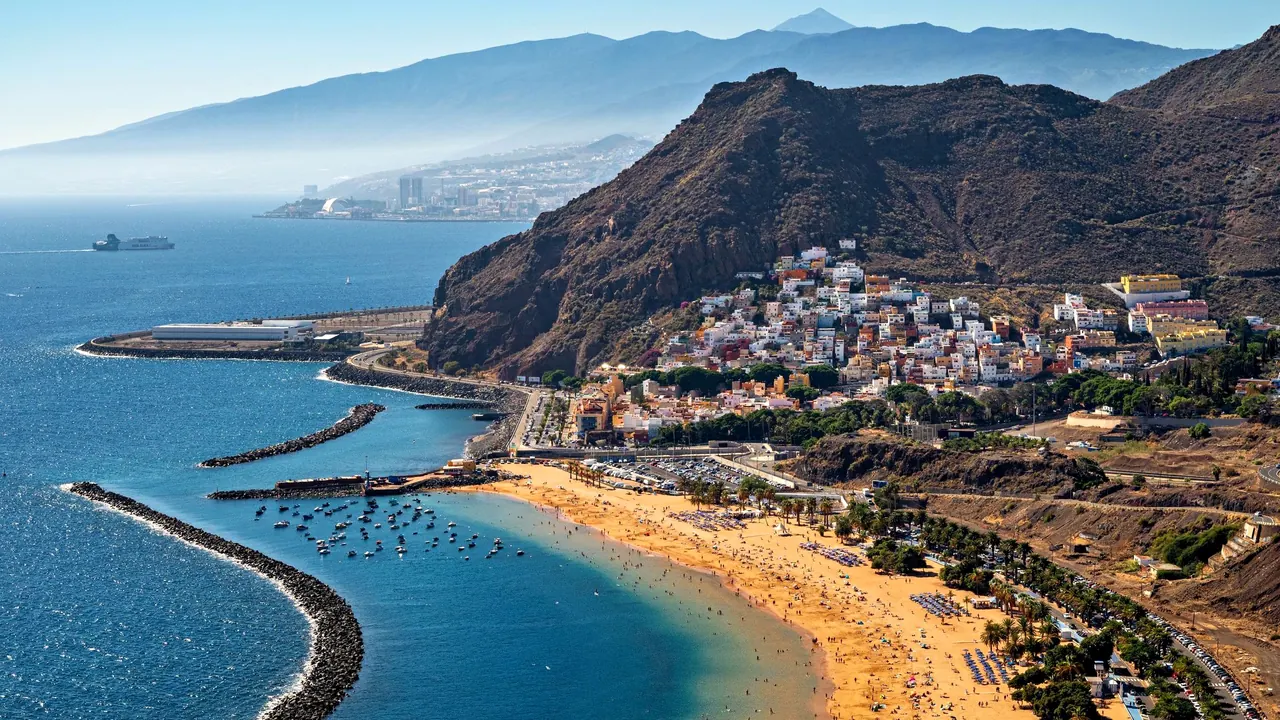
Photos: Tenerife by Harald Pippert, Pexels License.
La Palma or Tenerife?
Our verdict in twelve categories, each scored against the same fixed benchmark cities, and the climate month by month, so you can choose for your trip.
Choose La Palma for
La Palma does not lead in any category we score.
La Palma is for travellers who come to walk and look up at the sky. Its trails around the Caldera de Taburiente, along the volcanic spine to Fuencaliente and into the laurel forest of Los Tilos are as good as anything on its larger neighbour, and they come with quiet villages, rural houses and early nights. In exchange you get modest beaches, a narrow choice of restaurants and very little to do after dark. It suits couples and walkers who want to switch off.
Choose Tenerife for
- families
- nightlife
- day trips
Tenerife works for almost any other kind of trip, because it has much more besides the mountains. Pale-sand bays in the south, real nightlife, a UNESCO-listed old capital at La Laguna, easy family resorts and a ferry to La Gomera all sit alongside Teide and the Anaga forests. The price is crowds on the southern resort strip and a more built-up coast, so pick your base with care.
Scoreboard
Twelve categories on one fixed scale from 0 to 100. The shaded stretch is the gap between the two.
Your match
Pick a travel style or drag the sliders, and both match scores follow your weighting.
Has no clear advantage with the weighting you have chosen.
Wins on families and nightlife with your weighting.
What matters to you?
Category by category
What the scores mean for a trip.
Beaches & swimming
Tenerife is far better for a beach vacation. In the south, Costa Adeje, Los Cristianos and Playa del Duque have sheltered, pale-sand bays with calm water. Near Santa Cruz, Las Teresitas has golden sand under palms, and El Médano has a long natural beach for those who don't mind the wind.
La Palma has only a handful of black-sand and pebble beaches, at Puerto Naos, Tazacorte and Los Cancajos, and much of its coast is rough open Atlantic. The rock pools at Charco Azul are lovely, but here a swim is a break between walks rather than the reason for the trip.
Food & drink
The two islands share the same Canarian basics: wrinkled potatoes with mojo, grilled goat cheese, rabbit in salmorejo and fish straight from the harbour. Tenerife offers far more choice, from farmhouse guachinches in the northern hills to good tables in Santa Cruz and La Laguna and a few ambitious hotel kitchens in Costa Adeje. Just avoid the international menus of the southern resort strip.
La Palma's choice of restaurants is narrow, and there is little fine dining. Its wine is what stands out. There is Malvasia grown on black ash at Fuencaliente, and the piny vino de tea of the north-west, aged in Canary pine barrels, is something you won't find elsewhere.
Culture & sights
Tenerife has more heritage worth a dedicated day. La Laguna's UNESCO-listed colonial grid served as a model for towns across Spanish America, and La Orotava has steep streets of balconied houses. Garachico was half buried by lava in 1706, and the museum in Santa Cruz holds Guanche mummies.
On La Palma, most of the heritage is on Calle Real in Santa Cruz de La Palma, with sixteenth-century churches and painted balconied houses on the seafront. Beyond the capital there are the spiral petroglyphs of La Zarza. That fills a few pleasant days, but no more.
Nightlife
Tenerife has nightlife and La Palma barely does. On Tenerife you can choose between the bars and clubs of Playa de las Américas, open until dawn all year, the student streets of La Laguna and late Spanish-style nights out in Santa Cruz, whose carnival is one of the largest anywhere.
La Palma has a few busy squares in Santa Cruz and Los Llanos at weekends and quiet resorts after dinner. Its one big party is the Los Indianos parade on carnival Monday, when people in white cover the capital in talcum powder.
Nature & outdoors
Both islands are superb for the outdoors, and the difference is in character. La Palma is steeper, wilder and much quieter. You can walk down into the cliff-ringed Caldera de Taburiente, drive up to the Roque de los Muchachos above the clouds, cross the cinder cones of the Ruta de los Volcanes to the 2021 lava fields, and walk through the laurel ravine of Los Tilos. The whole island is a protected starlight reserve.
Tenerife's landscapes are bigger and more varied. Teide rises to 3,715m with a cable car near the top, and the island also has the laurel ridges of Anaga, the Masca gorge and the cliffs of Los Gigantes. At sea there are year-round whale watching, diving and kitesurfing at El Médano.
Day trips
Tenerife is much the better base for excursions. La Gomera, with its terraced valleys, whistled language and the Garajonay cloud forest, is under an hour by ferry from Los Cristianos. Gran Canaria's Vegueta quarter makes a longer day out, and if you stay in the south, the green north offers a complete change of scene.
From La Palma, outings mostly stay on the island, to Tazacorte, San Andrés or the Fuencaliente wineries. The ferries to other islands are slow enough to make a long day, so most visitors plan those islands as separate stays.
Good for families
For children, Tenerife is clearly ahead. The breakwater beaches of Costa Adeje and Los Cristianos, resort pools, one of Europe's best-known water parks, the zoo and marine park at Puerto de la Cruz and the Teide cable car keep a family busy, and a base in the south makes it all simple.
La Palma suits older children who enjoy walking, with short trails in Los Tilos, the pools at Charco Azul and the volcano visitor centres. For younger ones there is little beyond the animal park at Breña Alta, and the hairpin roads are hard on children who get car sick.
Getting around
Both islands are slower to cross than the map suggests, but Tenerife is easier. It has motorways linking the south, Santa Cruz and the north coast, a tram from Santa Cruz to La Laguna, buses that reach Teide National Park and an airport next to the southern resorts. A car still helps, especially for Anaga and Teno.
On La Palma a hire car is close to essential. The central tunnel makes the trip between Santa Cruz and Los Llanos quick, but the north is a slow series of hairpins. Buses rarely reach the trailheads, so linear walks often end with a taxi back to the car.
Shopping & style
Tenerife gives you more to browse. Santa Cruz has pedestrian streets around Calle del Castillo, a branch of the national department store and the arcaded Mercado de Nuestra Señora de África, and the southern resorts add low-tax malls. Lace and pottery from La Orotava are good to take home.
La Palma's shopping is limited to two small town centres and village markets. What is worth buying is distinctive: hand-rolled cigars, silk woven in El Paso, embroidered linen and Malvasia wine. Neither island is for fashion shopping.
Affordability
The two cost about the same, and both benefit from the Canary Islands' low tax on fuel and drinks. The difference is in how you spend. On La Palma, a stay usually means a rural house or apartment and a hire car you can hardly do without, and budget rooms are few enough that winter stays need booking early.
Tenerife has a much wider range, from package deals and self-catering in Los Cristianos or Puerto de la Cruz to expensive hotels in Costa Adeje. Cheap buses make it possible to manage without a car.
Live music & performing arts
La Palma's performing arts are small and local. There is the historic Teatro Circo de Marte in Santa Cruz, timple music and traditional dances at village fiestas, and the pageants of the Bajada de la Virgen once every five years. On most nights there is nothing to go to.
If you love concerts or opera, you will do far better on Tenerife. The Auditorio on the Santa Cruz seafront is home to the Tenerife Symphony Orchestra and stages a short opera season, while the Teatro Guimerá and La Laguna's Teatro Leal put on theatre and concerts. Both islands share the winter Canary Islands Music Festival. From the south, an evening in the capital means about an hour's drive each way.
Wellness & relaxation
Tenerife is ahead if you want treatments. The large resort hotels of Costa Adeje have proper spas with thalassotherapy pools and hydrotherapy circuits, and fincas in the north host yoga retreats. Its quiet corners are Garachico, Vilaflor and the hamlets of Anaga.
La Palma has only a few hotel spas on the coast. What it offers is its pace: a rural house among vineyards or avocado terraces, an empty trail by day and dark skies at night. It is a good place to switch off but has little to offer anyone looking for pampering.
When should you go?
Pick your month. The climate figures are measured averages, not a forecast.
La Palma in July
Tenerife in July
Daytime high, °C
Rainfall in the month, mm
Temperature and rainfall are climate normals, averaged over the years shown. La Palma: 1991-2020 normals, La Palma / Aeropuerto (7.5 km from centre). Tenerife: 1991-2020 normals, Tenerife Sur (16.1 km from centre).
Both islands are mild in every month, and the sea is swimmable all year, from about 19°C in late winter to 24°C in September and October. On La Palma, the rain arrives in October and lasts into February. It is heaviest in December, at about 75mm, and the winter days are noticeably duller. March to May is the best time for long walks, dry and fresh. Summer is warm and almost rainless, about 27°C by August, and good for both the beach and the high trails.
Tenerife's figures run a degree or two warmer and are much sunnier all year, with summer highs near 29°C and almost no rain from May to September. Winter brings only light showers and plenty of sun, which makes it the more dependable choice for winter sun. Neither island gets too hot for walking around town in summer. Conditions vary a lot within each island, so the weather on the coast and in the mountains can be quite different on the same day.
Which traveller are you?
On a family trip with children, Tenerife is far easier. The calm, breakwater-protected beaches of Costa Adeje and Los Cristianos, apartment complexes with pools, a large water park and the zoo at Puerto de la Cruz fill a week, while La Palma's winding roads are hard on young children.
For a food and nightlife trip, Tenerife is the clear pick. It has guachinches in the northern hills, a fine-dining tier in Costa Adeje, student bars in La Laguna and clubs in Las Américas that stay open until dawn. La Palma eats simply and goes to bed early.
On an outdoors trip, either island delivers, so choose the kind of walking you want. La Palma has the Caldera de Taburiente and the Ruta de los Volcanes with few people on the trails. Tenerife adds Teide's cable car, Masca, whale watching, diving and kitesurfing.
Before you go
| Measure | La Palma | Tenerife |
|---|---|---|
| Official language | Spanish | Spanish |
| Currency | Euro (EUR) | Euro (EUR) |
| Sockets | CF230 V, 50 Hz | CF230 V, 50 Hz |
| Driving side | Right | Right |
| Time zone | UTC, UTC+1 in summer | UTC, UTC+1 in summer |
| Emergency number | 112 | 112 |
| Main airport | La Palma Airport (SPC)22 non-stop destinations | Tenerife Sur Airport (TFS)111 non-stop destinations |
| Public holidays this year | 12 days | 12 days |
By the numbers
| Measure | La Palma | Tenerife |
|---|---|---|
| Population | 86,194 | 955,063 |
| People per km² | 122 | 470 |
| Swim season, months above 21 °C | 7 months | 7 months |
Where else could you go?
Every comparison below shares a destination with this one, so you can follow La Palma or Tenerife somewhere new.
- La Gomeravs Tenerife
- La Gomeravs La Palma
- Gran Canariavs Tenerife
- Gran Canariavs La Palma
- Fuerteventuravs Tenerife
- Lanzarotevs Tenerife