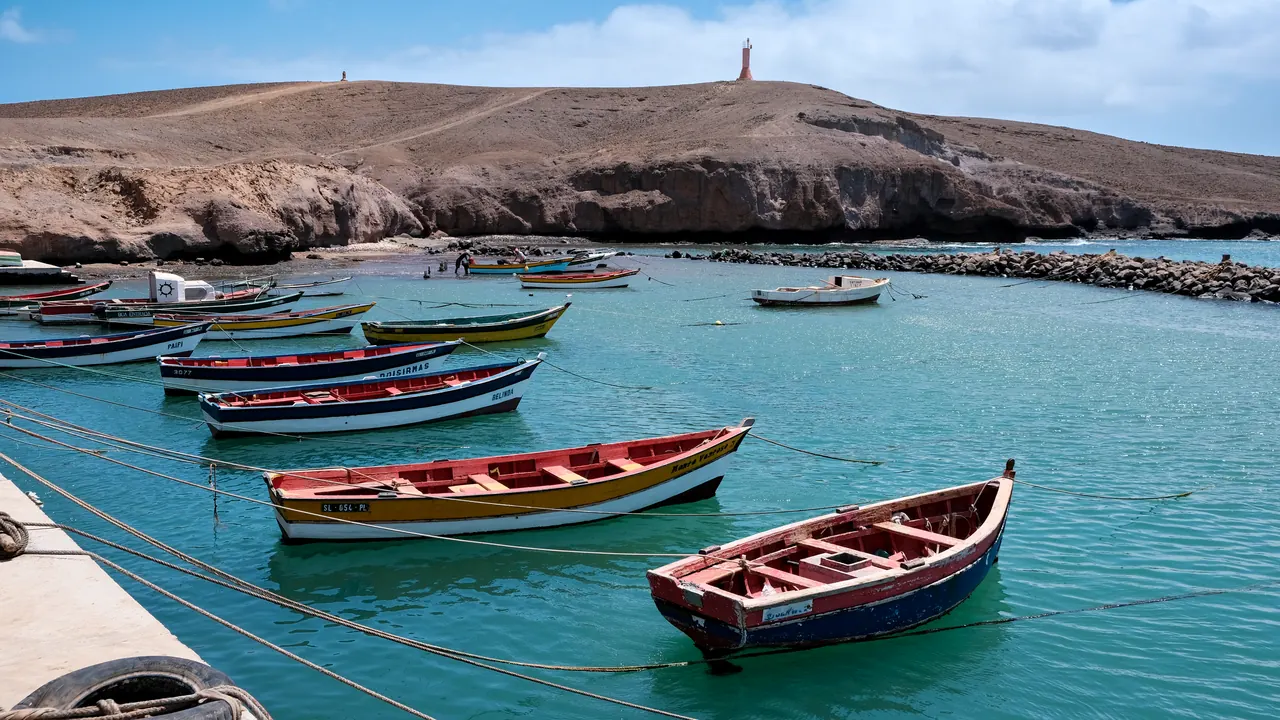
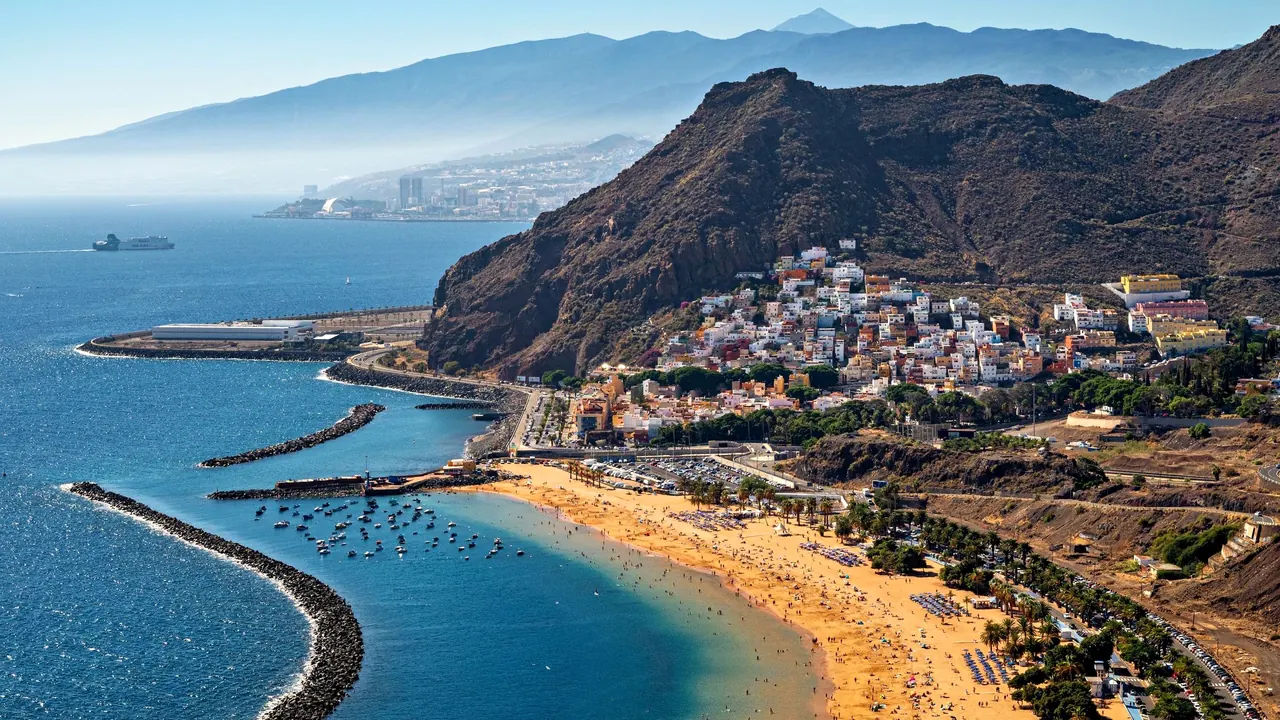
Photos: Sal by Rob Mowe, Pexels License; Tenerife by Harald Pippert, Pexels License.
Sal or Tenerife?
Our verdict in twelve categories, each scored against the same fixed benchmark cities, and the climate month by month, so you can choose for your trip.
Choose Sal for
- beaches
- getting around
- wellness
Sal suits the traveller who wants warmth, a long pale beach and very little else to think about. It is built around Santa Maria's sand and turquoise water, with steady trade winds that bring in kitesurfers and keep the heat bearable. A week of sunbeds, swims and easy evenings by the pier is what it does best. It has almost no sightseeing, and a curious traveller will run out of things to do.
Choose Tenerife for
- nature and the outdoors
- day trips
- culture and sights
Tenerife is the better choice for a varied trip. Teide's volcanic crater, the laurel forests of Anaga, the old streets of La Laguna and La Orotava, guachinche lunches in the northern hills and a ferry to La Gomera all fit into one stay. Families get water parks and calm, sheltered bays. The beaches are good rather than outstanding, and the sea is cooler, but there is far more to fill the days.
Scoreboard
Twelve categories on one fixed scale from 0 to 100. The shaded stretch is the gap between the two.
Your match
Pick a travel style or drag the sliders, and both match scores follow your weighting.
Wins on beaches and getting around with your weighting.
Wins on nature and the outdoors and day trips with your weighting.
What matters to you?
Category by category
What the scores mean for a trip.
Beaches & swimming
Sal has the better beach. Santa Maria's single long stretch of natural pale sand, with turquoise water and gentle shelving, beats anything on Tenerife for a classic swim, and the sea runs a few degrees warmer all year. The catch is that it is essentially one beach. The trade wind often makes the water choppy, so the sheltered area by the old pier is the calmest spot, and Ponta Preta and Kite Beach belong to surfers and kiters.
Tenerife offers more variety but less perfection. Its southern bays at Costa Adeje and Los Cristianos are man-made, protected by breakwaters, and calm. There are black-sand coves under Los Gigantes, Saharan sand at Las Teresitas, and natural rock pools at Garachico and Bajamar on the rough north coast. The water there is noticeably fresher.
Food & drink
Tenerife eats far better. Wrinkled potatoes with mojo, grilled goat cheese, rabbit in salmorejo, whole fish in the harbour villages and wine from old volcanic vineyards make a real regional cuisine. The guachinches in the northern hills are the most rewarding way to eat it, though the southern resort strip leans towards international menus.
Sal's best food is simple: fresh tuna and wahoo landed at the Santa Maria pier, and a breakfast of fried cachupa. Beyond that, most meals are resort buffets and casual grills built on imported ingredients, and a week of them quickly becomes repetitive.
Culture & sights
There is a wide gap here. Tenerife's northern towns give you several good days: La Laguna's colonial streets, which served as a model for towns in Spanish America, La Orotava's carved balconies, Garachico partly rebuilt over the lava of 1706, and the archaeology museum in Santa Cruz.
On Sal, the saltpans in the crater at Pedra de Lume and the rusting cableway beside them are about all there is, and Espargos and Palmeira fill an hour each. Anyone curious about Cape Verdean history would have to fly to another island.
Nightlife
Tenerife gives you more choice after dark. You can stay out until dawn in the bars and clubs of Playa de las Américas, have cocktails by the sea in Costa Adeje, or go drinking with students in La Laguna's old streets. The Carnival of Santa Cruz in late winter is one of the world's great street parties.
Sal's evenings centre on Santa Maria. There are sunset cocktails at the beach bars near the pier, a few lively bars and a couple of small weekend clubs playing kizomba and funana. It is friendly and easy to walk home from, but thin for anyone who wants a big night.
Nature & outdoors
Tenerife's landscapes are among the most dramatic in the Atlantic. There is the volcanic crater and summit of Teide, clear skies for stargazing above the clouds, laurel forest in Anaga, the Masca gorge and the cliffs of Los Gigantes, plus pilot whales offshore all year and walking in every season.
Sal is flat salt desert and stony hills, and its outdoor strengths are the wind and the wildlife. Kite Beach is one of the most reliable kitesurfing spots in the Atlantic, turtles nest on the southern beaches in late summer, and young lemon sharks gather at Shark Bay. Walking, though, barely goes beyond Monte Grande.
Day trips
Tenerife has real day trips. La Gomera is under an hour by ferry from Los Cristianos, with terraced valleys and the cloud forest of Garajonay. Las Palmas on Gran Canaria makes a longer day, and the island's own wine valleys and Puerto de la Cruz are a good contrast to a southern base.
From Sal, a half-day island tour covers Pedra de Lume, Palmeira, Espargos and the Buracona rock pool, and that is most of what there is. Boa Vista is close, but ferries run too rarely for an easy day trip, and the greener islands need a flight.
Good for families
Tenerife is the easier choice with children. The south has calm beaches behind breakwaters, apartment complexes with pools, a famous water park and a large zoo and marine park at Puerto de la Cruz. Whale-watching boats and the Teide cable car fill the days, and Spanish restaurants welcome children until late.
Sal works for a simple week of resort pools, kids' clubs and the sheltered water by the pier. Lemon sharks at Shark Bay and turtle hatchlings in late summer are memorable treats. Beyond that there is nothing aimed at children, and the strong sun and constant wind can wear small ones out.
Getting around
Both are manageable, but in different ways. Sal is tiny and flat. The airport is a short drive from Santa Maria, the town is easy to walk, and aluguer minibuses and taxis cover the rest. There is simply not much road to travel.
Tenerife has motorways, a tram between Santa Cruz and La Laguna and buses that go as far as Teide. Its steep volcanic terrain makes journeys slower than they look, though, and with so much worth seeing, a hire car and some winding mountain roads become part of the trip.
Shopping & style
Sal offers souvenirs, while Tenerife has a real capital to shop in. In Santa Maria, the choice comes down to stalls of West African carvings and fabrics, Cape Verdean music, bags of local salt, grogue and coffee from Fogo, and the street sellers can be persistent.
On Tenerife, shopping centres on Santa Cruz. Its pedestrian streets have Spanish chains and a department store, and there is the arcaded Mercado de Nuestra Señora de África. The southern resorts add low-tax malls, and northern villages still make lace, baskets and pottery, which are sold alongside honey and mojo at weekend farmers' markets.
Affordability
Tenerife is the cheaper island. The Canaries' low tax keeps drinks and goods inexpensive, the buses and village wine houses cost little, and self-catering apartments make longer stays affordable.
On Sal, almost everything is imported, so a stay in Santa Maria costs about the same as a mid-priced Mediterranean resort. That is why so many visitors book all-inclusive.
Live music & performing arts
Tenerife has the stages. The Auditorio in Santa Cruz is home to a symphony orchestra and hosts a short opera season, Teatro Guimerá and Teatro Leal put on theatre, and the Carnival's satirical choirs are a tradition worth seeing. All of this is in the capital, though, a fair drive from the southern resorts.
Sal has no venues, but it does have the more intimate sound. Live morna, coladeira and funana played in Santa Maria's bars and restaurants are a genuine taste of Cape Verdean music, even if the quality varies.
Wellness & relaxation
Both islands are easy places to slow down, but they relax you differently. Sal's draw is its pace of sunbed to sunset, and its one unusual experience is floating in the dense brine of the Pedra de Lume crater, followed by a mud scrub.
Tenerife's calm comes from its mild, even climate. The large Costa Adeje hotels have thalassotherapy pools and hydrotherapy circuits, and yoga retreats use rural fincas in the north. Quiet villages such as Vilaflor and Garachico offer peace well away from the party streets.
When should you go?
Pick your month. The climate figures are measured averages, not a forecast.
Sal in July
Tenerife in July
Daytime high, °C
Rainfall in the month, mm
Temperature and rainfall are climate normals, averaged over the years shown. Sal: 1991-2020 normals, Sal (15.8 km from centre). Tenerife: 1991-2020 normals, Tenerife Sur (16.1 km from centre).
Around Santa Maria in the south of Sal it is warm and almost rainless all year, and daytime highs never fall below the mid-twenties. The only damp spell is late summer. September brings a few showers, around 38mm in all, and the heat peaks near 31°C, though the trade wind keeps walking comfortable. The sea is best from August to November, when it reaches 27°C. In winter it is cooler but still pleasant for a swim, so Sal works for a beach trip in every month.
On Tenerife's south coast the year runs a few degrees cooler. Winter days in the low twenties are ideal for walking and hiking, and summer is hot without being oppressive. What rain there is falls between October and March, peaking at about 32mm in December, while the summer months are dry and very sunny, with July the brightest. The sea drops to 19°C in late winter, so for warm swims between December and April Sal has the edge. Tenerife is better for combining the beach with days in the hills.
Which traveller are you?
On a beach and sun trip, Sal is the stronger pick. Santa Maria's long sweep of pale sand and clear, gently shelving water is the heart of the island, the sea is warmer, and rain hardly ever interrupts a week on the sunbed.
For an outdoors trip, Tenerife is in another league. You can walk Teide's lava fields and pine forest, the ridge paths of Anaga and the Masca gorge, and watch pilot whales all year. Sal's flat salt desert mostly offers wind, turtles and snorkelling.
On a culture and arts trip, Tenerife is the only real option. It has the UNESCO-listed colonial grid of La Laguna, the balconied streets of La Orotava, the Guanche mummies in Santa Cruz and concerts at the Auditorio. Sal's heritage amounts to the saltpans at Pedra de Lume.
Before you go
| Measure | Sal | Tenerife |
|---|---|---|
| Official language | Portuguese, Cape Verdean Creole | Spanish |
| Currency | Cabo Verde Escudo (CVE) | Euro (EUR) |
| Sockets | CF220 V, 50 Hz | CF230 V, 50 Hz |
| Driving side | Right | Right |
| Time zone | UTC-1 | UTC, UTC+1 in summer |
| Emergency number | Police 132, ambulance 130, fire 131 | 112 |
| Main airport | Amílcar Cabral International Airport (SID)57 non-stop destinations | Tenerife Sur Airport (TFS)111 non-stop destinations |
| Public holidays this year | 9 days | 12 days |
By the numbers
| Measure | Sal | Tenerife |
|---|---|---|
| Population | 35,267 | 955,063 |
| People per km² | 164 | 470 |
| Swim season, months above 21 °C | 12 months | 7 months |
Where else could you go?
Every comparison below shares a destination with this one, so you can follow Sal or Tenerife somewhere new.
- La Gomeravs Tenerife
- Boa Vistavs Sal
- Gran Canariavs Tenerife
- La Palmavs Tenerife
- Fuerteventuravs Tenerife
- Lanzarotevs Tenerife