Cape Verde
Sal
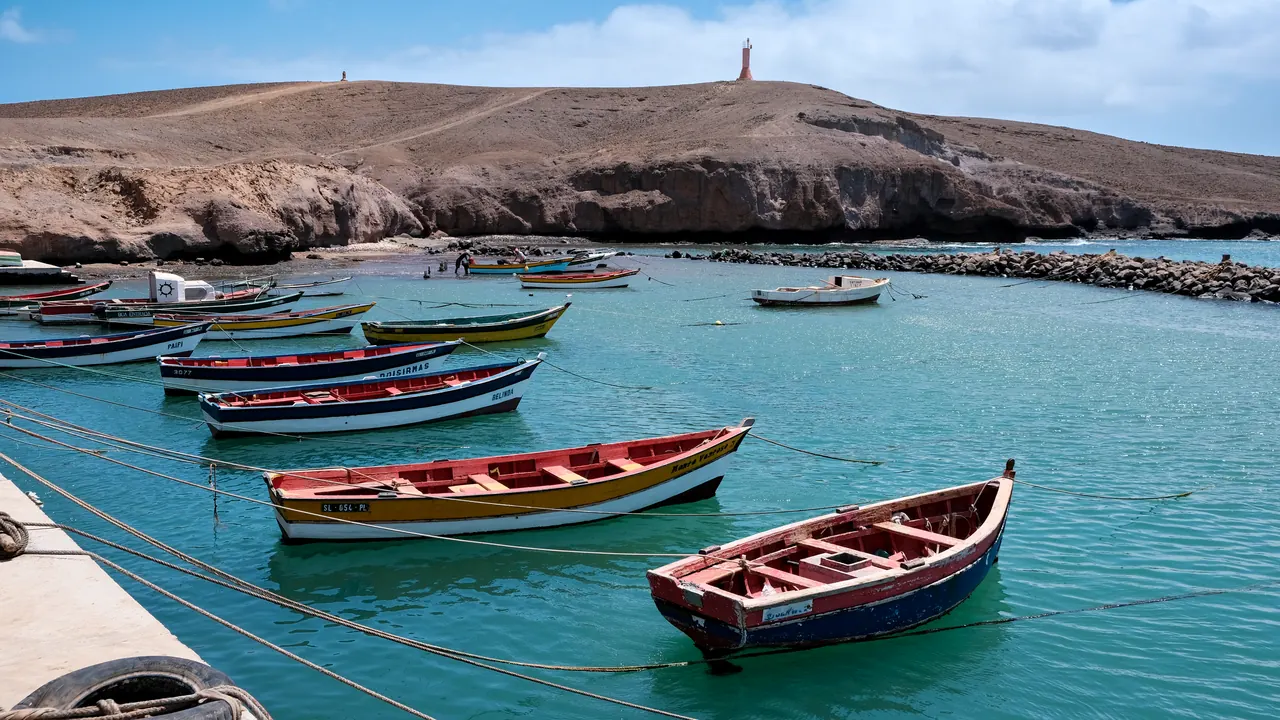
Fishing boats in the harbour at Pedra de Lume
- Beaches82
- Families55
- Getting around52
Photo: Rob Mowe, Pexels License
Match
38
Every category weighted equally
- Beach & sun45
- Culture & arts32
- Food & nightlife35
- Family trip44
- Outdoors40
- Relax & unwind43
- Shopping & style33
- On a budget39
Sal in twelve categories
Our verdict on each, scored 0 to 100 against the same fixed benchmark cities, so a score means the same thing on every page.
Beaches & swimming. Scores 82 out of 100.
Food & drink. Scores 32 out of 100.
Culture & sights. Scores 12 out of 100.
Nightlife. Scores 30 out of 100.
Nature & outdoors. Scores 45 out of 100.
Day trips. Scores 14 out of 100.
Good for families. Scores 55 out of 100.
Getting around. Scores 52 out of 100.
Shopping & style. Scores 12 out of 100.
Affordability. Scores 48 out of 100.
Live music & performing arts. Scores 28 out of 100.
Wellness & relaxation. Scores 50 out of 100.
Sal category by category
Beaches & swimming
82Beach life is the reason almost everyone comes to Sal, and it centres on Santa Maria in the south. A long sweep of pale sand runs west from the old wooden pier past the resort strip, with clear turquoise water and gently shelving sand that suits swimmers of most abilities. West of town, Ponta Preta is wilder, with dunes and serious waves, while Kite Beach on the east side belongs to the wind.
The sea is warmest from August to November, at about 26°C, and cools to around 22°C in the peak winter months, refreshing rather than tropical. The steady northeast trade wind keeps the heat comfortable but often whips up chop, so the sheltered stretch near the pier is the calmest place to swim. The rest of the island is mostly rock and salt flat, so a stay is really built around one great beach.
Food & drink
32Eating on Sal is mostly a resort affair, with buffets and hotel restaurants doing the heavy lifting. The local taste worth seeking out is simple: grilled tuna, wahoo and grouper landed at the Santa Maria pier, and cachupa, the slow-cooked stew of maize, beans and meat or fish that is the national dish, best at breakfast fried with an egg. Grogue, the sugarcane spirit, and its sweet cousin ponche finish the meal.
Santa Maria's streets hold a run of casual grills, pizza places and seafood terraces, and Espargos has a few plain local canteens. Almost everything else is imported, so range is narrow, and a food lover will find a week here repetitive.
Culture & sights
12Sal has little in the way of sights. Its history is salt: the saltpans at Pedra de Lume, in an old volcanic crater, were worked for export for two centuries, and the rusting cableway and the small chapel at the harbour are the island's main heritage. The salt works at Santa Maria shaped the town too.
Espargos, the capital, and the fishing port of Palmeira are pleasant enough for an hour, but there are no museums or historic quarters of note. Visitors interested in Cape Verdean history and architecture need to fly to the older islands.
Nightlife
30Going out on Sal means Santa Maria, and a modest evening at that. Beach bars near the pier turn to cocktails at sunset, a handful of bars along the pedestrian streets stay busy into the night, and a couple of small clubs fill up with locals and kitesurfers at weekends, playing kizomba, funana and international dance music.
Much of the crowd stays inside all-inclusive resorts, so the town scene is relaxed rather than wild. It suits a drink, some dancing and an easy walk home; anyone after big clubs will find it thin.
Nature & outdoors
45Sal is flat, arid and windswept, a landscape of salt flats, low volcanic hills and stony desert rather than green scenery. Its outdoor strength is the wind. From roughly November to May the trade wind blows steadily, making Kite Beach one of the most reliable kitesurfing spots in the Atlantic, and Ponta Preta's wave is a famous test for experienced windsurfers and surfers.
Wildlife adds to it. Loggerhead turtles nest on the southern beaches from July to October, with guided night walks to watch hatchlings, young lemon sharks gather in the shallows at Shark Bay, and diving and snorkelling find wrecks, rays and reef fish. Humpback whales pass offshore in spring. Walking is limited to coastal tracks and the climb of Monte Grande.
Day trips
14As a base for outings, Sal is limited. The island's own towns, Espargos and the harbour village of Palmeira, are small and usually seen together on a half-day island tour with Pedra de Lume and the Buracona rock pool.
The neighbouring island of Boa Vista, with its own dunes and the town of Sal Rei, can be reached by ferry on some days or by a short flight, but sailings are infrequent, so it works better as an overnight. The greener, more historic islands, including Mindelo on São Vicente and the volcano of Fogo, need a flight and more than a day.
Good for families
55Sal works as a simple sun-and-sand trip with children. The large resorts around Santa Maria have pools, kids' clubs and shallow entries, the airport is a short drive from the beach, and the island is calm and easy to manage. The sheltered water by the pier is the best place for young swimmers, and spotting lemon sharks in the shallows at Shark Bay or watching turtle hatchlings in late summer delights most children.
There is little else made for them, though: no zoos, aquariums or parks, and the strong sun and constant wind can be tiring for small children. Further west the surf is too rough for little ones.
Getting around
52Sal is small and easy. The airport sits near Espargos, a short drive from Santa Maria, and once in town the beach, bars and shops are all within walking distance along a flat seafront. Shared minibuses called aluguers run between Santa Maria and Espargos, and taxis are easy to find.
Beyond that, public transport is sparse. Visitors reach Pedra de Lume, Palmeira or Shark Bay on a half-day island tour, by taxi, or with a hired car or quad, on roads that are short and mostly quiet. Many guests never leave the resort strip.
Shopping & style
12Shopping on Sal is a matter of souvenirs. Santa Maria has stalls of West African carvings, masks and fabrics, small shops selling Cape Verdean music, bags of local salt, grogue and coffee from the island of Fogo, and a handful of surf and beachwear shops. Prices and quality vary, and street sellers can be persistent. There is no shopping street or market worth planning around.
Affordability
48Sal is not the bargain its location might suggest. Almost everything is imported, so restaurants, groceries and drinks in Santa Maria cost much the same as in a southern European resort, and hotels charge most in the European winter, which is the main season. All-inclusive packages are the usual way to keep costs predictable.
Local canteens in Espargos, aluguer minibuses and simple guesthouses are cheaper, and kitesurfing lessons and tours are fairly priced, but a visitor staying in Santa Maria should budget as for a mid-priced Mediterranean beach trip.
Live music & performing arts
28There is no theatre or concert hall on Sal, but Cape Verdean music is easy to hear. Many restaurants and bars in Santa Maria have live players in the evening, typically guitar, cavaquinho and voice performing morna, the slow, melancholy song form of the islands, and the faster coladeira and funana that get people dancing. Quality varies from background dinner music to genuinely fine local musicians.
The Santa Maria music festival, held on the beach late in the summer, brings bigger Cape Verdean and Lusophone acts. For a deeper scene, the musical heart of the country lies in Mindelo on another island.
Wellness & relaxation
50Sal is built for doing very little. The island's motto, no stress, is a fair summary of the pace in Santa Maria, where days run from sunbed to sunset with nothing pressing in between. The one bathing experience of its own is at Pedra de Lume, where the brine pools in the old crater are so salty that bathers float without effort, with a mud scrub and a fresh-water rinse afterwards.
Otherwise, wellness means resort spas offering massages and treatments, some with sea views, and yoga sessions in a few hotels and kite camps. There is no local spa or bathhouse tradition, but for unwinding in the sun the island does the job.
Where to stay in Sal
Almost every visitor to Sal stays in or near Santa Maria, and on an island this small one base covers the whole trip. The town centre around the old wooden pier suits anyone who wants to walk everywhere: the calmest swimming water is right there, and the grills, seafood terraces, live music and modest bars are all a short stroll along the flat seafront. Couples, independent travellers and anyone wanting an easy night out do best here.
The resort strip running west along the beach is the choice for families and for all-inclusive stays, with pools, kids' clubs and the long sweep of sand on the doorstep. It is quieter in the evenings, though the town is still within walking distance. Kitesurfers often base themselves on the eastern edge of Santa Maria, close to Kite Beach and the kite camps, where the wind sets the timetable.
Espargos, the capital near the airport, has simpler guesthouses and local canteens and suits a budget stay, but it is inland, so a beach trip needs a minibus or taxi. No moving between bases is needed. Boa Vista works best as a separate overnight.
When should you go?
Pick a month to see what it is like. The climate figures are measured averages, not a forecast.
Sal in July
Daytime high, °C
Rainfall in the month, mm
The whole year
Shaded against this destination’s own year: the deepest cell is its best month for that figure and the palest its weakest.
Temperature and rainfall are climate normals, averaged over the years shown. Sal: 1991-2020 normals, Sal (15.8 km from centre).
Before you go
| Measure | Sal |
|---|---|
| Official language | Portuguese, Cape Verdean Creole |
| Currency | Cabo Verde Escudo (CVE) |
| Sockets | CF220 V, 50 Hz |
| Driving side | Right |
| Time zone | UTC-1 |
| Emergency number | Police 132, ambulance 130, fire 131 |
| Main airport | Amílcar Cabral International Airport (SID)57 non-stop destinations |
| Public holidays this year | 9 days |
By the numbers
| Measure | Sal |
|---|---|
| Population | 35,267 |
| People per km² | 164 |
| Swim season, months above 21 °C | 12 months |
Compare Sal with
Every comparison with a written verdict behind it.