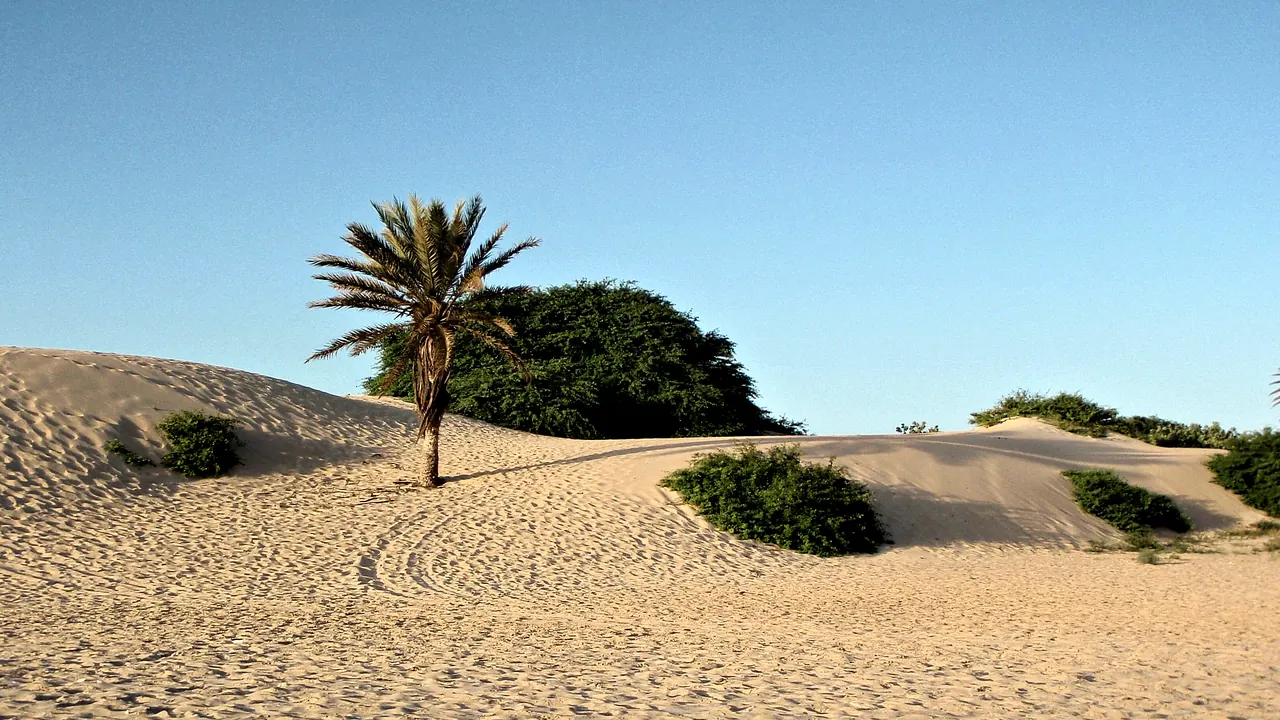
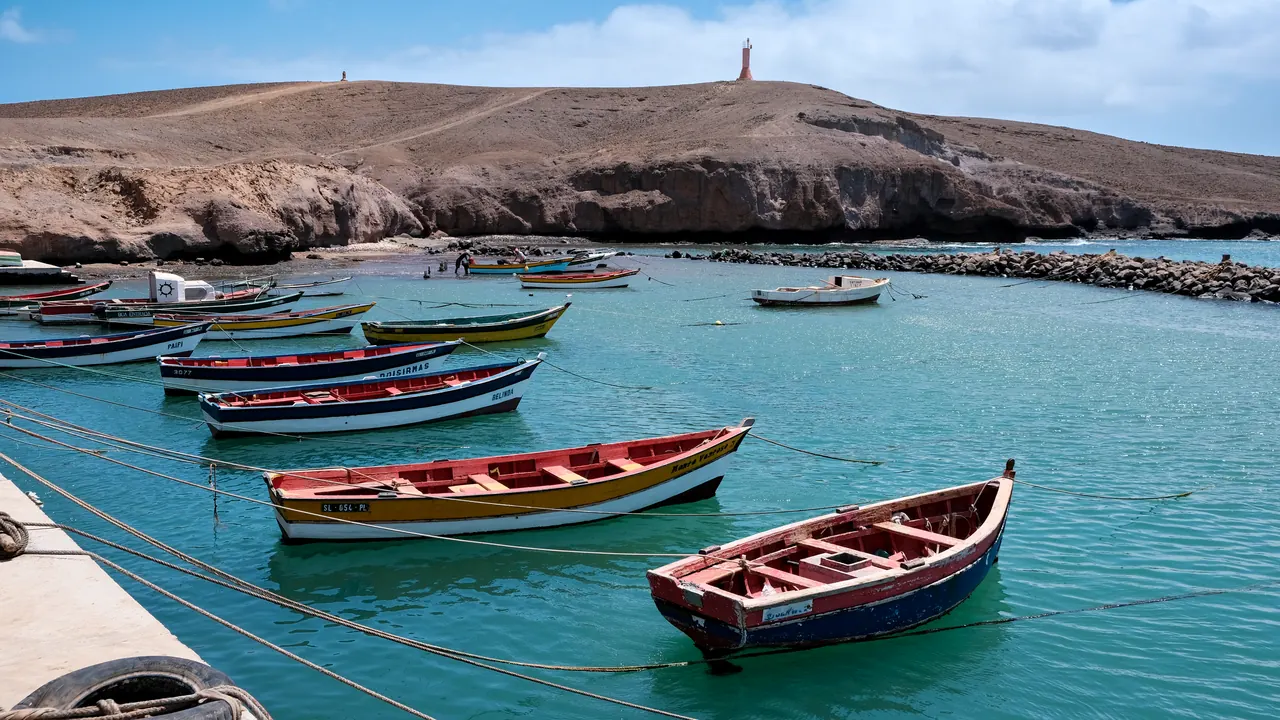
Photos: Boa Vista by Horst, CC BY-SA 4.0, cropped; Sal by Rob Mowe, Pexels License.
Boa Vista or Sal?
Our verdict in twelve categories, each scored against the same fixed benchmark cities, and the climate month by month, so you can choose for your trip.
Choose Boa Vista for
- nature and the outdoors
- beaches
- prices
Boa Vista suits travellers who want space more than convenience. Its beaches are long, wild and often close to empty, the white dunes of the Viana Desert start just behind Sal Rei, and its shores are some of the Atlantic's key turtle nesting grounds. A week here means settling into a resort on a quiet stretch of coast and heading out to see wildlife, with little to do after dark.
Choose Sal for
- getting around
- nightlife
- families
Pick Sal if you want an easier, more sociable beach trip. Everything happens in Santa Maria, where the main beach, the bars and the restaurants with live music are all within walking distance on a flat seafront. The calm water by the pier and the short transfer from the airport make it the simpler choice for families, and for anyone who likes a walk into town for dinner.
Scoreboard
Twelve categories on one fixed scale from 0 to 100. The shaded stretch is the gap between the two.
Your match
Pick a travel style or drag the sliders, and both match scores follow your weighting.
Wins on nature and the outdoors and beaches with your weighting.
Wins on getting around and nightlife with your weighting.
What matters to you?
Category by category
What the scores mean for a trip.
Beaches & swimming
On sand, the two islands are about equal, but the beaches work very differently. Boa Vista has many beaches spread around its coast. Praia de Chaves runs for kilometres near Rabil, Praia de Santa Monica is vast and nearly empty, and the bay at Sal Rei gives the calmest water. The open beaches can have strong currents, and there is little shade away from the resorts.
Sal is built around one great beach. The pale sand at Santa Maria shelves gently into clear water, the stretch by the old pier is sheltered enough for most swimmers, and the town sits right behind it. Ponta Preta and Kite Beach are for waves and wind rather than swimming.
Food & drink
The cooking on both islands is the same simple seafood: grilled tuna and wahoo, cachupa fried up for breakfast, and grogue or ponche to finish. Most resort guests on either island eat at the buffet.
The real difference is how much choice you get outside the resort. In Sal Rei, eating out means a few family-run places around the square and the harbour serving the day's catch. Santa Maria has a longer string of grills, pizza places and seafood terraces, which makes a week of dinners out on Sal a little less repetitive.
Culture & sights
Neither island is a trip for heritage, and either one can be seen in a day. On Boa Vista that means the low pastel houses and the church of Santa Isabel in Sal Rei, the pottery tradition at Rabil and the rusting wreck of the Cabo Santa Maria on the north coast.
Sal's history is about salt. The old crater saltpans at Pedra de Lume, with their rusting cableway and harbour chapel, are its most memorable sight. If you want Cape Verdean history in any depth, you need to fly to one of the older islands from either.
Nightlife
Boa Vista has no late scene at all. Going out means a few bars around the square and the waterfront in Sal Rei, which fill up at weekends and on festival nights, often with local music and dancing. The resorts stand well outside town, so most guests end the day by the pool.
Sal is the clear choice for a night out. In Santa Maria you can start with sunset cocktails at the beach bars near the pier, move on to the bars along the pedestrian streets and finish at one of a couple of small clubs playing kizomba and funana at weekends, then walk back to your hotel. It is relaxed rather than wild, but it is a proper evening out.
Nature & outdoors
Boa Vista is the stronger island for nature. The white dunes of the Viana Desert and the dry riverbeds lined with palms give it a landscape Sal lacks. Its beaches are among the Atlantic's most important loggerhead nesting grounds, and humpbacks gather offshore from March to May.
Outdoors, Sal is mostly about wind and water. Kite Beach is one of the most reliable kitesurfing spots in the Atlantic, Ponta Preta's wave tests experienced riders, and young lemon sharks swim in the shallows at Shark Bay. Diving and snorkelling are a real strength too, with wrecks, rays and reef fish. Turtles nest on Sal as well, but on land the scenery is mostly salt flats and stony desert.
Day trips
Neither island makes a good base for day trips, and each is the other's nearest neighbour. Sailings between them are infrequent, so the crossing works better as an overnight trip.
The outings you can do stay on the island. On Boa Vista, a tour passes through the villages of Rabil, Povoação Velha and Fundo das Figueiras. On Sal, a half-day tour links Pedra de Lume, the Buracona rock pool and the harbour at Palmeira.
Good for families
Sal makes the more relaxed family trip. The resorts around Santa Maria are next to the calm water by the pier, the airport transfer is short, and the lemon sharks at Shark Bay are an easy outing for small children.
Boa Vista suits families who are happy to stay in the resort all week. The beaches are wide and good for digging, but currents mean the pool is often the safer place to swim. Turtle walks and whale trips suit older children better, and medical care on the island is basic.
Getting around
Getting around is clearly easier on Sal. In Santa Maria you can walk between the beach, the bars and the shops along a flat seafront, aluguer minibuses and taxis connect it with Espargos, and the short, quiet roads make hiring a car or quad straightforward.
On Boa Vista, most resorts sit alone on their own stretch of coast, so every trip into Sal Rei means a taxi or shuttle. Much of the dune country and coast can only be reached on rough tracks, so most visitors explore it on an organised 4x4 or quad tour rather than in a hire car.
Shopping & style
Don't plan a shopping trip to either island. Boa Vista's most distinctive buy is pottery sold straight from the workshops at Rabil, along with carvings and grogue from a few stalls in Sal Rei.
In Santa Maria, Sal has a wider spread of souvenirs: bags of local salt, coffee from Fogo, Cape Verdean music and a few surf shops. Street sellers there can be persistent.
Affordability
Both islands cost about the same, and on both most goods are imported, so they are rarely cheap. Most visitors book all-inclusive packages to keep costs predictable.
Where the money goes differs. On Boa Vista, island tours, whale trips and turtle walks soon push up the total, though guesthouses and simple meals in Sal Rei are cheap. On Sal, eating out in Santa Maria costs about the same as at a southern European resort and hotels charge most in winter, while canteens in Espargos and the kitesurfing lessons are fairly priced.
Live music & performing arts
Sal has slightly more live music. Many restaurants and bars in Santa Maria have guitar, cavaquinho and voice in the evening, playing everything from quiet morna to dance-floor coladeira, and the beach festival late in the summer brings in bigger Cape Verdean and Lusophone acts.
Boa Vista is often named as the birthplace of morna, and you can hear it in Sal Rei's bars on many evenings. It also has its own summer music festival on the beach. Beyond that, the music is resort shows, and neither island has a theatre.
Wellness & relaxation
Both islands live by the same 'no stress' pace, and on both most of the wellness on offer is in resort spas. Sal pulls slightly ahead because of Pedra de Lume, where the brine pools in the old crater are salty enough to float in without effort, followed by a mud scrub.
Boa Vista's advantage is quiet. Its beaches are often nearly empty away from the resorts, which makes doing nothing feel more peaceful than on Santa Maria's busier sand.
When should you go?
Pick your month. The climate figures are measured averages, not a forecast.
Boa Vista in July
Sal in July
Daytime high, °C
Rainfall in the month, mm
Where the figures come from
Boa Vista's temperatures are measured 62 km from the centre, at Sal.
Boa Vista has no rain gauge within 25 km of the centre, so its rainfall comes from a gridded climate dataset read at the destination rather than from a gauge further away.
Temperature and rainfall are climate normals, averaged over the years shown. Boa Vista: 1991-2020 normals, Sal (61.6 km from centre). Sal: 1991-2020 normals, Sal (15.8 km from centre).
The two islands share almost the same climate, so this choice comes down to the trip you want rather than the month. Both stay dry nearly all year. What little rain there is falls between August and October and peaks in September at about 40mm, usually in short bursts. Daytime highs are a warm 25°C in January and climb to 31°C in September, so you can swim from the beach in any month. Late summer is the stickiest time for walking around, and winter is the most comfortable.
The sea follows the same pattern around both islands, from a refreshing 22°C in late winter and spring to 27°C in September and October. From November to May the trade wind blows hard on both, which takes the edge off the heat and draws kitesurfers but makes the water choppy. Swimmers who want warm, calm water will find autumn the best time on either island.
Which traveller are you?
On a family trip with young children, Boa Vista works if you are happy to spend the week around the resort pool, with town a drive away. Sal is the easier choice. Swimming is calmer, the transfer is shorter, and you can wander into town without planning.
For an outdoors trip built around wildlife and open, empty country, choose Boa Vista. It has more untouched coast to explore and more of the creatures people come to see. Sal is better only if you spend your outdoor time on a board or underwater.
For a food and nightlife trip, Sal is the better choice. On Boa Vista you take a taxi from a remote resort for a fish supper and usually get an early night. On Sal you can eat somewhere different each evening, stay out late and walk back afterwards.
Before you go
| Measure | Boa Vista | Sal |
|---|---|---|
| Official language | Portuguese, Cape Verdean Creole | Portuguese, Cape Verdean Creole |
| Currency | Cabo Verde Escudo (CVE) | Cabo Verde Escudo (CVE) |
| Sockets | CF220 V, 50 Hz | CF220 V, 50 Hz |
| Driving side | Right | Right |
| Time zone | UTC-1 | UTC-1 |
| Emergency number | Police 132, ambulance 130, fire 131 | Police 132, ambulance 130, fire 131 |
| Main airport | Aristides Pereira International Airport (BVC)23 non-stop destinations | Amílcar Cabral International Airport (SID)57 non-stop destinations |
| Public holidays this year | 9 days | 9 days |
By the numbers
| Measure | Boa Vista | Sal |
|---|---|---|
| Population | 12,000 | 35,267 |
| People per km² | 19 | 164 |
| Swim season, months above 21 °C | 12 months | 12 months |
Where else could you go?
Every comparison below shares a destination with this one, so you can follow Boa Vista or Sal somewhere new.