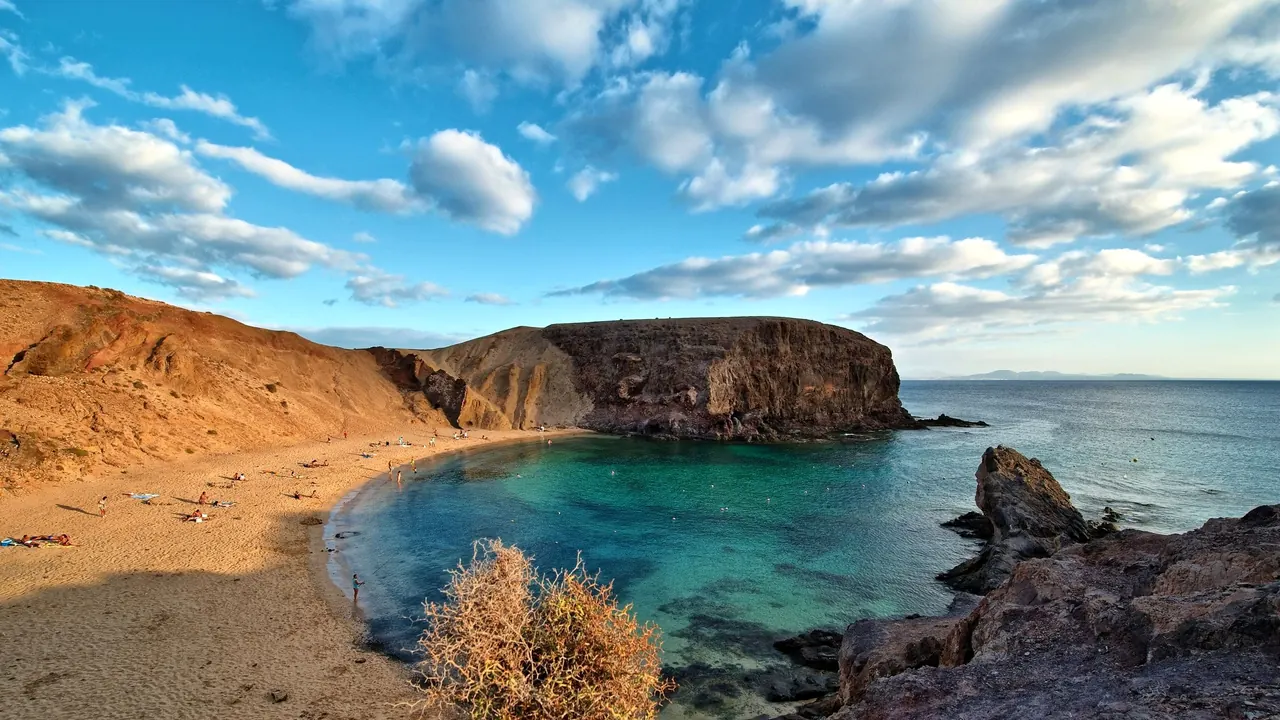
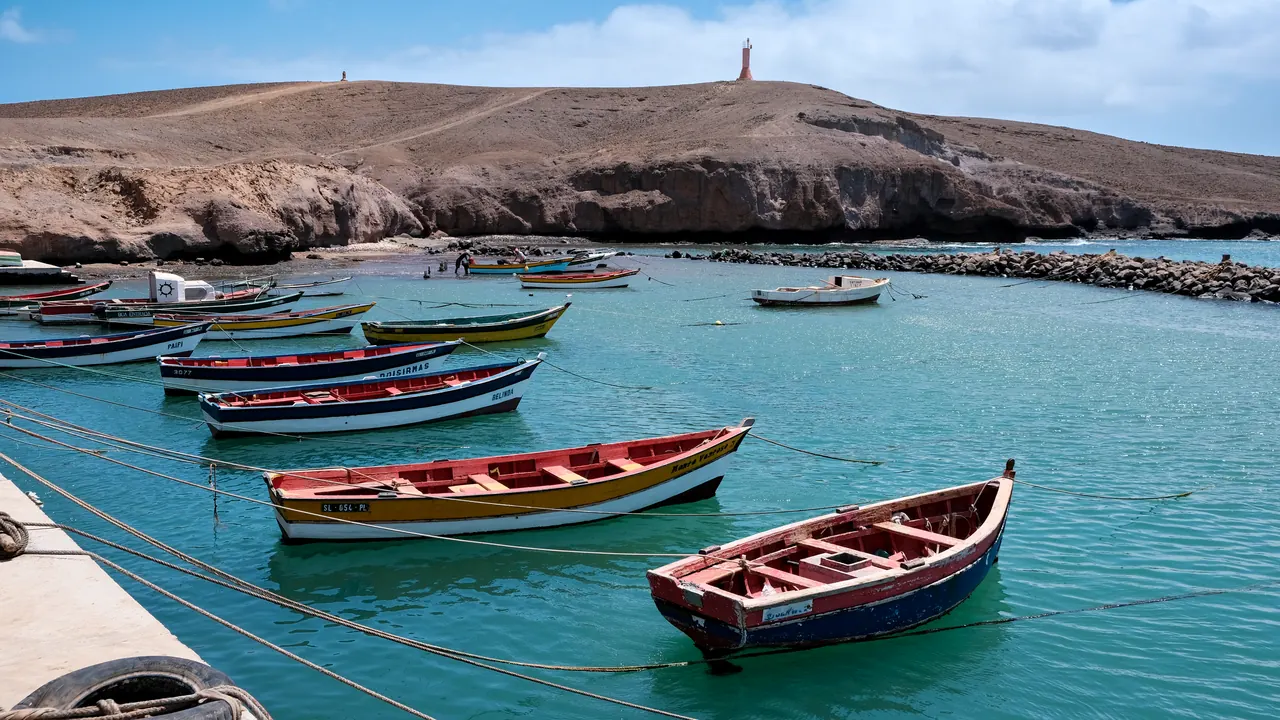
Photos: Lanzarote by Lviatour, CC BY-SA 3.0, cropped; Sal by Rob Mowe, Pexels License.
Lanzarote or Sal?
Our verdict in twelve categories, each scored against the same fixed benchmark cities, and the climate month by month, so you can choose for your trip.
Choose Lanzarote for
- culture and sights
- day trips
- nature and the outdoors
Lanzarote suits travellers who want a beach vacation with plenty to do between swims. The volcanic landscape of Timanfaya and the César Manrique sites give it real sights, the wine country and fishing villages make eating out worthwhile, and short ferries reach La Graciosa and Fuerteventura. With a hire car, a week here rarely feels the same two days running.
Choose Sal for
- beaches
- live music and the arts
- wellness
Sal is the better pick if the beach is the whole point and you want the warmth to be reliable. Santa Maria's long pale strand and turquoise water outclass most of Lanzarote's sand, the winter sun is warmer and the sea is softer to swim in. In return you give up almost everything else: there are few sights, the food is narrow and the island has little to explore, so it rewards people who are happy to stay put.
Scoreboard
Twelve categories on one fixed scale from 0 to 100. The shaded stretch is the gap between the two.
Your match
Pick a travel style or drag the sliders, and both match scores follow your weighting.
Wins on culture and sights and day trips with your weighting.
Wins on beaches and live music and the arts with your weighting.
What matters to you?
Category by category
What the scores mean for a trip.
Beaches & swimming
Sal has the better beach for swimmers. Santa Maria's sweep of pale sand runs west from the old pier, the water is turquoise and shelves gently, and the sea is several degrees warmer than Lanzarote's at every time of year. The catch is that it is essentially one beach. The trade wind often raises chop, so the calm stretch by the pier is where most people swim.
Lanzarote's strength is variety. You can choose between the golden Papagayo coves, the long town beaches of Playa Blanca and Puerto del Carmen and the black sand at Janubio. The Atlantic there is cooler, though, so swims are brisk, and Famara is for looking at rather than swimming.
Food & drink
Lanzarote is much more rewarding to eat on. Seafront tables in El Golfo, Arrieta and Órzola serve the day's catch with wrinkled potatoes and mojo, and the bodegas of La Geria pour dry malvasía from vines grown in black volcanic ash.
On Sal, most meals are hotel buffets and casual grills in Santa Maria, because almost everything is imported. Grilled tuna and wahoo from the pier, cachupa fried with an egg for breakfast and a glass of grogue are worth trying, but a week's eating gets repetitive.
Culture & sights
Lanzarote has a real cultural itinerary, largely built by César Manrique. It takes in the garden in the lava tube at Jameos del Agua, the Mirador del Río on its cliff, the Jardín de Cactus and his two homes, along with the old capital of Teguise and its castle. Even the island's white villages with green shutters follow his rules.
Sal's heritage comes down to salt: the crater saltpans at Pedra de Lume, with their rusting cableway and small chapel. Espargos and Palmeira are fine for an hour. For Cape Verdean history you have to fly to another island.
Nightlife
Neither island is a place for a big night out, but Lanzarote has a little more of it. Puerto del Carmen's Avenida de las Playas offers pubs, sports bars, karaoke and a few late clubs all year, and Arrecife's bars around the Charco de San Ginés draw locals at weekends.
Sal's evenings are smaller and have more local character. People have sunset cocktails at the beach bars by Santa Maria's pier, and at weekends a couple of small clubs fill with locals and kitesurfers dancing to kizomba and funana.
Nature & outdoors
Lanzarote's scenery is far more striking. Rust-red cones rise from the lava fields of Timanfaya, there are craters to climb at Caldera Blanca and Montaña Colorada, the Famara cliffs drop hundreds of metres to the sea, and the green lagoon at El Golfo sits below its crater. It also has surfing, diving and cycling, though there is almost no shade.
Sal's land is flat salt flat and stony desert, so its appeal lies in the wind and the wildlife. Kite Beach is one of the Atlantic's most reliable kitesurfing spots. Turtles nest from July to October, lemon sharks gather in the shallows at Shark Bay and humpback whales pass offshore in spring.
Day trips
Lanzarote gives you many more ways to fill a day. Boats from Órzola cross in about half an hour to car-free La Graciosa, with its sand streets, and ferries from Playa Blanca reach the dunes and old fishing quarter of Corralejo just as quickly. On the island, Teguise's Sunday market, the palm valley of Haría and the La Geria wine road make an easy loop.
On Sal, a single half-day tour covers Pedra de Lume, the Buracona rock pool and Palmeira. Ferries to Boa Vista are infrequent, so it is better visited with an overnight stay, and the greener islands such as São Vicente and Fogo need a flight.
Good for families
Lanzarote gives children more to do. As well as the calm beaches at Playa Dorada and Playa Grande, there are a water park and an animal park near Puerto del Carmen, a small aquarium at Costa Teguise, camel rides on Timanfaya and the hot-ground geysers at the park's visitor area.
Sal is fine for a simple pool-and-beach week. The large Santa Maria resorts have kids' clubs, the sheltered water by the pier suits young swimmers, and children usually love the lemon sharks at Shark Bay or a turtle hatchling walk in late summer. Beyond that there is nothing built for families, and the wind and sun can wear small children out.
Getting around
The islands differ in how you move rather than how easy it is. Lanzarote is about 60km long and is really a driving island. The roads are good and quiet, and a hire car is the only practical way to reach the volcanic sights, the northern villages and the wine country, since buses mostly link the resorts with Arrecife and the airport.
On Sal, most visitors walk. The airport is a short ride from Santa Maria, the town's beach, bars and shops line a flat seafront, and aluguer minibuses run to Espargos. Anything further is reached by tour, taxi or a hired quad, and many guests never leave the resort strip.
Shopping & style
Shopping is a small part of a stay on either island, but the better finds are on Lanzarote. On Sunday mornings the old town of Teguise fills with craft stalls, local cheese and ceramics. During the rest of the week, look for the island's own products: aloe vera cosmetics, olivine jewellery, bottles of malvasía and Manrique designs sold at his sites.
On Sal, shopping comes down to souvenirs in Santa Maria. Stalls sell West African carvings and fabrics, and small shops stock bags of local salt, grogue, coffee from Fogo and Cape Verdean music. Expect persistent street sellers, and nothing worth setting aside a morning for.
Affordability
Costs are about the same on both islands, and both charge most in the European winter, but the money goes in different places. On Lanzarote, cheap car hire and fuel and low local taxes keep daily spending reasonable, while the entry fees for Timanfaya and the Manrique centres add up over a stay.
On Sal, imported food and drink cost much what they would in a southern European resort. That is why many visitors book all-inclusive, keeping only the canteens of Espargos and the aluguers as cheap extras.
Live music & performing arts
Sal is the better island for hearing music in an ordinary week. Many Santa Maria restaurants and bars have live guitar and cavaquinho players in the evening, playing slow morna or the more danceable coladeira and funana, and the beach festival late in the summer brings bigger Lusophone acts.
Lanzarote's highlight is rarer but more memorable: an occasional classical or jazz concert in the lava-tube auditoriums at Jameos del Agua or Cueva de los Verdes. Most other nights, live music means resort cover bands.
Wellness & relaxation
Both islands are good for slowing down, but in different ways. Sal's pace is pure sunbed-to-sunset, and it has one bathing experience of its own: floating in the brine pools inside the Pedra de Lume crater, followed by a mud scrub.
Lanzarote's version is quieter and more rural. As well as the thalasso spas in the Playa Blanca and Costa Teguise hotels, there are yoga retreats in northern villages and the stillness of places like Haría, Uga and La Graciosa.
When should you go?
Pick your month. The climate figures are measured averages, not a forecast.
Lanzarote in July
Sal in July
Daytime high, °C
Rainfall in the month, mm
Temperature and rainfall are climate normals, averaged over the years shown. Lanzarote: 1991-2020 normals, Lanzarote / Aeropuerto (7.1 km from centre). Sal: 1991-2020 normals, Sal (15.8 km from centre).
Sal is the warmer of the two all year. In January Lanzarote reaches about 21°C by day, which is pleasant for walking and sightseeing but only just warm enough for lying on the beach, while Sal is nearer 25°C and properly beach-warm. The sea shows the same gap. Lanzarote's Atlantic falls to about 18°C in late winter, which makes for a bracing swim, while Sal's stays around 22°C. Lanzarote's light rain comes between October and March, and it is very sunny from spring into autumn, with long bright days in May, June and July. July and August are hot on both islands, and on Lanzarote's bare lava it is too hot for walking in the middle of the day.
Sal is almost rainless for most of the year. Its short wet spell comes in late summer, and September brings about 38mm along with the hottest days and the warmest sea. For the beach, Sal is at its best from November to May, when it is warm, dry and breezy. Lanzarote is best from April to June and in October, when it is warm enough to swim but still comfortable for exploring the volcanic interior.
Which traveller are you?
For a beach and sun trip, Sal is the stronger choice. Santa Maria's gently shelving sand and clear water make one excellent beach, and the sea and air stay warm through the European winter, so swimming feels easy rather than bracing.
On a culture and arts trip, Lanzarote wins clearly. Manrique's Jameos del Agua, his house in the volcanic bubbles at Tahíche and the cobbled streets of Teguise fill several days. Sal has little more than the old salt works at Pedra de Lume.
For an outdoors trip, choose Lanzarote. You can walk the craters of Caldera Blanca, look down from the Famara cliffs, surf, dive and cycle the volcanic roads. Sal offers kitesurfing and turtle walks, but its flat desert gives walkers little to do.
Before you go
| Measure | Lanzarote | Sal |
|---|---|---|
| Official language | Spanish | Portuguese, Cape Verdean Creole |
| Currency | Euro (EUR) | Cabo Verde Escudo (CVE) |
| Sockets | CF230 V, 50 Hz | CF220 V, 50 Hz |
| Driving side | Right | Right |
| Time zone | UTC, UTC+1 in summer | UTC-1 |
| Emergency number | 112 | Police 132, ambulance 130, fire 131 |
| Main airport | César Manrique-Lanzarote Airport (ACE)80 non-stop destinations | Amílcar Cabral International Airport (SID)57 non-stop destinations |
| Public holidays this year | 12 days | 9 days |
By the numbers
| Measure | Lanzarote | Sal |
|---|---|---|
| Population | 163,467 | 35,267 |
| People per km² | 207 | 164 |
| Swim season, months above 21 °C | 5 months | 12 months |
Where else could you go?
Every comparison below shares a destination with this one, so you can follow Lanzarote or Sal somewhere new.
- Fuerteventuravs Lanzarote
- Boa Vistavs Sal
- Gran Canariavs Lanzarote
- Tenerifevs Lanzarote
- La Gomeravs Lanzarote
- La Palmavs Lanzarote