Spain
Lanzarote
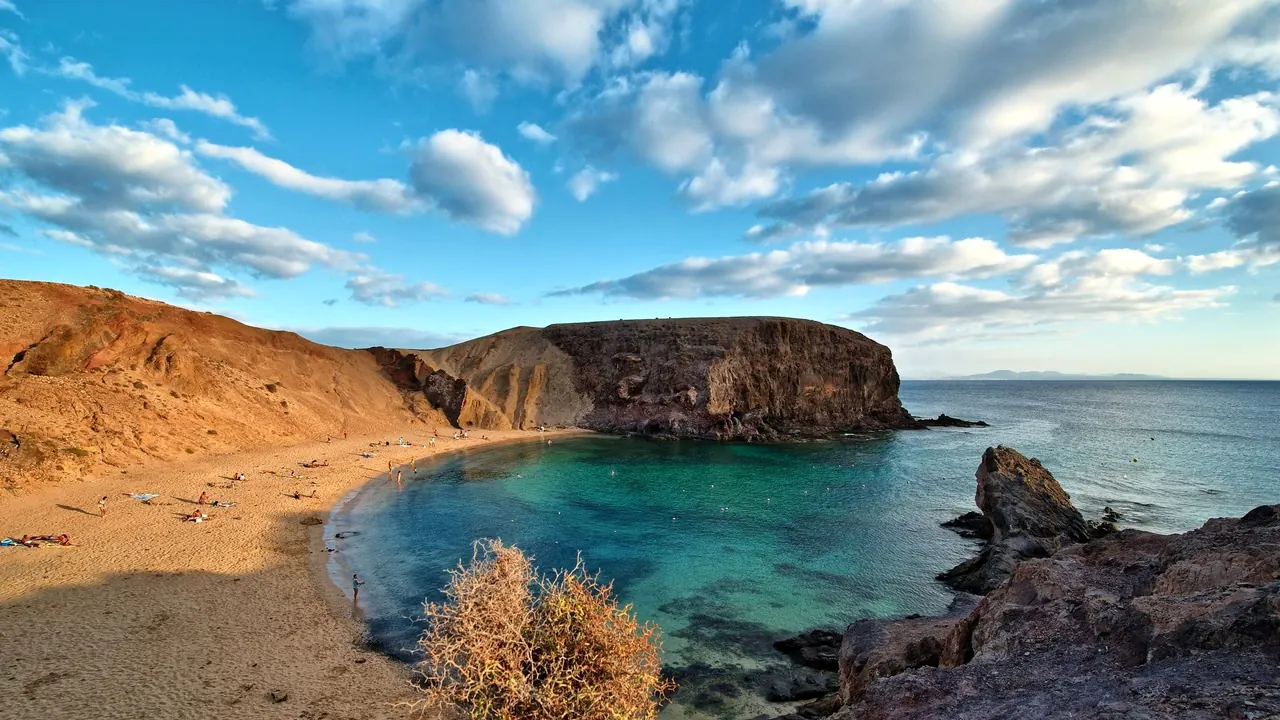
Playa de Papagayo below its golden cliffs
- Nature & outdoors73
- Beaches68
- Families66
Photo: Lviatour, CC BY-SA 3.0, cropped
Match
49
Every category weighted equally
- Beach & sun52
- Culture & arts45
- Food & nightlife43
- Family trip55
- Outdoors55
- Relax & unwind51
- Shopping & style44
- On a budget49
Lanzarote in twelve categories
Our verdict on each, scored 0 to 100 against the same fixed benchmark cities, so a score means the same thing on every page.
Beaches & swimming. Scores 68 out of 100.
Food & drink. Scores 47 out of 100.
Culture & sights. Scores 50 out of 100.
Nightlife. Scores 36 out of 100.
Nature & outdoors. Scores 73 out of 100.
Day trips. Scores 48 out of 100.
Good for families. Scores 66 out of 100.
Getting around. Scores 58 out of 100.
Shopping & style. Scores 27 out of 100.
Affordability. Scores 50 out of 100.
Live music & performing arts. Scores 20 out of 100.
Wellness & relaxation. Scores 44 out of 100.
Lanzarote category by category
Beaches & swimming
68Beaches are the main reason most people come, and you can lie on one almost any day of the year. The best are the Papagayo coves east of Playa Blanca, a string of golden sand bays below low cliffs, with clear, sheltered water. Playa Blanca and Puerto del Carmen have long, easy town beaches with calm water. Costa Teguise is breezier and suits families, and the black-sand beach at Janubio and the coves at Caletón Blanco in the north give a wilder contrast.
The sea is Atlantic rather than tropical, about 18°C in late winter and close to 23°C in September and October, so swims are refreshing more than warm. The wind is steady and can be strong. Famara's huge beach in the north-west is beautiful, but its currents make it a place for surfers and walkers rather than swimmers.
Food & drink
47The island's own food is simple and good: wrinkled salt-crusted potatoes with red and green mojo sauces, grilled cherne and other local fish, goat's cheese, gofio and slow stews. The most distinctive thing is the wine. In La Geria, vines grow in hollows dug into black volcanic ash behind half-moon stone walls, and the dry malvasía from those vines is worth seeking out in the bodegas along the road through the valley.
To eat well, go to the fishing villages. El Golfo, Arrieta, Playa Quemada and Órzola have seafront tables serving the day's catch. In the big resorts the menus lean towards international comfort food made for package visitors, and fine dining is limited.
Culture & sights
50The island's culture is mostly the work of one man. The artist and architect César Manrique shaped how Lanzarote looks, and his sites are its landmarks. They include Jameos del Agua, a collapsed lava tube turned into a garden and pool, and the Mirador del Río lookout built into a northern cliff. There is also his former home at Tahíche, set in volcanic bubbles, the Jardín de Cactus in an old quarry and his last home in the palm valley of Haría. The low white houses with green shutters across the island follow his rules too.
Older heritage is modest. Teguise, the former capital, has cobbled streets, convents and the Santa Bárbara castle above the town. Arrecife has two small coastal forts, one of them home to a contemporary art museum. Off Playa Blanca, the Museo Atlántico places sculptures on the seabed for divers and snorkellers.
Nightlife
36Nightlife centres on Puerto del Carmen, where the seafront Avenida de las Playas and the old harbour area are lined with pubs, sports bars, karaoke and a few late clubs that run all year. Costa Teguise and Playa Blanca have quieter bar terraces that empty out earlier. Arrecife has some local bars along the Charco de San Ginés, livelier on weekend nights. Most of the island goes to bed after dinner, and nobody chooses it for going out.
Nature & outdoors
73The landscape is the island's great strength. It was buried by eruptions in the 1730s, and in Timanfaya National Park rust-red and black cones rise from bare lava fields where the ground is still hot just below the surface. Access inside the park is mostly by a coach route, so walkers head instead to the craters of Caldera Blanca and Montaña Colorada, or to the Los Volcanes natural park nearby. In the north, the Famara cliffs drop hundreds of metres to the sea, and the green lagoon at El Golfo sits below a half-eroded crater.
The steady trade winds make this serious water-sports country. Famara is the surf beach, and Costa Teguise is known for windsurfing and kitesurfing. Diving is good off Playa Chica and Playa Blanca. Road cyclists come for the quiet, windy volcanic roads. What the island lacks is shade and green: it is dry and treeless, and the heat on the lava is fierce in summer.
Day trips
48The best outing is a ferry. From Órzola in the north, boats cross in about half an hour to La Graciosa, a small, car-free island with sand streets in its village, Caleta de Sebo. From Playa Blanca, ferries reach Corralejo on Fuerteventura in about half an hour too, with a lively old fishing quarter and huge dunes beyond the town.
On the island itself, a day can take in the Sunday market and old streets of Teguise, the palm valley and craft shops of Haría, and a drive through the wine villages of La Geria with a stop at a bodega or two. Most of these combine easily into a single loop, so the list of separate outings is fairly short.
Good for families
66This is easy family territory. The resort towns have shallow, calm beaches, especially Playa Dorada in Playa Blanca and Playa Grande in Puerto del Carmen. Big family resorts have pools and kids' clubs, and the weather is mild and dry in every school vacation. The island is small, so no drive is long, and the resorts are safe and relaxed.
Built attractions are modest. They include a western-themed animal park and a water park near Puerto del Carmen, a small aquarium in Costa Teguise, camel rides on the slopes of Timanfaya and glass-bottomed boats to the Papagayo coves. Children also tend to enjoy the geysers and the hot-ground demonstrations at the national park's visitor area. The strong sun and wind need watching with small children, and the Famara beaches are not safe for paddling.
Getting around
58The island is small, about 60km from end to end, and the roads are good and uncrowded, so a hire car makes everything easy. Most visitors rent one for at least a few days, since the volcanic sights, the northern villages and the wine country are hard to reach otherwise. Buses run fairly well between Arrecife, the airport and the three main resorts, but service to the interior and the north is thin. The resort promenades are pleasant to walk, and Puerto del Carmen's seafront runs for several kilometres. Ferries to La Graciosa and Fuerteventura are short and simple.
Shopping & style
27Shopping is modest. The main event is the Sunday market in Teguise, which fills the old town with craft stalls, local cheese, ceramics and plenty of souvenirs. Beyond that, the island's own products are aloe vera cosmetics, volcanic malvasía wine, olivine jewellery and prints and objects based on César Manrique's designs, sold in the shops at his sites. Arrecife has an ordinary high street and a mall. The resorts mostly sell beachwear and cheap goods.
Affordability
50Prices sit in the middle for southern Europe. Puerto del Carmen and Costa Teguise have plenty of apartments and package hotels at moderate rates. Car hire and fuel are cheap, and lower local taxes keep drinks and everyday goods reasonable. Simple fish lunches in the villages are fair value. Costs rise in the winter high season, at the upscale hotels and villas of Playa Blanca, and at the main sights, where Timanfaya and the Manrique centres each charge admission and add up over a stay.
Live music & performing arts
20There is little to attend in most weeks. The memorable exception is a concert in one of the lava-tube auditoriums at Jameos del Agua or Cueva de los Verdes, which host occasional classical, jazz and world-music programmes with remarkable acoustics. The Canary Islands music festival brings a few orchestral dates in winter, and Arrecife has a small municipal theatre. Otherwise, live music means cover bands and folk groups in the resorts and at village fiestas.
Wellness & relaxation
44There are no springs or old bathing customs, so wellness here means hotel spas. The larger resorts in Playa Blanca and Costa Teguise have thalasso pools, saunas and treatment rooms, and yoga and retreat houses are scattered through the quiet rural villages of the north and the interior. The island's real strength is its pace: low white villages, no high-rises, steady sunshine and a stillness in places like Haría, Uga or La Graciosa that makes slowing down easy.
Where to stay in Lanzarote
Lanzarote is only about 60km from end to end, so one base covers the whole island and nobody needs to move during a stay. Most visitors choose one of the three resort towns. Puerto del Carmen is the most practical first choice. It has a long seafront promenade, calm town beaches, plenty of apartments at moderate rates, good bus links to the airport and Arrecife, and the island's only real nightlife. It suits couples who want a bar after dinner and families watching the budget.
Playa Blanca, at the southern tip, is quieter and more polished, with larger hotels, spas and villas. The Papagayo coves and the ferry to Fuerteventura are close by, which makes it a good base for beach days, snorkelling and families with small children. Costa Teguise, just north of Arrecife, is breezier and relaxed. Windsurfers and kitesurfers like it, and it puts the Manrique sites and the northern villages within a short drive.
For a quiet stay, or a second visit, look to the low white villages of the north and the interior, such as Haría in its palm valley or Uga near the La Geria vineyards. Famara suits surfers and walkers rather than swimmers. All of these need a hire car, and they reward anyone who cares more about landscape, wine and village food than about a town beach.
When should you go?
Pick a month to see what it is like. The climate figures are measured averages, not a forecast.
Lanzarote in July
Daytime high, °C
Rainfall in the month, mm
The whole year
Shaded against this city’s own year: the deepest cell is its best month for that figure and the palest its weakest.
Temperature and rainfall are climate normals, averaged over the years shown. Lanzarote: 1991-2020 normals, Lanzarote / Aeropuerto (7.1 km from centre).
Before you go
| Measure | Lanzarote |
|---|---|
| Official language | Spanish |
| Currency | Euro (EUR) |
| Sockets | CF230 V, 50 Hz |
| Driving side | Right |
| Time zone | UTC, UTC+1 in summer |
| Emergency number | 112 |
| Main airport | César Manrique-Lanzarote Airport (ACE)80 non-stop destinations |
| Public holidays this year | 12 days |
By the numbers
| Measure | Lanzarote |
|---|---|
| Population | 163,467 |
| People per km² | 207 |
| Swim season, months above 21 °C | 5 months |
Compare Lanzarote with
Every comparison with a written verdict behind it.