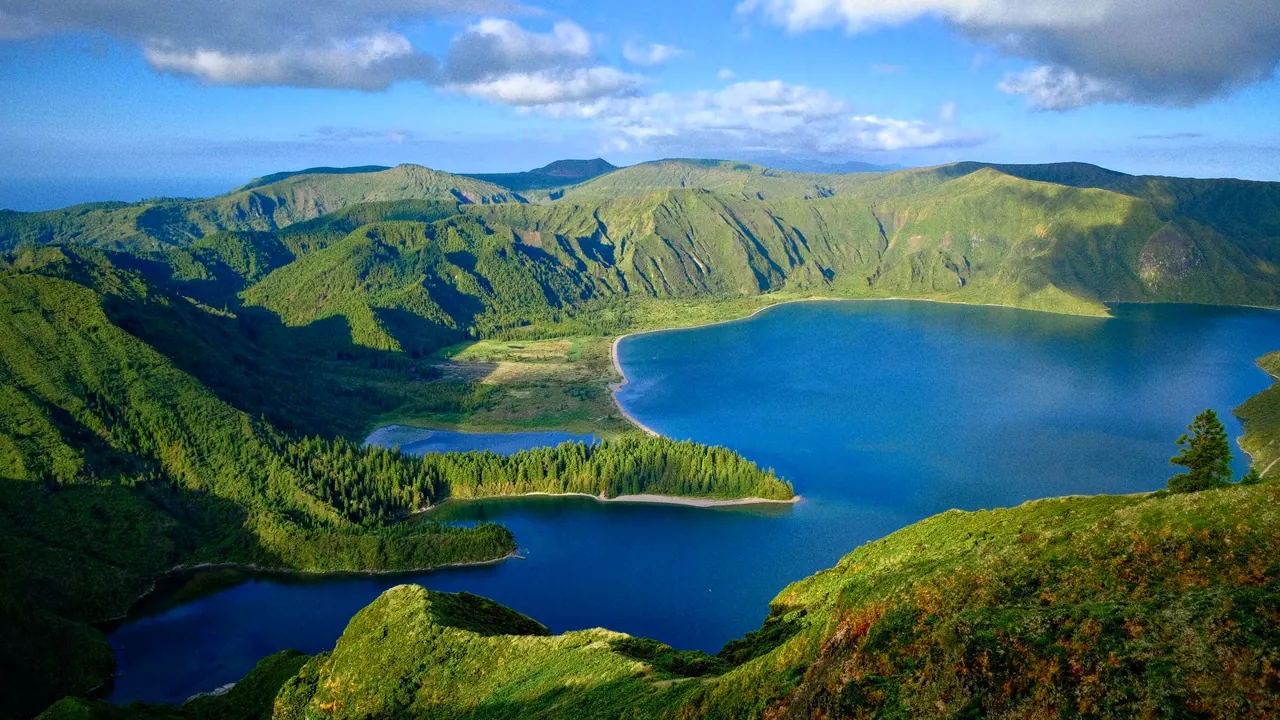
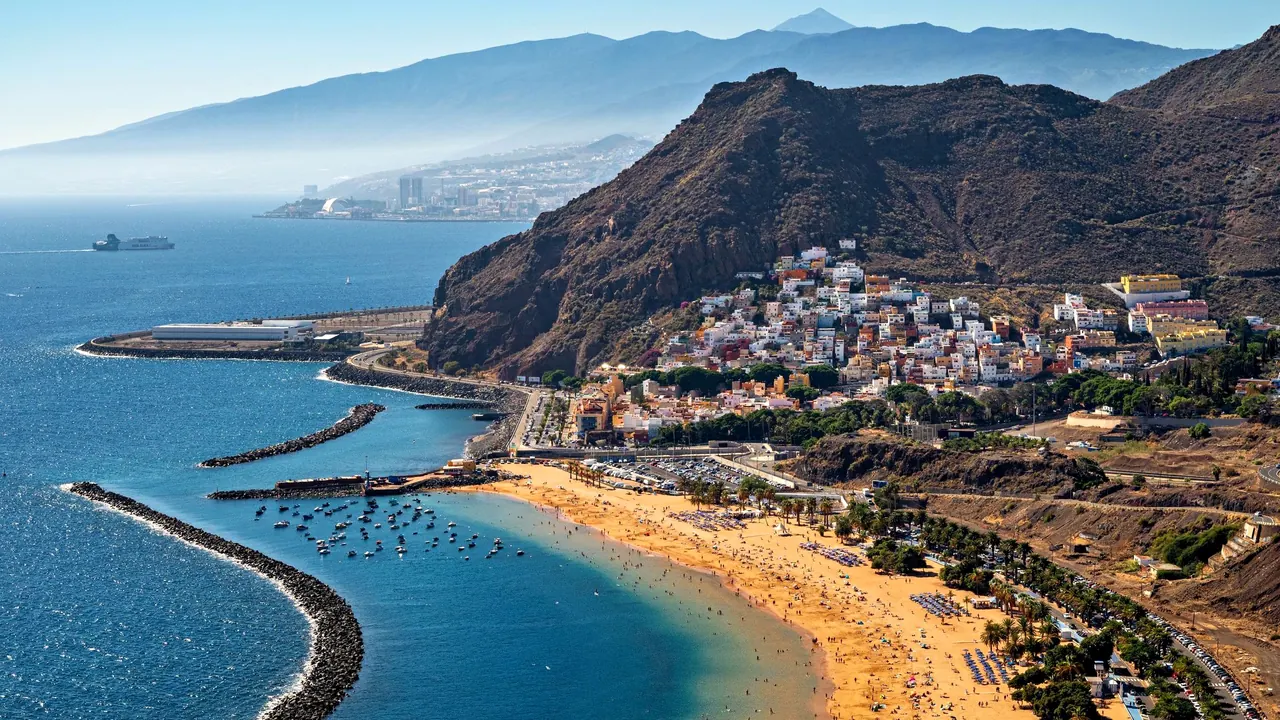
Photos: Azores by Leonardo Barucci, Pexels License; Tenerife by Harald Pippert, Pexels License.
Azores or Tenerife?
Our verdict in twelve categories, each scored against the same fixed benchmark cities, and the climate month by month, so you can choose for your trip.
Choose Azores for
- wellness
- nature and the outdoors
- prices
The Azores suit travellers who want the landscape to be the whole trip: crater lakes, whale boats, cliff paths and long soaks in warm volcanic pools, then early, quiet evenings. You need to be relaxed about mist and showers changing the day's plan, happy to drive a hire car, and willing to fly between islands if you want to see more than one.
Choose Tenerife for
- nightlife
- families
- beaches
Tenerife is the better pick for reliable sun, calm sandy beaches and an easy base with children, especially in winter, when the Azores are cool and wet. It also has more going on after dark, more historic towns within a drive, and a ferry to La Gomera. With Teide and the Anaga forests, walkers give up little by choosing it.
Scoreboard
Twelve categories on one fixed scale from 0 to 100. The shaded stretch is the gap between the two.
Your match
Pick a travel style or drag the sliders, and both match scores follow your weighting.
Wins on wellness and nature and the outdoors with your weighting.
Wins on nightlife and families with your weighting.
What matters to you?
Category by category
What the scores mean for a trip.
Beaches & swimming
Tenerife has much the better beaches. Its south coast is a run of man-made bays with pale sand and calm water behind breakwaters. Las Teresitas has golden sand brought in from the Sahara, El Médano has natural sand, and the dry south makes a beach day the normal plan rather than a lucky break.
In the Azores, swimming happens in lava rock pools and small black-sand coves. Santa Maria's pale beaches are the exception, but they are a flight away from São Miguel. By late summer the sea is about as warm on both, but in the Azores a swim has to fit around swell and cloud.
Food & drink
The two are evenly matched, and both cook simply from what the islands grow and catch. The Azores have the more unusual dishes: cozido lowered into the hot ground at Furnas, Terceira's alcatra braised in clay pots, and sharp São Jorge cheese. To drink there is mineral-edged Pico wine and tea from plantations among Europe's oldest.
Tenerife has papas arrugadas (wrinkled potatoes) with mojo sauces, grilled goat cheese and whole fish in the harbour villages, plus farmhouse guachinches pouring new wine in the northern hills. It also has a fine-dining tier that the Azores lack. Its weak spot is the southern resort strip, where menus turn international. La Laguna, Santa Cruz and the north are where to eat well.
Culture & sights
The Azores' finest sight, the World Heritage town of Angra do Heroísmo on Terceira, compares well with anything on Tenerife. Pico's walled vineyards and Terceira's brightly painted Holy Spirit chapels exist nowhere else. Beyond these, the heritage is modest and split across islands you reach by plane.
Tenerife has more, all within driving distance on one island: La Laguna's colonial street grid, the carved balconies of La Orotava, Garachico partly buried by lava, the Guanche mummies in Santa Cruz and the pyramids of Güímar. Neither is a culture trip on its own, but Tenerife fills more days.
Nightlife
Evenings in the Azores mostly end after dinner. The exceptions are a handful of bars in Ponta Delgada, the flag-covered sailors' bars of Horta and the summer festas that keep Terceira's streets busy late.
Tenerife offers several kinds of night out. Playa de las Américas has bars and clubs open until dawn, Costa Adeje has cocktail bars on the seafront, La Laguna's old streets fill with students at weekends, and Santa Cruz goes out late in Spanish style. Its Carnival in late winter is one of the biggest street parties anywhere.
Nature & outdoors
Both are volcanic islands where nature is the main reason to go, so the difference is in character. The Azores are soft and green, with the crater lakes of Sete Cidades and Lagoa do Fogo, steaming Furnas, the climb up Pico and sperm whales all year. Divers can also see manta rays off Santa Maria.
Tenerife is one great mountain. Teide rises to 3,715m above lava fields, with laurel forest in Anaga and the Masca gorge in the Teno massif. Its clear high skies are good for stargazing, which the misty Azores rarely allow. Whale boats here find pilot whales and dolphins, and the weather for walking is far more dependable.
Day trips
From São Miguel, days out in the Azores are small towns such as Ribeira Grande and Vila Franca do Campo, or a swim in the islet's flooded crater. The best island hops, from Faial across to Pico and São Jorge, only work if you base yourself in the central group.
Tenerife has the better day trips. La Gomera, with its terraced valleys and Garajonay cloud forest, is under an hour by ferry from Los Cristianos. Las Palmas on Gran Canaria makes a full day out. A stay in the south also leaves the green northern wine valleys and Puerto de la Cruz in easy reach.
Good for families
The Azores give children memorable outdoor days: whale boats, warm pools at Furnas and lunch lifted out of hot ground. But there is no zoo or theme park, the rock pools and swell need close watching, and rain can ruin a plan.
Tenerife is far easier with children. In Costa Adeje and Los Cristianos you get calm beaches behind breakwaters and apartment complexes with pools. There is a well-known water park in the south and a large zoo in Puerto de la Cruz, and the mild climate rarely wears small children out.
Getting around
You need a hire car on both to see much. On São Miguel driving is quick, but the buses run too rarely to plan around. Going beyond one Azores island adds another layer: ferries link Faial, Pico and São Jorge in the central group, the wider ferry network sails mainly in summer, and the rest means short flights. The weather can cancel boats and planes, so leave spare days.
Tenerife is easier because it is one island. Motorways link south and north, a tram runs between Santa Cruz and La Laguna, and buses reach Teide. You can manage a stay in the south without a car, although the mountain roads are slow and the motorway near Santa Cruz jams at rush hour.
Shopping & style
Neither island is a shopping destination. Shopping in the Azores is for things to take home: São Jorge cheese, north-coast tea, Pico wine and scrimshaw. Ponta Delgada's market hall is the best place to find them.
Tenerife has more choice. Santa Cruz has pedestrian shopping streets, a department store and the arcaded African market. The resorts sell low-tax electronics and perfume, and La Orotava keeps its traditions of lace and basketwork.
Affordability
Overall costs are similar, but the money goes on different things. In the Azores, meals, wine and the trails cost little. A hire car is close to essential, though, and whale trips and flights between islands add up, especially in July and August.
On Tenerife, the Canaries' low tax keeps drinks and petrol cheap, and buses help on a tight budget. Rooms in Costa Adeje in winter are the main expense, and self-catering in Los Cristianos or Puerto de la Cruz brings it down.
Live music & performing arts
Music in the Azores means village brass bands and folk dances at the summer festas, plus an autumn jazz festival in Angra. Outside festival time, finding a concert takes effort.
Tenerife has more. Its symphony orchestra plays at the Auditorio in Santa Cruz, which also hosts a short opera season, and there are historic theatres in Santa Cruz and La Laguna. The Carnival's satirical choirs add a local tradition. From the southern resorts, though, all this is about an hour's drive away, and resort evenings mostly mean tribute acts.
Wellness & relaxation
The Azores are clearly ahead for relaxation. Volcanic heat gives them a natural bathing tradition, from the iron-orange pool in the Terra Nostra garden at Furnas to hot springs flowing into the sea at Ponta da Ferraria. The islands' slow pace adds to the calm.
Tenerife has no bathing tradition of its own. Its wellness means large hotel spas with thalassotherapy pools in Costa Adeje, or yoga stays in rural fincas. Its advantage is a dry, mild climate, while Azorean soaking often happens in the rain.
When should you go?
Pick your month. The climate figures are measured averages, not a forecast.
Azores in July
Tenerife in July
Daytime high, °C
Rainfall in the month, mm
Temperature and rainfall are climate normals, averaged over the years shown. Azores: 1991-2020 normals, Ponta Delgada / Nordela Acores (2.3 km from centre). Tenerife: 1991-2020 normals, Tenerife Sur (16.1 km from centre).
The Azores are at their best from June to September. Where most visitors stay, daytime highs climb from about 17°C in winter to around 26°C in August, July is the driest month, and the sea is warm enough to swim from June into early October. From October the rain builds steadily to a wet December, often 170mm in the month, so winter walking means grey skies and good waterproofs.
In Tenerife's southern resorts, the weather is good all year. Winter afternoons stay in the low twenties, almost no rain falls from May to September, and the sea rarely drops below 19°C, so a January swim is normal. July is the sunniest month and August the hottest, close to 29°C. That is fine on the beach but tiring for long town walks, so spring and autumn suit exploring on foot better. The north of the island is cooler, cloudier and wetter. Still, the gap between the two is widest in winter, when Tenerife's south stays dry and bright and the Azores get their heaviest rain.
Which traveller are you?
For a beach and sun trip, Tenerife is the clear choice. Its southern coast lets you plan a beach day weeks ahead and expect to get it, in winter as well as summer. In the Azores a swim is a bonus you fit around showers and swell.
On a family trip with young children, Tenerife asks less of the parents. One resort base covers most days, the weather rarely spoils a plan and long drives are optional. The Azores give children wilder, more memorable days, but each one takes more effort to arrange.
For a relaxing and wellness trip, choose the Azores. Here the islands themselves do the work: warm water rising from the ground, empty green roads and nights that end early. On Tenerife you have to look for calm away from the resorts, though the sun is far more dependable.
Before you go
| Measure | Azores | Tenerife |
|---|---|---|
| Official language | Portuguese | Spanish |
| Currency | Euro (EUR) | Euro (EUR) |
| Sockets | CF230 V, 50 Hz | CF230 V, 50 Hz |
| Driving side | Right | Right |
| Time zone | UTC-1, UTC in summer | UTC, UTC+1 in summer |
| Emergency number | 112 | 112 |
| Main airport | João Paulo II Airport (PDL)25 non-stop destinations | Tenerife Sur Airport (TFS)111 non-stop destinations |
| Public holidays this year | 15 days | 12 days |
By the numbers
| Measure | Azores | Tenerife |
|---|---|---|
| Population | 236,440 | 955,063 |
| People per km² | 102 | 470 |
| Swim season, months above 21 °C | 4 months | 7 months |
Where else could you go?
Every comparison below shares a destination with this one, so you can follow Azores or Tenerife somewhere new.
- La Gomeravs Tenerife
- Gran Canariavs Tenerife
- La Palmavs Tenerife
- Fuerteventuravs Tenerife
- Lanzarotevs Tenerife
- Madeiravs Tenerife