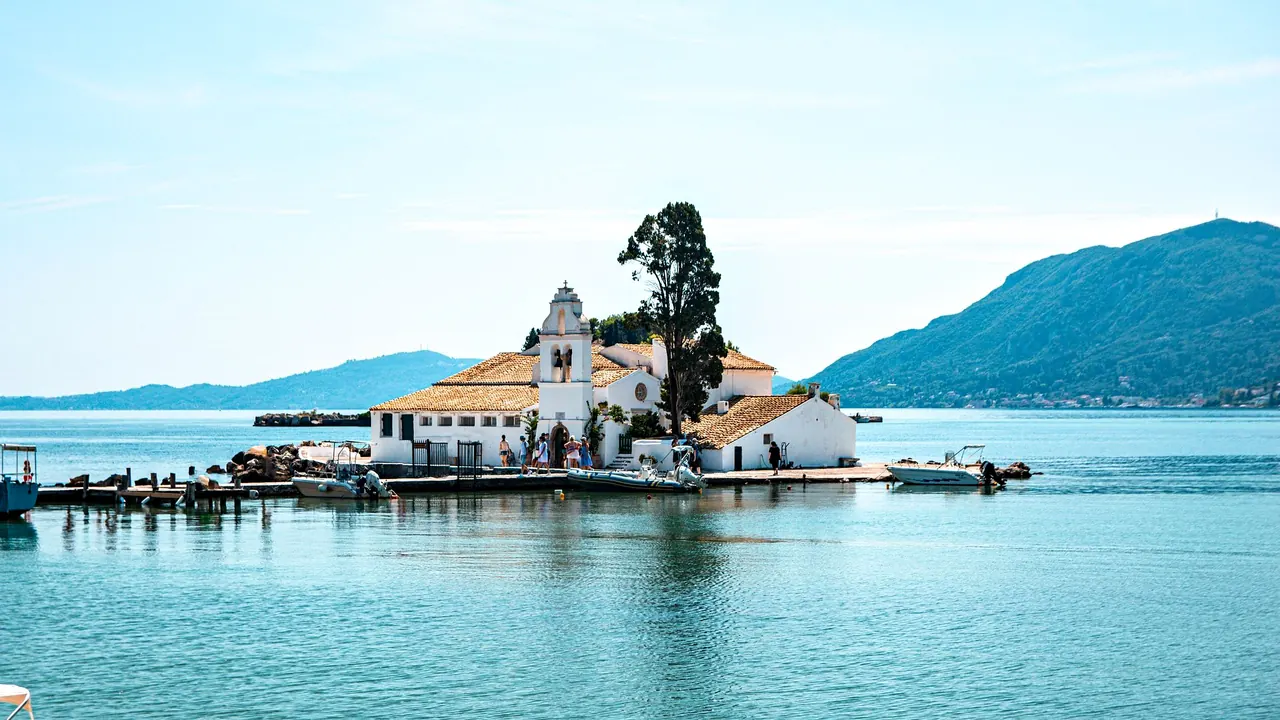
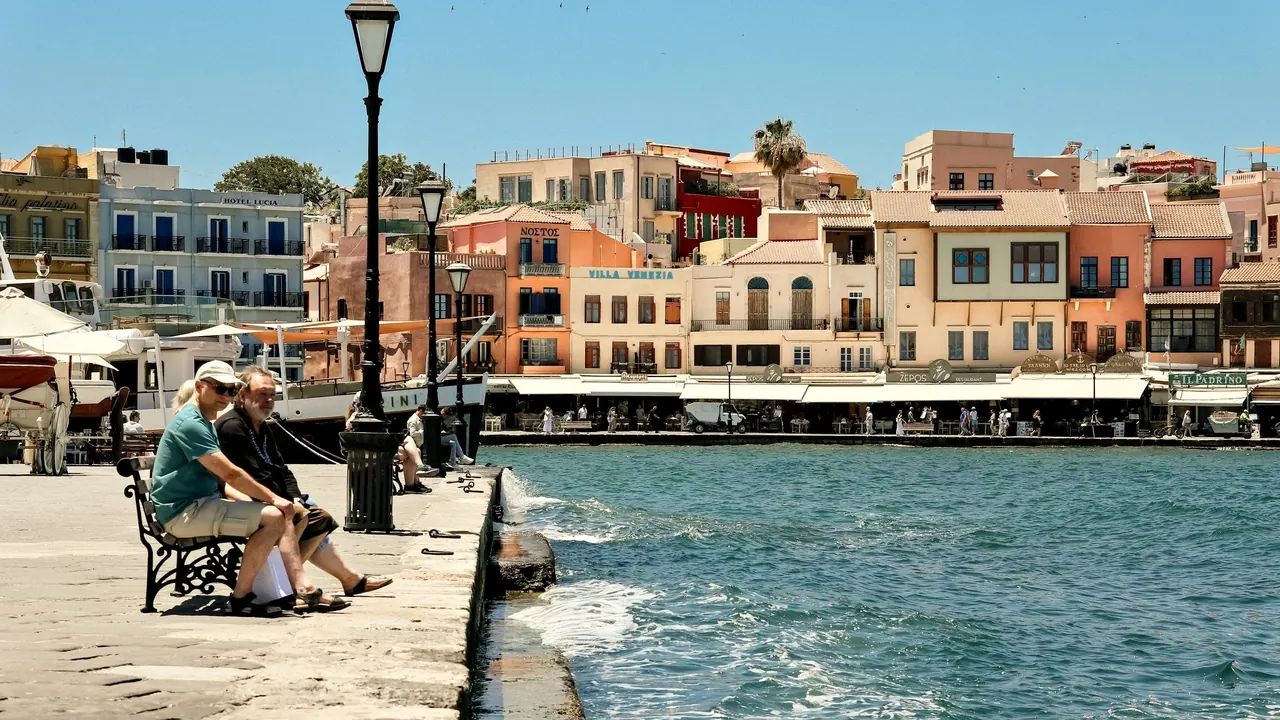
Photos: Corfu by Nico Hartnauer, Pexels License; Crete by Piotr Baranowski, Pexels License.
Corfu or Crete?
Our verdict in twelve categories, each scored against the same fixed benchmark cities, and the climate month by month, so you can choose for your trip.
Choose Corfu for
- live music and the arts
- nightlife
- families
Corfu suits travellers who want a smaller, greener island they can get to know in a week. One base on the north or west coast puts the sandy beaches within reach. Corfu Town gives you an Italianate old town for evenings and rainy days, and boat trips to Paxos, Antipaxos and Albania add variety without long drives. Its musical life is also unusual for Greece: the island's old philharmonic bands play in village squares all summer and lead the Easter processions through Corfu Town.
Choose Crete for
- nature and the outdoors
- food and drink
- culture and sights
If you want more from an island than the beach, Crete is the better pick. It has the more famous sands, from Elafonissi to Balos, as well as real mountains, deep gorges and the Minoan palaces. Its village cooking is among the best regional food in the Mediterranean. The price is size: to see it properly you'll spend long days on winding roads, so it rewards a longer trip or two bases.
Scoreboard
Twelve categories on one fixed scale from 0 to 100. The shaded stretch is the gap between the two.
Your match
Pick a travel style or drag the sliders, and both match scores follow your weighting.
Wins on live music and the arts and nightlife with your weighting.
Wins on nature and the outdoors and food and drink with your weighting.
What matters to you?
Category by category
What the scores mean for a trip.
Beaches & swimming
Both islands are made for a beach trip, but Crete has more range and the more famous names. Elafonissi's pinkish lagoon, the turquoise bay at Balos and the long strand of Falassarna lie in the far west. Vai has its palms in the east, and the south coast hides coves such as Preveli that you reach on foot or by boat.
Corfu's beaches are excellent too and easier to reach from one base. There are long sands at Glyfada and Issos on the west coast, clear coves at Paleokastritsa, and shallow water in the north. The day trip by boat to Antipaxos gives the island some of the clearest water in the Ionian.
Food & drink
Crete is the better island to eat on. Its cooking rests on its own olive oil, mountain cheeses such as graviera, wild greens and slow-cooked lamb and goat. The village tavernas, the old-town backstreets of Chania and Rethymno, and the vineyards south of Heraklion all reward the effort.
Corfu's food is interesting in a different way. Venice left pastitsada, sofrito and the peppery fish stew bourdeto, and the island makes kumquat liqueur and still drinks ginger beer. But there is less depth to it, and on both islands the resort strips serve menus aimed at package tourists.
Culture & sights
Corfu's culture is concentrated and easy to walk. The UNESCO-listed old town has its kantounia lanes, the Liston arcades and two fortresses. Its history runs from ancient Corcyra, whose archaic Gorgon pediment is in the Archaeological Museum, through the Byzantine castle of Angelokastro to the Venetian and British town you walk through today. The Achilleion is a short drive away.
Crete goes deeper and further back. Knossos, Phaistos, Malia and the Heraklion museum's unrivalled Minoan collection belong to Europe's first great civilisation, centuries older than anything on Corfu. On top of that come Chania's Venetian harbour, Rethymno's Ottoman balconies, Spinalonga and Arkadi, though seeing it all takes days of driving.
Nightlife
There's little to choose between them overall, and the two islands are set up in much the same way. Corfu has Kavos at its southern tip, a party strip running until dawn, and a calmer run of bars at Ipsos and Dassia. In Corfu Town the evening means cocktails under the Liston.
On Crete, Malia and Hersonissos play the party-resort role. Its grown-up nights are spread across three towns, and the bars of Chania, Rethymno and Heraklion fill with Greek students and locals as well as visitors.
Nature & outdoors
This is where the two islands differ most. Crete is a mountain island. The White Mountains and Psiloritis keep snow into spring, and gorges such as Samaria cut through them to the sea. You can watch griffon vultures and kri-kri goats, walk the E4 path, or go sport climbing at Agiofarago.
Corfu's nature is gentler and greener. There are olive groves and cypresses, Pantokrator at about 900m with views into Albania, and the Corfu Trail running the length of the island. Add sea caves at Paleokastritsa and birdwatching at the Korission lagoon. It's lovely for spring walks, but on a smaller scale.
Day trips
Sea against land is the real split here, since neither island has many more outings than the other. Corfu's day trips go by boat and cross borders: Paxos with Antipaxos, the short ferry to Saranda for the ruins of Butrint in Albania, and Parga and Sivota on the Greek mainland. Most of them run only in the main season.
Crete's best days out stay on the island. You can visit its other towns, the wine villages around Peza and Archanes, or the mountain villages of Anogia and the Amari valley. By sea there are Chrissi and Gramvousa, or a long day on the fast ferry to Santorini.
Good for families
Corfu's smaller size is what gives it a slight edge with children. The shallow north coast around Roda and Acharavi and the sands of Issos are never far from any base, and the water park and pirate-style boat trips are short outings. Just keep away from Kavos and Ipsos if you want calm evenings.
Crete has a little more for children to do, with several waterparks along the north coast, the aquarium at Gournes and the warm lagoon at Elafonissi. Reaching them often means long drives on winding roads, and Knossos rarely holds small children's attention for long.
Getting around
You'll want a car on both islands, and both have narrow, twisting roads. The difference is size. Corfu is about 60km long, so from one base everything is within easy reach, even though the buses run too rarely to rely on.
Crete is far larger. Its buses link the north-coast towns reliably, but the beaches, gorges and south-coast villages mean long, slow drives, and some villages can only be reached by summer boat.
Shopping & style
Neither island is a shopping destination, and on both the best buys are local products rather than fashion. On Corfu, Corfu Town's old lanes sell olive-wood bowls, kumquat liqueur and soaps. Chania has the stronger craft tradition, with its leather-makers' lane, knife-makers and covered market hall, and Heraklion's market street sells thyme honey, cheese and raki.
Affordability
Corfu's expensive pockets are the villa coast around Kassiopi and Corfu Town in July and August. On Crete it's Elounda's luxury resorts, Chania's old town and the famous western beaches in high summer. Away from those, the two cost much the same, and the package resorts on Corfu's north and east coasts keep rooms reasonable.
On both islands car hire is the main extra cost, and spring and autumn are cheaper. Crete's family-run rooms and generous village meals, often served with free raki and dessert, make a slower rural trip especially good value.
Live music & performing arts
Corfu has the richer live music, thanks to its Venetian past. Philharmonic bands founded in the nineteenth century play on the Spianada and in village squares all summer and lead the Easter processions, and kantades serenades are still sung with guitar and mandolin.
Crete's lyra music and circle dances are just as much a living tradition, best heard in the music tavernas of Rethymno and Chania or at mountain festivals in Anogia. Beyond some summer festivals in fortresses, neither island has much formal theatre or concert programme.
Wellness & relaxation
Neither island has a bathing tradition of its own, so on both, wellness means hotel spas and a slow pace. Crete's most serious spas are around Elounda and the Gulf of Mirabello, and Loutro, reached only by boat or on foot, is about as peaceful as a Greek village gets.
Corfu adds yoga retreats in the olive groves and the quiet northeast coast. On either island, choose your base carefully and stay away from the busy resort strips in midsummer.
When should you go?
Pick your month. The climate figures are measured averages, not a forecast.
Corfu in July
Crete in July
Daytime high, °C
Rainfall in the month, mm
Temperature and rainfall are climate normals, averaged over the years shown. Corfu: 1991-2020 normals, Kerkyra Airport (0.9 km from centre). Crete: 1991-2020 normals, Heraklion Airport (3.6 km from centre).
Both islands are summer beach destinations, but their weather differs more than their closeness on the map suggests. Corfu is the hotter and the wetter of the two. July and August reach about 32°C, which makes walking around Corfu Town in the afternoon heavy going. The rain returns in late September and is heavy through the winter, peaking at about 188mm in November, which is what keeps the island so green. On Corfu the best balance comes in June and early September: hot sun, a warm sea and fewer of the wet days that close out the season.
Crete is drier and sunnier almost all year. Its summer highs stay nearer 29°C, and from May to September there is almost no rain. October is still settled and warm enough for the beach, and the sea holds about 25°C through September. That makes Crete the safer choice for late-season swimming, and its long dry spring and autumn are the times for walking the gorges. In midwinter both islands are mild but cloudy and wet, and Corfu is the greyer of the two.
Which traveller are you?
On an outdoors trip, choose Crete. It has two mountain ranges above 2,400m, gorges such as Samaria and Imbros running down to the Libyan Sea, and a coast path between Loutro and Sfakia. Corfu's Pantokrator and the Corfu Trail are pleasant, but they can't match that scale.
For a culture and arts trip, Crete also comes out ahead. Knossos and the Heraklion Archaeological Museum take you to the heart of Minoan Europe, and Chania and Rethymno add the Venetian and Ottoman layers. Corfu Town is lovely and compact, but there is less of it to see.
On a family trip with young children, Corfu is slightly easier. It has shallow, sandy beaches on the north coast, a water park, and a small island where no outing means a long drive. On Crete, families often spend long hours in the car to reach Elafonissi or the south coast.
Before you go
| Measure | Corfu | Crete |
|---|---|---|
| Official language | Greek | Greek |
| Currency | Euro (EUR) | Euro (EUR) |
| Sockets | CF230 V, 50 Hz | CF230 V, 50 Hz |
| Driving side | Right | Right |
| Time zone | UTC+2, UTC+3 in summer | UTC+2, UTC+3 in summer |
| Emergency number | 112 | 112 |
| Main airport | Corfu Ioannis Kapodistrias International Airport (CFU)88 non-stop destinations | Heraklion International Nikos Kazantzakis Airport (HER)129 non-stop destinations |
| Public holidays this year | 15 days | 15 days |
By the numbers
| Measure | Corfu | Crete |
|---|---|---|
| Population | 100,854 | 623,065 |
| People per km² | 161 | 75 |
| Swim season, months above 21 °C | 5 months | 5 months |
Where else could you go?
Every comparison below shares a destination with this one, so you can follow Corfu or Crete somewhere new.