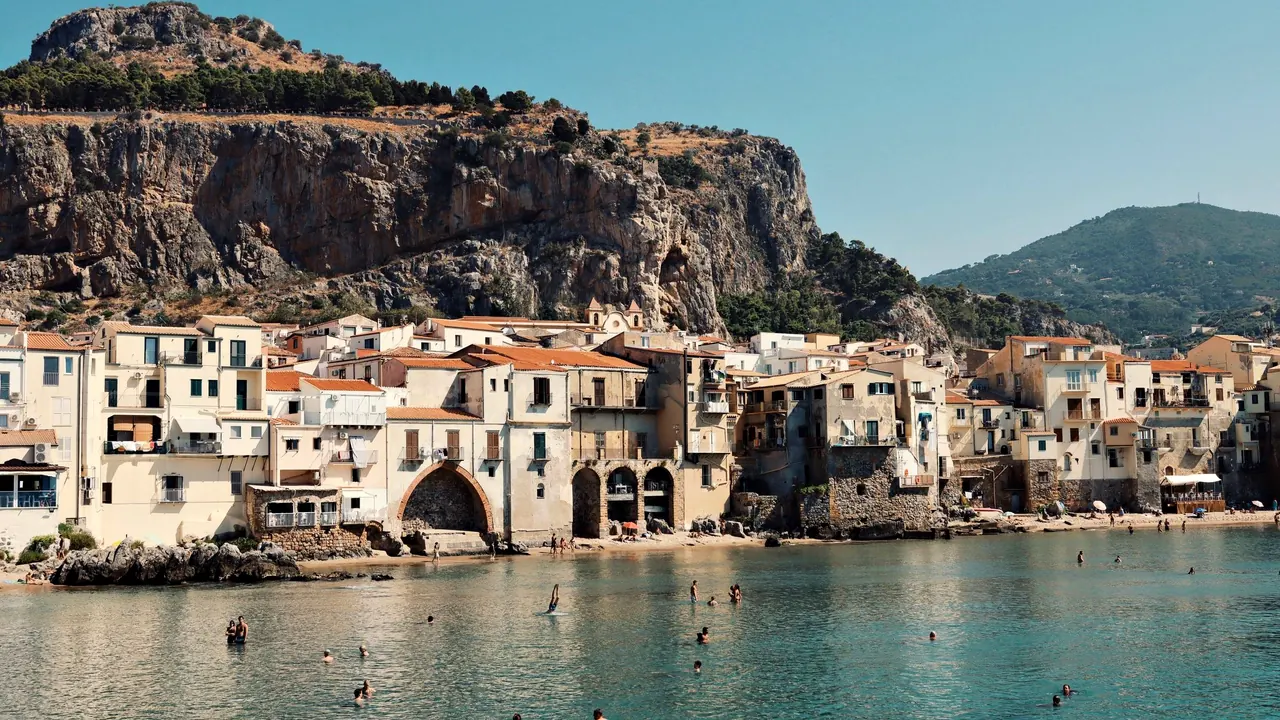
Photos: Sicily by Efrem Efre, Pexels License.
Sicily or Umbria?
Our verdict in twelve categories, each scored against the same fixed benchmark cities, and the climate month by month, so you can choose for your trip.
Choose Sicily for
- beaches
- nightlife
- food and drink
Sicily is the choice for a trip that combines sea and history. You get warm swimming from early summer into autumn, Greek temples, Arab-Norman mosaics and a street-food culture with far more range than Umbria's country cooking. It asks more of you, with long drives between bases and a hire car for most of the island, but it repays a week or more and has livelier evenings in Catania and Palermo.
Choose Umbria for
- getting around
- wellness
- day trips
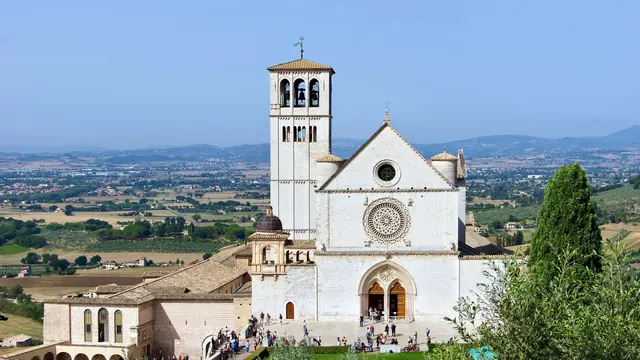
Travellers who would rather settle into one farmhouse and see a different hill town each day will be happier in Umbria. The days can take in Assisi's frescoes, Orvieto's cathedral or a Sagrantino estate, and the drives between them are short. The pace is slow and the art is first-rate, but there is no sea and little nightlife, and swimming means a lake or a pool.
Scoreboard
Twelve categories on one fixed scale from 0 to 100. The shaded stretch is the gap between the two.
Your match
Pick a travel style or drag the sliders, and both match scores follow your weighting.
Wins on beaches and nightlife with your weighting.
Wins on getting around and wellness with your weighting.
What matters to you?
Category by category
What the scores mean for a trip.
Beaches & swimming
This is the widest gap between the two. Sicily has sea on every side and warm water through summer and early autumn. There are sandy bays such as San Vito Lo Capo and Marina di Ragusa, the coves of the Zingaro reserve, the reserve beaches of Vendicari and the clear water around Favignana.
Umbria has no coast at all. Lake Trasimeno's small lidos are calm and shallow for paddling, but the water is cloudy and the bottom muddy in places. For most visitors, the day's swim is in a farmhouse pool, and the sea is a drive of two hours or more.
Food & drink
Both are serious places to eat, but Sicily has more range. Its cooking carries Greek, Arab and Spanish influences, from the street food of Palermo's Ballarò and Capo markets to fish couscous around Trapani and pasta alla Norma in Catania. Cannoli and granita are found everywhere, and Etna wines go with all of it.
Umbria's cooking is narrower and earthier. It means black truffle over strangozzi, Norcia's pork, Castelluccio lentils and porchetta from market vans, with Sagrantino and Orvieto wines tasted at the estates. What it lacks is seafood, which is exactly where Sicily is strongest.
Culture & sights
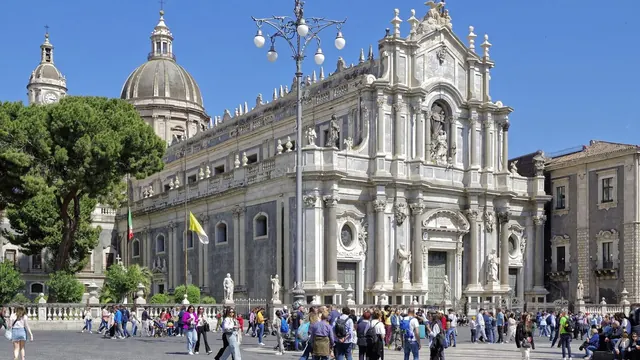
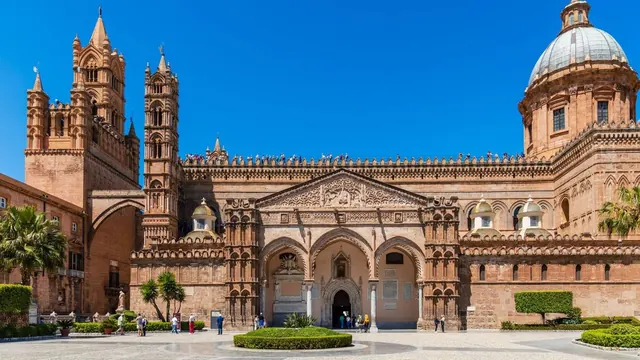
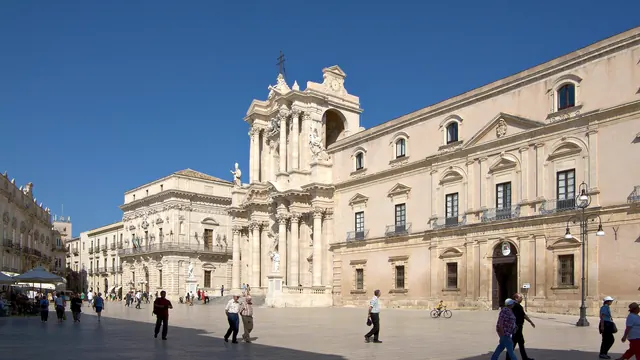
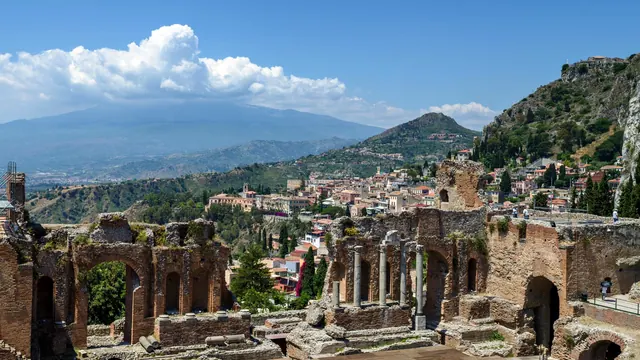
The two are evenly matched in different ways. Sicily's heritage comes from many civilisations and is spread across a large island. It has the Doric temples of Agrigento and Segesta, the Greek theatres of Syracuse and Taormina, the Roman mosaics of Piazza Armerina, the gold Arab-Norman interiors of Palermo and the baroque towns of the south east. Seeing it properly takes about a week and several bases.
Umbria's strength is medieval and Renaissance art, packed into hill towns that sit close together. There are Giotto's frescoes in Assisi, Signorelli's Last Judgement in Orvieto's cathedral and Perugino in Perugia's Galleria Nazionale. It covers fewer eras than Sicily, but you travel far less between masterpieces.
Nightlife
Neither is a clubbing destination, but Sicily has more going on after dinner. The historic centre of Catania fills with students and locals until late, and in Palermo people drink in the street around the Vucciria. In summer, open-air clubs open at Mondello and below Taormina.
In Umbria, the evening ends after a long dinner and a stroll. The exception is Perugia, where students gather on the cathedral steps and in a few late bars.
Nature & outdoors
Sicily's landscape is more dramatic. Umbria has nothing like the lava fields and summit craters of Etna, the evening climb on Stromboli to watch it erupt, or the diving around the Aeolian and Egadi Islands. In high summer, though, Sicily's interior is brown and too hot for walking.
Umbria is gentler, with oak woods and olive groves and the Monti Sibillini rising above the flowering plain of Castelluccio. There is rafting in the Valnerina and the Marmore Falls to visit. It suits walkers and cyclists who prefer green hills to volcanoes.
Day trips
Umbria has the edge here, because it is small and everything is close. From one base near Perugia or Spoleto you can see a different hill town each day, from Gubbio and Todi to Spello and Norcia. You can also cross into Tuscany for Cortona or Montepulciano, or take the train from Orvieto to Rome.
Sicily has plenty of good outings too, such as Cefalù and Erice from Palermo, the baroque towns around Noto, and ferries to Favignana or the Aeolian Islands. But the island is large, so covering it takes two or three bases and longer drives.
Good for families
The sea is what tips this towards Sicily. Shallow sandy bays such as Mondello and San Vito Lo Capo suit small children for days on end. Older ones can walk Etna's lava fields, take boat trips around the islands and watch the knights fight in Palermo's puppet theatre.
Umbria works for a quiet stay at a farmhouse with a pool and animals. For outings there are Lake Trasimeno, the Marmore Falls and an amusement park near Perugia. Its steep, cobbled towns are hard work with a pushchair.
Getting around
Umbria is much the easier of the two. Distances are short and the roads are good and quiet. You park below the walls of the hill towns and ride up by escalator or funicular. Without a car, you can reach the main towns on the rail line through Perugia, Assisi and Spoleto or from Orvieto's station on the Rome to Florence line.
Sicily nearly always means a hire car, with slow inland roads and chaotic traffic in Palermo and Catania. Trains are sparse, and rough seas can cancel the ferries to the islands.
Shopping & style
Sicily has the edge, mainly because it has real shopping cities. Palermo's Via Libertà, Catania's Via Etnea and Taormina's Corso Umberto give you three places for clothes. Umbria has only the ordinary chain shops of Perugia's Corso Vannucci. Sicily's food souvenirs also cover more of the island, from Modica chocolate and Bronte pistachio cream to Pantelleria capers, and there are also Trapani's coral and Palermo's puppet makers.
In crafts the two are closer. Caltagirone and Deruta both make painted majolica, and Umbria also has linen woven in Montefalco and Bevagna and cashmere outlets around Perugia. A bag of Norcia hams and truffles and wine bought at the Sagrantino estates is easy to fill in Umbria, but for a day of browsing shops Sicily offers more.
Affordability
Sicily goes slightly further for the money. Street food and pastry are cheap, and B&Bs in Palermo, Catania and the baroque south east are fairly priced even in summer. Taormina and the Aeolian Islands cost more in July and August.
Umbria is also good value next to its Tuscan neighbour, with fairly priced farmhouse stays, cheap local wine and churches that cost little to visit. In both places, the cost that adds up is a hire car.
Live music & performing arts
Sicily has more to see through the year. Palermo's Teatro Massimo runs a full season of opera and ballet. Greek tragedies are staged in the ancient theatre of Syracuse each spring and early summer, and Taormina's Greek theatre hosts concerts in summer. The opera dei pupi, Sicily's marionette theatre, has no counterpart in Umbria.
Umbria's stage life is concentrated in two summer festivals, Umbria Jazz in Perugia in July and the Festival dei Due Mondi in Spoleto. Outside them, its small theatres put on performances only now and then.
Wellness & relaxation
Umbria is the better place to slow down, although neither has a real bathing culture and both rely on their pace rather than their spas. Sicily's volcanic waters are more unusual: the hot springs at Sciacca, the mud and warm sea vents of Vulcano and the crater lake on Pantelleria. But most of its spas are in hotels around Taormina and the big resorts, and summer heat and long drives make rest harder. The calm comes from a farmhouse among the olives or a slow island such as Salina.
Umbria makes that quiet easier to find. The region is small, so one country house can be your base with little driving. Assisi and the hermitages on Monte Subasio draw people looking for silence, and the town grows still once the day visitors go. Its small spa towns, Fontecchio, San Gemini and Nocera Umbra, are known for their mineral waters rather than for big thermal pools.
When should you go?
Pick your month. The climate figures are measured averages, not a forecast.
Sicily in July
Umbria in July
Daytime high, °C
Rainfall in the month, mm
Where the figures come from
Sicily's sunshine is measured 67 km from the centre, at Ustica.
Umbria's temperatures are measured 53 km from the centre, at Frontone.
Umbria has no rain gauge within 25 km of the centre, so its rainfall comes from a gridded climate dataset read at the destination rather than from a gauge further away.
Temperature and rainfall are climate normals, averaged over the years shown. Sicily: 1991-2020 normals, Palermo / Punta Raisi (24.1 km from centre). Umbria: 1991-2020 normals, Frontone (52.9 km from centre).
Sicily's long season comes from the sea. Around the coast it is warm enough to swim from June to October, and the water reaches 27°C in August. Summer is very sunny and almost dry, but July and August bring heat of around 30°C, which makes the interior and the hill towns hard work. May and June are the best months for sightseeing and hiking, with late September a second good spell for walking, although the rain is already coming back by then. It builds through October and November and peaks in December at 138mm, though winter days stay mild.
Umbria's figures come from the hill country where most visitors stay, and its year is colder and less settled. Winter highs are around 7°C. Spring warms steadily, and by July the valleys are as hot as Sicily. Rain is spread more evenly through the year and is heaviest in autumn, so April to early June and September are the best months for walking the towns and hills.
Which traveller are you?
On a beach and sun trip, Sicily is the clear answer. Its coast runs from the sandy crescent of San Vito Lo Capo to the white cliffs of the Scala dei Turchi and the Egadi coves. Umbria has no sea, only the reedy lido beaches of Lake Trasimeno.
For a food and nightlife trip, Sicily is again the better choice. Palermo's market stalls, Catania's fish market and the island's pastry give you a broader table. Catania's piazza bars and the summer beach clubs also stay open later than Perugia's student evenings.
On a relaxing and wellness trip, Umbria suits better. It has country houses with pools, massage and yoga, the quiet of Assisi's hermitages and short, easy drives, so slowing down is simpler than in Sicily, where the heat and long journeys get in the way.
Before you go
| Measure | Sicily | Umbria |
|---|---|---|
| Official language | Italian | Italian |
| Currency | Euro (EUR) | Euro (EUR) |
| Sockets | CFL230 V, 50 Hz | CFL230 V, 50 Hz |
| Driving side | Right | Right |
| Time zone | UTC+1, UTC+2 in summer | UTC+1, UTC+2 in summer |
| Emergency number | 112 | 112 |
| Main airport | Falcone–Borsellino Airport (PMO)106 non-stop destinations | Perugia San Francesco d'Assisi – Umbria International Airport (PEG)17 non-stop destinations |
| Public holidays this year | 13 days | 13 days |
By the numbers
| Measure | Sicily | Umbria |
|---|---|---|
| Population | 4,983,478 | 852,085 |
| People per km² | - | 101 |
| Swim season, months above 21 °C | 5 months | - |
Where else could you go?
Every comparison below shares a destination with this one, so you can follow Sicily or Umbria somewhere new.
- Tuscanyvs Umbria
- Cinque Terrevs Umbria
- Caprivs Sicily
- Ischiavs Umbria
- Ischiavs Sicily
- Amalfi Coastvs Sicily