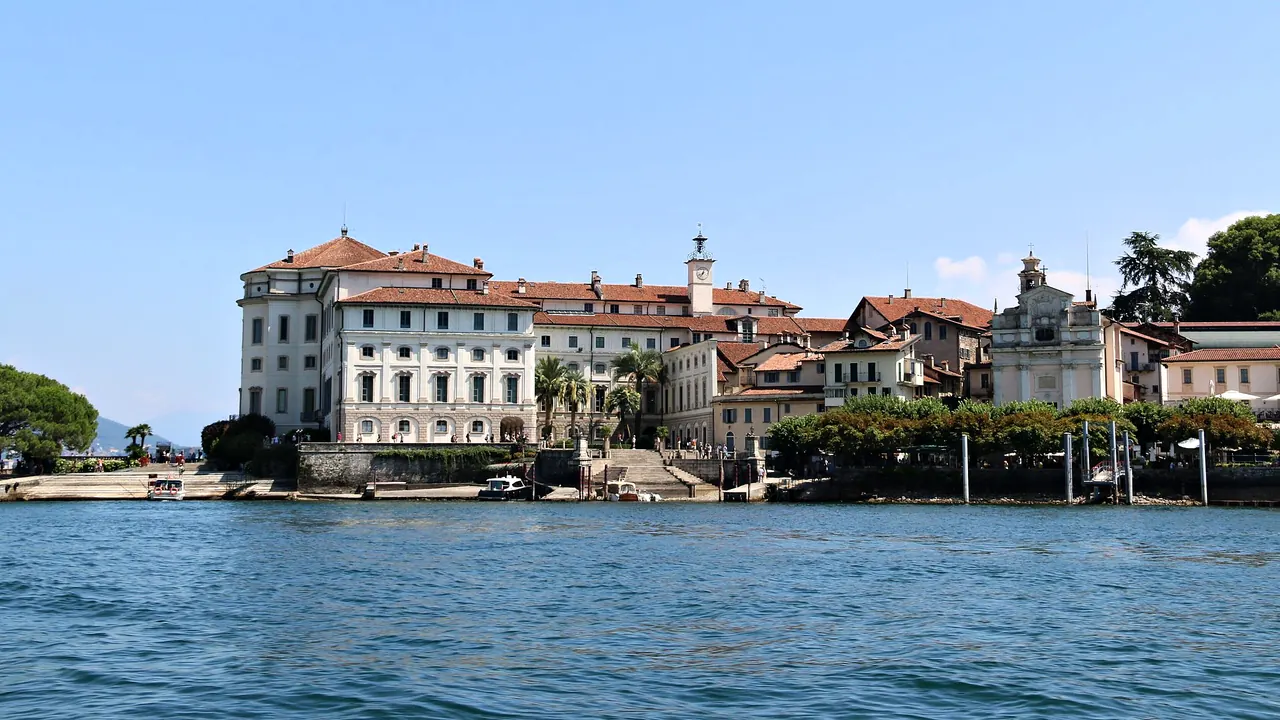
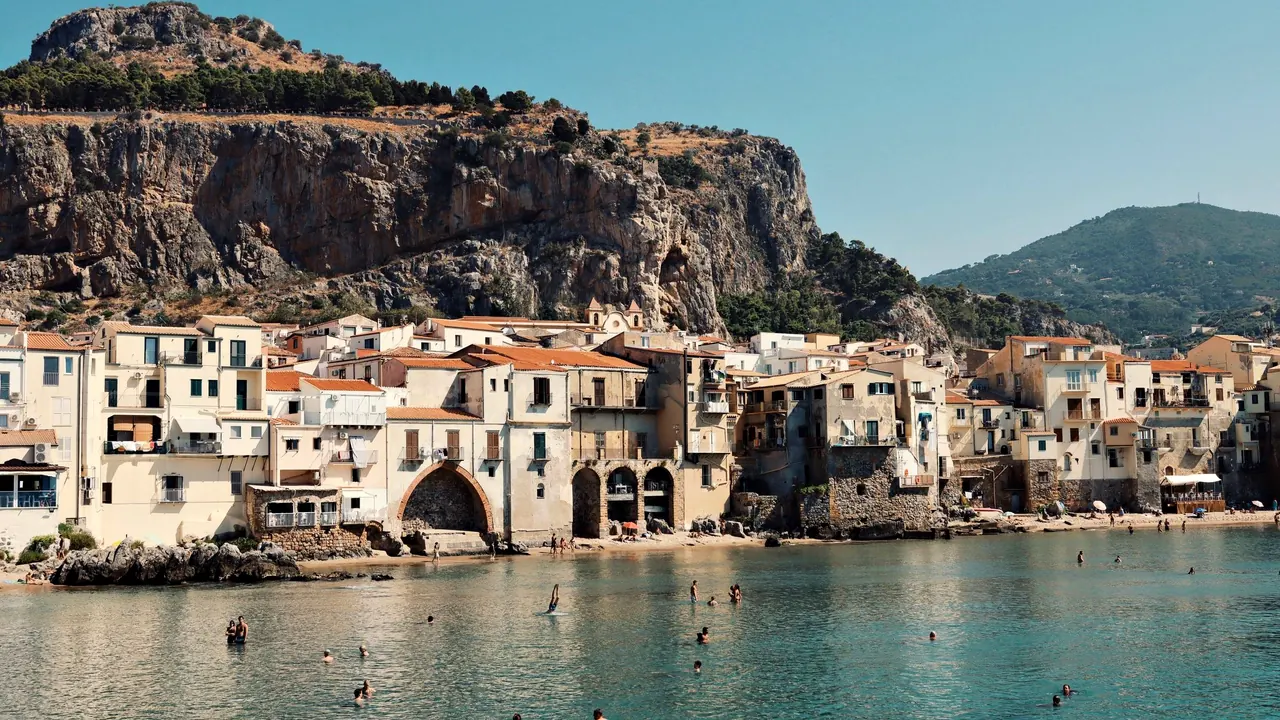
Photos: Lake Maggiore by FrDr, CC BY-SA 4.0, cropped; Sicily by Efrem Efre, Pexels License.
Lake Maggiore or Sicily?
Our verdict in twelve categories, each scored against the same fixed benchmark cities, and the climate month by month, so you can choose for your trip.
Choose Lake Maggiore for
- getting around
- families
- wellness
Lake Maggiore is for a slow, scenic trip: palace gardens on the Borromean Islands, ferries between small towns, and walks into Alpine valleys such as the Verzasca and the Val Grande. You can stay in Stresa or Locarno without a car, and Milan is close by train. It also suits families who want short distances and calm evenings. You give up warm sea swimming, much variety at dinner and any real nightlife.
Choose Sicily for
- beaches
- nightlife
- food and drink
Sicily rewards travellers who want more from each day: warm sea from June to October, Greek temples and Arab-Norman mosaics, and Palermo's street food. It is also the cheaper of the two. The cost is effort. Seeing it properly takes a hire car, about a week and two or three bases, and July and August are fiercely hot.
Scoreboard
Twelve categories on one fixed scale from 0 to 100. The shaded stretch is the gap between the two.
Your match
Pick a travel style or drag the sliders, and both match scores follow your weighting.
Wins on getting around and families with your weighting.
Wins on beaches and nightlife with your weighting.
What matters to you?
Category by category
What the scores mean for a trip.
Beaches & swimming
Lake Maggiore's swimming is a break in the day rather than the point of it: a dip from a pebble beach or stone jetty around Cannobio, with the mountains behind and water that feels fresh even in August. The season is short, and cold water after Alpine rain, steep drop-offs and boat traffic all need some care.
Sicily is a true sea-and-sand destination with a long season and great variety. It has the white crescent of San Vito Lo Capo, the marl cliffs of the Scala dei Turchi, the reserve beaches of Vendicari, black volcanic sand in the Aeolians and turquoise coves on Favignana. The only catch is August, when Italian families fill much of the coast.
Food & drink
Eating by Lake Maggiore is pleasant and gentle: perch in butter and sage, risotto, Ossola cheeses, and on the Swiss shore, meals at granite tables in the woodland grotti. After a few evenings in one town, though, the choice runs out, and there is almost no street food.
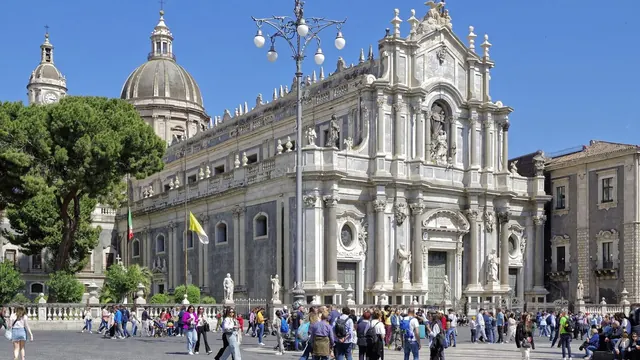
Sicily is a food destination in its own right. You can eat panelle and arancine standing at Palermo's Ballarò stalls, have granita with brioche for breakfast and pasta alla Norma in Catania. Each area has its own speciality, from Trapani's fish couscous to Modica chocolate and Bronte pistachios. Etna's volcanic wines are a lively match for the lake's Ghemme and Ticino Merlot.
Culture & sights
Maggiore's heritage is aristocratic and scenic. The Borromeo palaces and gardens on Isola Bella and Isola Madre, the frescoed Rocca di Angera, the cliffside hermitage of Santa Caterina del Sasso and the Sacro Monte of Ghiffa each make a lovely half-day by boat. There is no great museum and no dense historic centre.
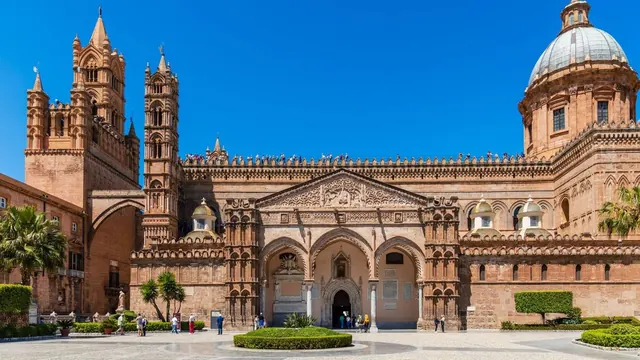
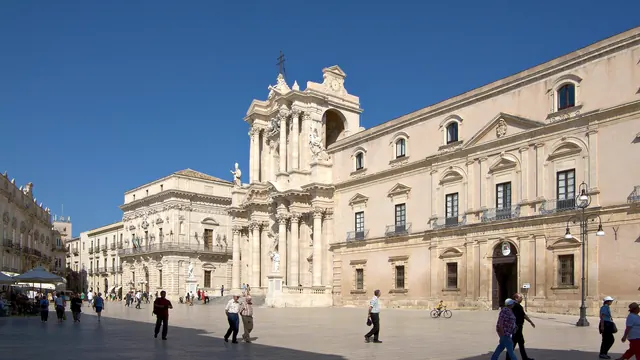
Sicily works on a different scale, with layers left by Greeks, Romans, Arabs, Normans and Spanish rulers. The Doric temples of Agrigento and Segesta, the gold mosaics of the Palatine Chapel and Monreale, the floor mosaics at Piazza Armerina and the baroque towns of Noto and Ragusa Ibla could fill a week of serious sightseeing.
Nightlife
Around the lake, an evening means a long dinner and a drink on the promenade in Stresa or Ascona, and most waterfronts are quiet by midnight. In Sicily the passeggiata leads on to real bar life among students in Catania's old centre and street drinking around Palermo's Vucciria. In summer there are open-air clubs at Mondello and below Taormina, although the small towns stay sleepy.
Nature & outdoors
Both are excellent for the outdoors, but the landscapes are very different. Maggiore is Alpine. You can climb through chestnut woods to the seven-lake view from Mottarone, walk the empty Val Grande, follow the green river and stone bridges of the Verzasca, or sail on the afternoon breezes of the upper lake.
Sicily's landscape is volcanic and maritime. You can walk Etna's lava fields with a guide, climb Stromboli in the evening to watch it erupt, follow the Zingaro cliff path or dive around the Egadi and Aeolian Islands. In both places spring and autumn are the seasons for walking, and Sicily's interior gets far hotter and browner in midsummer.
Day trips
Both make good bases for outings, but they work in different ways. From Maggiore you go by train and cross borders easily: Milan's cathedral and Last Supper, Lake Orta's island village, Bellinzona's castles, or the Centovalli railway over its viaducts to Domodossola.
In Sicily the outings stay on the island and mostly need a car. From Syracuse you can tour the baroque hill towns, and from Palermo it is easy to reach Cefalù, hilltop Erice or the Marsala wineries. Ferries to Favignana or Lipari make a full day at sea.
Good for families
Lake Maggiore is the easier choice with young children. Towns are small with safe promenades, and the ferries feel like an outing in themselves. The animals at Villa Pallavicino and the summer ride on Mottarone give children something of their own.
Sicily welcomes children warmly, and shallow bays such as Mondello and San Vito Lo Capo are ideal for small swimmers. Older children will enjoy Etna and Palermo's puppet theatre. But long drives, steep hill towns and July heat make the trip harder work than a week on the lake.
Getting around
Maggiore is easier without a car. The public ferries link Stresa, the islands and Verbania, and Stresa, Arona and Locarno are on good rail lines. A car mainly helps for the hill villages and quieter shores, where the narrow coast roads clog in summer.
Sicily largely needs a hire car. Coastal trains are sparse and slow, buses are often the better option between the main towns, and driving in Palermo and Catania is chaotic. Rough seas can also cancel ferries to the islands. Stay in two city bases without a car and you will miss much of the island.
Shopping & style
Neither is a fashion destination, but Sicily gives you much more to bring home. There are Caltagirone ceramics, Trapani coral work, Palermo puppets, Modica chocolate and Bronte pistachio cream, and Palermo's Via Libertà has fashion shops. At the lake, the highlight is the weekly lakefront market at Luino, plus honey and chestnut products. For anything stylish, you go to Milan.
Affordability
Sicily is clearly the cheaper vacation. Street food, pastry, simple trattorie and B&Bs in Palermo, Catania or the baroque south east cost little, and the main expenses are Taormina, the Aeolians and a hire car in high summer.
At Maggiore, the shore you choose matters a lot. A family-run hotel in a small Piedmont town keeps costs moderate, but Stresa's grand hotels and the Swiss prices around Locarno and Ascona push a stay up quickly, and ferry fares add up over a week.
Live music & performing arts
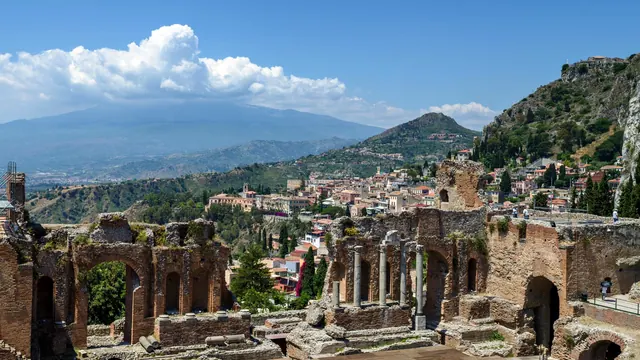
Sicily has stages that run all year as well as in summer. Palermo's Teatro Massimo has a full opera season, Greek tragedies are staged in the ancient theatre of Syracuse each spring, and Taormina's Greek theatre puts on summer concerts with Etna behind the stage. The opera dei pupi, with its armoured marionette knights, is unique to the island.
On Maggiore, live performance is mostly a summer affair: classical concerts of the Stresa Festival on the Borromean Islands, open-air shows in Locarno's Piazza Grande and jazz in Ascona. For opera you need to go to Milan.
Wellness & relaxation
Lake Maggiore has a slight edge for unwinding. Boats, gardens and silent evenings set a slow pace, the Stresa and Swiss-shore hotels have spas with lake views, and the springs at Bognanco make a pleasant half-day.
Sicily offers stranger waters: volcanic mud on Vulcano, hot springs at Sciacca and the crater lake on Pantelleria. But it relaxes you more through a farmhouse stay among olive groves, or a few days on Salina outside August, than through its spas.
When should you go?
Pick your month. The climate figures are measured averages, not a forecast.
Lake Maggiore in July
Sicily in July
Daytime high, °C
Rainfall in the month, mm
Where the figures come from
Lake Maggiore's temperatures are measured 36 km from the centre, at Lugano.
Lake Maggiore has no rain gauge within 25 km of the centre, so its rainfall comes from a gridded climate dataset read at the destination rather than from a gauge further away.
Sicily's sunshine is measured 67 km from the centre, at Ustica.
Temperature and rainfall are climate normals, averaged over the years shown. Lake Maggiore: 1991-2020 normals, Lugano (35.9 km from centre). Sicily: 1991-2020 normals, Palermo / Punta Raisi (24.1 km from centre).
Around Lake Maggiore, summer is short and comfortable. June to August reach about 27°C, which is warm enough for a lake swim from July into early September. Rain is spread through the year, with wet spells in May and August and the heaviest falls in autumn, peaking at 146mm in November. Late spring and September are the best months for walking and gardens, though they come with showers. Winters are cold and grey, and the lake is a place for mild seasons, not winter sun.
Sicily is hotter and drier, and its season runs longer. Highs reach about 30°C in August, July is almost rainless, and the sea warms to around 27°C at its peak. It stays swimmable well into October. Midsummer is too hot for walking the streets or the interior, so May, June, September and October are the better months for sightseeing. Even in winter the days are around 15°C, though from November to January rain is frequent and heavy.
Which traveller are you?
For a beach and sun trip, Sicily is the clear choice. It has warm sea for five months, sandy bays like San Vito Lo Capo, the coves of the Zingaro reserve, and island waters off Favignana and the Aeolians. Maggiore offers only fresh lake dips from small pebble beaches.
On a food and nightlife trip, Sicily wins again. Palermo's market stalls, the island's pastry and Etna's wineries offer far more range than the lake's perch and risotto. After dinner, Catania's bars and summer beach clubs keep going long after Maggiore's lakefronts have gone quiet.
For a relaxing and wellness trip, Lake Maggiore suits better. Its shore villages, such as Cannobio or Ghiffa, are at their calmest in spring and early autumn, and from one small base nothing needs a drive. Sicily is restful too, but its distances and summer heat take effort.
Before you go
| Measure | Lake Maggiore | Sicily |
|---|---|---|
| Official language | Italian | Italian |
| Currency | Euro (EUR) | Euro (EUR) |
| Sockets | CFL230 V, 50 Hz | CFL230 V, 50 Hz |
| Driving side | Right | Right |
| Time zone | UTC+1, UTC+2 in summer | UTC+1, UTC+2 in summer |
| Emergency number | 112 | 112 |
| Main airport | Milan Malpensa International Airport (MXP)208 non-stop destinations | Falcone–Borsellino Airport (PMO)106 non-stop destinations |
| Public holidays this year | 13 days | 13 days |
By the numbers
| Measure | Lake Maggiore | Sicily |
|---|---|---|
| Population | - | 4,983,478 |
| Swim season, months above 21 °C | - | 5 months |
Where else could you go?
Every comparison below shares a destination with this one, so you can follow Lake Maggiore or Sicily somewhere new.
- Lake Comovs Lake Maggiore
- Swiss Alpsvs Lake Maggiore
- French Alpsvs Lake Maggiore
- Aeolian Islandsvs Sicily
- Lake Gardavs Lake Maggiore
- Cinque Terrevs Lake Maggiore