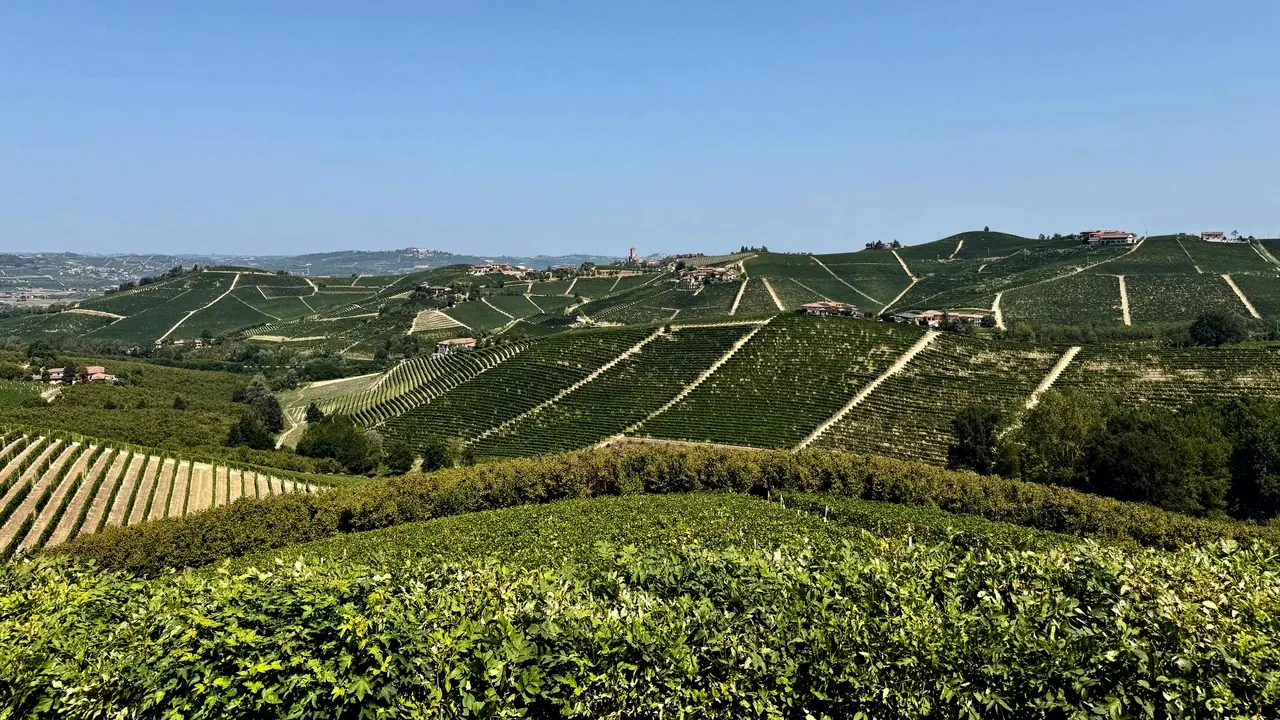
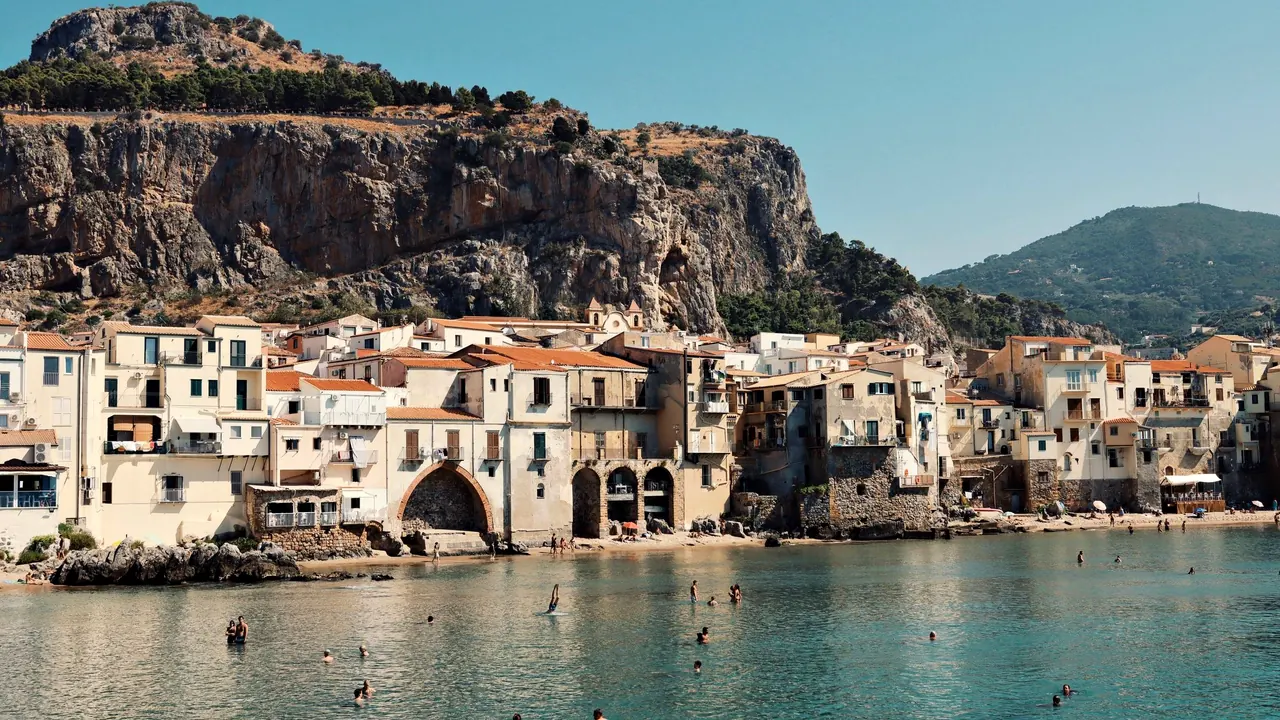
Photos: Piedmont by Martina Amaro, Pexels License; Sicily by Efrem Efre, Pexels License.
Piedmont or Sicily?
Our verdict in twelve categories, each scored against the same fixed benchmark cities, and the climate month by month, so you can choose for your trip.
Choose Piedmont for
- getting around
- wellness
- shopping
Piedmont suits travellers who plan a trip around the table and the mountains. The Langhe wine hills, Turin's coffee houses and the Alpine valleys sit close together, Turin's trains make the city and the lakes easy to reach without a car, and Acqui Terme adds real thermal baths. You give up the sea, and Piedmont's swimming is a pleasant extra on a lake stay rather than a reason to come.
Choose Sicily for
- beaches
- prices
- culture and sights
Anyone who wants warm sea, ancient ruins and street food in one trip should look to Sicily. Greek temples, Arab-Norman mosaics and baroque hill towns sit near beaches that stay swimmable well into autumn, and everyday costs are kinder. The catch is effort: the sights are spread round the island, you will want a hire car and two or three bases, and summer heat makes inland sightseeing hard work.
Scoreboard
Twelve categories on one fixed scale from 0 to 100. The shaded stretch is the gap between the two.
Your match
Pick a travel style or drag the sliders, and both match scores follow your weighting.
Too close to call, 1 point apart
Wins on getting around and wellness with your weighting.
Wins on beaches and prices with your weighting.
What matters to you?
Category by category
What the scores mean for a trip.
Beaches & swimming
Here the two are far apart. Piedmont has no coast, so swimming means the small lidos and pebble shores of Lake Maggiore around Stresa and Baveno, or a grassy spot on quiet Lake Orta. These are lovely on a summer afternoon but they are a side dish to a lake stay.
Sicily has the real thing on every side: the white crescent of San Vito Lo Capo, the marl cliffs of the Scala dei Turchi, the reserve beaches of Vendicari and the clear coves of Favignana and the Aeolian Islands. Its swimming season also lasts well beyond the short lake summer.
Food & drink
Both are among Italy's great places to eat, but the meals are very different. Piedmont is about sitting down: Barolo and Barbaresco from the Langhe, white truffles in autumn, tajarin and agnolotti del plin over long lunches, and in Turin the coffee houses, bicerin and vermouth aperitivo. The best tables are spread across the hills, so it rewards a car.
Sicily eats more on its feet and more from the sea. Palermo's Ballarò and Capo markets serve arancine and panelle at the stalls, the pastry runs from cannoli to morning granita, and Etna's wineries offer volcanic reds and whites. Simple trattorie do most of the work, but choice gets thin in the countryside.
Culture & sights
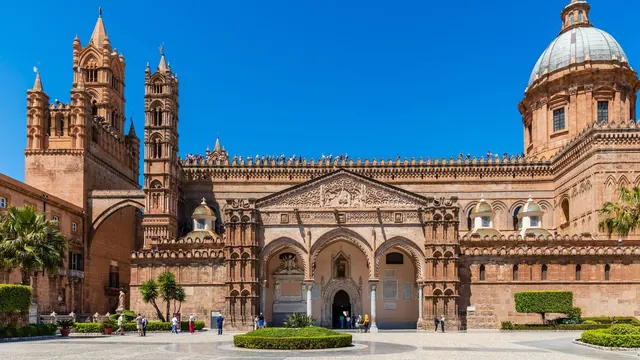
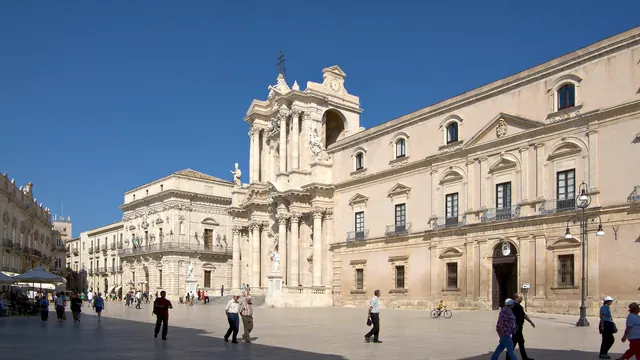
Sicily goes deeper in time and range. The Doric temples of Agrigento and Segesta, the gold mosaics of the Palatine Chapel and Monreale, the floor mosaics at Piazza Armerina and the baroque towns of Noto and Ragusa Ibla tell the story of Greek, Arab, Norman and Spanish rule. Seeing it properly takes about a week and several bases.
Piedmont's heritage is grander in a more orderly way and easier to take in. It centres on Turin, with the Egyptian Museum, the Royal Palace and the Savoy residence at Venaria Reale, plus outliers such as the Sacra di San Michele and the Borromean Islands.
Nightlife
Neither is a destination for big nights out. The difference is where the evening happens. In Piedmont it means Turin, with a serious aperitivo followed by the bar streets of San Salvario and Vanchiglia and the Po riverside in summer, and only a modest après-ski in the mountains.
Sicily's busiest scene is in the piazzas of Catania, with street drinking around Palermo's Vucciria. In summer the action moves to beach bars and open-air clubs at Mondello and below Taormina.
Nature & outdoors
Piedmont means high Alps, while Sicily means volcanoes and sea. In Piedmont, Monte Rosa rises above Alagna and Macugnaga, ibex live on Gran Paradiso, the Val Grande is properly wild, and the vineyard hills below make good cycling roads. Summer is for hiking and winter for skiing.
In Sicily you can walk Etna's lava fields with a guide, climb Stromboli in the evening to watch it erupt, follow the cliff path in the Zingaro reserve and dive round the Egadi and Aeolian Islands. Spring and autumn are the times to hike there, because summer scorches the interior.
Day trips
Both make good bases for outings, but Piedmont's change with where you stay. From Turin, Alba, Asti, Bra, Saluzzo and the Barolo villages of La Morra and Serralunga fill a day of towns and cellars. Beyond the border, Milan is about an hour away by fast train, and Genoa and Aosta are easy trips. From a Langhe base the direction flips, and Turin itself, the hilltop towns of Monferrato and Acqui Terme become the outings.
On Lake Maggiore, boats reach the other lake towns and the Swiss shore, and Orta San Giulio with its island monastery is a short drive away.\n\nSicily's day trips stay on the island or head out to its smaller islands. From Palermo you can reach Cefalù, Erice and the salt pans of Trapani. Syracuse leads to Modica, Ragusa and the fishing village of Marzamemi, and Catania to the Etna wine villages. Ferries to Favignana or Lipari make a full day at sea, and most of the trips on land are easier with a car.
Good for families
Neither is built around children, but they suit different family trips. Piedmont works as a mix of city and outdoors: mummies in Turin's Egyptian Museum, boats and peacock gardens on Lake Maggiore, and gentle ski slopes in winter. The wine hills will bore most children.
In Sicily the easy option is a beach stay in a shallow bay such as Mondello or San Vito Lo Capo, in a place where locals welcome children late into the evening. Long drives and fierce midsummer heat make touring harder there.
Getting around
Piedmont is much easier without a car. Turin has a flat, arcaded grid with trams, a metro and fast trains, and regional lines reach Alba, Asti and Stresa, where boats take over. You need to drive only for the Langhe villages and the mountains, and the roads there are pleasant.
In Sicily a hire car is close to essential. Inland roads are slow, driving in Palermo and Catania is chaotic, trains are sparse and rough seas can cancel the island ferries. Visitors who stick to two city bases see much less of the island.
Shopping & style
Piedmont has more for a shopper, mainly thanks to Turin. It has the arcaded Via Roma, the pedestrian Via Garibaldi, Porta Palazzo market and the Saturday Balon flea market, and there are cashmere mill outlets around Biella.
Sicily's shopping is about crafts more than fashion: Caltagirone majolica, Trapani coral, Palermo puppets, and Via Libertà or Taormina's Corso Umberto for clothes. In both regions the best things to take home are edible, gianduiotti and Barolo in one, and Modica chocolate and Bronte pistachio in the other.
Affordability
Sicily is the cheaper of the two. Street food and pastry cost little, and B&Bs and agriturismi in Palermo, Catania and the baroque south east are fairly priced even in summer. The expensive exceptions are Taormina, the Aeolian Islands and hire cars in high season.
Piedmont is mid-priced rather than cheap. Turin and hill farm stays keep a trip moderate, but rooms and restaurants in the Langhe fill up and cost more in truffle season, and the ski resorts carry Alpine prices.
Live music & performing arts
Both have a major opera house, the Teatro Regio in Turin and the Teatro Massimo in Palermo, so the difference lies in the settings. Piedmont's offer is a city season: the RAI orchestra, Italian drama at the Teatro Carignano, and festivals such as Stresa's summer concerts.
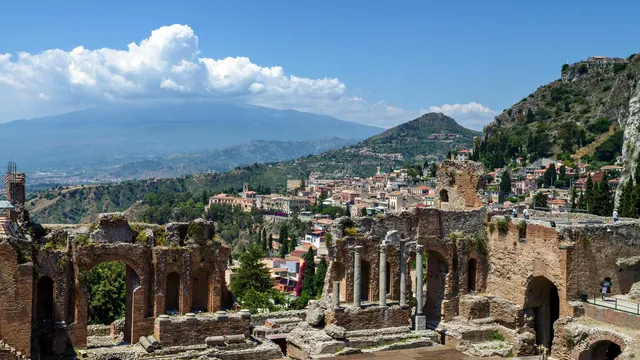
Sicily performs in the ruins. There are Greek tragedies in the ancient theatre of Syracuse and summer concerts in Taormina's theatre with Etna behind the stage. It also has the opera dei pupi, its own tradition of armoured marionettes.
Wellness & relaxation
Piedmont is the better choice for a spa trip. Acqui Terme is built around the Bollente, a spring that rises at about 75°C, and it has a long tradition of baths and mud treatments. Valdieri and Vinadio add thermal baths in the mountains, and many Langhe wine resorts have their own spas.
Sicily has the raw materials, such as Vulcano's mud and warm sea vents and the crater lake on Pantelleria, but no bathing culture has grown up around them. Rest there means a quiet farmhouse or Salina outside the peak season.
When should you go?
Pick your month. The climate figures are measured averages, not a forecast.
Piedmont in July
Sicily in July
Daytime high, °C
Rainfall in the month, mm
Where the figures come from
Piedmont has no weather station within reach, so its figures come from a gridded climate model rather than a measured record, and read a broad area rather than one spot.
Sicily's sunshine is measured 67 km from the centre, at Ustica.
Temperature and rainfall are climate normals, averaged over the years shown. Piedmont: 1991-2020 normals, TerraClimate 4 km grid at the town, no weather station within 90 km. Sicily: 1991-2020 normals, Palermo / Punta Raisi (24.1 km from centre).
In the lowlands where most visitors to Piedmont stay, spring and early autumn are the best months for walking the streets of Turin and the wine villages. July and August reach about 29°C, warm enough for the lake lidos from June to early September, and this is also the season for high Alpine trails. The rain builds through autumn to a peak of around 89mm in November, and winters are cold, which suits the ski resorts rather than sightseeing.
Sicily is warmer and sunnier for much more of the year. Summers are dry and long, with July almost rainless, but August highs of 30°C make the interior too hot for walking, so the coast is the place to be. The sea is pleasant from June to October and reaches about 27°C in late summer. Winters are mild but the wettest season, with about 138mm in December, so April, May, late September and October are best for combining ruins, hikes and a swim.
Which traveller are you?
On a beach and sun trip, Piedmont's lake lidos are only a summer extra, so Sicily is the clear choice. Its sea stays warm enough to swim from June to October, and the coast runs from the sand of San Vito Lo Capo to volcanic Aeolian coves.
For a relaxing and wellness trip, Piedmont suits travellers who want rest with treatments: a few days taking the waters in a spa town, then calm lake shores or a vineyard farm stay in mild weather. Sicily's rest is simpler, mostly sun, sea and long lunches, with little on offer in the way of treatments.
For a winter ski trip, Piedmont is the place to go. The Via Lattea around Sestriere and Sauze d'Oulx hosted Olympic events and has gentle slopes with ski schools, and Monte Rosa offers serious ski-touring. On Sicily, skiing is a modest sideline on Etna.
Before you go
| Measure | Piedmont | Sicily |
|---|---|---|
| Official language | Italian | Italian |
| Currency | Euro (EUR) | Euro (EUR) |
| Sockets | CFL230 V, 50 Hz | CFL230 V, 50 Hz |
| Driving side | Right | Right |
| Time zone | UTC+1, UTC+2 in summer | UTC+1, UTC+2 in summer |
| Emergency number | 112 | 112 |
| Main airport | Turin Airport (TRN)65 non-stop destinations | Falcone–Borsellino Airport (PMO)106 non-stop destinations |
| Public holidays this year | 13 days | 13 days |
By the numbers
| Measure | Piedmont | Sicily |
|---|---|---|
| Population | 4,341,375 | 4,983,478 |
| Swim season, months above 21 °C | 4 months | 5 months |
Where else could you go?
Every comparison below shares a destination with this one, so you can follow Piedmont or Sicily somewhere new.
- Lake Maggiorevs Piedmont
- Cinque Terrevs Piedmont
- French Rivieravs Piedmont
- Aeolian Islandsvs Sicily
- French Alpsvs Piedmont
- Lake Comovs Piedmont