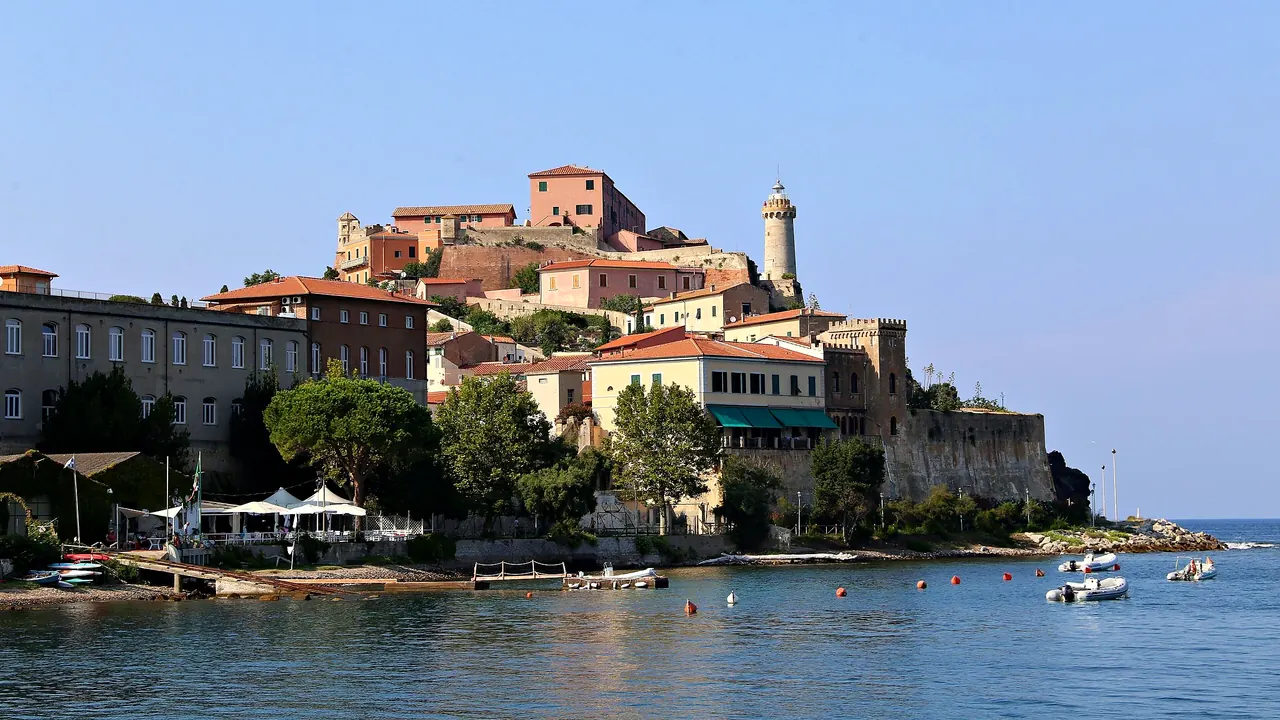
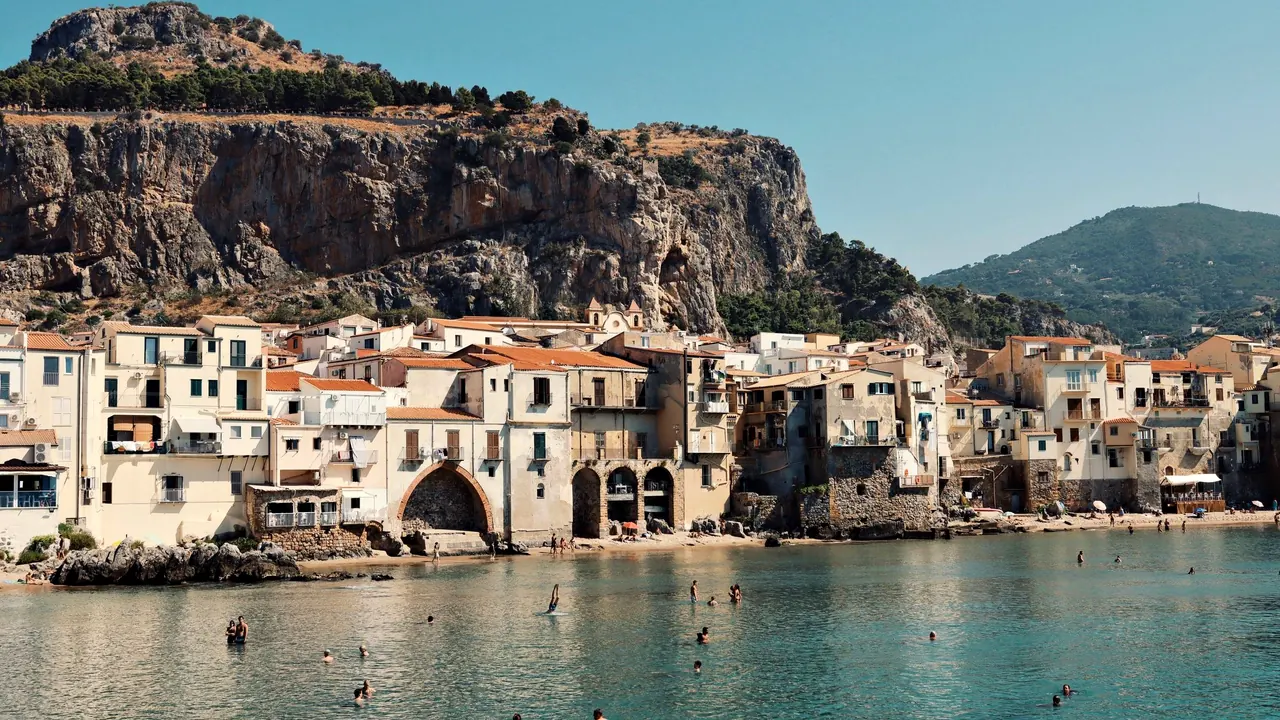
Photos: Elba by Sailko, CC BY 3.0, cropped; Sicily by Efrem Efre, Pexels License.
Elba or Sicily?
Our verdict in twelve categories, each scored against the same fixed benchmark cities, and the climate month by month, so you can choose for your trip.
Choose Elba for
- families
- getting around
- wellness
Elba is the better choice for a beach vacation kept within one compact island. Its granite bays, sandy family beaches and pebble coves are all a short drive apart, the mountain walks start close to the sea, and the gently shelving bays make it easy with small children. You give up depth: the island has little in the way of sights, evenings or day trips, so it suits people who want to stay put and swim.
Choose Sicily for
- culture and sights
- day trips
- live music and the arts
Travellers who want more than a beach should pick Sicily. Greek temples, Arab-Norman mosaics and baroque towns sit alongside some of Italy's most distinctive food, Etna and Stromboli to climb, and opera in Palermo. It is also the cheaper island. The catch is its size: seeing it well means long drives and two or three bases, which makes it a trip to plan rather than one to drift through.
Scoreboard
Twelve categories on one fixed scale from 0 to 100. The shaded stretch is the gap between the two.
Your match
Pick a travel style or drag the sliders, and both match scores follow your weighting.
Wins on families and getting around with your weighting.
Wins on culture and sights and day trips with your weighting.
What matters to you?
Category by category
What the scores mean for a trip.
Beaches & swimming
The two are evenly matched for beaches, and the difference is scale. Elba packs its variety into a small island: turquoise granite bays at Fetovaia and Cavoli in the south-west, the long sandy stretch at Marina di Campo, and white pebble coves under limestone cliffs near Portoferraio, all within an easy drive of each other.
Sicily has much more coast and more kinds of shore, from the white crescent of San Vito Lo Capo and the marl cliffs of the Scala dei Turchi to black volcanic sand on the Aeolian Islands and Favignana's rock pools. Its sea also stays warm into October. Because the coast is so long, you choose a stretch and stay there, where on Elba you can try a different bay every day.
Food & drink
Food is a much stronger reason to go to Sicily. Elba does good Tuscan island cooking, with cacciucco, stuffed squid, Ansonica white wine and the hill-village trattorias of Capoliveri and Marciana, but there is little beyond that and many beach places close out of season.
Sicily is a food destination in its own right. You can eat street food standing at the stalls of Palermo's Ballarò market, have granita with brioche for breakfast and pasta alla Norma in Catania, and taste specialities that change by area, from Trapani's fish couscous to Modica chocolate and wine on Etna's slopes.
Culture & sights
Elba's history fits around beach days: Napoleon's residences at Portoferraio and San Martino, the Medici bastions and forts of the old port, Porto Azzurro's star-shaped fortress and the mining museums of the iron-red east. Each makes a good half-day, but none is worth the trip by itself.
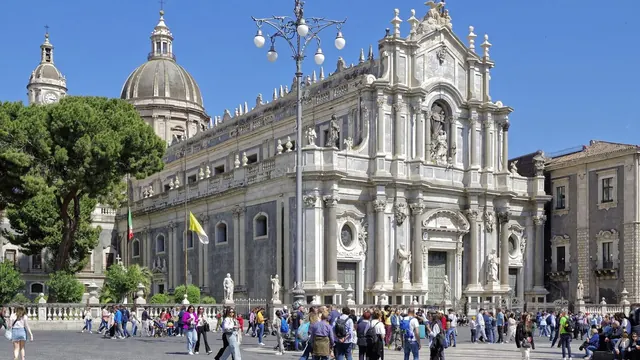
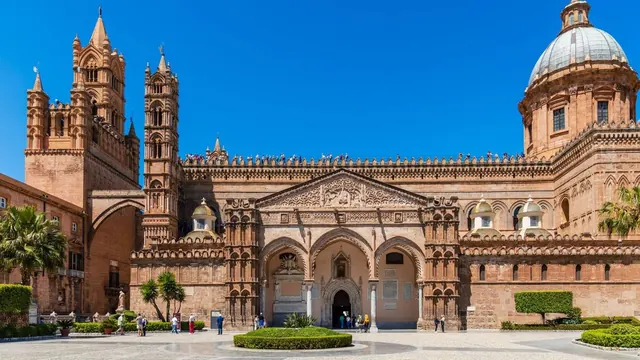
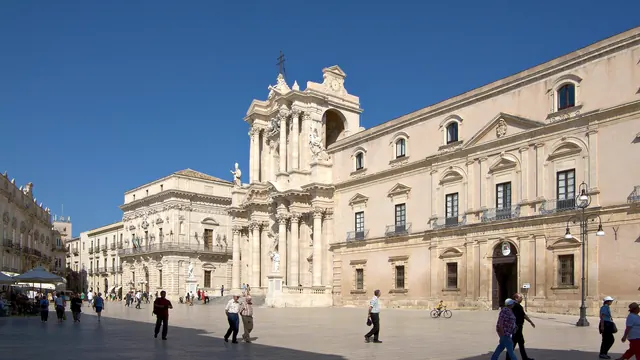
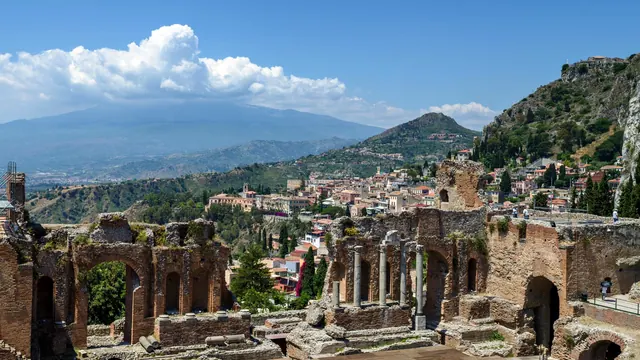
Sicily has some of the richest heritage in Europe, enough to fill a week. There are Doric temples at Agrigento and Segesta, Greek theatres at Syracuse and Taormina, the Roman mosaics of Piazza Armerina, Palermo's Arab-Norman gold and the honey-coloured baroque of Noto and Ragusa Ibla.
Nightlife
Neither island is built for clubbing, but Sicily has real cities and Elba does not. On Elba a summer night means the piazza at Capoliveri or the harbourfront at Porto Azzurro, with a few seasonal discos near Marina di Campo and Procchio, and out of season it goes quiet early. Sicily has Catania's student bar scene, still going late in the old centre, and street drinking around Palermo's Vucciria, then open-air clubs at Mondello and below Taormina in summer.
Nature & outdoors
Elba is good walking country for its size. Monte Capanne rises to about 1,000m, with an open basket lift up from Marciana, the Grande Traversata Elbana runs along the ridges, and the east has rough mountain-bike tracks. Everything is close to the sea.
Sicily is on a bigger and more dramatic scale. You can walk on Etna's lava fields with a guide, climb Stromboli at dusk to watch it erupt, follow the Zingaro cliff path or walk in the beech woods of the Madonie. Both islands offer good diving, around Elba's granite reefs and around the Egadi and Aeolian Islands, and on both midsummer is too hot for hiking.
Day trips
Leaving Elba starts with a ferry to Piombino. Populonia, Suvereto and the Bolgheri wine estates are within reach from there, along with boat trips to Pianosa or Capraia, but most visitors make only one or two outings.
Sicily works the other way round, with a different day out from almost any base. From Syracuse there are the baroque towns of Modica and Scicli, from Palermo Cefalù and Erice, and from Catania the Etna wine villages. Ferries also run out to Favignana or Lipari.
Good for families
Elba is the more relaxed choice with children. Its sandy bays shelve gently, family campsites and apartments sit right behind them, and the island is small enough that no drive is long, although the winding roads can upset car-sick children. The small aquarium at Marina di Campo and the lift up Monte Capanne fill out the days.
Sicily welcomes children just as warmly and has more to keep older ones busy, such as Etna's lava fields, Palermo's puppet theatre and a theme park near Catania. The cost is effort: long drives, steep hill towns and fierce midsummer heat.
Getting around
On both islands you will want a car, and on both the roads are slower than the map suggests. On Elba, which is only about 27km long, the trouble is August: queues into Portoferraio and beach car parks full by mid-morning, with the ferry crossing to book ahead.
In Sicily the issue is distance. Motorways link the main cities, but inland roads wind, and driving in Palermo or Catania is chaotic. Intercity buses and walkable centres such as Ortigia and Taormina do let you manage without a car if you stay in two cities, which Elba's sparse buses do not allow.
Shopping & style
Sicily gives you more to buy. You will find majolica ceramics from Caltagirone, coral work in Trapani, puppet makers and street markets in Palermo, and real fashion streets in Via Libertà and Via Etnea. Elba's shopping is an evening stroll past linen and beachwear boutiques in Capoliveri and Porto Azzurro. The best things to bring home are local Aleatico wine, honey and minerals from the old mines.
Affordability
Sicily is clearly easier on the budget. Street food and pastry cost little, and B&Bs and agriturismi in the cities, the baroque south east and the countryside stay fair even in summer. Only Taormina, the Aeolian Islands and the best-known resorts get expensive. On Elba the summer season is expensive almost everywhere, with the car ferry, hire car, parking and sunbeds all adding up. Campsites, self-catering and the quieter months of June and September keep it manageable.
Live music & performing arts
For live performance, the two are hardly comparable. Elba has summer concerts in squares, churches and Portoferraio's fortresses, plus a chamber music festival in late summer, and nothing in between.
Sicily has a full opera and ballet season at Palermo's Teatro Massimo, the Teatro Bellini in Catania, and Greek tragedy staged each spring in the ancient theatre of Syracuse. On summer nights there are concerts at Taormina's Greek theatre with Etna behind the stage, and the marionette knights of the opera dei pupi perform year-round in Palermo and Catania.
Wellness & relaxation
The two are about level, and on both the slow pace does more than any spa. Elba has one proper establishment, the thermal baths at San Giovanni with mud from the old salt pans, and its hill villages are quiet in June and September.
Sicily's hot waters are scattered and informal. There are springs at Sciacca and Segesta, mud pools and warm sea vents on Vulcano, and Pantelleria's crater lake. A farmhouse among olive groves or a stay on Salina is the island's way to unwind.
When should you go?
Pick your month. The climate figures are measured averages, not a forecast.
Elba in July
Sicily in July
Daytime high, °C
Rainfall in the month, mm
Where the figures come from
Elba's temperatures are measured 62 km from the centre, at Grosseto.
Elba has no rain gauge within 25 km of the centre, so its rainfall comes from a gridded climate dataset read at the destination rather than from a gauge further away.
Sicily's sunshine is measured 67 km from the centre, at Ustica.
Temperature and rainfall are climate normals, averaged over the years shown. Elba: 1991-2020 (sunshine 1961-1990) normals, Grosseto (61.7 km from centre). Sicily: 1991-2020 normals, Palermo / Punta Raisi (24.1 km from centre).
Both islands follow the same rhythm. Swimming starts in June, the sea is warmest in August and the rain comes back in autumn. The differences are at the edges. Around Elba's main resorts summer is slightly hotter, with August highs near 32°C that make midday walking hard work, but the sea cools sooner, so September is the last real swimming month. Sicily's sea is a couple of degrees warmer and stays fit for swimming through October, which gives it a longer beach season. It also has more sunshine all year.
For walking, cycling and sightseeing, both are at their best in May and from late September to October. Winters differ. Elba is cooler but fairly dry until autumn, then has its wettest month in November at about 92mm. Sicily's winters are milder but wetter, with around 138mm in December, so a winter trip there means sightseeing between showers rather than beach weather.
Which traveller are you?
On a family trip with young children, Elba is easier. Lacona, Biodola and Marina di Campo shelve gently and lie close together, campsites and apartments are set up for families, and short distances spare children the long Sicilian drives.
For a culture and arts trip, Sicily wins by a wide margin. Agrigento's temples, the Palatine Chapel and Monreale's mosaics, Ortigia and the baroque south east, plus opera at the Teatro Massimo, go far beyond Elba's Napoleonic houses and Medici forts.
On a trip on a tight budget, Sicily goes further. Stay in Palermo or Catania, make meals at the market stalls and take intercity buses, and you can do without a hire car. Elba has no such option, though a footpath to a quiet cove costs nothing.
Before you go
| Measure | Elba | Sicily |
|---|---|---|
| Official language | Italian | Italian |
| Currency | Euro (EUR) | Euro (EUR) |
| Sockets | CFL230 V, 50 Hz | CFL230 V, 50 Hz |
| Driving side | Right | Right |
| Time zone | UTC+1, UTC+2 in summer | UTC+1, UTC+2 in summer |
| Emergency number | 112 | 112 |
| Main airport | Pisa International Airport (PSA)82 non-stop destinations | Falcone–Borsellino Airport (PMO)106 non-stop destinations |
| Public holidays this year | 13 days | 13 days |
By the numbers
| Measure | Elba | Sicily |
|---|---|---|
| Population | 32,000 | 4,983,478 |
| People per km² | 143 | - |
| Swim season, months above 21 °C | 4 months | 5 months |
Where else could you go?
Every comparison below shares a destination with this one, so you can follow Elba or Sicily somewhere new.