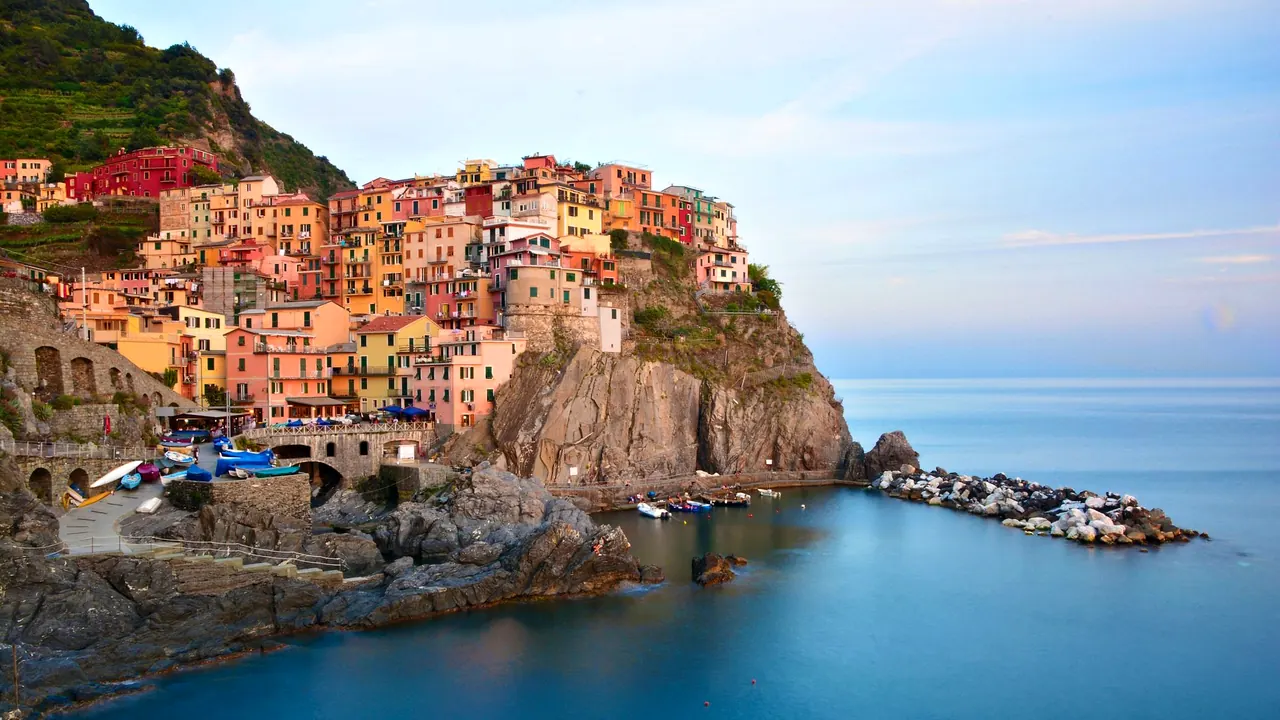
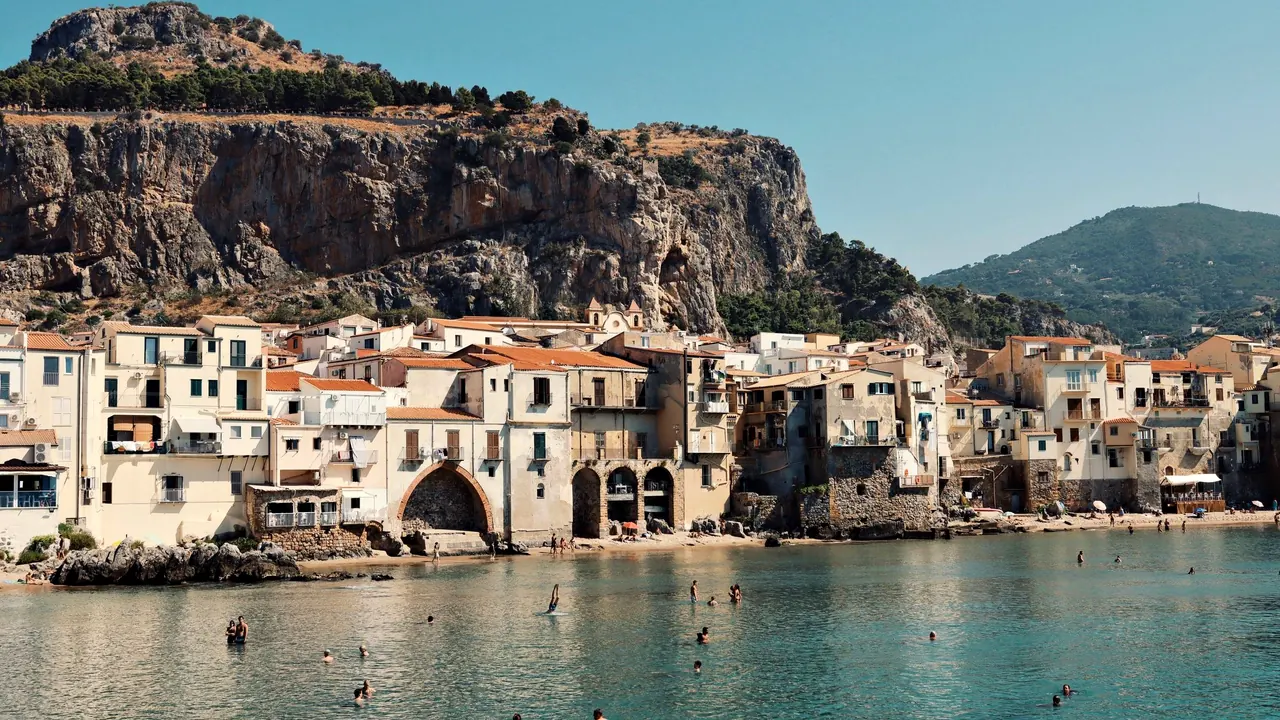
Photos: Cinque Terre by Narcisa Aciko, Pexels License; Sicily by Efrem Efre, Pexels License.
Cinque Terre or Sicily?
Our verdict in twelve categories, each scored against the same fixed benchmark cities, and the climate month by month, so you can choose for your trip.
Choose Cinque Terre for
- getting around
Cinque Terre suits a short, focused trip of a few days built around walking. You hike the cliff paths between five villages, swim off the rocks, take the train back and watch the sunset from a harbour wall, all without a car. It is one small stretch of coast that you can see well in a long weekend, but it gives up variety, nightlife, culture beyond the villages themselves, and value for money.
Choose Sicily for
- live music and the arts
- culture and sights
- nightlife
Sicily is the better choice for a longer vacation that combines several interests. It has Greek temples and Arab-Norman mosaics, some of Italy's most distinctive food, a wide choice of beaches and two volcanoes to climb, and it costs noticeably less. The price is distance. Seeing it properly means a hire car, long drives and two or three bases.
Scoreboard
Twelve categories on one fixed scale from 0 to 100. The shaded stretch is the gap between the two.
Your match
Pick a travel style or drag the sliders, and both match scores follow your weighting.
Wins on getting around with your weighting.
Wins on live music and the arts and culture and sights with your weighting.
What matters to you?
Category by category
What the scores mean for a trip.
Beaches & swimming
Cinque Terre's coast is mostly cliff. Monterosso has the only real sand, at Fegina, with umbrellas packed close in summer. In the other villages you swim off harbour slipways and rock shelves, which is perfect for a dip between walks but not for spending a day on the beach.
Sicily offers far more choice. There is the white sand of San Vito Lo Capo, the marl cliffs of the Scala dei Turchi, the reserve beaches at Vendicari, Favignana's turquoise coves and the black volcanic shores of the Aeolian Islands. The sea also stays warm for a month longer. The catch is that the beaches are spread around a large island, so it pays to choose one stretch of coast and stay there.
Food & drink
Cinque Terre's cooking is good but has a narrow range: trofie with pesto, focaccia and farinata, Monterosso anchovies, fried fish in paper cones and a glass of Sciacchetrà. In the busiest villages many menus are written for day-trippers, so the better meals are in Monterosso or up in the hilltop settlements.
Sicily is one of Italy's great food regions. You can eat panelle and arancine standing at the stalls of Ballarò, granita with brioche for breakfast, fish couscous in Trapani, chocolate in Modica and mineral wines on Etna's slopes. Almost every area has its own speciality worth travelling for.
Culture & sights
In Cinque Terre the sight is the place itself: five villages on the rock, terraces built over centuries, and the harbour square at Vernazza. Add a few striped Gothic churches and a watchtower and you have seen it within a day or two.
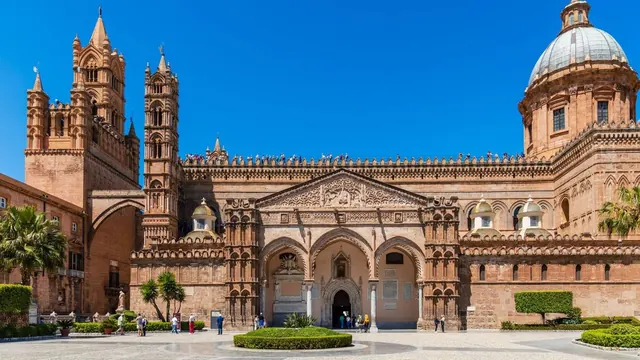
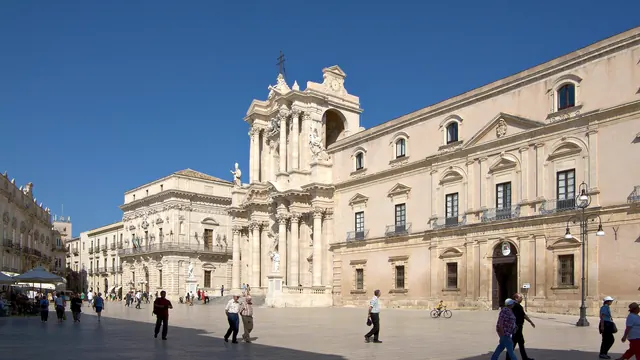
Sicily has layers left by Greeks, Arabs, Normans and Spanish rulers. There are the temples at Agrigento, the mosaics at Piazza Armerina and the Palatine Chapel, Ortigia's cathedral built around a temple, and the baroque towns of Noto and Ragusa Ibla, rebuilt after the earthquake of 1693. Seeing the best of it takes about a week.
Nightlife
Neither is a party destination, but the gap is wide. Cinque Terre's evening is a glass of white wine at sunset, a couple of bars in Monterosso or Riomaggiore, and quiet streets well before midnight.
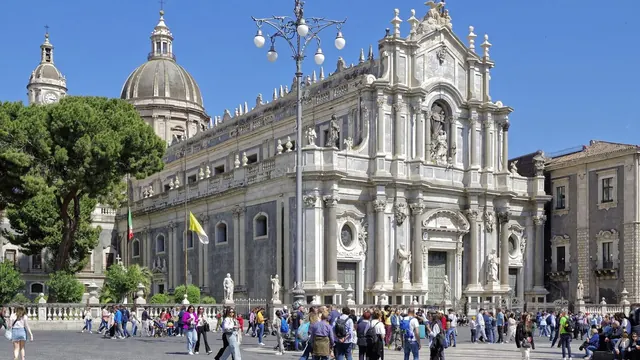
Sicily offers a proper night out in its cities. Catania's historic centre fills with students and locals until late, and in Palermo people drink in the street around the Vucciria. In summer there are open-air clubs at Mondello and below Taormina.
Nature & outdoors
Both are excellent for the outdoors, but in different ways. Cinque Terre is one compact national park and marine reserve. You can walk the Sentiero Azzurro or the higher Sentiero Rosso and return by train, and kayak out to the grottoes, all within a small area.
Sicily's landscapes are on a bigger scale and spread further apart. You can take guided walks on Etna's summit craters, climb Stromboli in the evening to watch it erupt, follow the Zingaro cliff path, walk in the beech woods of the Madonie, and dive around the Egadi Islands. In both places the walking is best in spring and autumn.
Day trips
Cinque Terre's location on the coastal railway is its advantage. Portovenere by boat, Lerici, Sarzana, Pisa, Lucca and Genoa can all be reached without a car, so you get Ligurian ports and Tuscan cities from one small base.
Sicily offers more and deeper choices from any base. The baroque towns around Noto, the Etna wine villages, hilltop Erice and the salt pans at Trapani are all within reach, as are ferries to Favignana or Lipari. Many of these trips are much easier with a hire car.
Good for families
Cinque Terre is hard work with small children. It is built of stairs, pushchairs are useless, trains are packed in summer and Corniglia sits hundreds of steps up. Monterosso, with its flat streets and gently shelving beach, is the one practical base. Walking trails and boat trips suit older children who like to hike.
Sicily is a much easier choice. Families are welcome everywhere until late, shallow sandy bays such as San Vito Lo Capo and Mondello suit toddlers, and an agriturismo with a pool makes for an easy base. Older children can explore the lava fields or watch Palermo's puppet theatre. The long drives and the heat of high summer are the main drawbacks.
Getting around
This is the one area where Cinque Terre clearly wins. A local train links all five villages with only minutes between stops, ferries run between the harbours in season, and the trails connect everything else. A car is more of a burden than a help. The hard parts are the crammed summer carriages and the steep stairways.
Sicily usually means hiring a car. The motorways between the main cities are fine, but inland roads are slow, city driving is chaotic, trains away from a few routes are sparse, and bad weather can cancel island ferries. With two city bases you can manage without a car, but you will see much less of the island.
Shopping & style
In Cinque Terre the shopping is mostly for things to eat and drink: pesto, jarred anchovies, lemon liqueur and the terraced wines, plus some linen and ceramics. There is no fashion shopping at all.
Sicily offers more. There is majolica from Caltagirone, coral work from Trapani, puppets in Palermo, Modica chocolate and Bronte pistachio cream to take home. For clothes you can try Via Libertà in Palermo, Via Etnea in Catania or the boutiques on Taormina's Corso Umberto.
Affordability
Cinque Terre's high cost comes from its rooms. Rooms in the villages are few and in heavy demand, and you also pay to use the park's paths. Focaccia, takeaway fish and the cheap train keep daily spending down, but many budget travellers stay in La Spezia or Levanto instead.
Sicily is one of the cheaper parts of Italy, with low-cost street food and fairly priced B&Bs and agriturismi even in summer. The exceptions are Taormina, the Aeolian Islands and the best-known beach resorts in July and August, and hire cars, which are expensive in high season.
Live music & performing arts
Cinque Terre has almost no stage of its own. There is an occasional church concert and the saints' day processions with village bands, and for anything more you go to La Spezia or Genoa.
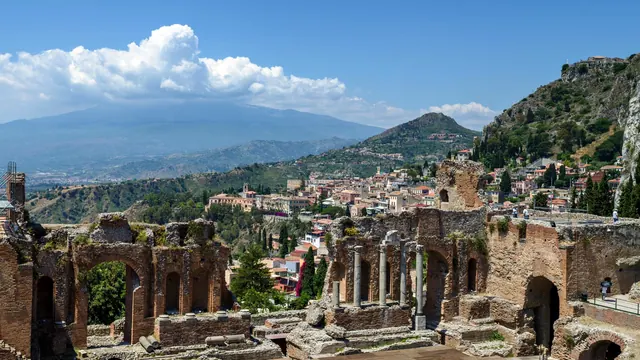
Sicily has real venues. Palermo's Teatro Massimo has a full opera and ballet season, and Catania's Teatro Bellini honours the composer born in the city. Each year ancient tragedies are staged in Syracuse's Greek theatre, and in summer the theatre at Taormina hosts performances with Etna behind the stage. The opera dei pupi marionette shows are a tradition found nowhere else.
Wellness & relaxation
Relaxation in Cinque Terre depends on timing. The car-free villages and a terrace above the sea feel restful in spring, in autumn or early in the morning, but not on a crowded summer afternoon. Spa options amount to a few guesthouse massages.
Sicily has more to offer. There are hot springs near Sciacca and Segesta, volcanic mud and warm sea vents on Vulcano, Pantelleria's crater lake, and spas in the Taormina hotels. Its best form of rest, though, is a slow stay at a countryside agriturismo or on quiet Salina.
When should you go?
Pick your month. The climate figures are measured averages, not a forecast.
Cinque Terre in July
Sicily in July
Daytime high, °C
Rainfall in the month, mm
Where the figures come from
Cinque Terre's temperatures are measured 78 km from the centre, at Pisa / S. Giusto.
Cinque Terre has no rain gauge within 25 km of the centre, so its rainfall comes from a gridded climate dataset read at the destination rather than from a gauge further away.
Sicily's sunshine is measured 67 km from the centre, at Ustica.
Temperature and rainfall are climate normals, averaged over the years shown. Cinque Terre: 1991-2020 normals, Pisa / S. Giusto (77.8 km from centre). Sicily: 1991-2020 normals, Palermo / Punta Raisi (24.1 km from centre).
Cinque Terre is warm enough for swimming from June to September, with the sea reaching about 25°C in August. Sicily's sea is a couple of degrees warmer at about 27°C. It stays pleasant well into October, so Sicily's beach season lasts about a month longer. In both places July and August are hot. In Cinque Terre the main coastal path is hard going at midday, and in Sicily the interior is too hot for walking. Spring and autumn are the best seasons for exploring on foot in both.
The two differ most in autumn. Cinque Terre gets very wet in October and November, with about 178mm of rain in November, and heavy rain sometimes closes sections of the trails. At the point where Sicily's figures are measured, autumn is much drier and July is almost rainless. By December and January, though, Sicily gets a little more rain than the Ligurian coast. Outside summer, Sicily's advantage is warmth and light rather than dry weather. It has more sunshine in every month and milder winters, around 15°C in January against 11°C.
Which traveller are you?
On a culture and arts trip, Sicily is the clear choice. It has the temples of Agrigento and Segesta, the mosaics of the Palatine Chapel and Monreale, the baroque towns of the south east, opera in Palermo and Greek tragedy in Syracuse. Cinque Terre offers a lovely landscape and some modest churches.
On a tight budget, Sicily goes much further. Street food and pastry cost little, and B&Bs in Palermo, Catania and the inland towns stay fairly priced even in summer. In Cinque Terre rooms are scarce and expensive, so budget travellers end up sleeping in La Spezia.
On an outdoors trip, the choice depends on how you like to move. Cinque Terre suits walkers without a car: you hike from village to village on cliff paths and take the train back. Sicily has more to offer, with Etna, Stromboli and island diving, but needs driving between them.
Before you go
| Measure | Cinque Terre | Sicily |
|---|---|---|
| Official language | Italian | Italian |
| Currency | Euro (EUR) | Euro (EUR) |
| Sockets | CFL230 V, 50 Hz | CFL230 V, 50 Hz |
| Driving side | Right | Right |
| Time zone | UTC+1, UTC+2 in summer | UTC+1, UTC+2 in summer |
| Emergency number | 112 | 112 |
| Main airport | Pisa International Airport (PSA)82 non-stop destinations | Falcone–Borsellino Airport (PMO)106 non-stop destinations |
| Public holidays this year | 13 days | 13 days |
By the numbers
| Measure | Cinque Terre | Sicily |
|---|---|---|
| Population | - | 4,983,478 |
| Swim season, months above 21 °C | 4 months | 5 months |
Where else could you go?
Every comparison below shares a destination with this one, so you can follow Cinque Terre or Sicily somewhere new.
- Portofinovs Cinque Terre
- Lake Comovs Cinque Terre
- Venicevs Cinque Terre
- Caprivs Sicily
- Amalfi Coastvs Sicily
- Naplesvs Sicily