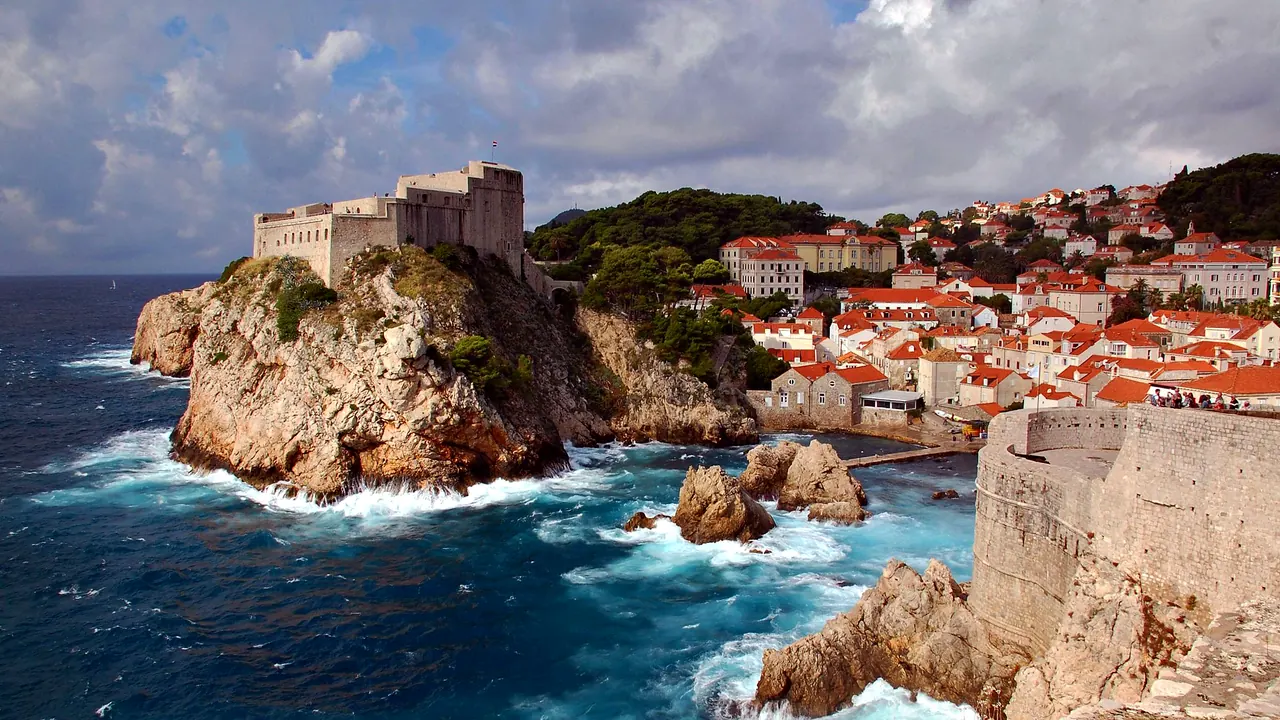
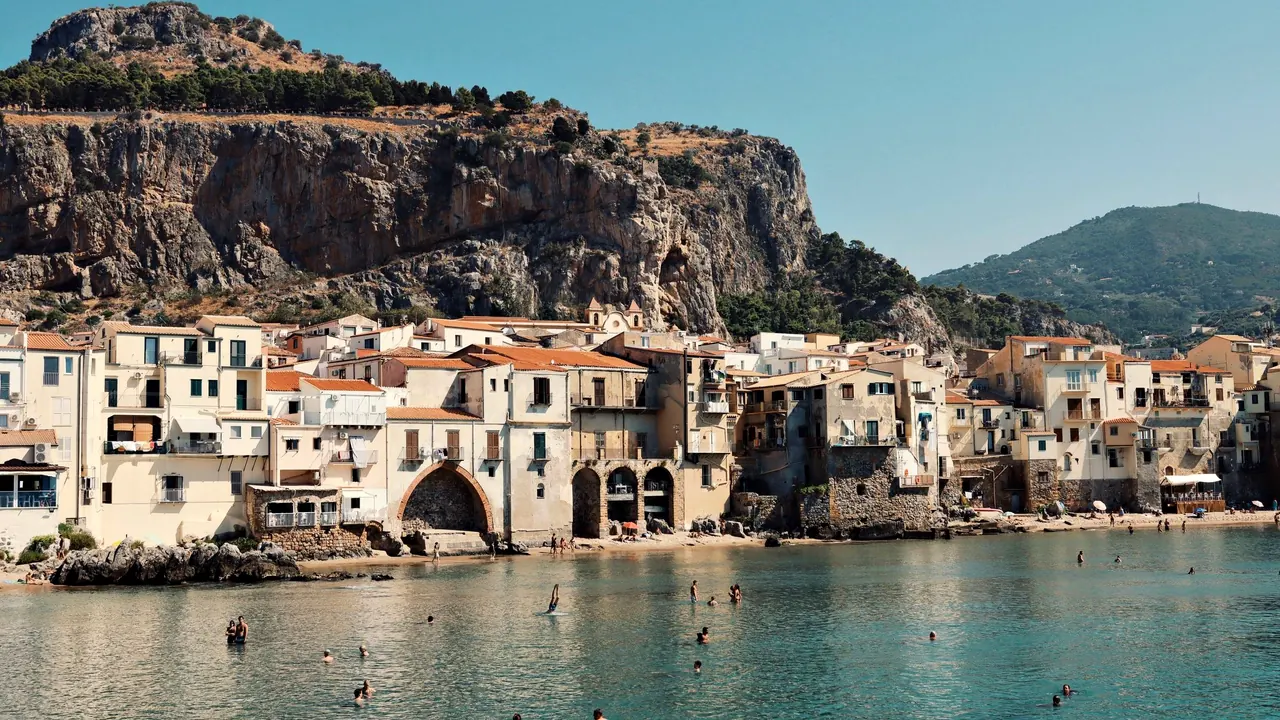
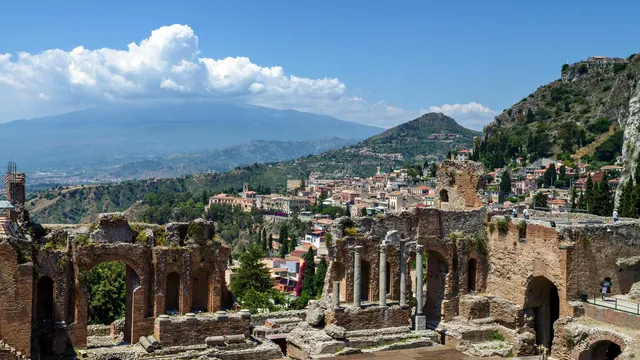
Photos: Dalmatia by Edwardwexler at English Wikipedia, CC BY-SA 3.0, cropped; Sicily by Efrem Efre, Pexels License.
Dalmatia or Sicily?
Our verdict in twelve categories, each scored against the same fixed benchmark cities, and the climate month by month, so you can choose for your trip.
Choose Dalmatia for
- nightlife
- getting around
- families
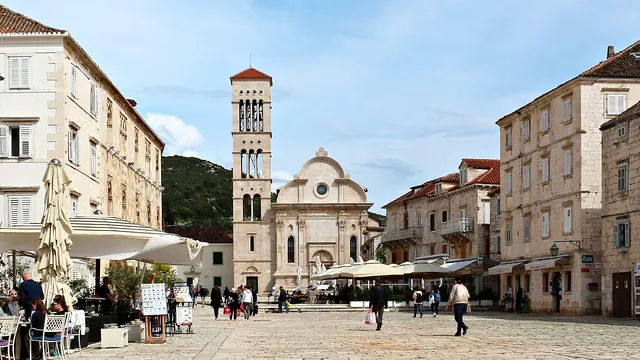
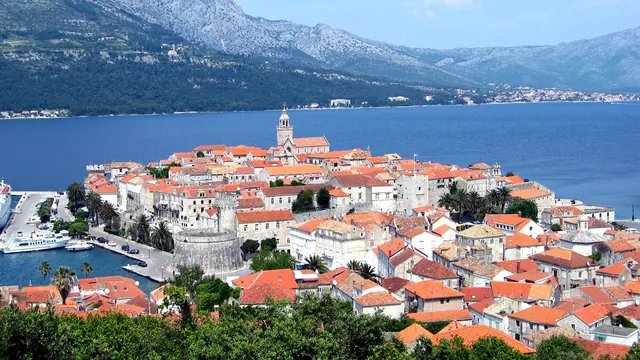
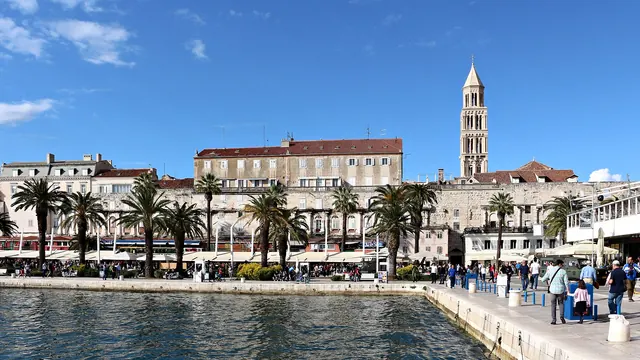
Dalmatia suits a summer trip built around the sea and the ferry timetable: hopping between Split, Hvar, Brač and Vis, swimming off pebble shores in water that is unusually clear, and ending the day in the lanes of Diocletian's Palace or on Hvar's harbourfront. You can get around much of it without a car, and its nights out are livelier. It costs more in the famous spots, and the food is simpler.
Choose Sicily for
- food and drink
- prices
- live music and the arts
Sicily is the better choice for travellers who come to eat and to look. Palermo's market stalls, the pastry and the regional dishes beat the Dalmatian konoba, and Greek temples, Arab-Norman mosaics and baroque hill towns give it more history to see. It is also easier on the wallet. In return you need a hire car and patience on slow inland roads, and the evenings are mostly dinner and a stroll rather than parties.
Scoreboard
Twelve categories on one fixed scale from 0 to 100. The shaded stretch is the gap between the two.
Your match
Pick a travel style or drag the sliders, and both match scores follow your weighting.
Wins on nightlife and getting around with your weighting.
Wins on food and drink and prices with your weighting.
What matters to you?
Category by category
What the scores mean for a trip.
Beaches & swimming
The swimming is equally good in both, but the shore is not. Dalmatia is mostly pebble and rock shelf, which keeps the water strikingly clear, and its best beaches are coves on the islands, reached by boat or on foot, with Zlatni Rat on Brač as the famous exception. Sand is scarce, found mainly around Nin and on Lopud.
Sicily has more variety and more sand: the long white bay at San Vito Lo Capo, the wide beaches near Marina di Ragusa, Mondello's shallow bay by Palermo, the white cliffs of the Scala dei Turchi and black volcanic beaches on the Aeolian Islands. Its sea is a degree or two warmer in late summer.
Food & drink
Sicily is the clear winner for eating. Palermo's Ballarò and Capo markets are street food at its best, with arancine, panelle and sfincione eaten standing up, and pastry from cannoli to granita with brioche is taken seriously all over the island. Each area adds its own dishes, from Trapani's fish couscous to Modica chocolate and Bronte pistachios.
Dalmatia cooks well but within narrow limits: grilled fish, black risotto and peka in a family konoba. Its wines from Pelješac, Hvar and Korčula and the oysters at Ston are the real draw, and the busiest harbourfronts serve plenty of forgettable meals.
Culture & sights
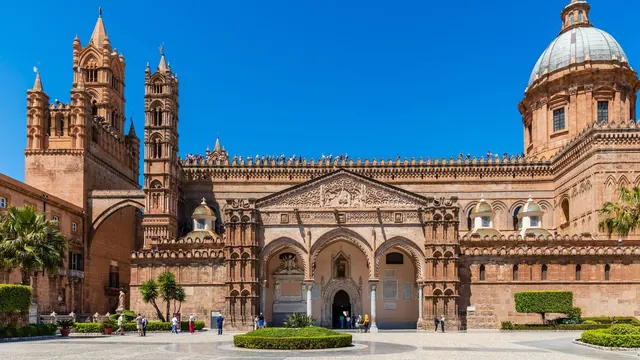
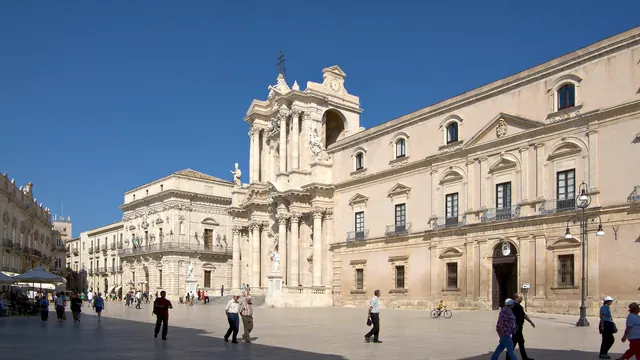
Both reward a trip through several towns, but Sicily goes deeper and covers more periods. Its Greek temples at Agrigento and Segesta, the theatres of Syracuse and Taormina, the Roman mosaics at Piazza Armerina, Palermo's Arab-Norman gold and the baroque of Noto and Ragusa Ibla span about two thousand years. It also has proper museums, such as the archaeological museum in Syracuse.
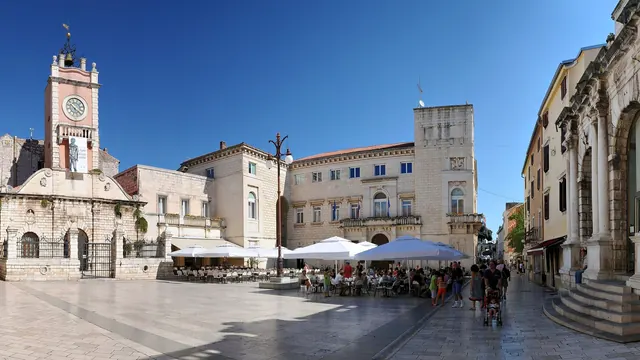
Dalmatia's strength is the lived-in townscape: Split's daily life inside Diocletian's Palace, the complete walls of Dubrovnik, and Trogir, Šibenik and Zadar close behind. It is beautiful stone, but the museums are modest.
Nightlife
Dalmatia goes out harder. In summer Hvar town has harbour cocktail bars and beach clubs on the islets reached by water taxi, Split's palace lanes fill with packed little bars, and Makarska and Bol have resort strips. Out of season it all shuts early.
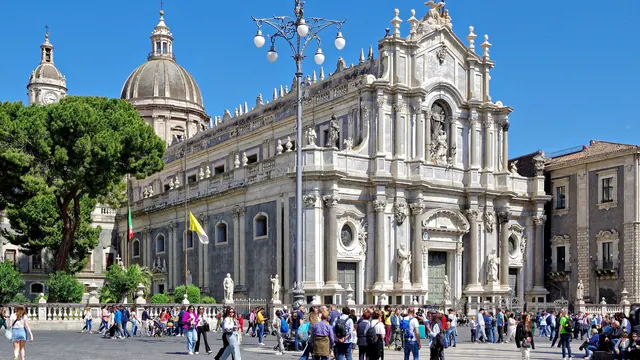
Sicilian evenings are mostly a late dinner and the passeggiata. The real bar life is in the cities, especially among the students in Catania's historic centre and on the streets around Palermo's Vucciria, with open-air clubs at Mondello and below Taormina only in summer.
Nature & outdoors
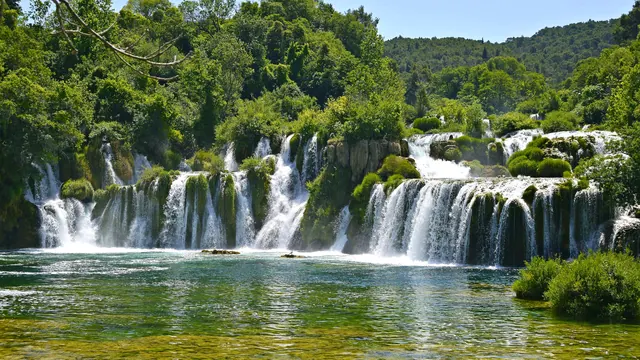
Dalmatia's outdoors is the sea and its islands, and Sicily's is volcanic. In Dalmatia you sail through channels and anchorages among more than a thousand islands, see the bare white Kornati from a boat and kayak on Mljet's saltwater lakes. On the mainland there are Krka's travertine falls, rafting in the Cetina gorge, Biokovo's wall above Makarska and serious climbing at Paklenica.
Sicily puts you on live volcanoes. You can cross Etna's lava fields and circle its summit craters with a guide, or climb Stromboli in the evening to watch it erupt. Away from the craters there are the Zingaro cliff path, the beech woods of the Madonie and Nebrodi, the basalt gorges of the Alcantara and flamingos at Vendicari. The diving off the Egadi and Aeolian Islands is excellent.
Day trips
In Dalmatia the boat does most of the work. Catamarans and ferries from Split reach harbours on Hvar, Brač and Vis, and from Dubrovnik it is a short hop to the Elaphiti islands or Cavtat. You can also cross a border for the day, to Kotor's bay in Montenegro or, on a longer day, to Mostar's Ottoman bridge in Bosnia and Herzegovina.
Sicily's day trips are mostly by road and stay on the island. From Noto you can reach Modica, Ragusa and Scicli. From Catania you can get to the Etna wine villages and Aci Trezza, and from Palermo to Cefalù, Erice and Marsala. A ferry from Trapani to Favignana or from Milazzo to Lipari takes up a full day.
Good for families
Children are welcome at late dinners in both, and neither has much built for them. The difference is the beach. Dalmatia's resorts such as Makarska, Baška Voda and Bol put everything a short walk from calm water, but the shores are mostly pebble, so bring water shoes. Sicily has more shallow sand at San Vito Lo Capo, Mondello and in the south east, and Etna's lava fields and Palermo's puppet theatre for older children, but expect longer drives in the heat.
Getting around
Dalmatia is the easier region to get around. Its old towns are car-free, reliable buses link the main towns, and Split, Zadar and Dubrovnik run ferry and catamaran services to their islands. The catches are the slow coastal road, the full car ferries in August and the long distances: Zadar to Dubrovnik takes a whole morning.
In Sicily most trips need a hire car. Trains are sparse away from a few lines, driving in Palermo and Catania is chaotic, and rough seas can cancel crossings to the islands. With only buses and two city bases, you will see far less of the island.
Shopping & style
Neither is a fashion destination, but Sicily gives a shopper more to do. Caltagirone's majolica, Trapani coral, Palermo's puppet makers, and food to take home such as Modica chocolate and Pantelleria capers make good finds, and Via Libertà, Via Etnea and Taormina's Corso Umberto cover clothes.
Dalmatia's best buys are olive oil, Hvar lavender, Pag lace and wine from village cellars. Beyond Split's shopping streets, the old towns are mostly souvenir and coral jewellery shops.
Affordability
Sicily stretches a budget further. Street food and pastry cost little, and B&Bs and agriturismi in Palermo, Catania, the south east and the countryside stay reasonable in summer. The pricey exceptions are Taormina, the Aeolian Islands and summer hire cars.
Dalmatia's best-known places, Dubrovnik's old town and Hvar town, are among the costliest on the Mediterranean, and boat trips and park fees add up. Costs drop if you stay around Zadar and Šibenik, rent private rooms or go in June or September.
Live music & performing arts
Sicily has more going on, much of it in remarkable settings. Palermo's Teatro Massimo runs a full opera season, Greek tragedies are staged each spring in Syracuse's ancient theatre, and Taormina's theatre hosts summer concerts with Etna behind the stage. The opera dei pupi, with armoured marionette knights, is uniquely Sicilian.
Dalmatia's performances are concentrated in summer, at the Dubrovnik and Split festivals in courtyards and the Peristyle. Its own sound is klapa, unaccompanied harmony singing you might hear in a church or a square.
Wellness & relaxation
Neither has a real spa tradition, so in both places rest comes from the slow pace. Sicily at least has natural waters to try: hot springs at Sciacca and near Segesta, mud and warm sea vents on Vulcano, and the crater lake on Pantelleria. Elsewhere it unwinds at a farmhouse among olive groves.
Dalmatia's version is fjaka, the drowsy summer afternoon, best enjoyed in a stone house on car-free islands like Vis, Lastovo or the Elaphiti, well away from Hvar's parties.
When should you go?
Pick your month. The climate figures are measured averages, not a forecast.
Dalmatia in July
Sicily in July
Daytime high, °C
Rainfall in the month, mm
Where the figures come from
Dalmatia's temperatures are measured 53 km from the centre, at Split / Marjan.
Dalmatia has no rain gauge within 25 km of the centre, so its rainfall comes from a gridded climate dataset read at the destination rather than from a gauge further away.
Dalmatia's sunshine is measured 53 km from the centre, at Split / Marjan.
Sicily's sunshine is measured 67 km from the centre, at Ustica.
Temperature and rainfall are climate normals, averaged over the years shown. Dalmatia: 1991-2020 (sunshine 1971-2000) normals, Split / Marjan (53.2 km from centre). Sicily: 1991-2020 normals, Palermo / Punta Raisi (24.1 km from centre).
Dalmatia's beach season runs from June, when the sea reaches about 22°C, to early October. July and August bring the most sun, with afternoons around 31°C that make the stone old towns hard going at midday. Rain returns in September and builds through October into a wet November, and winters are cool and grey. For walking the towns or the trails, April, May and October are the comfortable months, with late September close behind.
Sicily is less hot at the peak and stays warm for longer. July is almost dry, with about 6mm of rain. The sea reaches 27°C in August and is still good for swimming into October. Winter days around 15°C are mild enough for temples and baroque towns, though December is the wettest month. Walkers get a longer window: April to June, then again from late September into November, when the rain starts to build.
Which traveller are you?
For a culture and arts trip, Sicily is the stronger choice. Agrigento's temples, the mosaics of Monreale and Piazza Armerina and the baroque towns of the south east give it more history than Dalmatia's walled towns, and it adds opera, Greek tragedy and puppet theatre.
On a trip on a tight budget, Sicily is easier. Street food, pastry and simple trattorie cost little, and B&Bs in Palermo, Catania and the inland towns stay fairly priced in summer. Dubrovnik and Hvar are among the Mediterranean's dearest stays.
On a family trip with young children, Dalmatia is a little easier. Resorts such as Makarska and Bol keep everything a short walk from calm, tideless water, and buses and ferries cut down on the long drives through summer heat that Sicily usually involves.
Before you go
| Measure | Dalmatia | Sicily |
|---|---|---|
| Official language | Croatian | Italian |
| Currency | Euro (EUR) | Euro (EUR) |
| Sockets | CF230 V, 50 Hz | CFL230 V, 50 Hz |
| Driving side | Right | Right |
| Time zone | UTC+1, UTC+2 in summer | UTC+1, UTC+2 in summer |
| Emergency number | 112 | 112 |
| Main airport | Split Saint Jerome Airport (SPU)69 non-stop destinations | Falcone–Borsellino Airport (PMO)106 non-stop destinations |
| Public holidays this year | 14 days | 13 days |
By the numbers
| Measure | Dalmatia | Sicily |
|---|---|---|
| Population | 852,068 | 4,983,478 |
| People per km² | 70 | - |
| Swim season, months above 21 °C | 4 months | 5 months |
Where else could you go?
Every comparison below shares a destination with this one, so you can follow Dalmatia or Sicily somewhere new.
- Aeolian Islandsvs Sicily
- Kotorvs Dalmatia
- Plitvice Lakesvs Dalmatia
- Pugliavs Dalmatia
- Caprivs Sicily
- Ischiavs Sicily