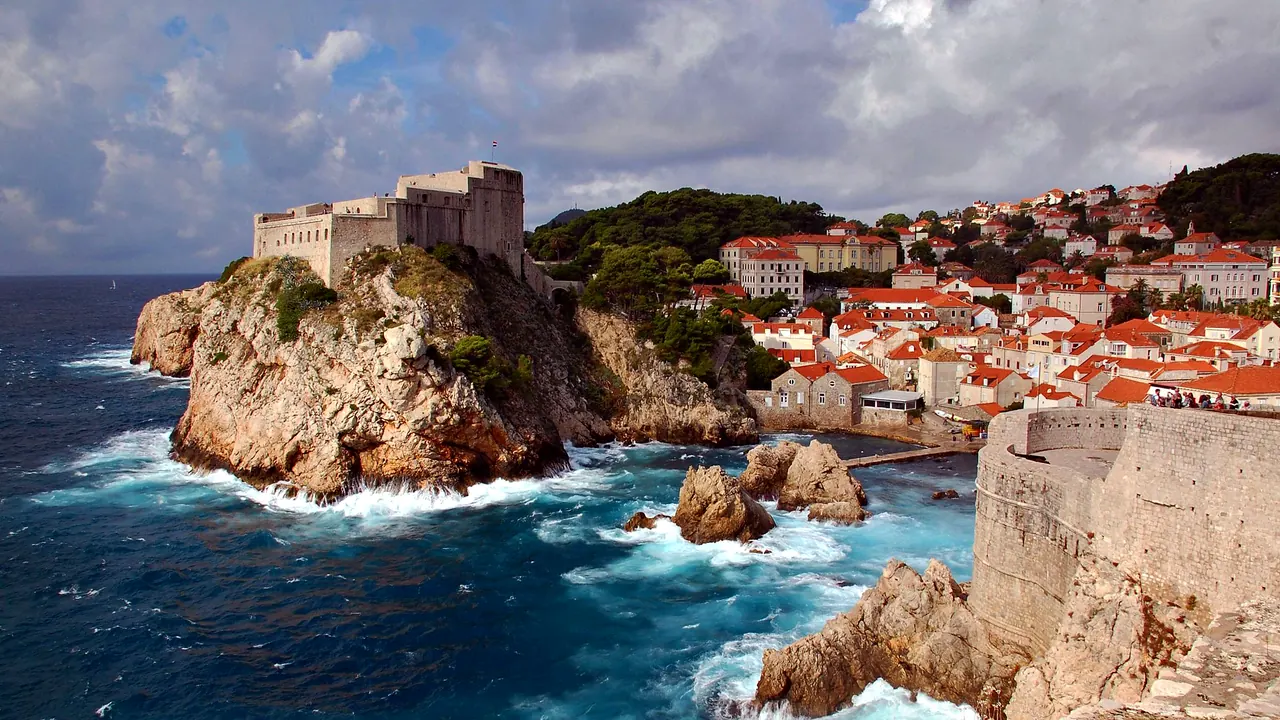
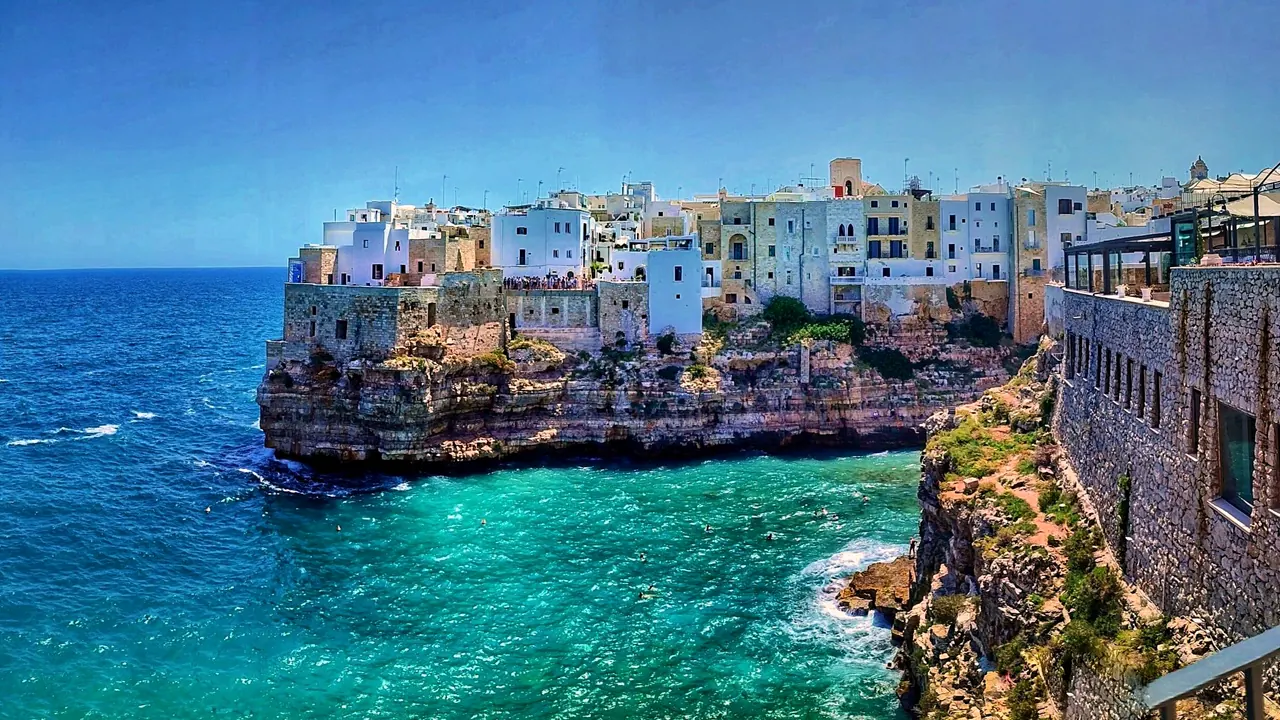
Photos: Dalmatia by Edwardwexler at English Wikipedia, CC BY-SA 3.0, cropped; Puglia by Acquario51, CC BY-SA 4.0, cropped.
Dalmatia or Puglia?
Our verdict in twelve categories, each scored against the same fixed benchmark cities, and the climate month by month, so you can choose for your trip.
Choose Dalmatia for
- nature and the outdoors
- nightlife
- getting around
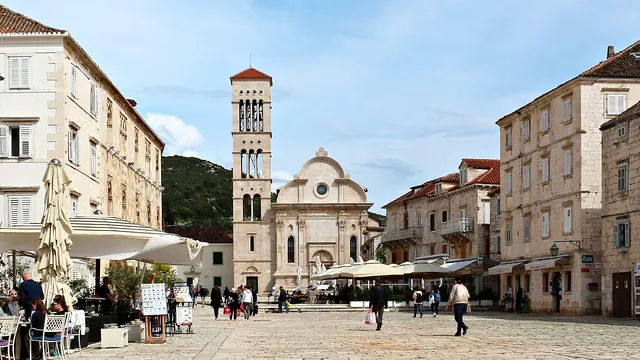
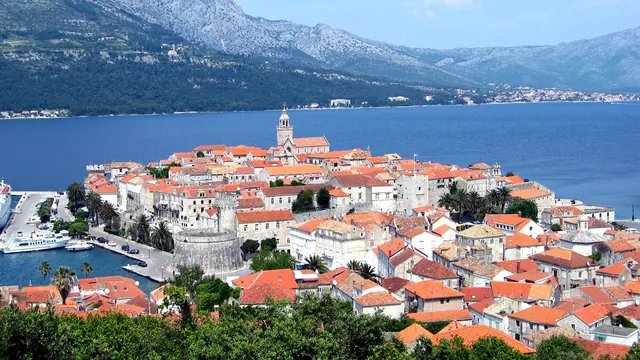
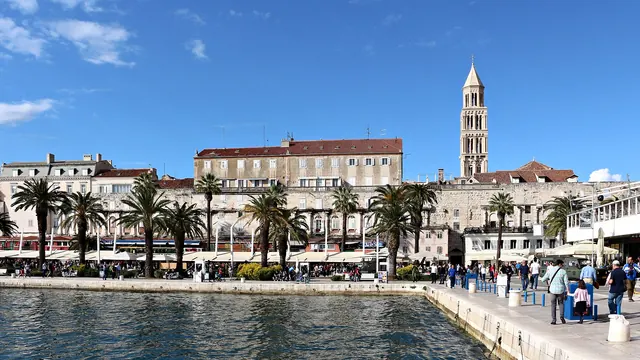
Dalmatia is for travellers who want the sea as something to travel on. You can hop between islands by ferry and catamaran, sail among the Kornati, climb above Paklenica or raft the Cetina, and spend the evenings in Split's palace lanes or Hvar's harbour bars. Its walled towns, from Diocletian's Palace to Dubrovnik's ring of walls, make the stronger run of sights. The price is a dearer summer and more planning.
Choose Puglia for
- food and drink
- wellness
- prices
Pick Puglia for a slower trip built around the table and the countryside. The cooking is richer and more varied, and a masseria among the olive groves makes for real rest. The sandy Ionian shallows of the Salento are also kinder to small children than Dalmatian pebbles. It is the gentler budget too, as long as you are happy to drive.
Scoreboard
Twelve categories on one fixed scale from 0 to 100. The shaded stretch is the gap between the two.
Your match
Pick a travel style or drag the sliders, and both match scores follow your weighting.
Too close to call, 1 point apart
Wins on nature and the outdoors and nightlife with your weighting.
Wins on food and drink and wellness with your weighting.
What matters to you?
Category by category
What the scores mean for a trip.
Beaches & swimming
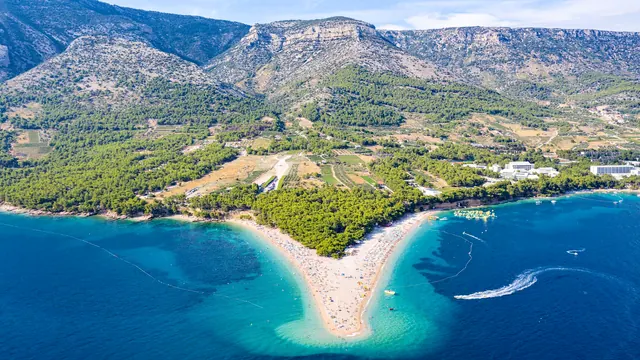
For a beach trip the two are evenly matched, and the difference is underfoot. Dalmatia's beaches are pebble and rock shelves, which keep the water very clear. Zlatni Rat on Brač and the pine-backed Makarska Riviera are the best known, but the finest swimming is in the island coves of Vis, Hvar and the Pakleni islands, often reached by small boat.
Puglia has real sand. On the Salento's Ionian shore, around Porto Cesareo, Gallipoli and Pescoluse, long pale beaches run into shallow turquoise water. The Adriatic side and the Gargano have limestone coves and cliffs closer to the Dalmatian style. Expect rows of paid lidos on Puglia's popular sands, where Dalmatia's quieter bays are reached by boat.
Food & drink
Puglia is the better place to eat. Its everyday food is broader and more generous: orecchiette with turnip tops, burrata from the Murge, focaccia barese, and raw sea urchins sold on the Bari waterfront. In the Valle d'Itria there are butcher-grill houses where you choose your meat at the counter, and farm cooking at the masserie.
Dalmatia's cooking is good but narrower: grilled fish, black cuttlefish risotto and peka from a konoba. The busy harbourfronts serve a lot of forgettable food. Wine is closer: Plavac Mali from Pelješac and Pošip from Korčula hold their own against Primitivo and Negroamaro, and Ston's oysters are worth a drive down the coast.
Culture & sights
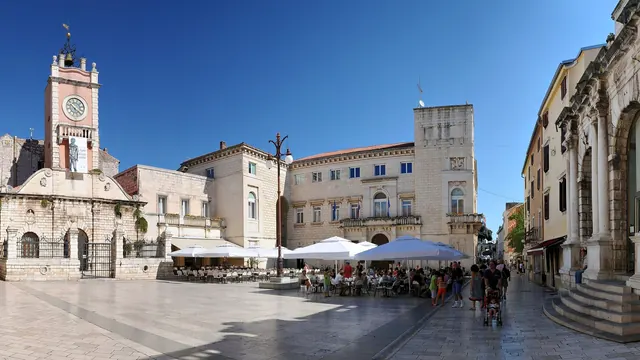
Dalmatia has the edge for sights. Daily life in Split still runs through Diocletian's Palace, and Dubrovnik's walls are complete. Trogir's island old town, Šibenik's stone cathedral and Zadar's Roman forum add a line of first-rank towns along a single coast.
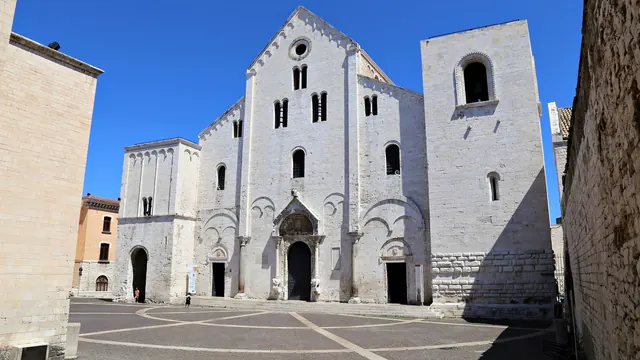
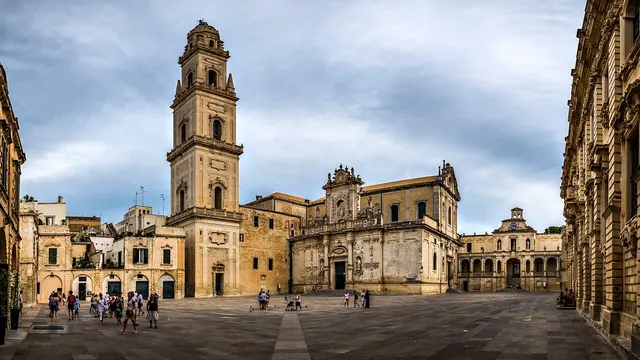
Puglia's heritage is more scattered but more varied: Lecce's baroque, the trulli of Alberobello, Castel del Monte alone on its hill, and the Romanesque cathedrals of Trani, Bari and Otranto. In both regions the museums are modest and the pleasure is in the townscape. Seeing the best of either means travelling between towns, by car in Puglia, by bus or boat in Dalmatia.
Nightlife
Dalmatia has the livelier summer nights. Hvar town is the draw, with harbourside cocktail bars and beach clubs on the islets reached by water taxi. Split's crowded palace lanes and the resort strips of Makarska and Bol are the alternatives.
Puglia's party town is Gallipoli in July and August, and Lecce's squares fill with people drinking late. Most evenings, though, are a passeggiata and a long dinner. Bari keeps some life all year, while most of the Dalmatian coast goes quiet once the season ends in mid September.
Nature & outdoors
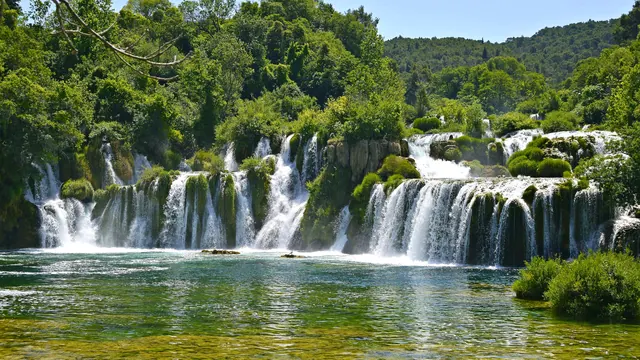
Dalmatia's landscape is far more dramatic. The island chain makes it one of the Mediterranean's great sailing grounds, from the bare white Kornati to Mljet's saltwater lakes. On the mainland there are the Krka waterfalls, rafting in the Cetina gorge, the 1,700m limestone wall of Biokovo and serious climbing in Paklenica.
Puglia is mostly gentle olive country, lovely by bicycle in the Valle d'Itria but rarely wild. Its drama is in the Gargano, with the beech woods of the Foresta Umbra, sea caves and diving off the Tremiti islands. In the south, the Salento has cliff paths around Otranto and Leuca.
Day trips
Both regions are good for day trips, but in different ways. In Dalmatia the days out are by sea: catamarans from Split to Hvar, Brač and Vis, and the Elaphiti islands from Dubrovnik. Longer runs cross the border to Kotor's bay or Mostar.
In Puglia the day trips are by car through a close web of small towns: Ostuni, Locorotondo and Martina Franca in the Valle d'Itria, and the harbour towns north of Bari. Matera's cave dwellings, just over the border in Basilicata, are the outing most visitors put first.
Good for families
Puglia is the easier region for families. Its sandy, shallow Ionian beaches suit toddlers, and villas with pools make for simple days. The Fasano safari park and the trulli of Alberobello give children something beyond the sea.
Dalmatia has calm, tideless water and resorts such as Makarska and Baška Voda where everything is a short walk from the shore. But sand is limited to Nin and a few islands, and pebbles call for water shoes. In both regions children are welcome at dinner late into the evening.
Getting around
Dalmatia gives you more ways to travel without a car. Reliable buses link the main towns, and catamarans and car ferries from Split, Zadar and Dubrovnik open up the islands. Allow for August ferry queues and long distances along the coast.
In Puglia a car is close to essential. The roads are good and quiet, but inland and in the Salento the local trains and buses are slow and infrequent. The region is long enough that covering both the Gargano and the Salento needs two bases. The exception is the main railway line through Bari, Polignano a Mare, Monopoli and Lecce.
Shopping & style
Neither region is for serious shopping, but Puglia has a little more to browse. There are real crafts in Grottaglie's ceramic quarter, Lecce's papier-mache studios and the linen of the Valle d'Itria, and the streets around Via Sparano in Bari have mainstream Italian fashion.
Dalmatia's best buys are local products: olive oil, Hvar lavender, Pag lace and Brač stone. Dubrovnik's old town is mostly souvenirs and coral jewellery, and Split's green market by the palace walls is more rewarding than its shops.
Affordability
Puglia is the cheaper of the two, mainly at the table, where trattorias, street snacks and local wine are good value. Rooms near the best Salento beaches and boutique masserie are expensive in high summer, though, and car hire and lido sun-loungers add to the bill.
Dalmatia costs more. Dubrovnik and Hvar town are among the most expensive places in the Mediterranean, and boat trips and park entries add up. In both regions you pay less in June and September, and with a base away from the famous spots, around Zadar and Šibenik or in inland Puglia.
Live music & performing arts
Puglia has a slightly stronger musical life. Bari's Teatro Petruzzelli is one of Italy's largest opera houses, and Martina Franca's summer festival stages rare operas. The Salento's pizzica folk tradition comes together each August at the Notte della Taranta in Melpignano.
Dalmatia's highlights are summer festivals in remarkable settings: theatre in Dubrovnik's palace courtyards and opera on Split's Peristyle. Klapa, its unaccompanied close-harmony singing, is a sound all its own.
Wellness & relaxation
Puglia is better for slowing down. Masserie among the olive groves, many with pools and spas, are made for quiet stays. There are small thermal centres at Santa Cesarea Terme, Torre Canne and Margherita di Savoia, though none is worth a trip on its own.
Dalmatia has no bathing tradition, and its spas are inside big resort hotels. Its kind of rest is fjaka, the slow island afternoon, best taken in a stone house on Vis, Lastovo or the car-free Elaphiti islands in June or September.
When should you go?
Pick your month. The climate figures are measured averages, not a forecast.
Dalmatia in July
Puglia in July
Daytime high, °C
Rainfall in the month, mm
Where the figures come from
Dalmatia's temperatures are measured 53 km from the centre, at Split / Marjan.
Dalmatia has no rain gauge within 25 km of the centre, so its rainfall comes from a gridded climate dataset read at the destination rather than from a gauge further away.
Dalmatia's sunshine is measured 53 km from the centre, at Split / Marjan.
Puglia's temperatures are measured 64 km from the centre, at Brindisi.
Puglia has no rain gauge within 25 km of the centre, so its rainfall comes from a gridded climate dataset read at the destination rather than from a gauge further away.
Temperature and rainfall are climate normals, averaged over the years shown. Dalmatia: 1991-2020 (sunshine 1971-2000) normals, Split / Marjan (53.2 km from centre). Puglia: 1991-2020 (sunshine 1981-2010) normals, Brindisi (64.4 km from centre).
Both coasts follow a similar Mediterranean pattern. The sea is warm enough to swim from June to late September and is warmest in August, when Puglia's water is slightly warmer at about 26°C. July and August are hot and very sunny in both, with daytime highs around 30°C. That is fine for the beach but hard going in the old towns and on trails. May is the shared month for walking and sightseeing, warm, dry and already long on sunshine in both regions.
Autumn is where they part. The Dalmatian coast turns wet from September, October brings some of its heaviest rain and November reaches about 135mm, so late September is the last good window for walking. June is the more reliable month for a Dalmatian beach trip, drier than September and with the sea already at 22°C. Where most visitors stay in Puglia, it is drier in every month and winters are a little milder. Walking and sightseeing there carry on comfortably through October, and September is the safer bet for swimming once July and August are over.
Which traveller are you?
On an outdoors trip, Dalmatia is far ahead. Its thousand islands make it one of the great sailing coasts, and inland there is canyoning in the Cetina gorge, climbing in Paklenica and trails up Biokovo. Puglia's gentle olive country suits cycling more than serious walking.
On a family trip with young children, Puglia is easier. The Salento's Ionian beaches are shallow and sandy, villas with pools are a common place to stay, and the Fasano safari park makes a good day out. Dalmatia's pebbles and stepped streets ask more of parents.
For a relaxing and wellness trip, Puglia is the better fit. A restored masseria among the olive groves, often with its own pool and spa, sets a slow pace, and there are thermal springs at Santa Cesarea Terme. Dalmatia has quiet island villages but no spa tradition.
Before you go
| Measure | Dalmatia | Puglia |
|---|---|---|
| Official language | Croatian | Italian |
| Currency | Euro (EUR) | Euro (EUR) |
| Sockets | CF230 V, 50 Hz | CFL230 V, 50 Hz |
| Driving side | Right | Right |
| Time zone | UTC+1, UTC+2 in summer | UTC+1, UTC+2 in summer |
| Emergency number | 112 | 112 |
| Main airport | Split Saint Jerome Airport (SPU)69 non-stop destinations | Bari Karol Wojtyła International Airport (BRI)104 non-stop destinations |
| Public holidays this year | 14 days | 13 days |
By the numbers
| Measure | Dalmatia | Puglia |
|---|---|---|
| Population | 852,068 | 3,866,174 |
| People per km² | 70 | 198 |
| Swim season, months above 21 °C | 4 months | 4 months |
Where else could you go?
Every comparison below shares a destination with this one, so you can follow Dalmatia or Puglia somewhere new.
- Kotorvs Dalmatia
- Plitvice Lakesvs Dalmatia
- Korčulavs Puglia
- Amalfi Coastvs Puglia
- Hvarvs Puglia
- Caprivs Puglia