Croatia
Dalmatia
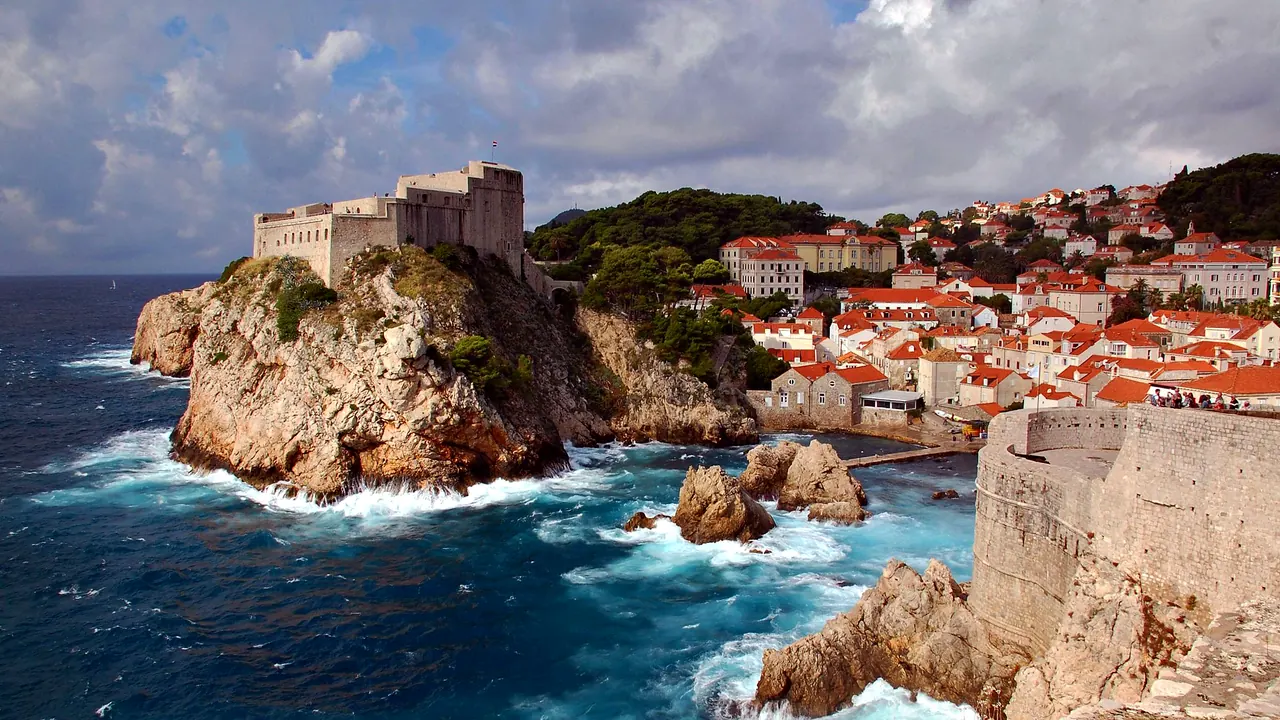
Fort Lovrijenac on its rock beside Dubrovnik's walls
- Beaches84
- Nature & outdoors82
- Culture & sights80
Photo: Edwardwexler at English Wikipedia, CC BY-SA 3.0, cropped
Match
61
Every category weighted equally
- Beach & sun63
- Culture & arts60
- Food & nightlife59
- Family trip63
- Outdoors66
- Relax & unwind61
- Shopping & style57
- On a budget59
Dalmatia in twelve categories
Our verdict on each, scored 0 to 100 against the same fixed benchmark cities, so a score means the same thing on every page.
Beaches & swimming. Scores 84 out of 100.
Food & drink. Scores 64 out of 100.
Culture & sights. Scores 80 out of 100.
Nightlife. Scores 68 out of 100.
Nature & outdoors. Scores 82 out of 100.
Day trips. Scores 79 out of 100.
Good for families. Scores 60 out of 100.
Getting around. Scores 55 out of 100.
Shopping & style. Scores 33 out of 100.
Affordability. Scores 45 out of 100.
Live music & performing arts. Scores 42 out of 100.
Wellness & relaxation. Scores 40 out of 100.
Dalmatia category by category
Beaches & swimming
84The Adriatic here is clear, calm and warm enough to swim from June to early October, reaching about 25°C in August. Most beaches are pebble or rock shelves rather than sand, which keeps the water strikingly transparent. The Makarska Riviera has the longest run of pine-backed pebble beaches on the mainland, while Brač holds Zlatni Rat, the spit of fine shingle at Bol that shifts with the wind.
The islands are where beach life is best: coves on Vis, Hvar and the Pakleni islands, sandy bays on Lopud and around Nin near Zadar. Expect crowds in the famous spots in July and August, and quiet bays reached by small boat or a walk through the maquis.
Food & drink
64Dalmatian cooking is simple and Mediterranean: grilled fish dressed with olive oil and chard, black cuttlefish risotto, slow-braised pašticada, and lamb or octopus baked under an iron bell in the embers, known as peka. The family-run konoba, often in a stone cellar or on a village terrace, is the place to eat it, and the morning markets of Split and Zadar show what is in season.
Wine is the stronger suit: Plavac Mali reds from the Pelješac peninsula and Hvar, Pošip whites on Korčula, and Babić around Primošten. Ston's oysters and mussels are a reason to drive down the coast. Range beyond local cooking is limited, and the busiest harbourfronts serve plenty of indifferent pizza and grilled platters.
Culture & sights
80The coast is lined with walled towns of Roman, Venetian and Ragusan stone. Split grew inside Diocletian's Palace, and its cellars, Peristyle and cathedral are still part of daily life. Dubrovnik's complete ring of walls encloses marble streets, the Rector's Palace and monasteries that recall a long independent republic.
Trogir's island old town, Šibenik's Cathedral of St James built entirely of stone, and Zadar's Roman forum beside the round church of St Donatus add more of the first rank, with the ruins of Salona just outside Split and Korčula's compact Venetian town to the south. The heritage is mostly architecture and townscape; museums are modest, and seeing the best means moving between several towns.
Nightlife
68Going out here is a summer affair, running from June to mid September. Hvar town is the famous one, with harbourside cocktail bars, beach clubs on the nearby islets reached by water taxi and parties that run well past midnight. Split's old town fills at night with crowded little bars in the palace lanes and along the waterfront, and Makarska and Bol have lively resort strips.
Outside the season most of the coast goes quiet early, and many smaller islands offer little beyond a harbour café and a bar with music. Visitors who want calm evenings should avoid staying in central Hvar town in high summer.
Nature & outdoors
82This is one of the great sailing coasts, a chain of more than a thousand islands, channels and sheltered anchorages. The Kornati archipelago, bare white islands in a deep blue sea, is best seen from a boat, while Mljet's forested national park has saltwater lakes for kayaking and cycling.
Inland, the Krka river falls over travertine terraces near Šibenik, the Cetina gorge at Omiš is used for rafting and canyoning, and the limestone wall of Biokovo rises behind Makarska to over 1,700m with a road and trails to the top. Paklenica, at the foot of the Velebit range near Zadar, is a serious climbing and hiking area. Spring and autumn suit walking far better than the hot, dry summer.
Day trips
79Much of the pleasure is in moving between towns by ferry and catamaran. From Split, island harbours such as Stari Grad and Jelsa on Hvar, Bol and Supetar on Brač, or the remote fishing town of Komiža on Vis make easy days out. From Dubrovnik, the Elaphiti islands, Cavtat, the walled salt town of Ston and the wineries of Pelješac are close, and Kotor's bay across the Montenegrin border is about two hours away.
Inland, Mostar's Ottoman bridge in Bosnia and Herzegovina is reachable from either end of the coast, though it makes a long day. Smaller stops such as Omiš, Primošten and Nin fill the gaps, so there is rarely a shortage of somewhere to go.
Good for families
60Families come for the sea: calm, clear water with no tides, many shallow bays, and resort towns such as Makarska, Baška Voda and Bol where everything is a short walk from the shore. Sandy beaches suit small children best and are found around Nin near Zadar and on a few islands. Croatians are relaxed about children in restaurants late into the evening.
There is little built for children beyond waterparks and aquariums in a few resorts, so days revolve around swimming, boat trips and gelato. Pebbles call for water shoes, and the steep stepped streets of Dubrovnik and the island towns are hard going with a pushchair in July heat.
Getting around
55The old towns themselves are compact and best walked, and they are mostly car-free. Between them, a good motorway runs inland behind the coast, while the scenic coastal road is slow and winding and clogs in August. Buses link the main towns reliably, but villages and beaches are easier with a car.
Split is the hub for car ferries and faster passenger catamarans to the central islands, and Dubrovnik and Zadar serve their own archipelagos. In high season, car ferries fill up and queues form, so island hopping takes planning. Distances along the coast are long: Zadar to Dubrovnik is a full morning's drive.
Shopping & style
33Shopping is about local products rather than fashion. Olive oil, wine, dried figs, Hvar lavender, Pag lace and Brač stone carvings are the things worth bringing home, bought at markets, cellars and village shops. Split has the region's main shopping streets and a busy open-air green market by the palace walls.
The old towns, Dubrovnik above all, are dominated by souvenir and coral jewellery shops, and there is little in the way of independent design or luxury. Anyone wanting serious shopping will not find it here.
Affordability
45In the summer season this is not a cheap coast. Dubrovnik's old town and Hvar town are among the most expensive places to stay and eat in the Mediterranean, and boat trips and national park entries add up. Split is a step cheaper but still pricey in July and August.
Costs fall with a little choice: private rooms and apartments in smaller towns, mainland resorts, the northern coast around Zadar and Šibenik, and lunch in an inland konoba rather than on a harbourfront. June and September bring lower room prices with the sea still warm.
Live music & performing arts
42The performing arts season is the summer. The Dubrovnik Summer Festival stages theatre and classical concerts in palace courtyards, on fortress terraces and in front of churches, and the Split Summer Festival brings opera to the Roman Peristyle. Split's Croatian National Theatre runs opera, ballet and drama through the rest of the year.
The most distinctive sound is klapa, unaccompanied close-harmony singing by small groups of men or women, heard at festivals, in churches and sometimes spontaneously in old-town squares. Split also hosts a large electronic music festival each July. Outside these, live music is mostly bands playing to resort terraces.
Wellness & relaxation
40There is no bathing culture here, and spas are found in large resort hotels rather than as a tradition of their own. What the coast does offer is pace: Dalmatians have a word, fjaka, for the drowsy afternoon idleness of summer, and the car-free Elaphiti islands, Vis and Lastovo are good places to practise it.
Visitors seeking rest should avoid the party towns and the crowded old towns in August, and choose a stone house in a small island village, ideally in June or September.
Where to stay in Dalmatia
Split makes the most practical first base. Its harbour is the hub for ferries and catamarans to Brač, Hvar and Vis, buses run along the coast from it, and its evenings in the palace lanes suit couples and groups who like to go out. Families and beach lovers do better on the Makarska Riviera to the south, where pebble beaches lie a short walk from the room and Biokovo rises behind for walkers. Bol on Brač offers the same easy beach days with an island feel.
Dubrovnik suits a stay built around the walls, the summer festival and day trips to Ston, the Pelješac wineries and Korčula, which also rewards a night or two of its own. It is the costliest base on the coast, and the stepped streets are tiring with small children. Hvar town is the place for late nights; for quiet evenings on the same island, stay in Stari Grad or Jelsa.
The northern end, around Zadar and Šibenik, is cheaper and closer to Krka, the Kornati and Paklenica, with sandy bays near Nin for young children. Zadar to Dubrovnik is a full morning's drive, so a week works best from one or two bases. On a first visit, choose Split or Dubrovnik. Save the north, or a village on Vis, for a slower second trip.
When should you go?
Pick a month to see what it is like. The climate figures are measured averages, not a forecast.
Dalmatia in July
Daytime high, °C
Rainfall in the month, mm
The whole year
Shaded against this destination’s own year: the deepest cell is its best month for that figure and the palest its weakest.
Where the figures come from
Dalmatia's temperatures are measured 53 km from the centre, at Split / Marjan.
Dalmatia has no rain gauge within 25 km of the centre, so its rainfall comes from a gridded climate dataset read at the destination rather than from a gauge further away.
Dalmatia's sunshine is measured 53 km from the centre, at Split / Marjan.
Temperature and rainfall are climate normals, averaged over the years shown. Dalmatia: 1991-2020 (sunshine 1971-2000) normals, Split / Marjan (53.2 km from centre).
Before you go
| Measure | Dalmatia |
|---|---|
| Official language | Croatian |
| Currency | Euro (EUR) |
| Sockets | CF230 V, 50 Hz |
| Driving side | Right |
| Time zone | UTC+1, UTC+2 in summer |
| Emergency number | 112 |
| Main airport | Split Saint Jerome Airport (SPU)69 non-stop destinations |
| Public holidays this year | 14 days |
By the numbers
| Measure | Dalmatia |
|---|---|
| Population | 852,068 |
| People per km² | 70 |
| Swim season, months above 21 °C | 4 months |
Compare Dalmatia with
Every comparison with a written verdict behind it.
- Algarve
- Amalfi Coast
- Capri
- Corfu
- French Riviera
- Ischia
- Istria
- Kotor
- Plitvice Lakes
- Procida
- Puglia
- Sicily
- Tuscany
- Umbria