Croatia
Dubrovnik
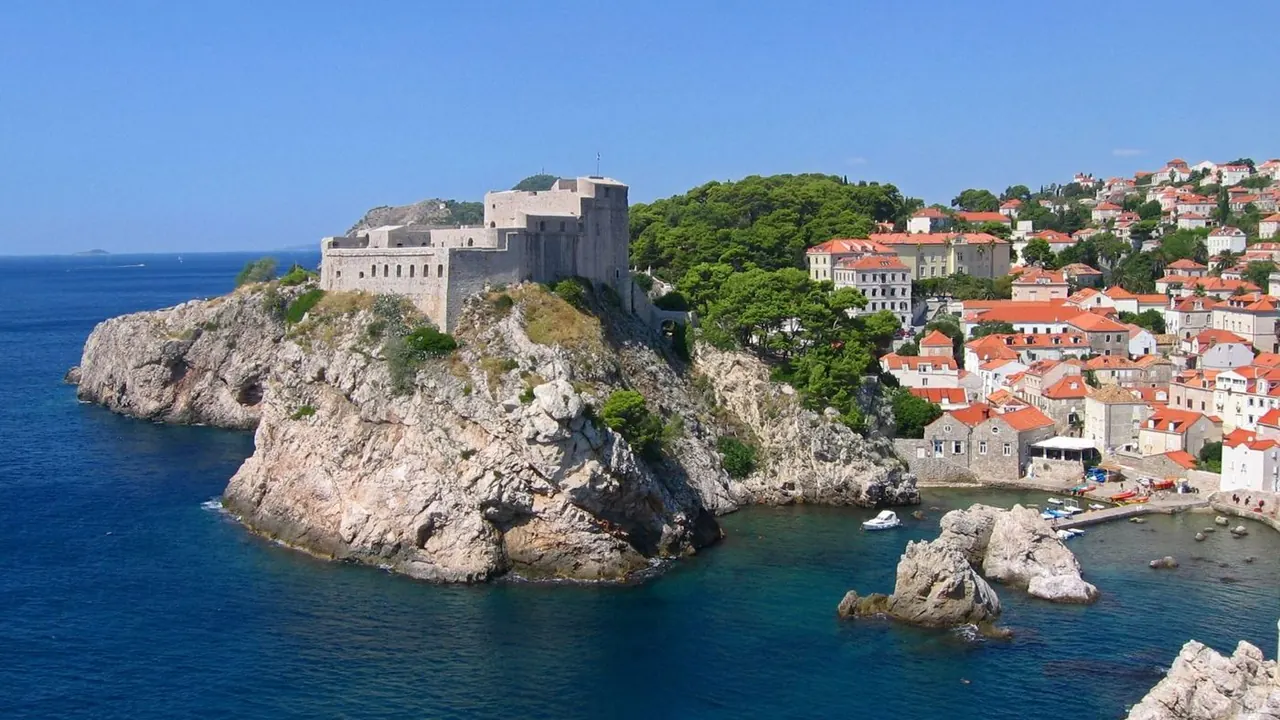
Fort Lovrijenac above the sea
- Beaches74
- Culture & sights72
- Nature & outdoors70
Photo: Natalia Semenova, CC BY 3.0, cropped
Match
49
Every category weighted equally
- Beach & sun50
- Culture & arts49
- Food & nightlife45
- Family trip53
- Outdoors55
- Relax & unwind50
- Shopping & style45
- On a budget47
Dubrovnik in twelve categories
Our verdict on each, scored 0 to 100 against the same fixed benchmark cities, so a score means the same thing on every page.
Beaches & swimming. Scores 74 out of 100.
Food & drink. Scores 47 out of 100.
Culture & sights. Scores 72 out of 100.
Nightlife. Scores 37 out of 100.
Nature & outdoors. Scores 70 out of 100.
Day trips. Scores 66 out of 100.
Good for families. Scores 50 out of 100.
Getting around. Scores 60 out of 100.
Shopping & style. Scores 25 out of 100.
Affordability. Scores 28 out of 100.
Live music & performing arts. Scores 25 out of 100.
Wellness & relaxation. Scores 32 out of 100.
Dubrovnik category by category
Beaches & swimming
74Swimming is a real part of a summer stay here. The Adriatic is clear and reaches about 24-25°C in July and August, and people swim straight off the rocks below the seaward walls, at the small Banje beach just outside the Old Town, and along the coves of the Lapad peninsula and Babin Kuk. The beaches are pebble or concrete platforms rather than sand, and in high season they fill early.
The better swimming is a short boat ride away. Lokrum sits just off the Old Town, the Elafiti islands have quieter bays and Lopud has a sandy cove at Sunj, and Cavtat down the coast is calmer. The water stays pleasant from June to early October.
Food & drink
47The local cooking is Dalmatian and simple: grilled fish, black risotto, octopus salad, slow-cooked pasticada, and the oysters and mussels of Ston. Red wines from the Peljesac peninsula, such as Plavac Mali and Dingac, and whites from Korcula appear on most lists, and the Gruz market sells fish and local produce in the mornings.
The weakness is the Old Town, where many restaurants cater to cruise and day crowds with long menus and high prices. Eating well takes a little effort: family-run konobas in Lapad, Gruz and the villages of Konavle, or lunch at an oyster farm near Ston, are usually better than a table on the Stradun. The range is narrow beyond seafood, and there is little street food.
Culture & sights
72The Old Town is the sight. Its walls run almost 2km around the city, unbroken, and walking them gives views over terracotta roofs, the harbour and the sea. Inside, the marble-paved Stradun leads past the Franciscan monastery with one of Europe's oldest working pharmacies, the Sponza Palace, the Rector's Palace, the cathedral and the baroque Church of St Blaise, and the Dominican monastery holds a fine collection of Dalmatian painting. Fort Lovrijenac stands on its own rock outside the walls.
The set is compact and remarkably intact, rebuilt after the earthquake of 1667 and again after the siege of 1991-92, which the museum on Mount Srd recalls. Two or three days cover it, and the museums are small. Crowds in the narrow streets in summer daytime are the main drawback.
Nightlife
37Evenings are mostly about a drink with a view. In summer the bars cut into the rocks outside the seaward walls are the classic sunset stop, and the lanes off the Stradun hold small wine and cocktail bars that stay busy until late. There are a couple of clubs, one inside the old Revelin fortress by the Ploce gate, and a few more bars along the Lapad promenade and at Banje beach.
This is a small scene that depends on the summer season. Even in July and August a night out means the same handful of streets, with little range in music or style. From November to March many places close, and the Old Town is quiet by midnight. It suits a late drink and some dancing on a warm night, but it won't satisfy anyone looking for serious clubbing or a choice of districts to go out in.
Nature & outdoors
70The setting is the outdoor draw: limestone mountains dropping steeply into a clear sea scattered with islands. The cable car or a zigzag path climbs Mount Srd above the city for views across the archipelago, and sea kayaking around the walls and over to Lokrum is a popular half day. Lokrum itself is a wooded island with a botanical garden, peacocks and a small salt lake.
Further out, the Elafiti islands are good for walking and cycling between villages, the Mljet national park has saltwater lakes and pine forest, and the Konavle valley to the south has hiking trails and rural paths. Spring and autumn suit walking best, as summer heat makes the bare hillsides hard going.
Day trips
66Dubrovnik's position at the southern tip of Croatia puts two other countries within reach. The Bay of Kotor in Montenegro, with the walled town of Kotor and the baroque village of Perast, is the classic day out, about two hours by road depending on the border. Trebinje in Bosnia and Herzegovina, with its Ottoman bridge and plane-shaded market square, is under an hour away, and Mostar is a long but popular day.
Closer to home, Cavtat is a pretty harbour town reached by boat, Ston has its long medieval walls and saltpans, and the car-free Elafiti islands are an easy ferry hop. Korcula is possible on a long day. Border queues in summer can add hours.
Good for families
50Children tend to enjoy the walls, boat rides to Lokrum, the cable car up Mount Srd and swimming in the calm, clear coves of Lapad. There is a small aquarium in the St John fortress, and the city feels safe and welcoming. But very little is made with children in mind.
The practical side is harder. Much of Dubrovnik is stairs, so pushchairs are a struggle away from the Stradun, and in July and August heat and cruise-day crowds make the Old Town tiring. Families usually do best staying in Lapad or Babin Kuk, near the beaches, and visiting the Old Town early or in the evening.
Getting around
60The Old Town is entirely car-free and small enough to cross in ten minutes, although its side streets are steep stairways. Most hotels lie outside it, in Lapad, Babin Kuk, Gruz and Ploce, linked by a simple city bus network that runs to the Pile gate. Ferries and taxi boats leave from Gruz and the Old Harbour for Lokrum, the Elafiti islands and Cavtat.
There is no rail, and the single coast road gets congested at the Pile gate in summer. The steep terrain makes walking between districts harder than distances suggest. A car is not needed in the city but is useful for Konavle, Ston and trips into Montenegro or Bosnia.
Shopping & style
25Shopping is a minor part of a visit. The Old Town's streets are lined mostly with souvenir shops, alongside a few places selling local crafts such as Konavle embroidery, coral and silver filigree jewellery, lavender, olive oil and Dalmatian wine. The morning market on Gunduliceva Poljana sells dried figs, candied orange peel and liqueurs. Beyond that there is a shopping centre in Gruz and little else, with no fashion streets or department stores to speak of.
Affordability
28Dubrovnik is the most expensive place in Croatia and costly by any Mediterranean measure. In summer, rooms in and near the Old Town cost as much as in a major Western European capital, restaurants on the main streets charge a premium, and the walls, the cable car and boat trips add up quickly.
There are ways to soften it: staying in Lapad, Gruz or Cavtat, eating at konobas away from the Stradun, using the city buses and coming in spring or autumn, when room prices drop sharply. Even so, a budget traveller will find it costly.
Live music & performing arts
25The highlight is the Dubrovnik Summer Festival, held every July and August since 1950, when theatre, classical concerts and dance are staged in open-air settings such as Fort Lovrijenac, the Rector's Palace atrium and the city's squares. Outside the festival the offer is thin: the Dubrovnik Symphony Orchestra gives concerts through the year, the Marin Drzic Theatre has a small Croatian-language programme, and churches host occasional chamber music. Folk dance performances of the lindo appear in summer. For most of the year there is little to attend.
Wellness & relaxation
32Dubrovnik has no bathing tradition of its own, and spa options are limited to the larger hotels, mostly in Lapad, Babin Kuk and along the coast towards Ploce. In high season the Old Town is crowded and anything but restful.
The calm comes from the setting and the seasons. In spring and autumn the city slows down, and a stay on the Elafiti islands or in Cavtat, where life follows the harbour and the afternoon heat, is much more restorative than a summer week in the centre.
When should you go?
Pick a month to see what it is like. The climate figures are measured averages, not a forecast.
Dubrovnik in July
Daytime high, °C
Rainfall in the month, mm
The whole year
Shaded against this city’s own year: the deepest cell is its best month for that figure and the palest its weakest.
Where the figures come from
Dubrovnik has no rain gauge within 25 km of the centre, so its rainfall comes from a gridded climate dataset read at the city rather than from a gauge further away.
Dubrovnik's sunshine is measured 83 km from the centre, at Mostar.
Temperature and rainfall are climate normals, averaged over the years shown. Dubrovnik: 1999-2020 (sunshine 1991-2020, rainfall 1991-2020) normals, Dubrovnik / Cilipi (15.3 km from centre).
Before you go
| Measure | Dubrovnik |
|---|---|
| Official language | Croatian |
| Currency | Euro (EUR) |
| Sockets | CF230 V, 50 Hz |
| Driving side | Right |
| Time zone | UTC+1, UTC+2 in summer |
| Emergency number | 112 |
| Elevation | 10 m |
| Main airport | Dubrovnik Ruđer Bošković Airport (DBV)16 km from centre76 non-stop destinations |
| Public holidays this year | 14 days |
By the numbers
| Measure | Dubrovnik |
|---|---|
| City population | 41,562 |
| Museums within 10 km | 7 |
| UNESCO World Heritage sites within 50 km | 3 |
| Swim season, months above 21 °C | 5 months |
Compare Dubrovnik with
Every comparison with a written verdict behind it.