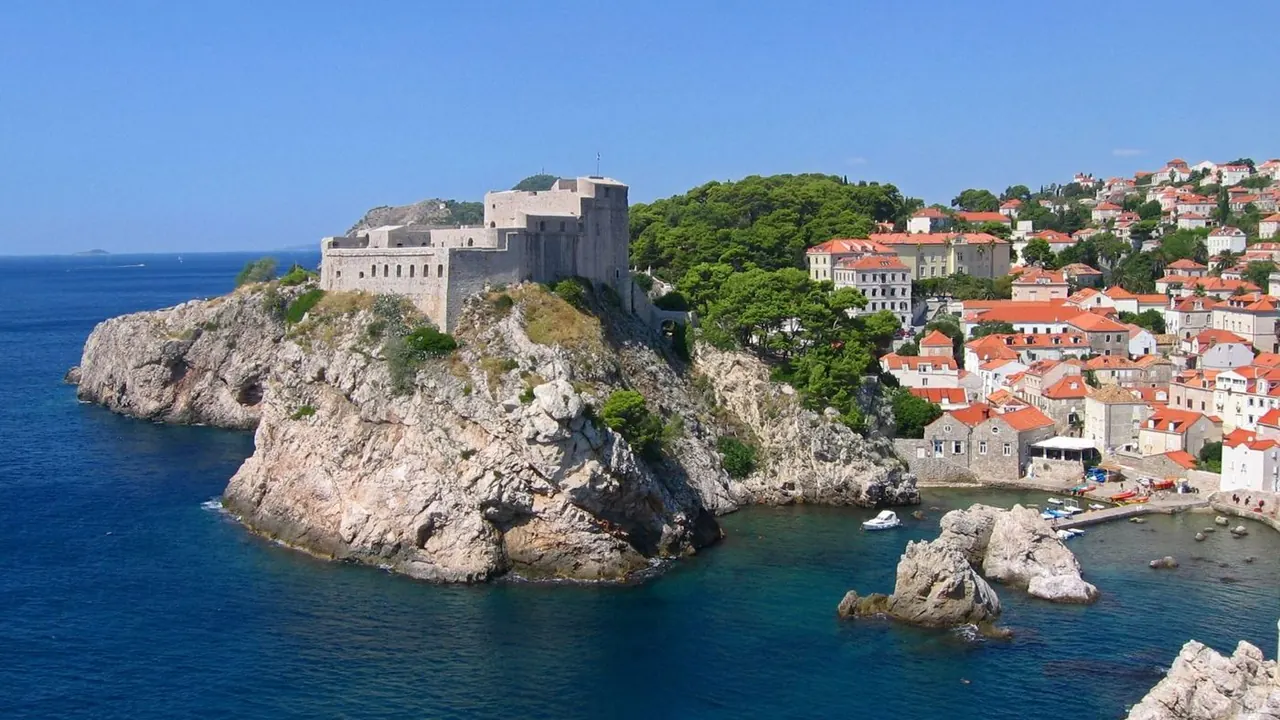
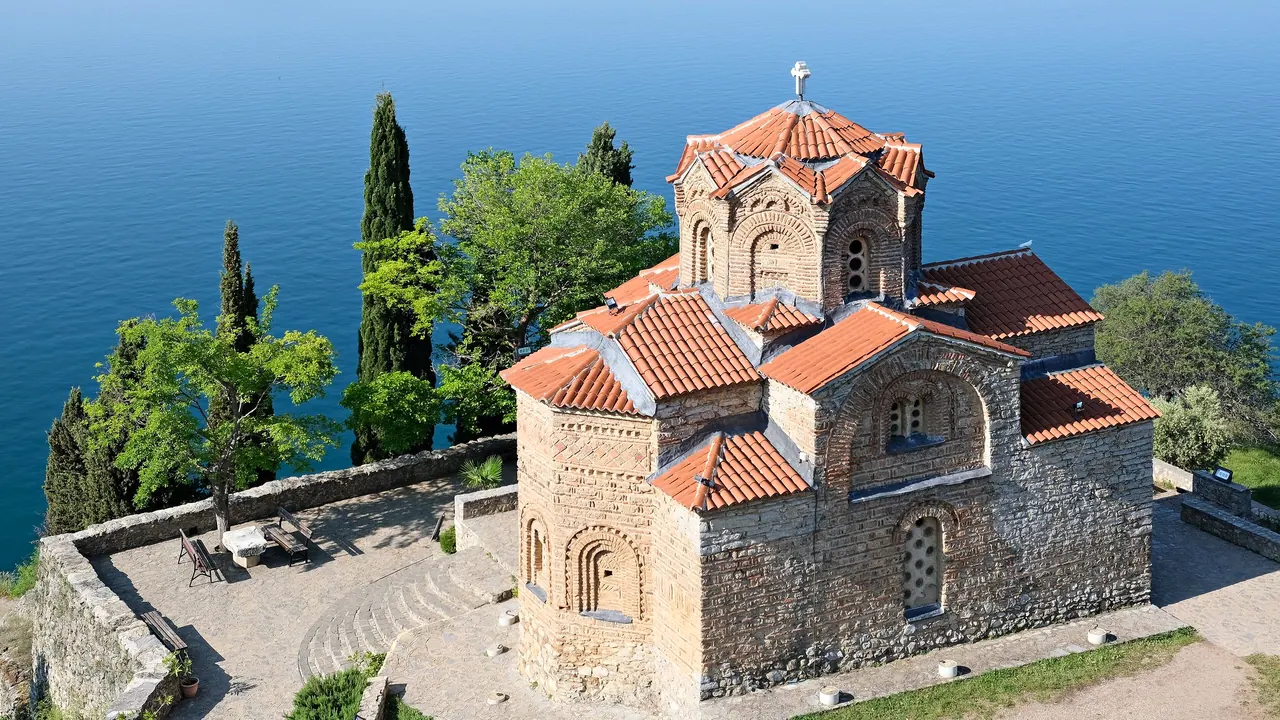
Photos: Dubrovnik by Natalia Semenova, CC BY 3.0, cropped; Ohrid by kallerna, CC BY-SA 4.0, cropped.
Dubrovnik or Ohrid?
Our verdict in twelve categories, each scored against the same fixed benchmark cities, and the climate month by month, so you can choose for your trip.
Choose Dubrovnik for
- beaches
- day trips
- food and drink
Dubrovnik is the pick for a sea vacation with a famous old town attached. You can swim in the clear Adriatic straight off the rocks, take boats out to Lokrum and the Elafiti islands, and reach Kotor or Trebinje across the border in a day. The walled Old Town is the more complete and striking sight of the two. It suits travellers who can afford one of the costliest stops on the Mediterranean and don't mind sharing the Stradun with summer crowds.
Choose Ohrid for
- prices
- shopping
Ohrid suits a slower, cheaper trip where your money goes much further. Instead of the sea you get a calm, clear freshwater lake. Its frescoed churches and the hilltop old town reward an unhurried day or two, and the mountains of Galičica rise right behind the shore. Choose it if you want lake swimming, Byzantine art and low costs more than island-hopping and a long list of outings.
Scoreboard
Twelve categories on one fixed scale from 0 to 100. The shaded stretch is the gap between the two.
Your match
Pick a travel style or drag the sliders, and both match scores follow your weighting.
Too close to call, level with your weighting
Wins on beaches and day trips with your weighting.
Wins on prices and shopping with your weighting.
What matters to you?
Category by category
What the scores mean for a trip.
Beaches & swimming
Both places swim from pebbles and concrete platforms rather than sand, but Dubrovnik offers more swimming over a longer season. You can swim in the clear Adriatic off the rocks below the seaward walls, at Banje or in the coves of Lapad. A short boat ride reaches Lokrum, the quieter Elafiti bays and the sandy cove at Sunj on Lopud.
Ohrid's swimming is in fresh water, calm and very clean, from small coves below Kaneo, the town beach at Potpeš, or the longer stretches with beach bars at Lagadin and Gradište. There are no island boat trips and the swimming season is shorter.
Food & drink
Dubrovnik eats better, as long as you avoid the Stradun. Ston oysters and mussels, black risotto, and Plavac Mali from the Peljesac peninsula give it a real seafood identity, and the Gruz market shows what is in season. The best meals are at konobas in Lapad or the Konavle villages.
Ohrid serves honest Macedonian home cooking, such as tavče gravče, ajvar, sheep's cheese and lake belvica with Tikveš wine. Menus repeat themselves along the waterfront, though. Breakfast burek from a bakery may be the most memorable thing you eat.
Culture & sights
Dubrovnik has the more striking set of sights. Its walls run unbroken around the whole Old Town, and inside are the Rector's Palace, the Sponza Palace, the Franciscan monastery's old pharmacy and Fort Lovrijenac on its own rock. Its weak point is the summer daytime crowd in the narrow streets.
Ohrid's appeal is more spiritual. The St Sophia frescoes rank among the finest medieval paintings in the Balkans. Plaošnik is tied to the beginnings of Cyrillic learning, and the church of St John at Kaneo stands above the lake. Both towns can be seen in a couple of days on foot.
Nightlife
Both are small, summer-only scenes, and they differ mainly in setting. In Dubrovnik, a night out means a sunset drink at the bars cut into the rocks outside the walls, wine bars in the lanes off the Stradun, and a club inside the Revelin fortress. In Ohrid, regional crowds fill the café-bars along the lake promenade, and the beach clubs on the southern shore play music into the small hours. Both towns are quiet from autumn to spring.
Nature & outdoors
Both have fine settings, but of different kinds. Dubrovnik's is limestone mountains falling into a sea dotted with islands. You can kayak around the walls to Lokrum, walk the paths of Mount Srd, or visit the saltwater lakes and pine forest of Mljet.
Ohrid offers higher mountain walking. In Galičica National Park, trails climb above 2,000m and viewpoints look over both Ohrid and Prespa lakes, and paragliders launch from the same ridge. Down at St Naum, rowing boats glide over spring-fed pools.
Day trips
Dubrovnik has the better set of outings because two countries are close by. Kotor and Perast in Montenegro, Trebinje's Ottoman bridge in Bosnia and Herzegovina, and even Mostar are all possible in a day. The car-free Elafiti islands and Cavtat are an easy boat ride. Summer border queues are the catch.
Ohrid's trips are fewer and slower to reach. The best are St Naum by boat or road, Struga, Bitola with the Heraclea mosaics, and Korçë across the Albanian border. Public transport is thin, so you will need a car or a driver.
Good for families
Neither town is really built for children, and in both the old town's stairs and cobbles make a pushchair hard work. What differs is how a day with children unfolds. Dubrovnik has more small outings to string together: the walls, the cable car up Mount Srd, the little aquarium in the St John fortress and the boat over to Lokrum's peacocks. The catch is that midsummer heat and cruise-day crowds in the Old Town wear young children down, so families usually stay by the Lapad or Babin Kuk coves and do the sights early or late.\n\nOhrid has fewer outings but makes for gentler swimming.
Calm fresh water means no salt stinging the eyes and no swell, which suits nervous young swimmers better than the sea, although the water is only warm enough from late June to mid-September. Apart from the lake, the rebuilt prehistoric stilt village at the Bay of Bones is the one sight children will really remember, and there is no aquarium or anything like it. It works best for families who are happy to spend most of the day by the water and who like that locals are relaxed about children at the dinner table.
Getting around
Both centres are easy to walk but steep. They differ in what lies beyond the centre. Dubrovnik's hotels are spread across Lapad, Babin Kuk and Gruz, linked by a simple bus network to the Pile gate, and ferries and taxi boats make the islands and Cavtat easy to reach.
In Ohrid, the promenade, bazaar and old town are close together, and taxis handle short trips. The southern shore and St Naum depend on infrequent buses and summer boats, so a car matters more there.
Shopping & style
Neither town is a shopping destination, but Ohrid has the more distinctive craft. The Ohrid pearl, a bead coated with lustre from lake-fish scales, is made by a few families, and it is worth buying from an established workshop in the bazaar rather than a stall.
Dubrovnik's Old Town mostly sells souvenirs. Konavle embroidery, coral and filigree jewellery, and the dried figs and candied orange peel at Gunduliceva Poljana market are the best of it.
Affordability
Cost is where these two part company most. Dubrovnik is expensive even by Adriatic standards, and it is dearest in July and August close to the Old Town. Prices swing a lot through the year, though. Room rates fall sharply in spring and autumn, and a base in Gruz or across the water in Cavtat eases the bill further. Even at its cheapest, it never feels like a bargain.
Ohrid stays inexpensive almost all year, and its seasonal swing is much smaller. The only real squeeze is on lakefront rooms at weekends in July and August, when visitors from across the region book them up. Late spring and early autumn bring the lowest prices together with warm weather, which makes them the best-value weeks of the year.
Live music & performing arts
Both towns save their stage for a summer festival, and both festivals use historic settings. Dubrovnik's, held since 1950, puts theatre, concerts and dance in Fort Lovrijenac and the Rector's Palace atrium, and its symphony orchestra plays through the rest of the year. Ohrid's festival brings opera and classical music to St Sophia and the ancient theatre, and a choral festival adds sacred singing. Outside July and August, there is little to attend in either town.
Wellness & relaxation
Neither has a spa tradition, so wellness means hotel spas in both. The difference is where to find calm. Around Dubrovnik, it comes from leaving the centre for the Elafiti islands or Cavtat's harbour, ideally outside summer. In Ohrid, it comes from slow lakeside mornings and quiet promenade evenings in May, June and September, although the nearest thermal springs, near Debar, are a long drive away.
When should you go?
Pick your month. The climate figures are measured averages, not a forecast.
Dubrovnik in July
Ohrid in July
Daytime high, °C
Rainfall in the month, mm
Where the figures come from
Dubrovnik has no rain gauge within 25 km of the centre, so its rainfall comes from a gridded climate dataset read at the city rather than from a gauge further away.
Dubrovnik's sunshine is measured 83 km from the centre, at Mostar.
Ohrid has no rain gauge within 25 km of the centre, so its rainfall comes from a gridded climate dataset read at the city rather than from a gauge further away.
Temperature and rainfall are climate normals, averaged over the years shown. Dubrovnik: 1999-2020 (sunshine 1991-2020, rainfall 1991-2020) normals, Dubrovnik / Cilipi (15.3 km from centre). Ohrid: 1999-2017 (rainfall 1991-2020) normals, Ohrid (0.2 km from centre).
Dubrovnik has the longer warm season. The sea is warm enough for swimming from June to September and peaks around 26°C in August. July and August are the driest and sunniest months, but daytime highs near 29°C make the walls and stairways hard work by midday. The rain arrives in September and builds through the autumn, with November the wettest month at about 179mm. Winters are mild, with highs around 11°C, so the streets stay pleasant for walking even then.
Ohrid gets just as hot in July and August, but its swimming season is shorter, from late June to mid-September. Its winters are much colder, with January highs around 6°C. Rain is spread more evenly through the year and never as heavy as Dubrovnik's autumn downpours. In both places, May, June and September are the best months to combine walking with warm weather.
Which traveller are you?
On a beach and sun trip, Dubrovnik is the clear choice. It has salt water from June to early October, rocky swimming spots below the walls, and boat trips to Lokrum, the Elafiti islands and Lopud's sandy cove. Ohrid's lake is lovely, but its season is shorter.
On a tight budget, Ohrid wins easily. Guesthouse rooms, lakeside meals with local wine, taxis and church entry fees all cost little. In Dubrovnik, even staying in Lapad and eating at konobas, the walls, boats and rooms add up quickly.
For a culture and arts trip, Dubrovnik has the edge. Its intact walled city, the Rector's Palace and the Franciscan monastery make a richer set of sights. Ohrid's frescoes at St Sophia and the church at Kaneo still deserve a detour for anyone interested in Byzantine art.
Before you go
| Measure | Dubrovnik | Ohrid |
|---|---|---|
| Official language | Croatian | Albanian, Macedonian |
| Currency | Euro (EUR) | Denar (MKD) |
| Sockets | CF230 V, 50 Hz | CF230 V, 50 Hz |
| Driving side | Right | Right |
| Time zone | UTC+1, UTC+2 in summer | UTC+1, UTC+2 in summer |
| Emergency number | 112 | 112 |
| Elevation | 10 m | 695 m |
| Main airport | Dubrovnik Ruđer Bošković Airport (DBV)16 km from centre76 non-stop destinations | Ohrid St. Paul the Apostle Airport (OHD)9 km from centre14 non-stop destinations |
| Public holidays this year | 14 days | 12 days |
By the numbers
| Measure | Dubrovnik | Ohrid |
|---|---|---|
| City population | 41,562 | 38,818 |
| People per km² | - | 100 |
| Museums within 10 km | 7 | 11 |
| UNESCO World Heritage sites within 50 km | 3 | 2 |
| Swim season, months above 21 °C | 5 months | - |
Where else could you go?
Every comparison below shares a destination with this one, so you can follow Dubrovnik or Ohrid somewhere new.
- Kotorvs Dubrovnik
- Budvavs Dubrovnik
- Mostarvs Dubrovnik
- Tiranavs Ohrid
- Skopjevs Ohrid
- Sarajevovs Dubrovnik