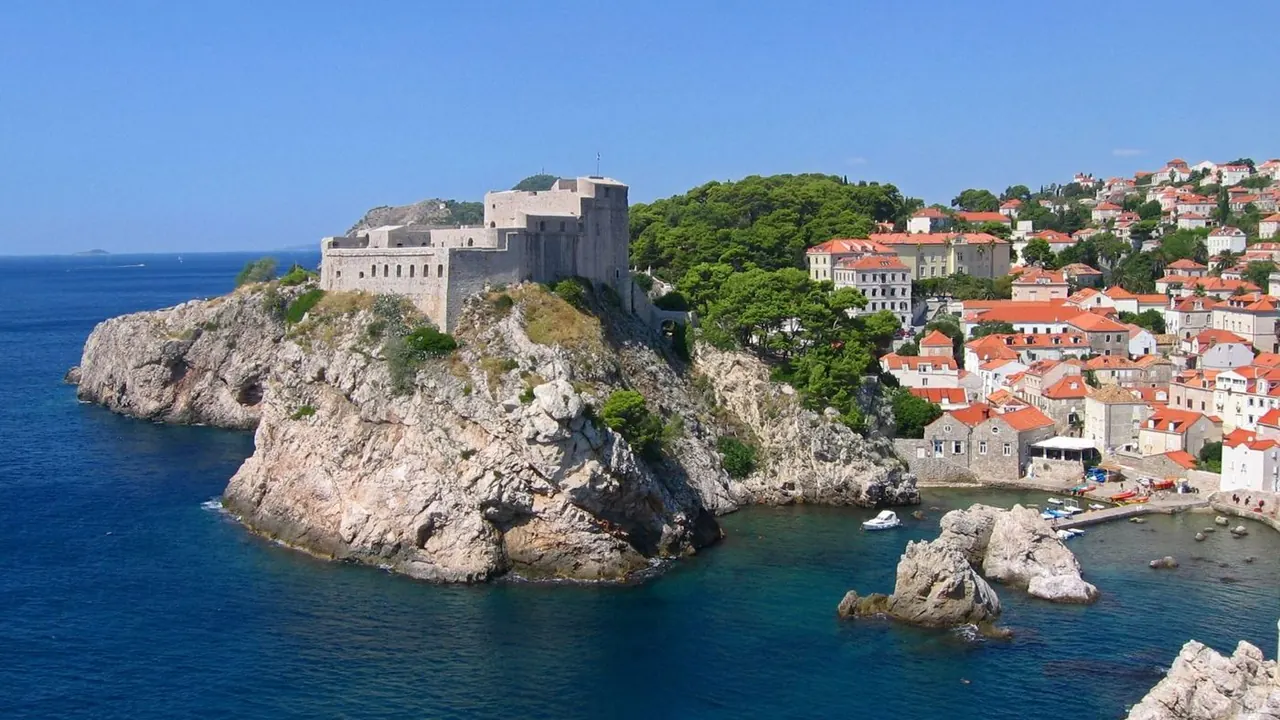
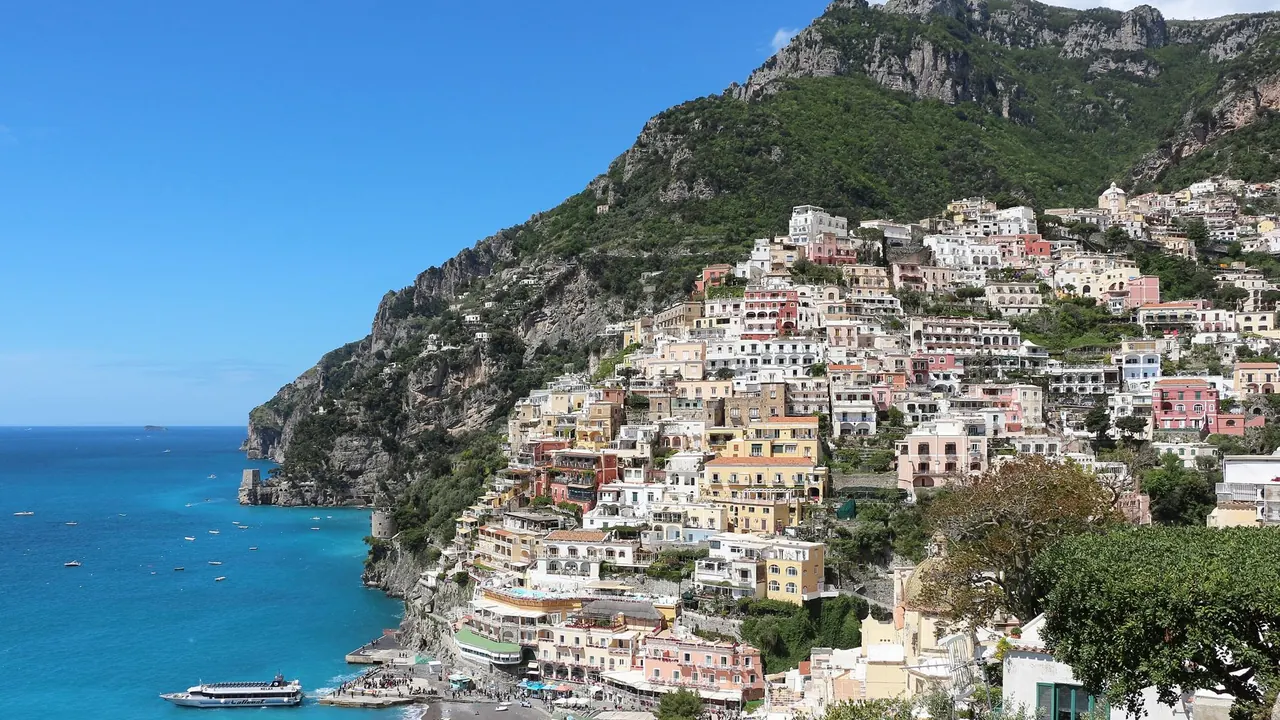
Photos: Dubrovnik by Natalia Semenova, CC BY 3.0, cropped; Positano by Bernard Gagnon, CC BY 4.0, cropped.
Dubrovnik or Positano?
Our verdict in twelve categories, each scored against the same fixed benchmark cities, and the climate month by month, so you can choose for your trip.
Choose Dubrovnik for
- culture and sights
- getting around
- families
Dubrovnik suits travellers who want a real city to explore between swims. The walled Old Town, its monasteries and palaces fill two or three days, the evenings have more going on, and buses, ferries and calm coves in Lapad make it the easier base for families. It is expensive, but a little less punishing than its Italian rival.
Choose Positano for
- day trips
- shopping
- wellness
Positano is the choice for scenery, walking and a slow, stylish stay by the sea. The cliffs and the Path of the Gods are more dramatic than anything around Dubrovnik, Capri, Amalfi, Ravello and Pompeii all lie within a day, and the hotel terraces are made for doing very little. Expect stairs everywhere, very high costs and not much to see in town itself.
Scoreboard
Twelve categories on one fixed scale from 0 to 100. The shaded stretch is the gap between the two.
Your match
Pick a travel style or drag the sliders, and both match scores follow your weighting.
Wins on culture and sights and getting around with your weighting.
Wins on day trips and shopping with your weighting.
What matters to you?
Category by category
What the scores mean for a trip.
Beaches & swimming
Both are good for swimming, but the shore is very different. Dubrovnik is mostly rocks and concrete platforms below the walls, the small pebble beach at Banje and the coves of Lapad and Babin Kuk, with the better swimming a boat ride away on Lokrum, the Elafiti islands or the sandy cove at Sunj on Lopud.
Positano offers a proper beach scene instead: the long curve of Spiaggia Grande with its rows of loungers, quieter Fornillo, and Arienzo and Laurito down long stairways. The dark sand and pebbles shelve steeply, so water shoes help, and in both places every spot is taken early in high summer.
Food & drink
Dubrovnik eats a little better, mainly because of what lies around it: oysters and mussels from Ston, Plavac Mali and Dingac from the Peljesac peninsula, and a morning fish market at Gruz. The trick is to leave the Stradun for family-run konobas in Lapad or the Konavle villages.
Positano is about the long lunch on a terrace, with clams, seafood scialatielli and lemon desserts, but menus repeat one another, there is almost no market or everyday eating, and many kitchens shut between November and Easter.
Culture & sights
This is where the two are furthest apart. Dubrovnik is a complete walled city: almost 2km of walls, the marble Stradun, the Rector's and Sponza palaces, an old monastery pharmacy, Dalmatian painting at the Dominicans and a museum on Mount Srd recalling the 1991-92 siege.
Positano has its majolica-domed church with a Byzantine icon and a Roman villa preserved beneath it by Vesuvius, and the rest of its appeal is the stacked pastel town itself. For serious sightseeing you would travel on to Pompeii or Naples.
Nightlife
Neither is a night-out destination, but Dubrovnik gives you more to do after dinner. There are sunset bars cut into the rocks outside the seaward walls, late wine and cocktail bars in the lanes off the Stradun, a club inside the Revelin fortress and more along the Lapad promenade.
Positano's evening is aperitivo, a long dinner and perhaps the cave club at the end of Spiaggia Grande. It suits couples well, and both towns go quiet once the season ends.
Nature & outdoors
Positano has the more spectacular landscape. The Lattari mountains drop sheer into the sea, the Path of the Gods runs along the cliffs high above the lemon terraces, and steeper trails climb through chestnut woods to ridges over 1,000m, with boat trips to grottoes and the Li Galli islets below.
Dubrovnik's outdoors are gentler and more about the sea and islands: kayaking around the walls to Lokrum, the cable car or path up Mount Srd, cycling between Elafiti villages, and the saltwater lakes and pine forest of the Mljet national park.
Day trips
Positano sits within reach of some of Italy's great sights. Ferries run to Amalfi and Ravello, Capri is about half an hour by boat, and Pompeii, Herculaneum and the temples of Paestum make full days out, though most ferries stop outside spring to autumn.
Dubrovnik's day trips go across borders. You can see Kotor and Perast in Montenegro, Ottoman Trebinje and Mostar in Bosnia, plus Ston's walls and Cavtat closer to home. It is an interesting mix, but summer border queues can eat up much of the day.
Good for families
Dubrovnik is the more workable of the two with children. Staying in Lapad or Babin Kuk puts calm, clear coves on the doorstep, and the cable car, the walls, Lokrum boat rides and the aquarium in the St John fortress give some variety, even if the Old Town's stairs and summer crowds are tiring.
Positano is built almost entirely of steps, has nothing for children beyond the sea, and its beaches drop off quickly. Older children who like boats and swimming manage, but toddlers do not.
Getting around
Dubrovnik is far simpler to get about. The car-free Old Town takes ten minutes to cross, city buses link Lapad, Babin Kuk, Gruz and Ploce to the Pile gate, and boats run from Gruz and the Old Harbour to Lokrum, the Elafiti islands and Cavtat. The hills still make walking between districts harder than it looks.
In Positano almost every walk means hundreds of steps. Coastal buses fill up and crawl in summer, a car is a burden on the narrow road, and the ferries that make life easy run mostly in season.
Shopping & style
Positano has a look you can take home: lanes of boutiques selling white linen and printed resort wear, sandal makers cutting pairs to fit, and hand-painted ceramics. It is all one style, but it is a genuine pleasure to browse.
Dubrovnik's shopping is mostly souvenirs. The worthwhile finds are crafts such as Konavle embroidery, coral and silver filigree, and the dried figs and candied orange peel at the morning market on Gunduliceva Poljana.
Affordability
Both are among the costliest places on the Mediterranean, but Dubrovnik is the less painful. Moving out to Lapad, Gruz or Cavtat, eating at konobas and riding the city buses brings a stay within reach of more budgets.
Positano is in a class of its own for cost, with sea-view rooms, beach loungers and terrace tables all priced for the view. The usual escape is to sleep in Praiano or Sorrento and come in by bus or ferry.
Live music & performing arts
Dubrovnik has the stronger offer, thanks largely to its Summer Festival, held every July and August since 1950, which stages theatre, concerts and dance at Fort Lovrijenac and in the Rector's Palace atrium. The Dubrovnik Symphony Orchestra keeps some music going through the year.
Positano itself has only occasional church and square concerts. The real draw is an evening trip to Ravello's classical festival on its terrace above the sea, and Naples for opera.
Wellness & relaxation
Positano is better set up for doing nothing in comfort. Its upscale hotels have spas and pools cut into the cliff, and a slow lunch over the sea is the town's natural rhythm, especially in May, June and late September.
Dubrovnik's spas are confined to the larger hotels in Lapad, Babin Kuk and towards Ploce. The calm there is better found by moving out to the Elafiti islands or Cavtat than by staying near the crowded Old Town.
When should you go?
Pick your month. The climate figures are measured averages, not a forecast.
Dubrovnik in July
Positano in July
Daytime high, °C
Rainfall in the month, mm
Where the figures come from
Dubrovnik has no rain gauge within 25 km of the centre, so its rainfall comes from a gridded climate dataset read at the city rather than from a gauge further away.
Dubrovnik's sunshine is measured 83 km from the centre, at Mostar.
Positano's temperatures are measured 25 km from the centre, at Capri.
Positano has no rain gauge within 25 km of the centre, so its rainfall comes from a gridded climate dataset read at the city rather than from a gauge further away.
Positano's sunshine is measured 59 km from the centre, at Grazzanise.
Temperature and rainfall are climate normals, averaged over the years shown. Dubrovnik: 1999-2020 (sunshine 1991-2020, rainfall 1991-2020) normals, Dubrovnik / Cilipi (15.3 km from centre). Positano: 2005-2025 (sunshine 1991-2020, rainfall 1991-2020) normals, Capri (25.3 km from centre).
The two share almost the same summer. Both are warm enough for the beach from June to early October, with the sea reaching about 26°C in August, and July and August bring highs around 29°C with long, dry, sunny days. That heat makes the stairs of both towns and the bare hillsides above them hard work at midday, so May, June and late September are the better months for walking and sightseeing, with the sea still pleasant in June and September.
The real difference comes with autumn. Dubrovnik turns properly wet from September, and November brings around 179mm of rain against 127mm at Positano, which also stays a degree or two milder through the winter. Neither is a beach destination from November to April, but Positano's winter is the gentler of the two, while Dubrovnik's spring is drier than its autumn.
Which traveller are you?
On a culture and arts trip, Dubrovnik wins. You sleep beside the history, can walk it early before the crowds arrive and catch festival evenings in summer. From Positano, culture means a day out by boat or bus.
For an outdoors trip, Dubrovnik gives gentler days of paddling and cycling between islands. Positano is the stronger base for real walking, which starts at your door, though the climbs are steep and best left for spring or autumn.
On a family trip with children, Dubrovnik is far easier. Base yourselves by a calm beach, use buses rather than hauling a pushchair up steps, and save the Old Town for the evenings. Positano suits only older children who love boats.
Before you go
| Measure | Dubrovnik | Positano |
|---|---|---|
| Official language | Croatian | Italian |
| Currency | Euro (EUR) | Euro (EUR) |
| Sockets | CF230 V, 50 Hz | CFL230 V, 50 Hz |
| Driving side | Right | Right |
| Time zone | UTC+1, UTC+2 in summer | UTC+1, UTC+2 in summer |
| Emergency number | 112 | 112 |
| Elevation | 10 m | 142 m |
| Main airport | Dubrovnik Ruđer Bošković Airport (DBV)16 km from centre76 non-stop destinations | Naples International Airport (NAP)33 km from centre131 non-stop destinations |
| Public holidays this year | 14 days | 13 days |
By the numbers
| Measure | Dubrovnik | Positano |
|---|---|---|
| City population | 41,562 | 3,729 |
| People per km² | - | 429 |
| Museums within 10 km | 7 | 10 |
| UNESCO World Heritage sites within 50 km | 3 | 5 |
| Swim season, months above 21 °C | 5 months | 5 months |
Where else could you go?
Every comparison below shares a destination with this one, so you can follow Dubrovnik or Positano somewhere new.