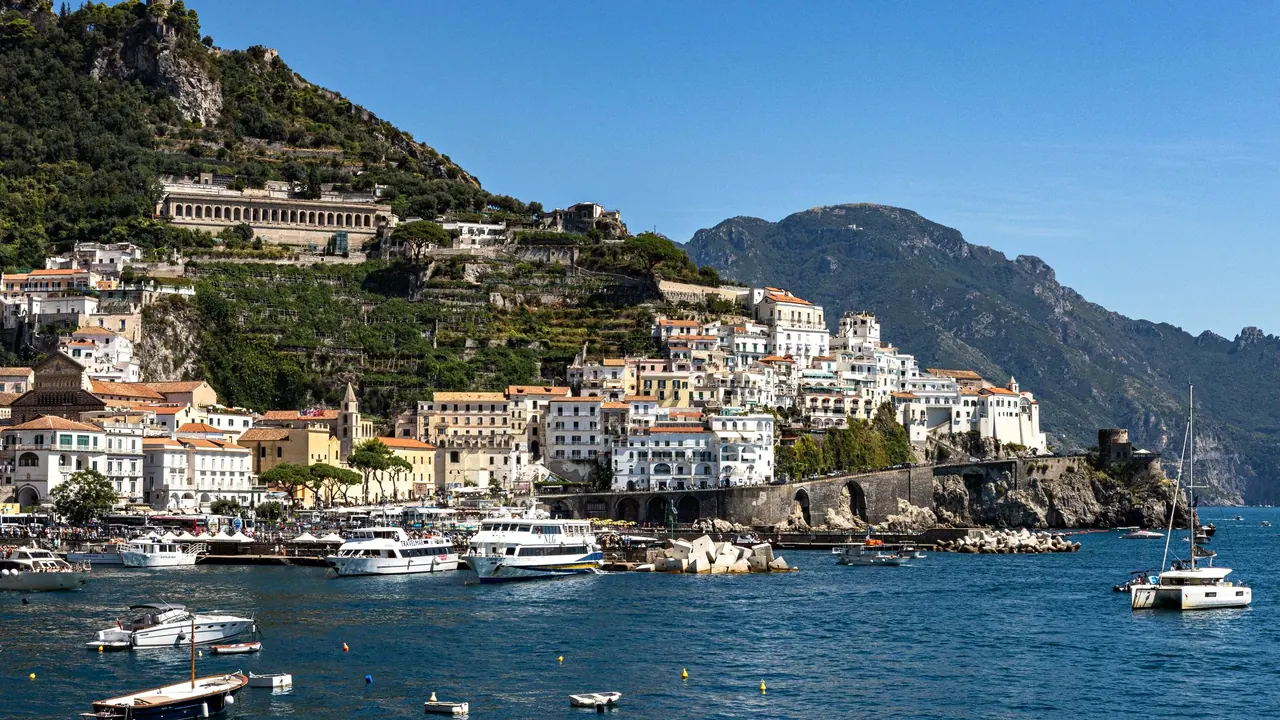
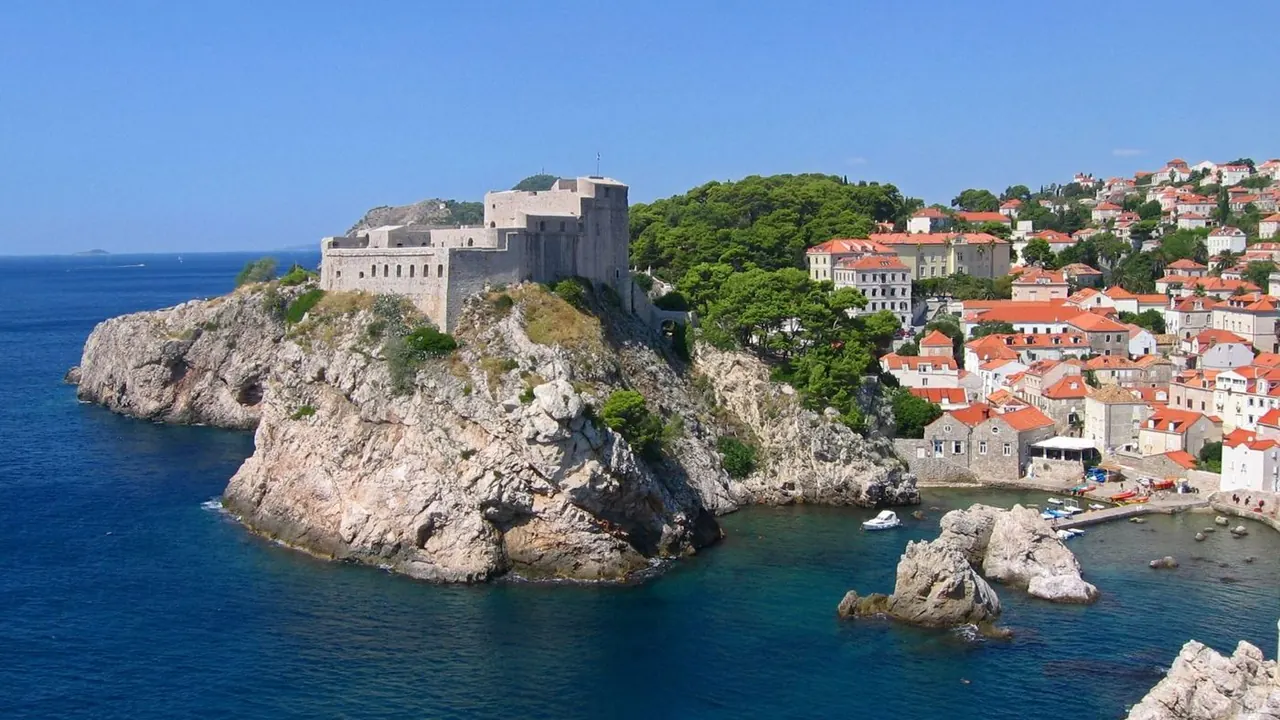
Photos: Amalfi by Oleksandra Zelena, Pexels License; Dubrovnik by Natalia Semenova, CC BY 3.0, cropped.
Amalfi or Dubrovnik?
Our verdict in twelve categories, each scored against the same fixed benchmark cities, and the climate month by month, so you can choose for your trip.
Choose Amalfi for
- day trips
- nature and the outdoors
- shopping
Amalfi suits travellers who come for the landscape and plan to keep moving. The town itself takes half a day, but it sits at the centre of a coast of cliff paths, lemon terraces and famous neighbours. The Path of the Gods, Ravello's gardens, Positano by ferry and Capri, Pompeii or Paestum are all within reach. Choose it if you want walking and boat days, can do without much going on after dinner, and don't mind paying well for the view.
Choose Dubrovnik for
- culture and sights
- nightlife
- families
Dubrovnik is the better pick if the place itself is what you want to explore. The walled Old Town has enough history to fill two or three days. The swimming is easier, from the rocks below the walls, the Lapad coves and Lokrum, and evenings run a little later. It is also kinder to families, though still far from cheap. Its excursions take you across borders, to the Bay of Kotor in Montenegro and Trebinje or Mostar in Bosnia, rather than along one celebrated stretch of coast.
Scoreboard
Twelve categories on one fixed scale from 0 to 100. The shaded stretch is the gap between the two.
Your match
Pick a travel style or drag the sliders, and both match scores follow your weighting.
Wins on day trips and nature and the outdoors with your weighting.
Wins on culture and sights and nightlife with your weighting.
What matters to you?
Category by category
What the scores mean for a trip.
Beaches & swimming
Both coasts swim off pebbles and rocks rather than sand, but Dubrovnik makes it easier to find a good spot. Its swimming is spread out: ladders off the rocks under the seaward walls, Banje beside the Old Town, and the coves of Lapad and Babin Kuk where most visitors stay.
Amalfi has one main town beach, Marina Grande, and in summer most of it is covered by beach-club loungers. The better swims mean a walk to Atrani, stairs down to Santa Croce, or a boat. Dubrovnik's offshore swimming is also more varied. There is Lokrum a few minutes out, quiet Elafiti bays, and a rare sandy cove at Sunj on Lopud.
Food & drink
The two are evenly matched, both serving honest coastal cooking with a centre that caters to day crowds. The difference is in what reaches the plate. In Amalfi the flavours are lemon and anchovy: sfusato lemons, Cetara's colatura, scialatielli with clams, and limoncello to finish.
Dubrovnik's table is Dalmatian. You get black risotto, octopus salad, slow-cooked pasticada, and Ston oysters you can eat at the farm itself, with Peljesac reds such as Dingac on the side. In both places the better meals are away from the main square or the Stradun, in back-alley trattorias or village konobas.
Culture & sights
Dubrovnik is far ahead here. Its walls are a sight in their own right, and inside them stand a palace, monasteries, a baroque church and a fort on its own rock. Together they make a whole intact city that rewards two or three days, with the 1991-92 siege remembered on Mount Srd.
Amalfi's heritage is fine but brief. The striped Duomo with its Constantinople bronze doors, the Chiostro del Paradiso, the republic's Arsenale and the paper museum up the valley make a good morning, and after that you head back to the coast.
Nightlife
Neither suits serious clubbing, but Dubrovnik at least gives you a night out. In summer there are sunset drinks at the bars cut into the rocks below the walls, wine bars in the lanes off the Stradun, and dancing at the club inside the Revelin fortress.
Amalfi ends its evening with dinner and a gelato on Piazza Duomo. Once the last ferries and buses leave, the town goes quiet, and anything livelier means a trip to Salerno or Naples.
Nature & outdoors
Both have mountains dropping into a clear sea, but Amalfi's landscape is the more dramatic and the more walkable. The Path of the Gods above Positano is one of Europe's great coastal walks. The Valle delle Ferriere offers waterfalls and ferns from the back of town, and old mule stairways climb to Ravello and the hill hamlets.
Dubrovnik's outdoors is more about the islands. You can kayak around the walls to Lokrum, cycle between Elafiti villages, or walk among the saltwater lakes and pine forest of Mljet. Mount Srd gives the big view over it all.
Day trips
Amalfi has the stronger day trips, and the places themselves are bigger names. Ravello and Positano are close, Capri is a ferry ride away, and the Greek temples of Paestum and the ruins of Pompeii and Herculaneum each fit into a full day. Ferries run only from spring to autumn, though.
From Dubrovnik the trips cross borders. Kotor and Perast in Montenegro are the classic outing, Trebinje's Ottoman bridge is under an hour away, and closer to home there are Ston's walls and the car-free Elafiti islands. Both suffer in summer, but in different ways. On the Amalfi coast the delay is the slow crawl along the single cliff road and buses too full to board. From Dubrovnik it is the border queue, which can add hours to a day in Montenegro or Bosnia.
Good for families
Neither town is built with children in mind, though both feel safe and welcoming. Amalfi works best for families with older children who swim confidently and can manage long climbs. They will enjoy boat trips into the sea caves and the walks up the valley past old mills. With toddlers, the shape of the town is the problem, and a base with more space and sand elsewhere on the coast is easier.
Dubrovnik is more forgiving with younger children because you can plan around its difficulties. Walk the walls early in the morning or in the evening, when the summer heat and cruise-day crowds ease. Save the steep side streets for older legs, since a pushchair only really manages on the flat Stradun.
Getting around
Dubrovnik is a little easier to get around. Its hotel districts are spread out but linked by a straightforward city bus to the Pile gate, and taxi boats run to Lokrum and Cavtat. A hire car earns its keep for Konavle or Montenegro.
Amalfi is a single small town you cross on foot, and the coast's buses and ferries all start from its harbour. In summer, though, full buses pass waiting queues and the one cliff road jams, so a car only adds to the trouble. Both towns are heavy going for anyone who struggles with steps.
Shopping & style
Amalfi has more worth bringing home. Its handmade cotton paper, still produced in the valley, is a real local craft, alongside hand-painted majolica, linen and sandals made to measure, even if the limoncello shops repeat themselves.
Dubrovnik's lanes are mostly souvenir stalls. Look past them for Konavle embroidery, silver filigree, and the dried figs and candied orange peel at the Gunduliceva Poljana morning market.
Affordability
Both are expensive, but Amalfi is the harder on the wallet. Sea-view rooms are priced like the dearest capitals, there is little cheap accommodation, and loungers and boat hire add up. The local buses are the only real bargain.
Dubrovnik is costly too, especially in and near the Old Town in summer. It does have more ways to soften the cost: rooms in Lapad, Gruz or Cavtat, konobas away from the Stradun, and spring or autumn stays, when room prices drop sharply.
Live music & performing arts
Both are thin for most of the year, and each is lifted by one notable summer festival. Ravello, up the hill from Amalfi, holds orchestral and chamber concerts on the terrace of Villa Rufolo, high above the sea.
The Dubrovnik Summer Festival, running since 1950, is broader and takes place inside the city itself. It stages theatre, dance and music in Fort Lovrijenac and the Rector's Palace. The city's symphony orchestra also plays through the year.
Wellness & relaxation
Neither has a bathing tradition, and spa treatments in both mostly mean the larger hotels. What differs is where to find calm. Around Amalfi it is up in the hill hamlets, with long shaded lunches and early swims off the rocks. From Dubrovnik you would cross by ferry to the Elafiti islands or settle in Cavtat, where the days follow the harbour.
When should you go?
Pick your month. The climate figures are measured averages, not a forecast.
Amalfi in July
Dubrovnik in July
Daytime high, °C
Rainfall in the month, mm
Where the figures come from
Amalfi's temperatures are measured 65 km from the centre, at Grazzanise.
Amalfi has no rain gauge within 25 km of the centre, so its rainfall comes from a gridded climate dataset read at the city rather than from a gauge further away.
Dubrovnik has no rain gauge within 25 km of the centre, so its rainfall comes from a gridded climate dataset read at the city rather than from a gauge further away.
Dubrovnik's sunshine is measured 83 km from the centre, at Mostar.
Temperature and rainfall are climate normals, averaged over the years shown. Amalfi: 1991-2020 normals, Grazzanise (64.7 km from centre). Dubrovnik: 1999-2020 (sunshine 1991-2020, rainfall 1991-2020) normals, Dubrovnik / Cilipi (15.3 km from centre).
Both coasts follow the same Mediterranean pattern, and the sea warms at the same pace. From June to September it is comfortable for swimming in either place, reaching 26°C in August, and May and early October are possible for hardier swimmers. Amalfi runs a little hotter in high summer, with afternoons around 31°C in July and August. That makes its exposed trails and stairways heavy going at midday, while Dubrovnik stays a couple of degrees milder. Both are dry and very sunny from June to August.
For walking, May, June and late September are the best months on either coast. When the rain returns in autumn, the gap is clear. Amalfi's wettest month, November, brings about 143mm, while Dubrovnik is much wetter through late autumn and early winter, with 179mm in November and almost as much in December. Winters in both are cool and cloudier, and suit quiet sightseeing better than the coast.
Which traveller are you?
For a culture and arts trip, Dubrovnik is the clear choice. The full circuit of its walls, the Rector's Palace, the Franciscan and Dominican monasteries and Fort Lovrijenac make a complete walled city. Amalfi's Duomo, cloister and Arsenale fill only a morning.
On a family trip with children, Dubrovnik is the easier base. You can stay in Lapad or Babin Kuk, close to calm coves and a city bus. Children can ride the cable car, visit the small aquarium and take boats to Lokrum. In Amalfi, stairways, crowded pebbles and winding buses wear everyone out.
On an outdoors trip, Amalfi gives you more. The Path of the Gods, the waterfalls of the Valle delle Ferriere and the old mule stairways up to Ravello and Pontone are walks of real stature. Dubrovnik's Mount Srd, kayaking and island cycling are pleasant but gentler.
Before you go
| Measure | Amalfi | Dubrovnik |
|---|---|---|
| Official language | Italian | Croatian |
| Currency | Euro (EUR) | Euro (EUR) |
| Sockets | CFL230 V, 50 Hz | CF230 V, 50 Hz |
| Driving side | Right | Right |
| Time zone | UTC+1, UTC+2 in summer | UTC+1, UTC+2 in summer |
| Emergency number | 112 | 112 |
| Elevation | 6 m | 10 m |
| Main airport | Naples International Airport (NAP)38 km from centre131 non-stop destinations | Dubrovnik Ruđer Bošković Airport (DBV)16 km from centre76 non-stop destinations |
| Public holidays this year | 13 days | 14 days |
By the numbers
| Measure | Amalfi | Dubrovnik |
|---|---|---|
| City population | 4,729 | 41,562 |
| People per km² | 830 | - |
| Museums within 10 km | 8 | 7 |
| UNESCO World Heritage sites within 50 km | 5 | 3 |
| Swim season, months above 21 °C | 5 months | 5 months |
Where else could you go?
Every comparison below shares a destination with this one, so you can follow Amalfi or Dubrovnik somewhere new.