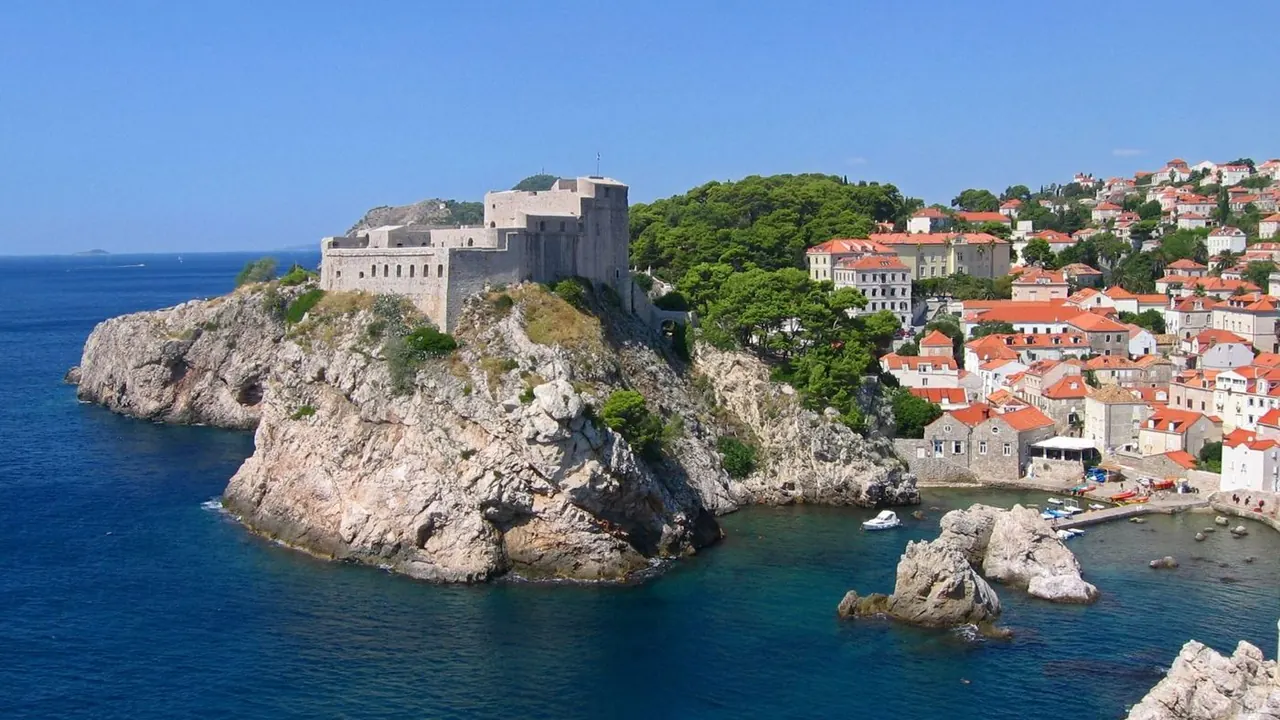
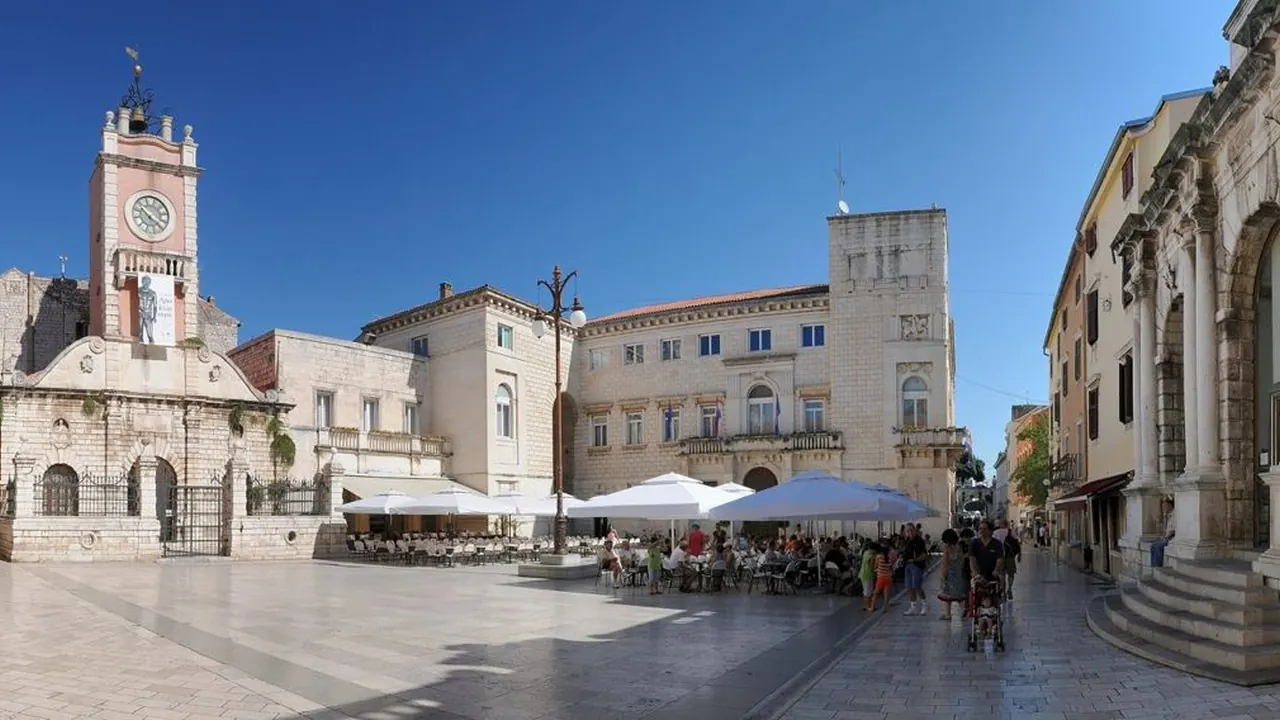
Photos: Dubrovnik by Natalia Semenova, CC BY 3.0, cropped; Zadar by Böhringer Friedrich, CC BY-SA 2.5, cropped.
Dubrovnik or Zadar?
Our verdict in twelve categories, each scored against the same fixed benchmark cities, and the climate month by month, so you can choose for your trip.
Choose Dubrovnik for
- culture and sights
- beaches
- food and drink
Dubrovnik is for the traveller who wants one of the great walled towns of the Mediterranean and accepts what that costs. The unbroken walls, the Stradun and the palaces and monasteries inside them give it far more to see than Zadar has. Boat trips to Lokrum and the Elafiti islands, and a day across the border in Montenegro, fill out a short and memorable stay.
Choose Zadar for
- prices
- nature and the outdoors
- families
Zadar suits someone who wants the Dalmatian coast as a base rather than a showpiece. It is much cheaper and its flat old town is easier to get around. The mountains, waterfalls and islands within reach, from Paklenica to the Kornati and Krka, make it the better choice for anyone planning to spend most days outdoors.
Scoreboard
Twelve categories on one fixed scale from 0 to 100. The shaded stretch is the gap between the two.
Your match
Pick a travel style or drag the sliders, and both match scores follow your weighting.
Too close to call, 2 points apart
Wins on culture and sights and beaches with your weighting.
Wins on prices and nature and the outdoors with your weighting.
What matters to you?
Category by category
What the scores mean for a trip.
Beaches & swimming
The two are close here. Both have the same clear Adriatic, and both have pebble and concrete platforms in town rather than sandy beaches. In Dubrovnik you swim off the rocks below the walls or at Banje with the Old Town right behind you, and the best water is a boat ride away on Lokrum or the Elafiti islands, where Sunj on Lopud is a rare sandy cove.
Swimming in Zadar itself is plainer: off the promenade, or at Kolovare and pine-shaded Borik. Sand is easier to reach, though. The long, shallow beaches at Nin are twenty minutes north, and Sakarun on Dugi Otok, with its pale sand and turquoise water, makes a full day out.
Food & drink
Neither city is a reason to travel for food, and both serve much the same Dalmatian menu of grilled fish, black risotto and octopus. The local specialities differ. Around Dubrovnik they are the Ston oysters and mussels and the red wines of Peljesac. Zadar has lamb cooked under the peka bell, Pag cheese and its own Maraschino liqueur.
In Dubrovnik, eating badly is easy along the Stradun, where menus are aimed at cruise visitors, so good meals take a trip out to Lapad, Gruz or the villages of Konavle. The konobas on Zadar's peninsula are much alike, and the market by the walls is a good way to start a morning.
Culture & sights
Dubrovnik has the stronger set of sights. The walls run unbroken for almost 2km, and with the Rector's Palace, the Franciscan and Dominican monasteries and Fort Lovrijenac they make a remarkably intact walled city. The museum on Mount Srd adds the story of the siege of 1991-92.
Zadar offers age rather than grandeur. The Roman forum, the round ninth-century St Donatus and the Museum of Ancient Glass are all a few minutes' walk apart, and the Sea Organ is a modern sight Dubrovnik has nothing like. It is rewarding, but there is noticeably less to see.
Nightlife
Both are small, summer-only scenes that start with a drink at sunset. Dubrovnik's signature is the bars cut into the rocks outside the seaward walls, and it has a club inside the Revelin fortress. Zadar gathers on the Riva by the Sea Organ before moving on to the café-bars of Kalelarga.
The real difference is Zrće on Pag, about an hour from Zadar, where a young crowd finds proper beach clubbing in high summer. Dubrovnik has nothing like it nearby, and both towns go quiet once the season ends.
Nature & outdoors
Outdoors in Dubrovnik is mostly about the view. You can climb or take the cable car up Mount Srd, kayak under the walls, wander wooded Lokrum, or go further out to the saltwater lakes of Mljet. It is beautiful, but the list is short.
Zadar has far more within reach. Paklenica's gorges offer serious hiking and some of Croatia's best climbing, boats run to the stark Kornati and the cliffs of Telašćica, and both Krka and Plitvice can be done in a day. For several active days, Zadar is the better base.
Day trips
Both have a good spread of outings, but of different kinds. Dubrovnik's advantage is the border: the Bay of Kotor and Perast in Montenegro, and Trebinje or, on a long day, Mostar in Bosnia and Herzegovina. Summer queues at the border can cost hours.
Zadar's trips stay inside Croatia and run along the motorway, to Šibenik's cathedral and to Trogir and Split. Closer in are tiny Nin and Pag town, and the ferry reaches car-free Silba.
Good for families
Neither city has much made for children, and in both the sea carries a family day. Dubrovnik has a few more small treats, such as the aquarium in the St John fortress, the cable car and the boat to Lokrum. Its stairs make pushchairs a struggle, though, and families usually stay out in Lapad or Babin Kuk.
Zadar is easier on foot. The old town is flat and car-free, the waterfront suits scooters, and the lit tiles of the Greeting to the Sun hold children's attention after dark. Nin's shallow sand is the best beach for small children in either place.
Getting around
Both centres are car-free and small enough to cross on foot in a quarter of an hour or less. The ground is what differs. Dubrovnik's side streets are steep stairways and most hotels are in outer districts linked by city buses. Zadar's peninsula is flat, and Kolovare beach is within walking distance.
Both rely on ferries from the harbour for the islands. Zadar's national parks and coastal towns really call for a hire car or an organised excursion, while in Dubrovnik a car is only worth having for Konavle, Ston and the border crossings.
Shopping & style
Shopping is a sideline in both, with no fashion streets worth the trip. Dubrovnik's Old Town is mostly souvenir shops, and the things worth buying are Konavle embroidery, coral and filigree jewellery, and the figs and candied orange peel from the Gunduliceva Poljana market. Zadar's marble Kalelarga has some fashion chains and galleries, and the best things to take home are Maraschino, Pag cheese and Pag lace.
Affordability
The gap is widest in July and August, when most people travel. A summer room in or near Dubrovnik's Old Town costs what it would in a major Western European capital, the restaurants along the Stradun charge extra, and walking the walls, riding the cable car and taking boats to Lokrum soon add up. Staying in Lapad, Gruz or Cavtat and coming in spring or autumn, when room prices drop sharply, softens the bill, but Dubrovnik stays the dearer of the two.
Zadar's rooms near the peninsula also cost more in high summer, but they start from a lower base. Outside July and August, private apartments make a longer stay affordable. The old town costs little to enjoy, since the forum, the waterfront and the Sea Organ are free to walk around. What pushes up a Zadar budget is the trips out: park entry at Krka and Paklenica, and boat excursions to the Kornati.
Live music & performing arts
Both have a thin calendar for most of the year and one summer highlight. Dubrovnik's Summer Festival, held every July and August since 1950, mixes theatre, dance and concerts in open-air settings such as Fort Lovrijenac and the atrium of the Rector's Palace.
Zadar's highlight is more intimate. The Musical Evenings in St Donatus bring early and chamber music into the ninth-century church, and in summer you may hear klapa singing in the squares.
Wellness & relaxation
Neither city has a spa tradition, and wellness in both means hotel spas, in Lapad and Babin Kuk or at Borik. Zadar adds the mineral-rich mud of Nin's lagoon and a slower daily rhythm, ending with sunset on the Sea Organ steps.
Dubrovnik's crowded summer centre is hard to relax in. The restful version of a stay there means the Elafiti islands or Cavtat, ideally in spring or autumn.
When should you go?
Pick your month. The climate figures are measured averages, not a forecast.
Dubrovnik in July
Zadar in July
Daytime high, °C
Rainfall in the month, mm
Where the figures come from
Dubrovnik has no rain gauge within 25 km of the centre, so its rainfall comes from a gridded climate dataset read at the city rather than from a gauge further away.
Dubrovnik's sunshine is measured 83 km from the centre, at Mostar.
Zadar has no rain gauge within 25 km of the centre, so its rainfall comes from a gridded climate dataset read at the city rather than from a gauge further away.
Temperature and rainfall are climate normals, averaged over the years shown. Dubrovnik: 1999-2020 (sunshine 1991-2020, rainfall 1991-2020) normals, Dubrovnik / Cilipi (15.3 km from centre). Zadar: 1999-2020 (rainfall 1991-2020) normals, Zadar / Zemunik (9.9 km from centre).
Both cities follow the same Adriatic pattern. The sea is warm enough for swimming from June to September and is warmest in August, at about 26°C off Dubrovnik and 25°C off Zadar. Zadar is hotter in midsummer, reaching 31°C in July and August against Dubrovnik's 29°C, so its open waterfront and the hills inland are hard going at midday. Dubrovnik's summer is very sunny, with more than 300 hours of sunshine in each of those two months.
Rain is the bigger difference. Dubrovnik is a much wetter place: heavy rain returns in September, and November and December are the wettest months of the year. Zadar stays fairly dry all year and gets almost no rain in high summer. In both cities, May and late September are the best time for walking the streets in comfortable warmth, and late September is still warm enough to swim. Winters are mild but cool in both, good for quiet sightseeing but not for the sea.
Which traveller are you?
For a culture and arts trip, Dubrovnik is the stronger choice. Its walls, palaces, monasteries and Fort Lovrijenac form a complete historic city, and in July and August the Summer Festival stages theatre and concerts in those same buildings.
On an outdoors trip, Zadar makes the better base. The gorges and climbing routes of Paklenica, boat trips to the Kornati and the waterfalls of Krka are all within easy reach, while Dubrovnik's outdoors mostly means Mount Srd, Lokrum and a kayak round the walls.
For a trip on a tight budget, your money goes much further in Zadar. Private apartments, inexpensive ferries and fairly priced konobas keep costs down. Dubrovnik is Croatia's most expensive city and stays costly even if you sleep and eat away from the Old Town.
Before you go
| Measure | Dubrovnik | Zadar |
|---|---|---|
| Official language | Croatian | Croatian |
| Currency | Euro (EUR) | Euro (EUR) |
| Sockets | CF230 V, 50 Hz | CF230 V, 50 Hz |
| Driving side | Right | Right |
| Time zone | UTC+1, UTC+2 in summer | UTC+1, UTC+2 in summer |
| Emergency number | 112 | 112 |
| Elevation | 10 m | 5 m |
| Main airport | Dubrovnik Ruđer Bošković Airport (DBV)16 km from centre76 non-stop destinations | Zadar Airport (ZAD)10 km from centre66 non-stop destinations |
| Public holidays this year | 14 days | 14 days |
By the numbers
| Measure | Dubrovnik | Zadar |
|---|---|---|
| City population | 41,562 | 70,779 |
| Museums within 10 km | 7 | 1 |
| UNESCO World Heritage sites within 50 km | 3 | 2 |
| Swim season, months above 21 °C | 5 months | 4 months |
Where else could you go?
Every comparison below shares a destination with this one, so you can follow Dubrovnik or Zadar somewhere new.