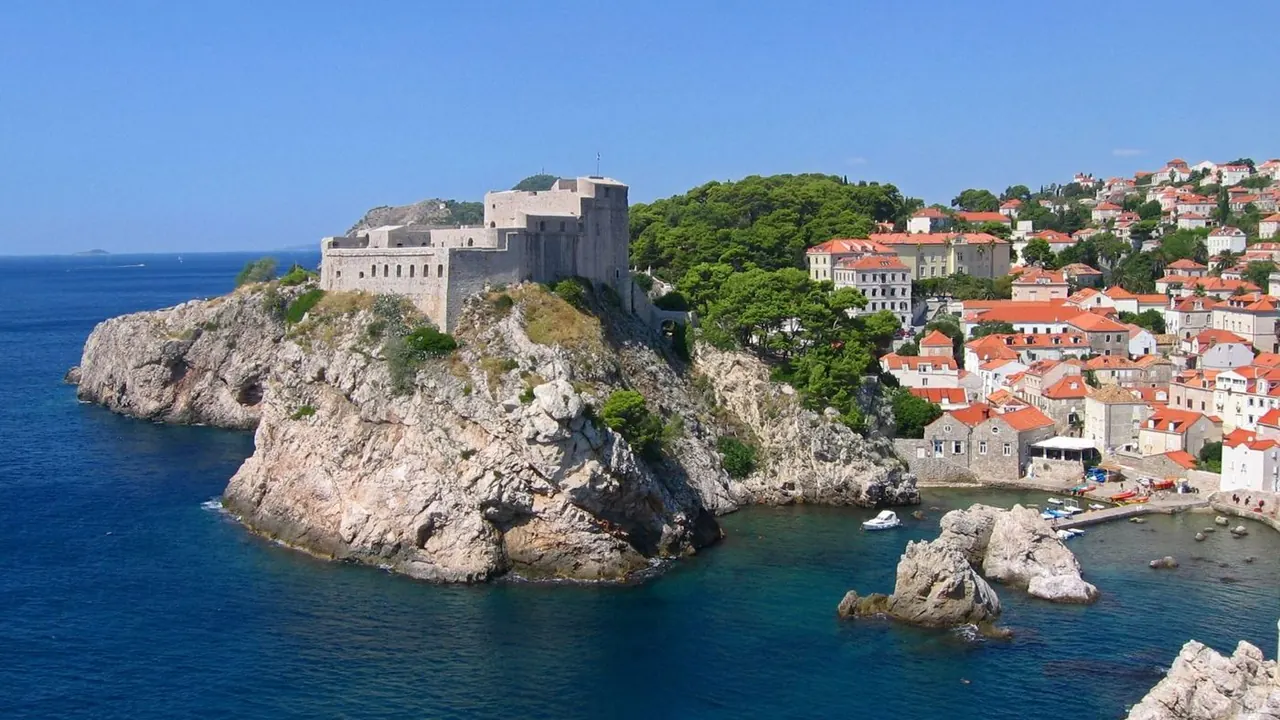
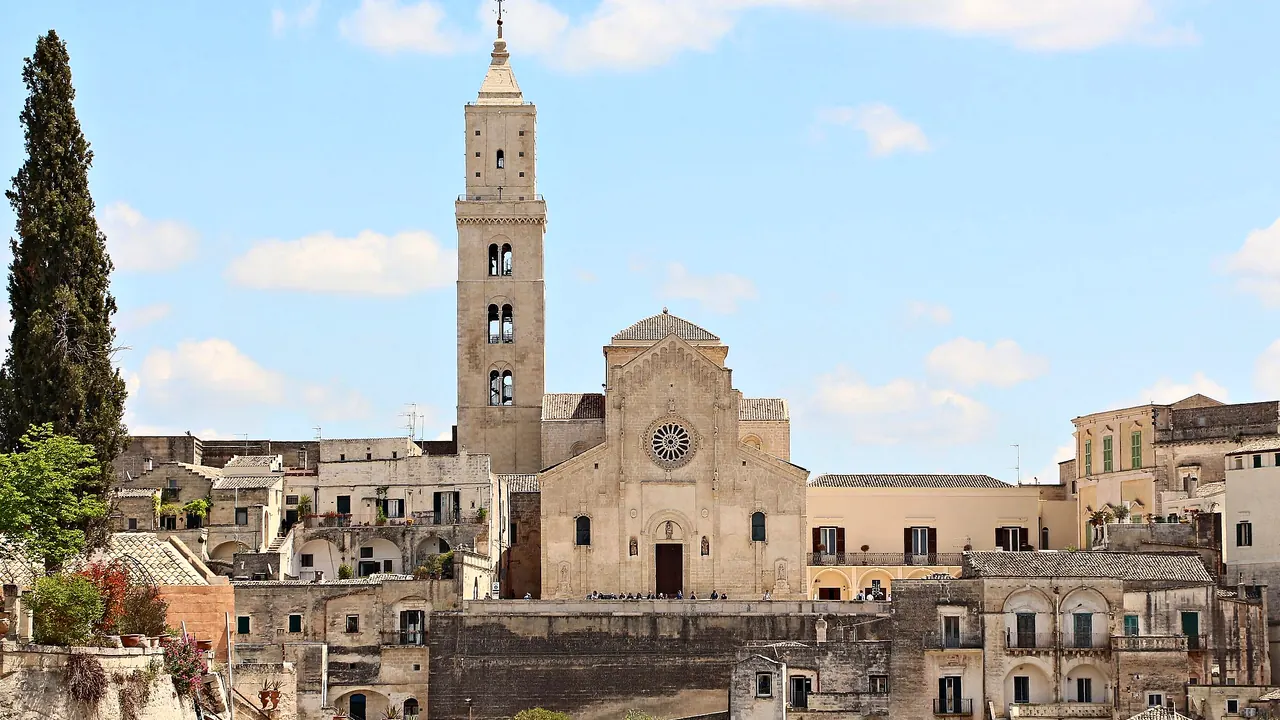
Photos: Dubrovnik by Natalia Semenova, CC BY 3.0, cropped; Matera by Bernard Gagnon, CC BY 4.0, cropped.
Dubrovnik or Matera?
Our verdict in twelve categories, each scored against the same fixed benchmark cities, and the climate month by month, so you can choose for your trip.
Choose Dubrovnik for
- beaches
- families
- nightlife
Dubrovnik suits a summer trip built around the sea: swimming off the rocks below the walls, boat hops to Lokrum and the Elafiti islands, and a fortified Old Town that is a sight in itself. It is also easier with children or without a car. The condition is a budget that can take one of the dearest stays on the Mediterranean.
Choose Matera for
- prices
- day trips
- food and drink
Matera is the stranger choice, and gentler on the wallet. The cave districts of the Sassi have as much impact as Dubrovnik's walls, food and rooms cost less, and with a hire car you can reach a wider spread of outings, from the trulli of Alberobello to the white towns of Puglia. It is a place for couples and walkers rather than swimmers or night owls.
Scoreboard
Twelve categories on one fixed scale from 0 to 100. The shaded stretch is the gap between the two.
Your match
Pick a travel style or drag the sliders, and both match scores follow your weighting.
Wins on beaches and families with your weighting.
Wins on prices and day trips with your weighting.
What matters to you?
Category by category
What the scores mean for a trip.
Beaches & swimming
Dubrovnik puts the sea on your doorstep. People swim off the rocks below the seaward walls, at Banje and in the Lapad coves, and short boat rides reach Lokrum, the Elafiti bays and Lopud's sandy cove. The catch is that the beaches are pebbles or concrete platforms, and they fill early in summer.
Matera has no shore of its own. Its beaches are the wide sands of Metaponto and Policoro on the Ionian coast. They are shallow and calm, and better for small children than Dubrovnik's rocks, but you need a car and most of a day, so swimming is an outing rather than part of daily life.
Food & drink
Neither city is a great food destination, and the difference is coast against hill country. Dubrovnik eats from the sea: black risotto, octopus, Ston oysters and Peljesac reds. The best of it is in the konobas of Lapad, Gruz or Konavle rather than on the Stradun.
Matera's cooking is built on bread, pulses and pasta: the horn-shaped durum loaf, crapiata, cavatelli and crackling dried peppers, with Aglianico to drink. Its own trap is the scenic cave restaurants of the Sassi. The fairer meals are up around Via Ridola.
Culture & sights
Both are compact and extraordinary old towns that take two or three days to see, and they make a striking contrast. Dubrovnik's is built in stone and polished: a full circuit of walls, the marble Stradun, and palaces and monasteries rebuilt after the earthquake of 1667 and again after the siege of 1991-92.
Matera's Sassi are carved rather than built: cave homes and rock churches with Byzantine frescoes, climbing the Gravina gorge and lived in since prehistoric times. Dubrovnik's lanes are packed on summer days, while Matera looks its finest at dusk, when the lights come on across the ravine.
Nightlife
Dubrovnik offers more of a night out, though a modest one: sunset drinks at the bars cut into the rocks outside the walls, late wine and cocktail bars off the Stradun, and a club inside the Revelin fortress. All of it happens in summer and in the same few streets.
In Matera an evening means the passeggiata, a long dinner and a glass on a terrace above the lit Sassi, and there are no clubs at all. It suits couples, while Dubrovnik at least allows some dancing on a warm night.
Nature & outdoors
Dubrovnik's outdoors is mountain meeting sea: kayaking round the walls to Lokrum, the climb up Mount Srd, and islands such as Mljet with its saltwater lakes and pine forest. The water adds a side that Matera cannot match.
Matera's landscape is drier and wilder. The Gravina gorge lies right below the Sassi and the stony Murgia plateau rises opposite, with abandoned rock churches and Neolithic sites along its trails. The Lucanian Dolomites and the Pollino forests lie further out. Both are best walked in spring and autumn.
Day trips
Matera is the stronger base for excursions. It sits on the Puglia border, with a dense ring of places within about an hour: Altamura, Gravina, the trulli of Alberobello, the white towns of the Valle d'Itria, Castel del Monte and Polignano a Mare, plus Craco and the mountain villages of Basilicata. Nearly all of them need a car.
Dubrovnik has fewer outings, but they are more varied. Kotor and Perast in Montenegro and Trebinje in Bosnia lie across the borders, and Cavtat, Ston and the Elafiti islands are a boat ride or short drive away. Border queues in summer can take a big bite out of the day.
Good for families
Dubrovnik is the easier of the two with children. Beach hotels in Lapad and Babin Kuk sit by calm coves, and the walls, the Lokrum boat, the cable car and the small aquarium make good days out. The hard part is the stairs and the summer crowds in the Old Town.
Matera has less to keep children busy. Older ones enjoy the caves and the underground cistern, but the stone steps of the Sassi rule out pushchairs, summer afternoons have little shade, and reaching the sea takes a car.
Getting around
Both old towns are car-free and steep, so either way you get around on foot. Beyond its old town, Dubrovnik is better connected. City buses link Lapad, Gruz and Ploce to the Pile gate, and ferries and taxi boats run to the islands and Cavtat, so you can manage without a car.
Matera's upper town is flat and easy to walk, but the city is off the national rail network, with only a slow line to Bari and few buses. To reach most of what lies around it, you really need a hire car.
Shopping & style
Dubrovnik sells the crafts of the Dalmatian coast, while Matera's are made of clay and stone. Between the souvenir shops of Dubrovnik's Old Town you can find Konavle embroidery and coral and filigree jewellery, and the morning market on Gunduliceva Poljana has candied orange peel and dried figs. Beyond that there is just a shopping centre in Gruz.
Matera's Sassi workshops sell cuccù whistles and miniature tufa carvings, and Via del Corso adds an ordinary Italian high street. The best things to take home are edible: dried peppers, local pasta and Aglianico.
Affordability
Matera is much cheaper. Trattorias and guesthouses in the upper town cost little, and wandering the Sassi and the Murgia is free, though the cave hotels charge for their character.
Dubrovnik is expensive by any Mediterranean measure. In summer, Old Town rooms cost as much as in a major Western European capital, and the walls, the cable car and the boats add up. Staying in Lapad or Cavtat and coming in spring or autumn helps, but it never becomes cheap.
Live music & performing arts
Dubrovnik has the edge thanks to its Summer Festival, held every July and August since 1950, with theatre, concerts and dance at Fort Lovrijenac and in the Rector's Palace atrium. The symphony orchestra plays through the year, but outside the festival there is little else.
Matera has concerts at the music conservatory, a summer jazz festival and the Festa della Bruna, whose procession ends with the papier-mâché float being torn apart. That makes one memorable night a year rather than a whole season.
Wellness & relaxation
Neither city has a bathing tradition, and in both the spas are found in hotels. Matera's are the more unusual, with pools cut into candlelit cave rooms, and the town's slow mornings and evenings over the gorge are restful in themselves.
In Dubrovnik the calm lies further out, on the Elafiti islands or in Cavtat, and in spring and autumn. A summer week in the Old Town is anything but relaxing.
When should you go?
Pick your month. The climate figures are measured averages, not a forecast.
Dubrovnik in July
Matera in July
Daytime high, °C
Rainfall in the month, mm
Where the figures come from
Dubrovnik has no rain gauge within 25 km of the centre, so its rainfall comes from a gridded climate dataset read at the city rather than from a gauge further away.
Dubrovnik's sunshine is measured 83 km from the centre, at Mostar.
Matera has no rain gauge within 25 km of the centre, so its rainfall comes from a gridded climate dataset read at the city rather than from a gauge further away.
Temperature and rainfall are climate normals, averaged over the years shown. Dubrovnik: 1999-2020 (sunshine 1991-2020, rainfall 1991-2020) normals, Dubrovnik / Cilipi (15.3 km from centre). Matera: 2005-2025, 10 years observed (rainfall 1991-2020) normals, Matera / Martella (4.8 km from centre).
Dubrovnik is at its best for the sea from June to September, when the Adriatic is warm enough for long swims and reaches 26°C in August. July and August are also the sunniest and driest months, hot in the streets but eased by the water. The rain comes back in September and builds through the autumn. October already brings about 143mm, and November and December are wetter still. For walking the walls and the hills in comfort, choose late April, May or early June, which are warm and mostly dry before the summer heat sets in.
Matera lies inland on its plateau and is hotter in summer. July highs of around 32°C make the steep Sassi and the shadeless Murgia hard going by midday, so May and June, then September and October, are the best months for walking. For most of the year it is also the drier of the two. From autumn to spring it gets about half as much rain as the coast, so an October visit is a much safer bet here than in Dubrovnik. By late summer the Ionian sea is as warm as the Adriatic, but you have to drive to reach it. Winters are cool in both cities.
Which traveller are you?
On a beach and sun trip, Dubrovnik is the clear pick. You can swim every day from the rocks, at Banje or in the Lapad coves, and boats reach Lokrum and the quieter Elafiti bays. Matera's sandy Ionian beaches are lovely, but they are a drive away.
For a trip on a tight budget, Matera goes much further. Upper-town trattorias are modest, guesthouses outside the Sassi are cheap, and walking the cave districts and the Murgia costs nothing. Dubrovnik stays expensive even if you stay in Lapad or Gruz.
On a family trip with children, Dubrovnik is the easier base. Stay in Lapad or Babin Kuk near the calm coves, and fill the days with the walls, the cable car and the Lokrum boat. Matera's stepped Sassi defeat pushchairs, and its beaches need a car.
Before you go
| Measure | Dubrovnik | Matera |
|---|---|---|
| Official language | Croatian | Italian |
| Currency | Euro (EUR) | Euro (EUR) |
| Sockets | CF230 V, 50 Hz | CFL230 V, 50 Hz |
| Driving side | Right | Right |
| Time zone | UTC+1, UTC+2 in summer | UTC+1, UTC+2 in summer |
| Emergency number | 112 | 112 |
| Elevation | 10 m | 401 m |
| Main airport | Dubrovnik Ruđer Bošković Airport (DBV)16 km from centre76 non-stop destinations | Bari Karol Wojtyła International Airport (BRI)54 km from centre104 non-stop destinations |
| Public holidays this year | 14 days | 13 days |
By the numbers
| Measure | Dubrovnik | Matera |
|---|---|---|
| City population | 41,562 | 59,685 |
| People per km² | - | 152 |
| Museums within 10 km | 7 | 8 |
| UNESCO World Heritage sites within 50 km | 3 | 1 |
| Swim season, months above 21 °C | 5 months | 5 months |
Where else could you go?
Every comparison below shares a destination with this one, so you can follow Dubrovnik or Matera somewhere new.