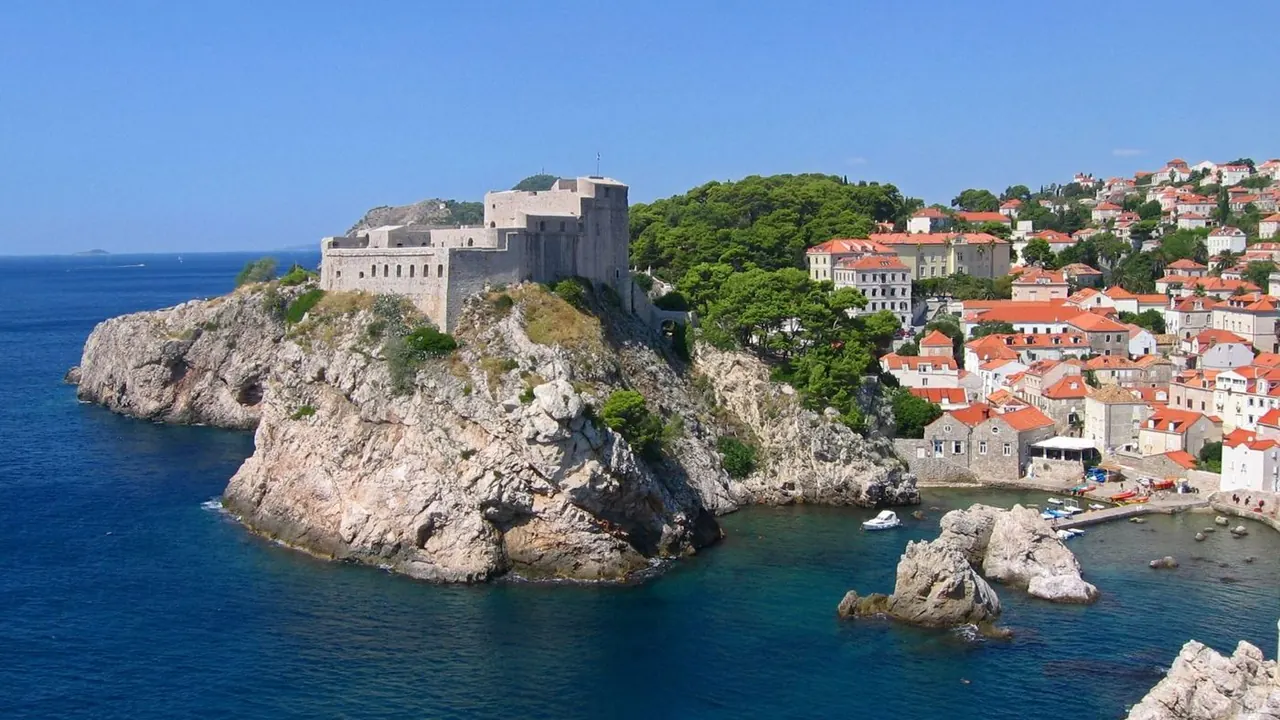
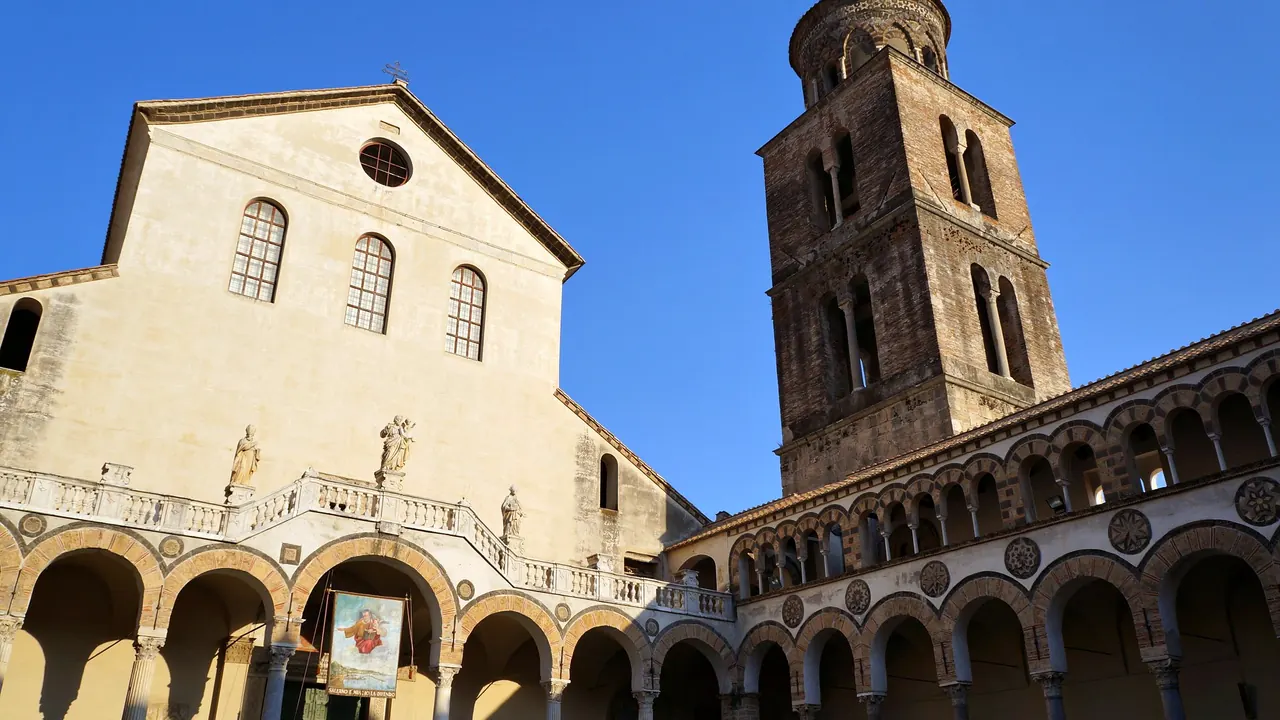
Photos: Dubrovnik by Natalia Semenova, CC BY 3.0, cropped; Salerno by Leandro Neumann Ciuffo, CC BY 2.0, cropped.
Dubrovnik or Salerno?
Our verdict in twelve categories, each scored against the same fixed benchmark cities, and the climate month by month, so you can choose for your trip.
Choose Dubrovnik for
- culture and sights
- beaches
Dubrovnik suits a traveller who wants one extraordinary walled town with clear sea right beneath it. The Old Town, its walls and fortresses make a single sight Salerno cannot match. You can swim off the rocks below the ramparts, and Lokrum and the Elafiti islands are a short ferry ride away. In return it costs a lot, the food takes effort to get right, and two or three days use up most of the city.
Choose Salerno for
- prices
- day trips
- shopping
Salerno is the better base for a longer stay with plenty of outings. Paestum, Pompeii, Amalfi, Ravello and Naples are all within easy reach by train or ferry, the everyday Campanian food is better, and rooms cost far less than on the Amalfi Coast or in Dubrovnik. The city itself is pleasant rather than spectacular, so choose it for what lies around it.
Scoreboard
Twelve categories on one fixed scale from 0 to 100. The shaded stretch is the gap between the two.
Your match
Pick a travel style or drag the sliders, and both match scores follow your weighting.
Wins on culture and sights and beaches with your weighting.
Wins on prices and day trips with your weighting.
What matters to you?
Category by category
What the scores mean for a trip.
Beaches & swimming
Dubrovnik has clear water right at the edge of town. You can swim off the rocks beneath the seaward walls, at Banje or in the coves of Lapad, although the beaches are all pebble or concrete platforms and fill early. Boat rides to Lokrum and the Elafiti islands, including the sandy cove at Sunj on Lopud, make it even better.
Salerno's own beaches are grey sand beside a working port, fine for a dip but less clear. Its strength is choice a short trip away: long sandy lidos and pine woods towards Paestum for a full day by the sea, and the bright pebbly coves of the Amalfi Coast. If you want sand more than clear water, Salerno has the edge.
Food & drink
In Salerno you eat well with little effort. Buffalo mozzarella from the plain towards Paestum, colatura from Cetara, wood-fired pizza, friggitorie and sfogliatelle make the old town's lanes a place to graze, and good everyday food is normal rather than something you have to hunt for.
Dubrovnik's Dalmatian cooking is fine at its best: grilled fish, black risotto, Ston oysters and Peljesac reds. But the Old Town's tables serve the cruise crowds at high prices. To eat well you have to head to the konobas of Lapad, Gruz or Konavle, and there is little choice beyond seafood.
Culture & sights
Dubrovnik is the stronger sight by some distance. The unbroken walls, the Stradun, the Rector's Palace, the Franciscan pharmacy and Fort Lovrijenac together make a whole walled city. Its rebuilding after the earthquake of 1667 and the siege of 1991-92 adds to the visit.
Salerno's heritage is quieter and more scattered: the Norman cathedral with Saint Matthew's crypt, the medicinal garden tied to Europe's earliest medical school, and the Arechi Castle above the gulf. It fills a pleasant day or two, while the region's great ancient sites lie outside the city.
Nightlife
Neither city is a clubbing destination, and in both a night out stays within a few streets. Dubrovnik's evenings are about a drink with a view, from the bars cut into the rocks below the walls to the small cocktail bars off the Stradun, with a club inside the Revelin fortress. Much of it closes from November to March.
Salerno's nights are more local and depend less on the season. Young locals gather outside the wine bars around Largo Campo at weekends, and the seafront passeggiata fills the early evening. For a bigger night out, Naples is a short train ride away.
Nature & outdoors
Both cities have limestone mountains falling into the sea, but Salerno has more ways to get out into them. The Path of the Gods and the Valle delle Ferriere on the Amalfi Coast follow old mule tracks across the cliffs, and the Cilento national park adds wooded hills, river gorges and the wild headlands around Palinuro.
In Dubrovnik the outdoors is more about the water and the islands. You can kayak around the walls to Lokrum, take in the views from Mount Srd, cycle on the Elafiti islands or visit the saltwater lakes of Mljet. In both places the summer heat makes spring and autumn the seasons for proper walking.
Day trips
Day trips are Salerno's great advantage. Paestum and Pompeii are each about half an hour away by train, and ferries reach Amalfi and Positano. Naples, Herculaneum, Caserta and Sorrento are all easy days out, enough for a week of outings without repeating one.
Dubrovnik has fewer day trips, but several cross a border: Kotor and Perast in Montenegro, and Trebinje and Mostar in Bosnia and Herzegovina. Ston's walls and the Elafiti islands are closer to home. Summer queues at the borders can make those days much longer.
Good for families
Dubrovnik gives children more small adventures, while Salerno is easier on young legs. In Dubrovnik there are the walls to walk, the cable car up Mount Srd, boats to Lokrum, the little aquarium in the St John fortress and calm swimming coves in Lapad. The catch is the stairs, which defeat pushchairs away from the Stradun, and summer heat and cruise-day crowds that wear families down, so a base in Lapad or Babin Kuk works best.
Salerno's long, flat, car-free seafront promenade has playgrounds and gelato along the way, and the shallow sandy beaches south of the city suit younger swimmers. The old town is steep here too, and there is no aquarium or theme park. Children are welcome out late on summer evenings, though, and the Luci d'Artista lights give families a reason to come in winter.
Getting around
Both cities are easy without a car, in different ways. Dubrovnik's Old Town is car-free and small, but most hotels are in Lapad or Babin Kuk, linked by buses on one congested road, and the hills make walking between districts tiring. Boats are the way to reach Lokrum, the islands and Cavtat.
Central Salerno is a walkable strip from the station to the old town. Its big advantage is rail: direct trains to Naples, Pompeii and Paestum, where Dubrovnik has no trains at all. In summer, ferries are the best way along the Amalfi Coast, rather than the packed coastal buses.
Shopping & style
Salerno has a proper shopping street. Corso Vittorio Emanuele is a long pedestrian stretch of Italian chains and clothes shops, busiest at passeggiata time. Painted majolica from Vietri, limoncello from the coast and colatura from Cetara are good things to take home.
Dubrovnik has little beyond souvenir shops and a few crafts: Konavle embroidery, silver filigree, lavender and wine, plus dried figs and candied peel at the morning market. Neither city suits a serious fashion trip.
Affordability
The difference here is large. Salerno is a working southern Italian city where pizzerias, coffee bars and trains charge local prices, and it makes a sensible base for the much more expensive Amalfi Coast. Only high summer, lido sunbeds and entry to the big archaeological sites push costs up.
Dubrovnik is the most expensive place in Croatia. In summer, rooms near the Old Town cost as much as in a Western European capital, and the walls, the cable car and the boats add up quickly. Staying in Lapad or Cavtat and coming in spring helps, but it rarely becomes cheap.
Live music & performing arts
Salerno has a year-round centre in the Teatro Verdi, a gilded opera house with a season of opera, concerts and ballet. In summer, the Ravello Festival's cliff-top concerts are within reach, and Naples offers much more for keen audiences.
Dubrovnik's big moment is the Summer Festival in July and August, with theatre and music in striking open-air settings such as Fort Lovrijenac and the Rector's Palace atrium. Outside those weeks there is little beyond the occasional symphony or church concert.
Wellness & relaxation
Dubrovnik's calm lies offshore, while Salerno's comes from its seafront and a spa town inland. In Dubrovnik, spa treatments mean the larger hotels in Lapad, Babin Kuk or towards Ploce, and the Old Town in summer is anything but restful. A stay on the Elafiti islands or in Cavtat, ideally in spring or autumn, is the way to slow down.
Salerno has the only thermal waters of the two: the open-air sulphur pools at Contursi Terme, about an hour inland in the Sele valley. In town, sunset walks along the palm-lined promenade and quiet mornings in the upper lanes suit an unhurried stay. Traffic on the main roads stops it from feeling like a retreat.
When should you go?
Pick your month. The climate figures are measured averages, not a forecast.
Dubrovnik in July
Salerno in July
Daytime high, °C
Rainfall in the month, mm
Where the figures come from
Dubrovnik has no rain gauge within 25 km of the centre, so its rainfall comes from a gridded climate dataset read at the city rather than from a gauge further away.
Dubrovnik's sunshine is measured 83 km from the centre, at Mostar.
Salerno's temperatures are measured 71 km from the centre, at Grazzanise.
Salerno has no rain gauge within 25 km of the centre, so its rainfall comes from a gridded climate dataset read at the city rather than from a gauge further away.
Temperature and rainfall are climate normals, averaged over the years shown. Dubrovnik: 1999-2020 (sunshine 1991-2020, rainfall 1991-2020) normals, Dubrovnik / Cilipi (15.3 km from centre). Salerno: 1991-2020 normals, Grazzanise (71.3 km from centre).
Both cities follow the same Mediterranean pattern, and their seas warm almost in step. Swimming is comfortable from June to September, the water reaches about 26°C in August and it stays mild into early October. On land Salerno runs a little hotter, with afternoons around 31°C in July and August against 29°C in Dubrovnik. That makes Salerno's stepped lanes and the shadeless sites at Pompeii and Paestum hard going at midday.
The bigger difference comes in autumn. Dubrovnik turns wet sooner and harder, with rain building through October to about 179mm in November, while Salerno's autumn is wet but a little gentler. For walking either city, May, June and early September are the best months. Winters in both are mild but damp and greyer, with Salerno a degree or two warmer.
Which traveller are you?
On a beach and sun trip, Dubrovnik is the better pick. You can swim in clear water off the rocks below the walls or in the Lapad coves, and Lokrum, the Elafiti islands and Cavtat are short boat rides away. Salerno's own beaches are greyer, and its good swimming needs an outing.
For a food and nightlife trip, Salerno wins on the food: buffalo mozzarella eaten the day it is made, Cetara's colatura and wood-fired pizza at local prices. Evenings are modest in both cities, but Salerno's lanes around Largo Campo fill with locals, and Naples is close by train.
On a trip on a tight budget, Salerno is much easier. Its rooms, trattorias, trains and buses are priced for locals, and it makes a cheap base for an expensive coast. Dubrovnik stays costly even if you stay in Lapad or Gruz, especially in summer.
Before you go
| Measure | Dubrovnik | Salerno |
|---|---|---|
| Official language | Croatian | Italian |
| Currency | Euro (EUR) | Euro (EUR) |
| Sockets | CF230 V, 50 Hz | CFL230 V, 50 Hz |
| Driving side | Right | Right |
| Time zone | UTC+1, UTC+2 in summer | UTC+1, UTC+2 in summer |
| Emergency number | 112 | 112 |
| Elevation | 10 m | 4 m |
| Main airport | Dubrovnik Ruđer Bošković Airport (DBV)16 km from centre76 non-stop destinations | Naples International Airport (NAP)46 km from centre131 non-stop destinations |
| Public holidays this year | 14 days | 13 days |
By the numbers
| Measure | Dubrovnik | Salerno |
|---|---|---|
| City population | 41,562 | 127,186 |
| People per km² | - | 2,123 |
| Museums within 10 km | 7 | 9 |
| UNESCO World Heritage sites within 50 km | 3 | 5 |
| Swim season, months above 21 °C | 5 months | 5 months |
Where else could you go?
Every comparison below shares a destination with this one, so you can follow Dubrovnik or Salerno somewhere new.