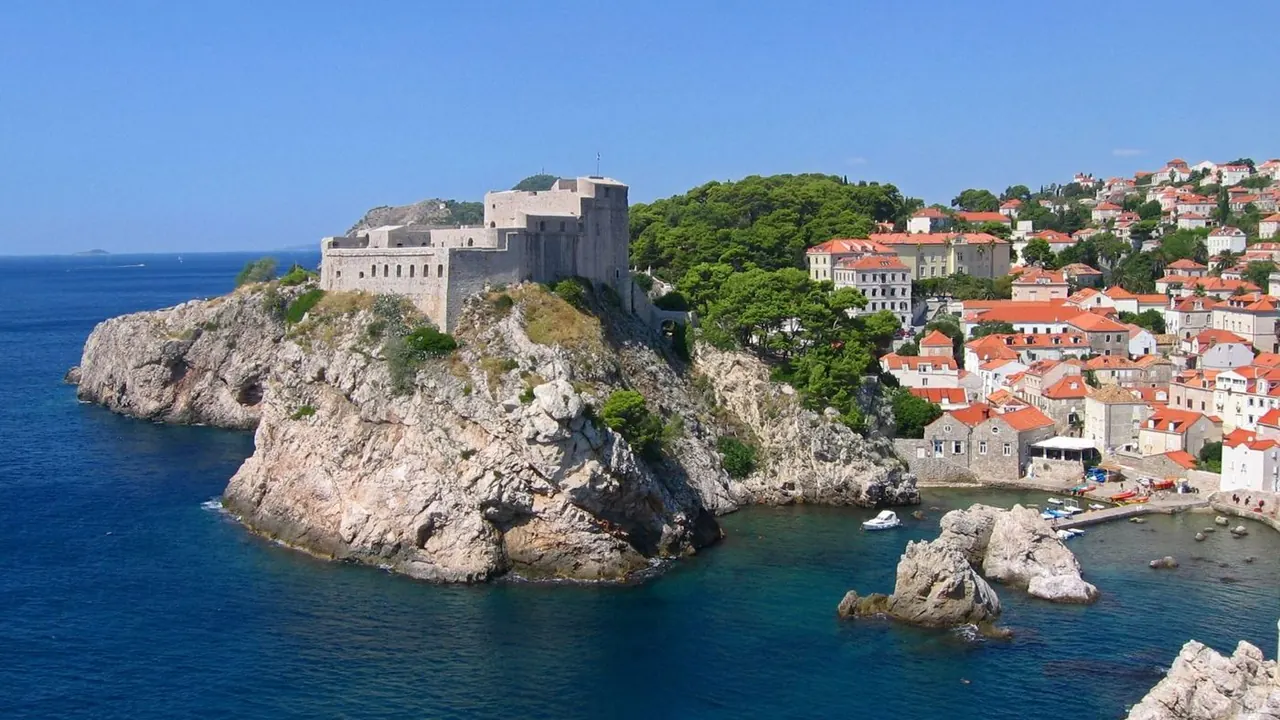
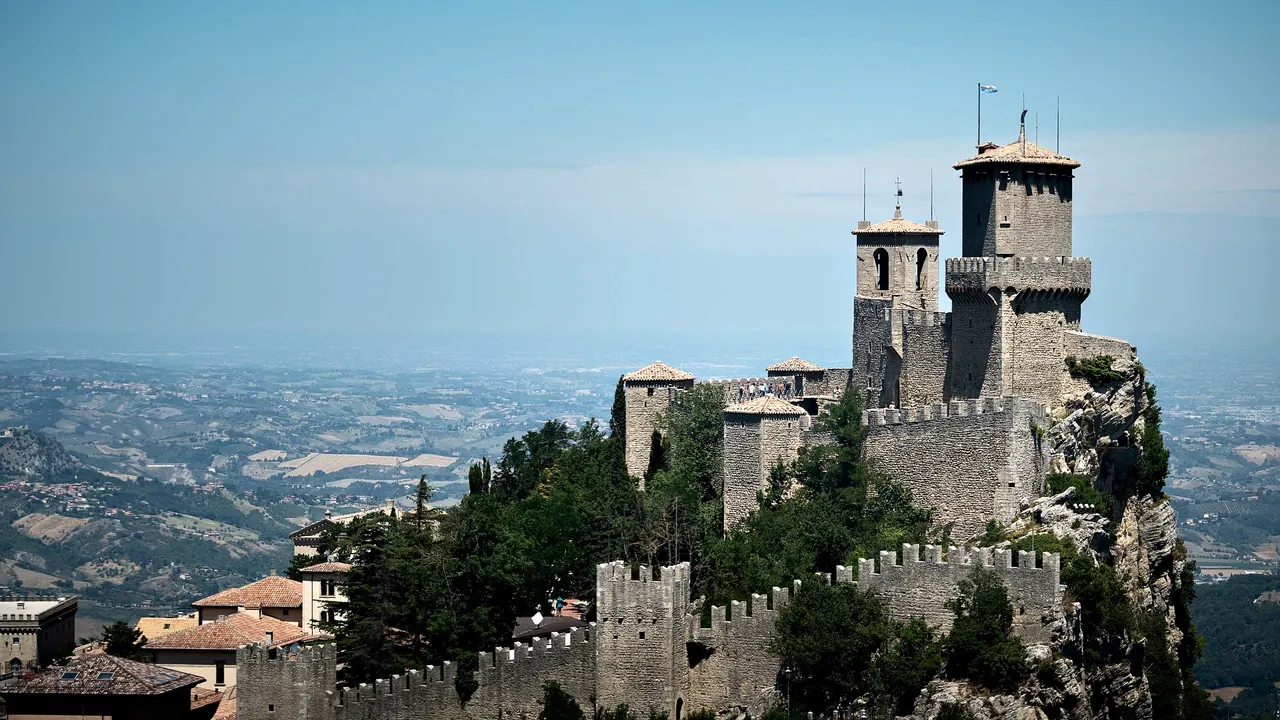
Photos: Dubrovnik by Natalia Semenova, CC BY 3.0, cropped; San Marino by Tibor Szabo, Pexels License.
Dubrovnik or San Marino?
Our verdict in twelve categories, each scored against the same fixed benchmark cities, and the climate month by month, so you can choose for your trip.
Choose Dubrovnik for
- beaches
- nightlife
- nature and the outdoors
Dubrovnik is the better choice for a proper week by the sea. You get swimming off the rocks and in island coves and a walled Old Town with much more to see inside it. There are boat trips to Lokrum and the Elafiti islands, and at least a modest evening scene in summer. It suits travellers who want sea, scenery and history in one place and can cope with high costs and summer crowds.
Choose San Marino for
- prices
- day trips
- shopping
San Marino works best as a base rather than as a destination in its own right. The summit town takes about half a day, but Urbino, San Leo, Ravenna and the Rimini coast are all an easy drive away, and prices are closer to those of provincial Italy. Pick it for a road trip through Romagna and the Montefeltro, ideally with a car, and expect quiet evenings.
Scoreboard
Twelve categories on one fixed scale from 0 to 100. The shaded stretch is the gap between the two.
Your match
Pick a travel style or drag the sliders, and both match scores follow your weighting.
Wins on beaches and nightlife with your weighting.
Wins on prices and day trips with your weighting.
What matters to you?
Category by category
What the scores mean for a trip.
Beaches & swimming
In Dubrovnik you can live by the sea for a week. There is clear water off the rocks under the walls, the small Banje beach, the Lapad coves, and boat trips to Lokrum, Lopud and Cavtat. Most swimming spots are pebble or concrete platforms, and the sandy cove at Sunj on Lopud is the exception.
San Marino has no coast of its own. The sand is at Rimini and Riccione, about half an hour below, with rows of umbrellas, beach clubs and shallow water that young children like. It makes a day out, not a morning swim before breakfast.
Food & drink
Dubrovnik's cooking comes from the sea, and that gives it the edge. There is grilled fish, black risotto, octopus salad and the oysters and mussels of Ston, with Peljesac reds and Korcula whites to drink. The good meals are away from the Stradun, in the family-run konobas of Lapad, Gruz and Konavle, or at lunch on an oyster farm near Ston.
San Marino eats from the hills instead. You get hand-rolled tagliatelle and strozzapreti, passatelli in broth, grilled meats and piadina, with the republic's own Sangiovese. It is pleasant, honest food rather than a draw. As on the Stradun, the summit terraces sell the view more than the cooking, so you will eat better in Borgo Maggiore or in the Romagna countryside.
Culture & sights
Both are compact walled towns, but Dubrovnik fills two or three days. The 2km circuit of walls, the Stradun, the Rector's and Sponza palaces, the Franciscan and Dominican monasteries and Fort Lovrijenac make a remarkably complete set.
San Marino's appeal lies in its setting and in its story as one of the world's oldest surviving republics. You see three towers on the ridge of Monte Titano, the Palazzo Pubblico and the basilica. It is striking, but most visitors have seen it in half a day.
Nightlife
Dubrovnik at least has a night out in summer. There are sunset drinks at the bars on the rocks below the seaward walls, wine and cocktail bars in the lanes off the Stradun, and a club inside the Revelin fortress. The scene is small, and much of it closes from November to March.
San Marino has almost nothing once the coaches leave, beyond dinner and a glass of wine with the lights of the coast below. For a real night out, you drive down to the Riviera clubs in Rimini and Riccione.
Nature & outdoors
Dubrovnik's landscape is the stronger draw, with limestone mountains dropping straight into a sea dotted with islands. You can kayak around the walls, climb Mount Srd, explore the pine woods and salt lakes of Mljet or walk across the Elafiti islands, which gives several days of variety.
Monte Titano offers a gentler kind of outdoors, inland. There are cliffside paths between the towers, woods down to Borgo Maggiore and views over the plain to the Apennines. It is good for a morning walk or quiet cycling in the Montefeltro hills, but it has nothing on the water.
Day trips
Dubrovnik's day trips cross borders. You can reach Kotor and Perast in Montenegro and Trebinje and Mostar in Bosnia and Herzegovina, and Ston, Cavtat and the Elafiti islands are close by. Summer queues at the border can take up much of the day.
San Marino has the edge as a base for day trips. Rimini is just below, San Leo and Urbino are within an hour, and Ravenna's mosaics are a little further. Gradara, Santarcangelo and Bologna add plenty of variety, although most of these really need a car.
Good for families
For children the two are about even, and they share the same snag: steep streets and steps that make pushchairs hard work. Dubrovnik keeps everything in one place, with calm coves in Lapad, boat rides to Lokrum and a small aquarium in the St John fortress.
San Marino's summit has towers, battlements and a cable car, but the real family attractions are on the coast. Italia in Miniatura, Fiabilandia and the waterparks around Riccione make it best for families with a car.
Getting around
Dubrovnik is easier to manage without a car. The Old Town is car-free and takes ten minutes to cross, and city buses link Lapad, Babin Kuk and Gruz to the Pile gate. Ferries and taxi boats go to Lokrum, Cavtat and the islands, though there is no railway.
San Marino's centre is walkable, and a cable car runs down to Borgo Maggiore. The only regular link to the outside world is the bus to Rimini and its trains. Village buses are infrequent, so touring the hill towns realistically means driving.
Shopping & style
Neither city is a shopping destination, and each sells a different kind of thing. Dubrovnik leans towards local crafts and produce, such as Konavle embroidery, coral and filigree jewellery, lavender, and the dried figs from the Gunduliceva Poljana market. San Marino relies on its lower taxes, with perfume, watches, leather goods and spirits, plus an outlet centre on the valley floor and stamps and coins for collectors.
Affordability
San Marino is noticeably kinder on the wallet. Prices are those of provincial central Italy, with moderate hotels and fairly priced trattorias in the lower villages, and only the summit terraces charge extra.
Dubrovnik is one of the costliest places on the Mediterranean. Summer rooms near the Old Town cost as much as in a major capital, and the walls, the cable car and the boats soon add up. Staying in Lapad or Cavtat and coming in spring or autumn brings costs down, but still not to San Marino's level.
Live music & performing arts
Dubrovnik has the one major event: the Summer Festival every July and August. It stages theatre, concerts and dance at Fort Lovrijenac and in the atrium of the Rector's Palace, and a symphony orchestra plays through the rest of the year.
San Marino's programme is thinner and centres on the costumed Medieval Days, with crossbow contests and flag-throwers. For opera or a concert season you would go to Bologna or Pesaro.
Wellness & relaxation
Dubrovnik gives a little more to a slow stay, mostly because of where you can escape to. Its spas are in the larger hotels in Lapad, Babin Kuk and towards Ploce. In spring and autumn, a few days on the Elafiti islands or in Cavtat, living at the pace of the harbour, is properly restful.
San Marino's calm is smaller and comes at the end of the day. Once the coaches leave, you can walk the walls in the quiet above the plain, though summer daytime around the towers is crowded. Apart from a few hotel spas, the thermal baths are down on the Romagna coast or in the Apennine valleys, so they take a separate drive.
When should you go?
Pick your month. The climate figures are measured averages, not a forecast.
Dubrovnik in July
San Marino in July
Daytime high, °C
Rainfall in the month, mm
Where the figures come from
Dubrovnik has no rain gauge within 25 km of the centre, so its rainfall comes from a gridded climate dataset read at the city rather than from a gauge further away.
Dubrovnik's sunshine is measured 83 km from the centre, at Mostar.
San Marino's temperatures are measured 52 km from the centre, at Frontone.
San Marino has no rain gauge within 25 km of the centre, so its rainfall comes from a gridded climate dataset read at the city rather than from a gauge further away.
Temperature and rainfall are climate normals, averaged over the years shown. Dubrovnik: 1999-2020 (sunshine 1991-2020, rainfall 1991-2020) normals, Dubrovnik / Cilipi (15.3 km from centre). San Marino: 1991-2020 normals, Frontone (51.5 km from centre).
Dubrovnik's sea season runs from June to early October. Highs reach 29°C in July and August and the water warms to 26°C, under long, dry, very sunny days. Midsummer is hot for climbing stairs and walking the walls, so May, June and September are the most comfortable months for sightseeing. The rain sets in properly in autumn and is heaviest in November, at 179mm, and winters are mild but wet.
San Marino sits on an inland mountain, so its seasons are more extreme. Winter days reach only about 7°C, and July climbs to 30°C. That is warm enough for the Rimini beaches below but hot on the steep summit streets. Rain is spread more evenly through the year and is heaviest in autumn, so late spring and September are the best months for walking between the towers and touring the hill towns.
Which traveller are you?
On a beach and sun trip, Dubrovnik wins easily. You can swim off the rocks below the walls, at Banje or in the Lapad coves, and take a boat to Lokrum or the Elafiti islands. In San Marino, the beach means driving down to the umbrellas at Rimini.
For a culture and arts trip, Dubrovnik offers more. It has the full circuit of walls, the palaces and monasteries, Fort Lovrijenac and the open-air Summer Festival. San Marino's summit takes about half a day to see, although Urbino and Ravenna are within reach by road.
On a trip on a tight budget, San Marino is the easier choice. Hotels and trattorias in the lower villages charge what provincial Italy charges, and the sights cost little. Dubrovnik stays expensive even if you stay in Lapad or Gruz.
Before you go
| Measure | Dubrovnik | San Marino |
|---|---|---|
| Official language | Croatian | Italian |
| Currency | Euro (EUR) | Euro (EUR) |
| Sockets | CF230 V, 50 Hz | CFL230 V, 50 Hz |
| Driving side | Right | Right |
| Time zone | UTC+1, UTC+2 in summer | UTC+1, UTC+2 in summer |
| Emergency number | 112 | 112 |
| Elevation | 10 m | 675 m |
| Main airport | Dubrovnik Ruđer Bošković Airport (DBV)16 km from centre76 non-stop destinations | Bologna Guglielmo Marconi Airport (BLQ)114 km from centre98 non-stop destinations |
| Public holidays this year | 14 days | 18 days |
By the numbers
| Measure | Dubrovnik | San Marino |
|---|---|---|
| City population | 41,562 | 4,040 |
| People per km² | - | 569 |
| Museums within 10 km | 7 | 19 |
| UNESCO World Heritage sites within 50 km | 3 | 2 |
| Swim season, months above 21 °C | 5 months | 4 months |
Where else could you go?
Every comparison below shares a destination with this one, so you can follow Dubrovnik or San Marino somewhere new.
- Kotorvs Dubrovnik
- Budvavs Dubrovnik
- Mostarvs Dubrovnik
- Assisivs San Marino
- Florencevs San Marino
- Bolognavs San Marino