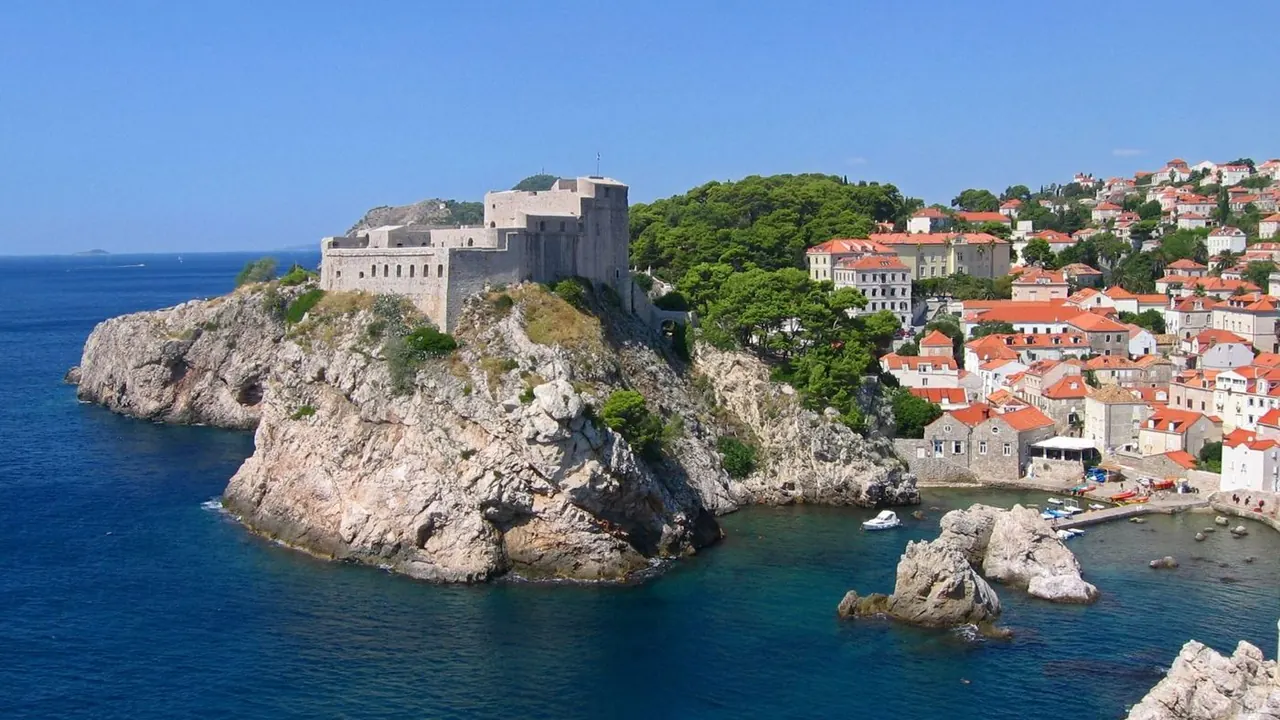
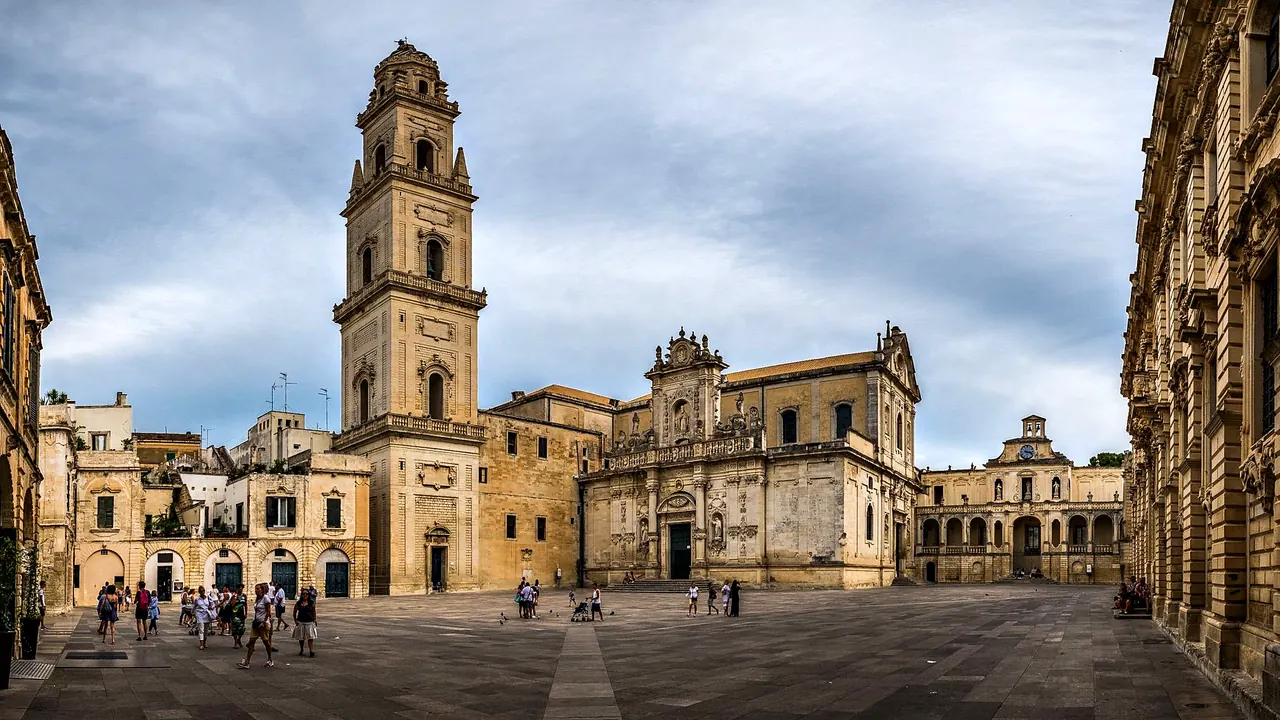
Photos: Dubrovnik by Natalia Semenova, CC BY 3.0, cropped; Lecce by Giuseppe Milo, CC BY 3.0, cropped.
Dubrovnik or Lecce?
Our verdict in twelve categories, each scored against the same fixed benchmark cities, and the climate month by month, so you can choose for your trip.
Choose Dubrovnik for
- nature and the outdoors
- getting around
- beaches
Dubrovnik suits travellers who want the sea and the scenery right at the door. Its walled Old Town sits between limestone mountains and an island-scattered Adriatic, so swimming off the rocks, kayaking to Lokrum and ferry hops to the Elafiti islands all start within walking distance, and you can manage without a car. The price is steep, though, and summer daytime crowds in the narrow streets are part of the deal.
Choose Lecce for
- prices
- food and drink
- live music and the arts
Lecce is the better pick if you care about eating well, getting good value and a slower southern rhythm. The Baroque centre is flat and easy to stroll, the local cooking is distinctive and cheap, and the whole Salento is within reach for beach days and stone towns. It works best with a hire car, because the sand and the sea caves lie a drive away rather than below the walls.
Scoreboard
Twelve categories on one fixed scale from 0 to 100. The shaded stretch is the gap between the two.
Your match
Pick a travel style or drag the sliders, and both match scores follow your weighting.
Wins on nature and the outdoors and getting around with your weighting.
Wins on prices and food and drink with your weighting.
What matters to you?
Category by category
What the scores mean for a trip.
Beaches & swimming
Both give you a summer built around the sea, but the swimming is very different. In Dubrovnik you swim within minutes of your room, off the rocks below the seaward walls, at Banje or in the Lapad coves. The beaches are pebble and concrete platforms, and taxi boats reach quieter water on Lokrum or the sandy cove at Sunj on Lopud.
Lecce has no seafront of its own. The rewards are sandy: pale coves at Torre dell'Orso and long, shallow Ionian beaches at Porto Cesareo, reached by car or seasonal bus in half an hour or more. So it is sand and a drive against rock and a short walk.
Food & drink
Lecce eats better and more cheaply, and its food is very much its own: pasticciotto with almond-milk iced coffee in the morning, then ciceri e tria, orecchiette and fava purée, all easy to find in the old town itself.
In Dubrovnik the good cooking is mostly grilled fish, black risotto and Ston oysters, and you have to look for it. The Old Town tables lean towards the cruise crowds, so the better meals are in Lapad, Gruz or out in Konavle. In both places there is little to eat beyond the regional food.
Culture & sights
These are two of the Adriatic's most complete historic centres, built in very different styles. Dubrovnik is a medieval and Renaissance city-state behind unbroken walls you can walk all the way round, with monasteries, the Rector's Palace and Fort Lovrijenac. It is fortress architecture, and it gets crowded on summer days.
Lecce's draw is ornament. Its honey-coloured limestone facades are carved with fruit, beasts and cherubs, most of all at Santa Croce, and Roman remains surface under Piazza Sant'Oronzo. Both have small museums, and both are best enjoyed on foot over two or three days.
Nightlife
Neither is a place to come for nightlife, and the evenings differ mainly in season. Dubrovnik's are a summer affair of sunset drinks at the bars cut into the rocks outside the walls, and the club in the Revelin fortress. The town goes quiet by midnight in winter.
Lecce keeps going through more of the year, thanks to its students and the habit of an aperitivo on the piazzas. Its summer dancing, though, moves out to beach clubs near Gallipoli, which means a drive.
Nature & outdoors
Dubrovnik has the more dramatic setting. Steep limestone mountains meet a clear sea scattered with islands, so you can take the cable car or the path up Mount Srd, paddle to wooded Lokrum, cycle on the Elafiti islands or spend a day among the saltwater lakes and pines of Mljet.
Around Lecce the land is flat olive groves and dry-stone walls, so the outdoors means the coast. The clifftop paths and sea caves between Otranto and Leuca are lovely, and there is birdwatching at Le Cesine and diving off the cliffs, but it is gentler country overall.
Day trips
Both make good bases. Dubrovnik's trips cross borders: the Bay of Kotor and Perast in Montenegro, Ottoman Trebinje under an hour away, and Mostar on a long day. There are also boats to Cavtat and the islands, but summer border queues can eat hours.
Lecce's trips stay inside one region and lean towards towns and art: Otranto's cathedral mosaic, Gallipoli on its island, the frescoes at Galatina and, further north, Ostuni and the trulli of Alberobello. Nearly all of them are much easier with a car.
Good for families
Both work for families, but neither is built for children, and the obstacles differ. Dubrovnik offers boat rides, the cable car, the walls and a small aquarium. However, the stairs defeat pushchairs, so families usually stay near the Lapad beaches.
Lecce's flat, largely traffic-free centre and its family-filled evening piazzas are easier with small children. The shallow sand at Porto Cesareo is ideal for toddlers, but reaching it takes a car, and the midday heat needs planning.
Getting around
Dubrovnik is easier to manage without a car. The Old Town is car-free and tiny, city buses link the hotel districts to the Pile gate, and ferries and taxi boats cover Lokrum, Cavtat and the islands. The catch is the gradient: stairways and hills make short distances hard work.
Lecce's centre is flatter and just as walkable, and fast trains run to Brindisi and Bari. Beyond the city, though, local trains are slow and the beach buses run only in summer, so most visitors end up hiring a car.
Shopping & style
Neither is a shopping destination, but Lecce gives you a little more to browse. There is cartapesta from old-town workshops, carved limestone, Grottaglie ceramics and a few fashion shops.
Dubrovnik's streets are mostly souvenir shops. The things worth seeking out are Konavle embroidery, filigree jewellery and the figs and candied peel at the Gunduliceva Poljana market.
Affordability
Dubrovnik is the dearer of the two by a wide margin. In summer a room in or near the Old Town costs what it would in a major Western European capital, meals along the main streets carry a premium, and the walls, the cable car and the boats to the islands soon add up. Coming in spring or autumn and sleeping in Lapad, Gruz or Cavtat cuts the room bill sharply, but even then a careful traveller spends noticeably more here.
Lecce's expensive stretch is far shorter. Only in August, when the Salento fills with Italian vacationers, do rooms and beach-club loungers turn dear. For the rest of the year the osterie, the local wine and the rooms in the old town stay fairly priced. The one cost Lecce adds is a hire car for the coast, and it rarely closes the gap.
Live music & performing arts
Lecce has more going on for more of the year. The Politeama Greco and the Teatro Paisiello stage opera and concerts, and in summer the pizzica tambourine dance turns up at village festivals, peaking at the Notte della Taranta in Melpignano.
Dubrovnik's one great draw is its Summer Festival, held since 1950, with theatre and concerts in settings like Fort Lovrijenac and the Rector's Palace atrium. Outside July and August there is little beyond occasional orchestral and church concerts.
Wellness & relaxation
Lecce makes the more restful stay. The long afternoon closing sets a slow pace, Santa Cesarea Terme has sulphur pools in cliff grottoes under an hour away, and old masserie in the countryside work as quiet spa retreats.
In Dubrovnik, spas are mostly limited to the larger hotels, and the summer Old Town is anything but calm. For rest, go in spring or autumn, or stay on the Elafiti islands or in Cavtat instead.
When should you go?
Pick your month. The climate figures are measured averages, not a forecast.
Dubrovnik in July
Lecce in July
Daytime high, °C
Rainfall in the month, mm
Where the figures come from
Dubrovnik has no rain gauge within 25 km of the centre, so its rainfall comes from a gridded climate dataset read at the city rather than from a gauge further away.
Dubrovnik's sunshine is measured 83 km from the centre, at Mostar.
Lecce's temperatures are measured 38 km from the centre, at Brindisi.
Lecce has no rain gauge within 25 km of the centre, so its rainfall comes from a gridded climate dataset read at the city rather than from a gauge further away.
Temperature and rainfall are climate normals, averaged over the years shown. Dubrovnik: 1999-2020 (sunshine 1991-2020, rainfall 1991-2020) normals, Dubrovnik / Cilipi (15.3 km from centre). Lecce: 1991-2020 (sunshine 1981-2010) normals, Brindisi (38 km from centre).
The two share a summer pattern. Days peak around 29°C in Dubrovnik and 30°C in Lecce in July and August, and the sea reaches about 26°C at both. Swimming is good from June into early October in each, though the midday heat makes walking the streets tiring in high summer. For sightseeing on foot, May, June and late September are the most comfortable months.
The difference is out of season. From September on, Dubrovnik gets much wetter: autumn and early winter are its rainiest stretch, peaking around 179mm in November. Lecce stays drier and sunnier all year, so a spring or late-autumn trip there is the safer bet on weather. Neither is a beach place in winter, when highs sit in the low teens.
Which traveller are you?
On an outdoors trip, Dubrovnik is the stronger choice. Mountains drop straight into the sea there, so you can climb Mount Srd, kayak around the walls, walk on the car-free Elafiti islands and visit the lakes of Mljet, none of which flat, olive-planted Salento can match.
On a tight budget, Lecce makes far more sense. Pastries, trattoria meals and local wine cost little, and B&Bs in old palazzi are fairly priced outside August. Dubrovnik is costly even if you stay in Lapad and avoid the Stradun.
For a food and nightlife trip, go to Lecce. Its own breakfast pastries, chickpea and pasta dishes and Negroamaro wines are easy to find in cheap osterie. Evenings run from the passeggiata to the old-town wine bars, with a student crowd for much of the year.
Before you go
| Measure | Dubrovnik | Lecce |
|---|---|---|
| Official language | Croatian | Italian |
| Currency | Euro (EUR) | Euro (EUR) |
| Sockets | CF230 V, 50 Hz | CFL230 V, 50 Hz |
| Driving side | Right | Right |
| Time zone | UTC+1, UTC+2 in summer | UTC+1, UTC+2 in summer |
| Emergency number | 112 | 112 |
| Elevation | 10 m | 49 m |
| Main airport | Dubrovnik Ruđer Bošković Airport (DBV)16 km from centre76 non-stop destinations | Brindisi Airport (BDS)39 km from centre49 non-stop destinations |
| Public holidays this year | 14 days | 13 days |
By the numbers
| Measure | Dubrovnik | Lecce |
|---|---|---|
| City population | 41,562 | 94,783 |
| People per km² | - | 393 |
| Museums within 10 km | 7 | 11 |
| UNESCO World Heritage sites within 50 km | 3 | 0 |
| Swim season, months above 21 °C | 5 months | 4 months |
Where else could you go?
Every comparison below shares a destination with this one, so you can follow Dubrovnik or Lecce somewhere new.