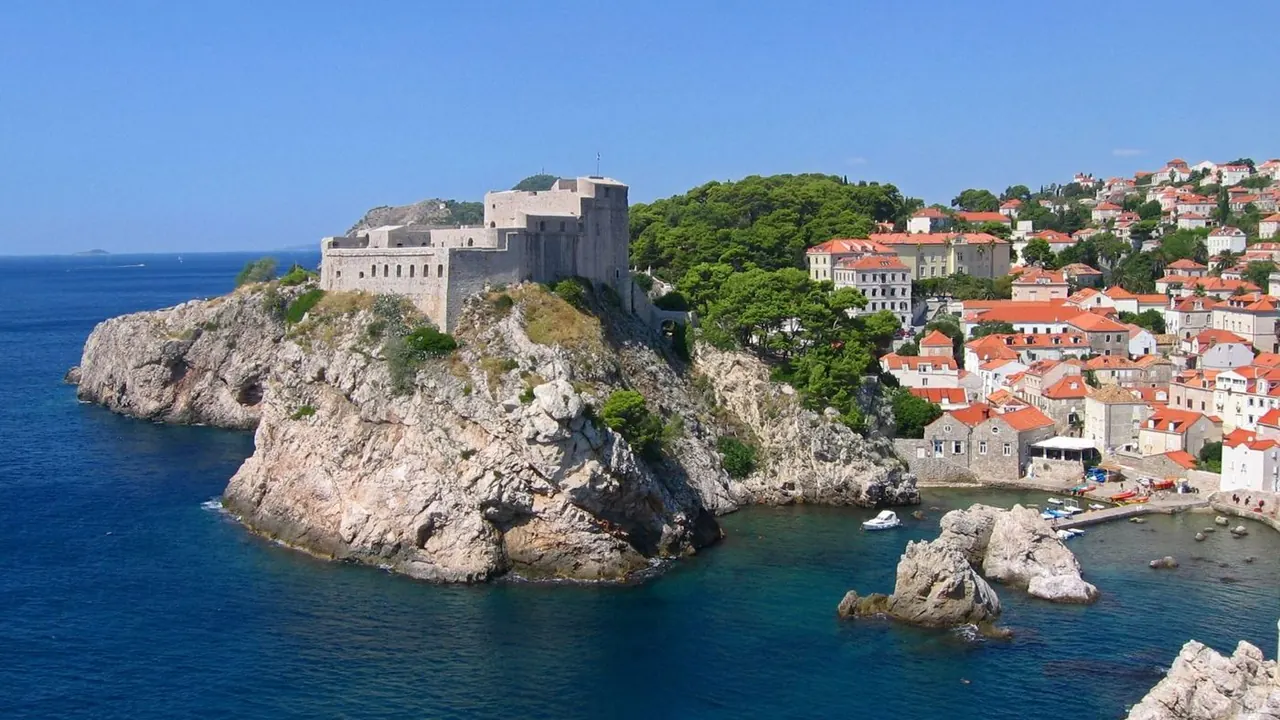
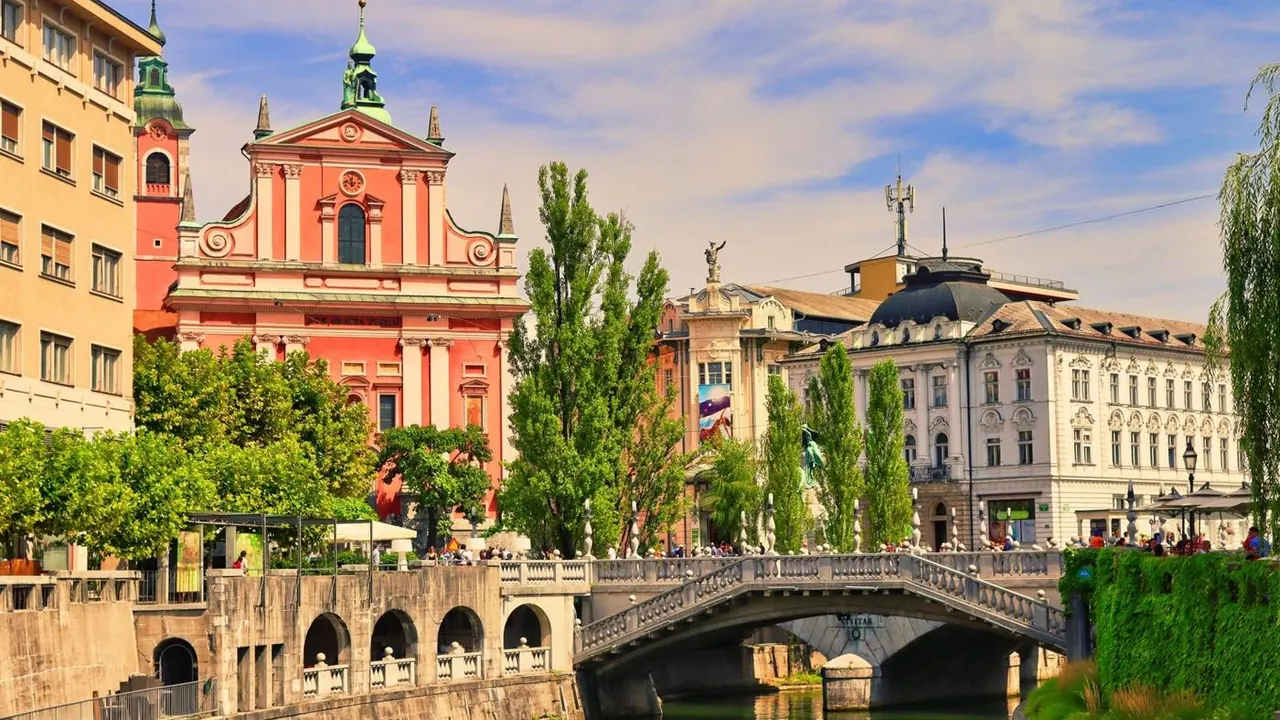
Photos: Dubrovnik by Natalia Semenova, CC BY 3.0, cropped; Ljubljana by detait, Pexels License.
Dubrovnik or Ljubljana?
Our verdict in twelve categories, each scored against the same fixed benchmark cities, and the climate month by month, so you can choose for your trip.
Choose Dubrovnik for
- beaches
- culture and sights
Dubrovnik is the choice if the sea is the point of the trip. You get clear Adriatic water off rocks and coves, boat rides to Lokrum and the Elafiti islands, and a walled Old Town that is one of the most complete in Europe. It suits a summer week of swimming, sightseeing and sunset drinks, as long as you accept high prices, steep stairs and daytime crowds.
Choose Ljubljana for
- prices
- live music and the arts
- getting around
Ljubljana suits travellers who would rather use a city as a base than spend the whole stay in it. The centre is flat, green and easy on foot, prices are more reasonable, and the Julian Alps, Bled, the karst caves and the coast are all within a day's reach. Add a proper opera and concert scene and good regional wine, and it works best for an active, unhurried trip with plenty of variety.
Scoreboard
Twelve categories on one fixed scale from 0 to 100. The shaded stretch is the gap between the two.
Your match
Pick a travel style or drag the sliders, and both match scores follow your weighting.
Wins on beaches and culture and sights with your weighting.
Wins on prices and live music and the arts with your weighting.
What matters to you?
Category by category
What the scores mean for a trip.
Beaches & swimming
This is Dubrovnik's clearest advantage. The Adriatic laps the city itself, and in summer you can swim from the rocks under the seaward walls, at Banje or in the Lapad and Babin Kuk coves, with quieter water a short boat ride away on Lokrum, Lopud's sandy Sunj cove or at Cavtat. The shore is pebble and concrete rather than sand, and it fills up early in high season.
Ljubljana is inland, so swimming means the Sava on the city's edge, a trip to Lake Bled or Bohinj, or the long ride to Piran and Izola on Slovenia's short coast. All of these are pleasant outings, but none of them is a beach vacation.
Food & drink
Ljubljana eats a little better day to day. The Central Market under Plečnik's colonnades, gostilna inns serving štruklji and jota, and riverside bars pouring Vipava, Brda and orange wines by the glass make good meals easy to find.
Dubrovnik's strength is narrower and depends on the sea: Ston oysters, black risotto, grilled fish and Peljesac reds. Much of the Old Town caters to day crowds, so eating well means heading out to the konobas of Lapad, Gruz or Konavle.
Culture & sights
Dubrovnik has the stronger set piece. The unbroken walls, the marble Stradun, the Rector's Palace, the Franciscan pharmacy and Fort Lovrijenac form one of the most intact walled towns on the Mediterranean, although the narrow streets are crowded on summer days.
Ljubljana's appeal is quieter and spread across the townscape. Plečnik's UNESCO-listed bridges, embankments and library, the castle hill and Metelkova's murals add up to a pleasant whole rather than a list of must-sees. Both cities take about two or three days to see.
Nightlife
Both cities offer small, relaxed scenes rather than serious clubbing. The difference lies in the setting and the season. Dubrovnik is at its best for a sunset drink at the cliff bars outside the walls or a late dance at the Revelin fortress, but it depends on summer and goes quiet from November.
Ljubljana's evenings centre on the terraces along the Ljubljanica. Students keep it going through term, and Metelkova's scruffy clubs give it a grittier, alternative edge that runs late at weekends.
Nature & outdoors
Ljubljana has more landscape within reach and more variety in it. Tivoli Park and Šmarna Gora are on the doorstep, Triglav National Park and the Vintgar gorge are about an hour away, and the Soča's rafting, the karst caves and winter skiing round out the year.
Dubrovnik's outdoors are mainly about the coast: mountains falling into an island-scattered sea. The best of it is kayaking around the walls, the climb up Mount Srd, walking on the Elafiti islands and Mljet's saltwater lakes, ideally in spring or autumn before the heat sets in.
Day trips
Ljubljana sits in the middle of a small country, which makes it the better base for day trips. Bled, Škofja Loka, Predjama Castle, Idrija, Piran and the Brda wine villages are all easy outings, with Trieste and Zagreb further afield.
Dubrovnik's highlights lie across its borders, with the Bay of Kotor, Perast, Trebinje and Mostar, plus closer trips to Ston, Cavtat and the islands. Summer border queues can turn a day out into a long one.
Good for families
Neither city does much with children in mind, and they suit different ages and kinds of day out. Dubrovnik offers more adventure, with boat rides to Lokrum, the cable car, the walls and calm swimming coves. The stairs, heat and summer crowds make it tiring, though, especially with a pushchair.
Ljubljana is gentler and easier to manage. The centre is flat and largely car-free, and there are playgrounds in Tivoli, a modest zoo, the castle funicular and a puppet theatre that small children can follow without the language.
Getting around
Ljubljana is the easier city to get around. Everything a visitor needs is within about 20 minutes' walk on flat, mostly pedestrianised streets, and bike-share and electric shuttles fill the gaps.
Dubrovnik's Old Town is car-free too, but most hotels sit out in Lapad, Babin Kuk or Gruz. That means buses along a single congested coast road, steep climbs between districts and boats for the islands.
Shopping & style
Neither city is worth visiting for shopping, though Ljubljana has a little more to browse: market stalls selling honey, pumpkin-seed oil and Piran salt, Idrija lace, a Sunday antiques market on the embankment and a few design boutiques on Trubarjeva. Dubrovnik is mostly souvenir shops, with Konavle embroidery, filigree jewellery and candied orange peel as the more authentic buys.
Affordability
Ljubljana is clearly the easier city on a budget. Lunchtime set menus, fairly priced local wine, cheap sights and a walkable centre keep daily costs moderate, and only central summer rooms are priced like Western Europe.
Dubrovnik is expensive by Mediterranean standards. Rooms near the Old Town, restaurants on the Stradun and paid sights such as the walls and cable car all add up. Staying in Lapad or Cavtat and visiting in spring or autumn helps, but only up to a point.
Live music & performing arts
Ljubljana has a year-round programme. The Slovenian Philharmonic, the National Opera and Ballet and Cankarjev dom all perform in the city, and the summer Ljubljana Festival fills Plečnik's Križanke courtyard. Metelkova adds live rock and alternative music.
Dubrovnik really comes alive for the arts only during the July and August Summer Festival, when plays and concerts move into Fort Lovrijenac and the Rector's Palace atrium. Outside the festival there is little to see beyond occasional concerts.
Wellness & relaxation
Ljubljana is the more restful choice. The calm, car-free centre and long riverside café afternoons set an easy pace, and Slovenia's thermal spa towns, with their mineral pools, are within about an hour's drive.
Dubrovnik has no bathing tradition beyond hotel spas, and the Old Town in summer is anything but calm. Rest there comes from escaping to the Elafiti islands or Cavtat, or from visiting out of season.
When should you go?
Pick your month. The climate figures are measured averages, not a forecast.
Dubrovnik in July
Ljubljana in July
Daytime high, °C
Rainfall in the month, mm
Where the figures come from
Dubrovnik has no rain gauge within 25 km of the centre, so its rainfall comes from a gridded climate dataset read at the city rather than from a gauge further away.
Dubrovnik's sunshine is measured 83 km from the centre, at Mostar.
Temperature and rainfall are climate normals, averaged over the years shown. Dubrovnik: 1999-2020 (sunshine 1991-2020, rainfall 1991-2020) normals, Dubrovnik / Cilipi (15.3 km from centre). Ljubljana: 1991-2020 normals, Ljubljana / Bezigrad (1.9 km from centre).
Dubrovnik is at its best in summer if you want to swim. The sea is warm enough for long swims from June to early October and peaks around 26°C in August. July and August are the driest and sunniest months, but they are also hot, at about 29°C, so the stepped streets and bare hillsides are hard going at midday. Walking is more comfortable in April and May, and again in October, which is mild but wetter. The rain comes back in September and keeps building through autumn. November and December are the wettest months, though winter stays mild.
Ljubljana swings more sharply between the seasons. Summer days are nearly as warm as Dubrovnik's, at about 28°C, but get roughly twice as much rain, and September is the city's wettest month. Winter is drier but cold and grey, with highs around 4°C and little sun, so strolling is a chilly business. The best months are May to August, when the days are long and warm enough for the riverside and the mountains. Dubrovnik has the longer season, since its spring and autumn stay mild on the coast, while Ljubljana is much colder and darker than Dubrovnik from November to February.
Which traveller are you?
On a beach and sun trip, Dubrovnik is the obvious pick. You can swim straight off the rocks below the walls or at the Lapad coves, and take boats out to Lokrum and the Elafiti bays. Ljubljana's nearest real sea is a day trip away.
For an outdoors trip, Ljubljana gives more. Triglav National Park, the Soča valley's rafting, the Kamnik-Savinja Alps and the Postojna caves are all within about an hour or so. Dubrovnik's sea kayaking and island walks are lovely but cover less ground.
On a trip on a tight budget, Ljubljana stretches your money much further. Inns serve set lunch menus, sights cost little and you can walk everywhere. Dubrovnik is expensive even if you stay in Lapad or Gruz, and the walls, cable car and boats add up quickly.
Before you go
| Measure | Dubrovnik | Ljubljana |
|---|---|---|
| Official language | Croatian | Slovene |
| Currency | Euro (EUR) | Euro (EUR) |
| Sockets | CF230 V, 50 Hz | CF230 V, 50 Hz |
| Driving side | Right | Right |
| Time zone | UTC+1, UTC+2 in summer | UTC+1, UTC+2 in summer |
| Emergency number | 112 | 112 |
| Elevation | 10 m | 309 m |
| Main airport | Dubrovnik Ruđer Bošković Airport (DBV)16 km from centre76 non-stop destinations | Ljubljana Jože Pučnik Airport (LJU)20 km from centre32 non-stop destinations |
| Public holidays this year | 14 days | 21 days |
By the numbers
| Measure | Dubrovnik | Ljubljana |
|---|---|---|
| City population | 41,562 | 284,293 |
| People per km² | - | 1,736 |
| Museums within 10 km | 7 | 14 |
| UNESCO World Heritage sites within 50 km | 3 | 3 |
| Swim season, months above 21 °C | 5 months | - |
Where else could you go?
Every comparison below shares a destination with this one, so you can follow Dubrovnik or Ljubljana somewhere new.