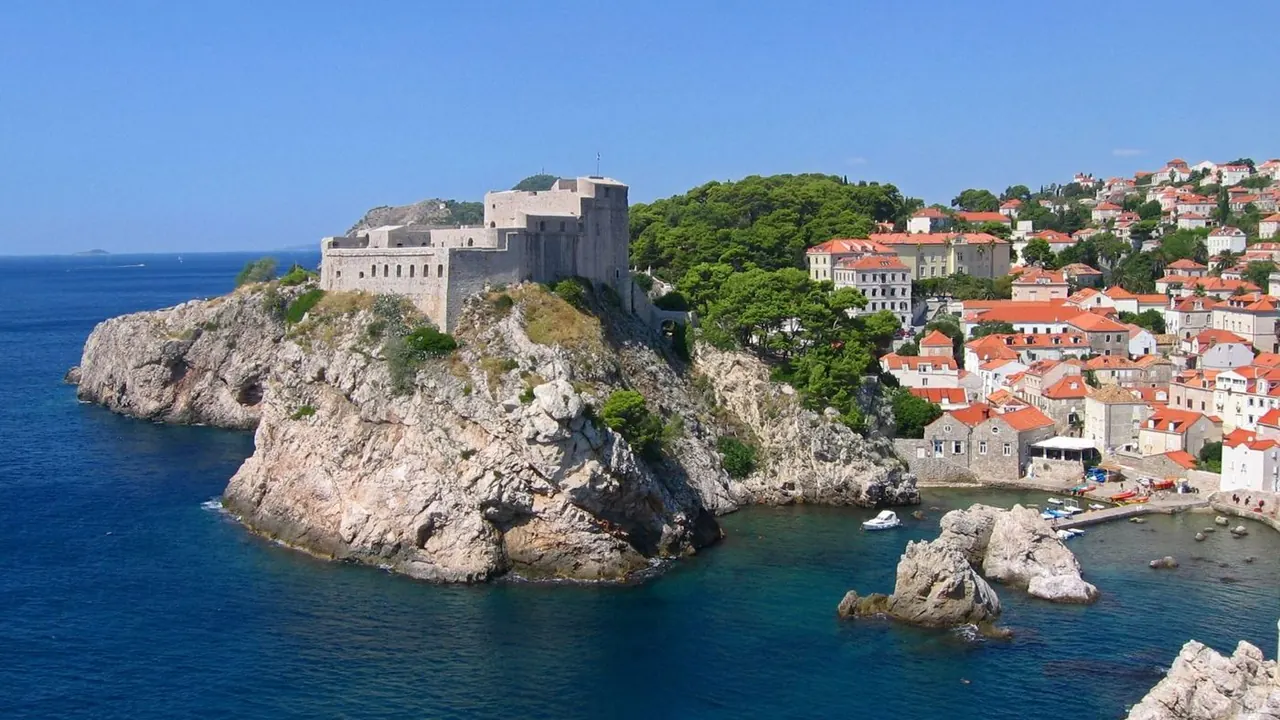
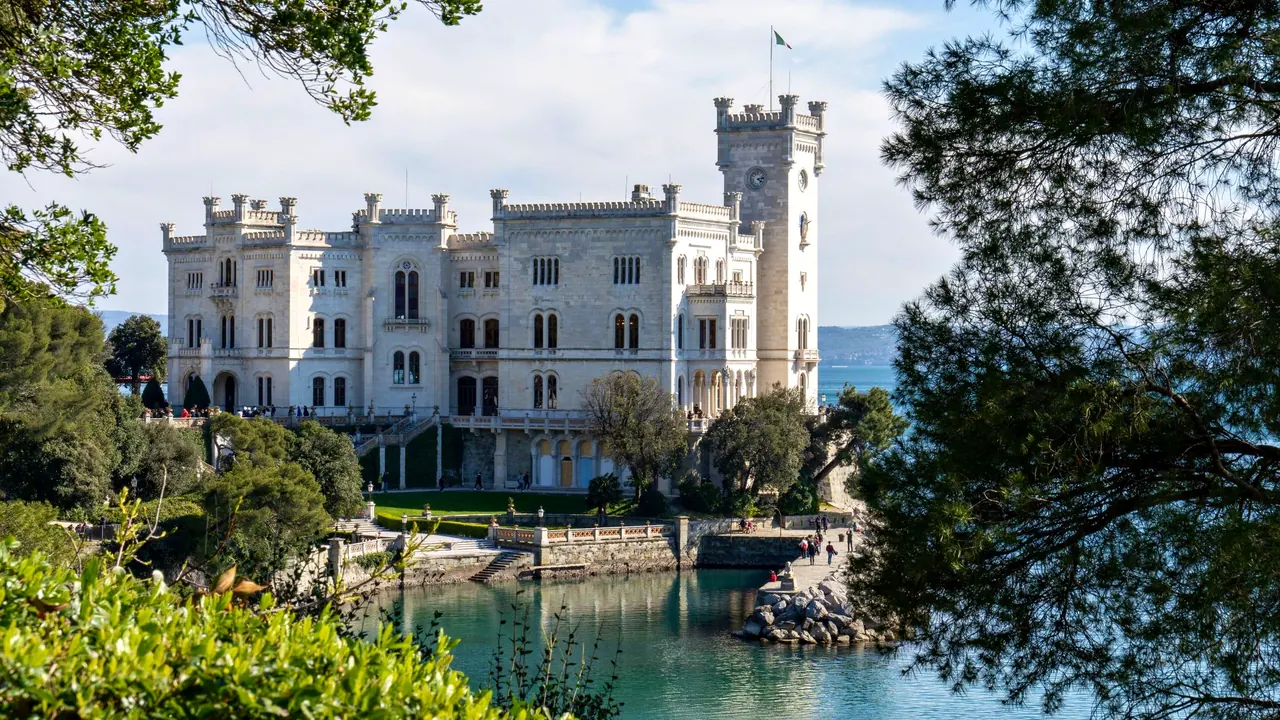
Photos: Dubrovnik by Natalia Semenova, CC BY 3.0, cropped; Trieste by Tibor Szabo, Pexels License.
Dubrovnik or Trieste?
Our verdict in twelve categories, each scored against the same fixed benchmark cities, and the climate month by month, so you can choose for your trip.
Choose Dubrovnik for
- beaches
- culture and sights
- nightlife
Dubrovnik suits a summer trip built around the sea and one extraordinary walled town. Its Old Town is the more striking sight of the two, the swimming is better, with Lokrum and the Elafiti islands a short boat ride away, and the long dry summer is very reliable. Go knowing that it is expensive, that evenings offer little choice, and that crowds in the narrow streets will shape your days in high season.
Choose Trieste for
- live music and the arts
- prices
- food and drink
For a slower, cheaper and more varied stay, Trieste is the better pick. You eat better there, in the buffets, the old coffee houses and the farmhouse osmize of the Karst. The Teatro Verdi gives it a real opera season, and Aquileia, Piran, Ljubljana and even Venice are all within a day's reach. Swimming at Barcola is more a local habit than a postcard, but the flat centre and fair prices make a week there easy.
Scoreboard
Twelve categories on one fixed scale from 0 to 100. The shaded stretch is the gap between the two.
Your match
Pick a travel style or drag the sliders, and both match scores follow your weighting.
Wins on beaches and culture and sights with your weighting.
Wins on live music and the arts and prices with your weighting.
What matters to you?
Category by category
What the scores mean for a trip.
Beaches & swimming
Neither city has much sand, but Dubrovnik is the better place to swim. People swim from the rocks below the walls, at Banje and in the Lapad coves, and better water lies a short boat ride away on Lokrum, around the Elafiti islands and at the sandy cove of Sunj on Lopud. The beaches fill early in high season.
Trieste's swimming is more an urban routine than a scenic draw. Locals lay their towels on the stepped concrete and the lawns of Barcola, and some old bathing establishments still have changing cabins. The pebble coves at Sistiana, Duino and Grignano are prettier, but they lack the island-hopping that makes Dubrovnik special.
Food & drink
Trieste is the more rewarding city to eat in. Its buffets carve boiled pork and sausages with horseradish and sauerkraut, jota and sardoni share the menus, and the coffee culture has a language all its own. The osmize on the Karst add farmhouse wine and cured meats.
Dubrovnik's cooking is good but narrower: grilled fish, black risotto, Ston oysters and Peljesac reds. The trouble is that the Old Town is full of restaurants aimed at day visitors, so eating well means going out to Lapad, Gruz or the villages of Konavle.
Culture & sights
Dubrovnik has the stronger single sight. It is an intact walled town with almost 2km of ramparts to walk, and the Stradun, the Rector's Palace, the Franciscan and Dominican monasteries and Fort Lovrijenac are all packed into a few minutes' walk. It is compact enough to see in two or three days, though summer crowds take some of the pleasure away.
Trieste's heritage is more spread out and more mixed. You find Habsburg grandeur on Piazza Unità and along the Canal Grande, a Roman theatre and the mosaics of San Giusto, and Miramare Castle on the coast. A large synagogue and the Risiera di San Sabba memorial add history from the twentieth century.
Nightlife
Both cities offer a quiet night out rather than a big one, but the evenings feel different. In Dubrovnik the evening is a sunset drink at the bars set into the rocks outside the walls. After that come small cocktail bars off the Stradun and the odd club, one of them inside the Revelin fortress. Much of it shuts between November and March.
Trieste's evenings revolve around the aperitivo, with spritz on Piazza Unità and by the canal. Students keep a few streets of wine bars busy all year, and in summer the crowd moves out to the kiosks along Barcola.
Nature & outdoors
Both have a fine natural setting, but the landscapes differ. Dubrovnik's outdoors is the sea and its islands. You can kayak around the walls, climb Mount Srd for the view across the archipelago, walk the Elafiti islands and visit the saltwater lakes of Mljet.
Trieste looks inland as much as out to sea. The Karst plateau rises right behind the city, with the Strada Napoleonica, the Rilke Path, the Val Rosandra gorge and huge caves such as the Grotta Gigante. The gulf is serious sailing water, and the Julian Alps are close enough for mountain days.
Day trips
Trieste is the stronger base for day trips. Aquileia, Cividale, star-shaped Palmanova, Grado and the Collio wine country are all about an hour or so away in Friuli. Piran, Ljubljana and the Postojna cave lie across the Slovenian border, and Venice is a realistic day by train.
Dubrovnik's excursions are fewer but memorable: the Bay of Kotor and Perast in Montenegro, Ottoman Trebinje, Ston's long walls and the Elafiti islands by ferry. Border queues in summer can eat into the day.
Good for families
Neither city is built around children, and families will find both manageable rather than tailored. Dubrovnik's appeal is the sea: boat rides to Lokrum, calm coves at Lapad, the cable car and walking the walls. But it has endless stairs for pushchairs and tiring summer crowds, so families do best staying near the beaches.
Trieste is calmer and suits older children who enjoy caves and castles. The Grotta Gigante, the grounds of Miramare and the science centre are the highlights, while rocky swimming and steep streets make it harder going with toddlers.
Getting around
Trieste is easier to get around. Its main sights sit on flat ground by the sea, and a dense bus network runs to Barcola, Miramare and up onto the Karst. Boats also cross the bay to Muggia. The steep climb up to San Giusto is the only real effort.
Dubrovnik's car-free Old Town is tiny, but most visitors stay outside it and ride buses to the Pile gate, where the single coast road clogs in summer. The steep terrain between districts makes walking harder than the map suggests.
Shopping & style
Shopping is a minor part of a visit to either city, but Trieste offers a little more. It has ordinary Italian clothing shops around Corso Italia, antique and second-hand shops in the old town lanes, and good coffee, Karst honey and presnitz to take home. Dubrovnik is mostly souvenir shops, brightened by Konavle embroidery, filigree jewellery and candied orange peel from the morning market.
Affordability
Trieste is much the cheaper stay. Rooms are fairly priced for most of the year, buffet meals and coffee at the bar cost little, and the waterfront, the cathedral hill, Barcola and the Karst walks are free.
Dubrovnik is expensive by any Mediterranean measure. Summer rooms near the Old Town cost as much as in a major Western European capital, and the walls, the cable car and the boat trips soon add up. Spring, autumn and a base in Lapad or Cavtat help, but they don't close the gap.
Live music & performing arts
Trieste has the year-round stage. The Teatro Verdi on the waterfront runs a full opera and ballet season, the city keeps alive a Habsburg fondness for operetta that is rare in Italy, and the Politeama Rossetti and a Slovenian-language theatre widen the programme.
Dubrovnik's performing life is concentrated in the Summer Festival. In July and August its plays and concerts fill Fort Lovrijenac and the Rector's Palace atrium, which is a wonderful setting, but for the rest of the year there is little to see.
Wellness & relaxation
Neither city has thermal baths, and spas mean hotel spas in both. Trieste is the more restful of the two because of its pace. Long sittings in old coffee houses and evening walks on the Molo Audace are part of everyday life there. In Dubrovnik, calm means leaving the summer Old Town for the Elafiti islands or Cavtat, or coming in spring or autumn.
When should you go?
Pick your month. The climate figures are measured averages, not a forecast.
Dubrovnik in July
Trieste in July
Daytime high, °C
Rainfall in the month, mm
Where the figures come from
Dubrovnik has no rain gauge within 25 km of the centre, so its rainfall comes from a gridded climate dataset read at the city rather than from a gauge further away.
Dubrovnik's sunshine is measured 83 km from the centre, at Mostar.
Temperature and rainfall are climate normals, averaged over the years shown. Dubrovnik: 1999-2020 (sunshine 1991-2020, rainfall 1991-2020) normals, Dubrovnik / Cilipi (15.3 km from centre). Trieste: 1991-2020 normals, Trieste (1.6 km from centre).
Both cities have hot summers, peaking around 29°C in July and August, and both seas are warm enough to swim from June to September. Dubrovnik keeps its water pleasant into early October, reaching 26°C in August. Its summers are also distinctly drier and sunnier than Trieste's, so it is the safer bet for a beach week. Trieste gets a fair share of summer thunderstorms.
The two part ways in the cooler months. Dubrovnik's rain arrives heavily from September, peaking around 179mm in November, although its winters stay mild. Trieste spreads its rain more evenly through the year and is colder in winter, at about 9°C in January, with the Bora wind making some days raw. For walking the streets without the summer heat, May and late September suit both cities best, and April and October are also good in Dubrovnik.
Which traveller are you?
On a beach and sun trip, Dubrovnik is the clear choice. The water is clearer, there are coves at Lapad and boat trips to Lokrum and the Elafiti islands, and the summers are drier and sunnier. Trieste's swimming from concrete platforms at Barcola is pleasant but plainer.
For a trip on a tight budget, Trieste is far kinder. Rooms are reasonable for most of the year, a buffet lunch or a coffee at the bar costs little, and the buses are cheap. Dubrovnik stays costly even if you stay in Lapad and eat at konobas.
On a food and nightlife trip, choose Trieste for the eating. It has steaming buffet counters, jota, Central European cakes, a proper coffee culture and Karst wines at the osmize. Neither city offers big nights out, but Trieste's aperitivo hour suits a long evening better than Dubrovnik's handful of streets.
Before you go
| Measure | Dubrovnik | Trieste |
|---|---|---|
| Official language | Croatian | Italian |
| Currency | Euro (EUR) | Euro (EUR) |
| Sockets | CF230 V, 50 Hz | CFL230 V, 50 Hz |
| Driving side | Right | Right |
| Time zone | UTC+1, UTC+2 in summer | UTC+1, UTC+2 in summer |
| Emergency number | 112 | 112 |
| Elevation | 10 m | 2 m |
| Main airport | Dubrovnik Ruđer Bošković Airport (DBV)16 km from centre76 non-stop destinations | Trieste Airport (TRS)31 km from centre32 non-stop destinations |
| Public holidays this year | 14 days | 13 days |
By the numbers
| Measure | Dubrovnik | Trieste |
|---|---|---|
| City population | 41,562 | 198,417 |
| People per km² | - | 2,332 |
| Museums within 10 km | 7 | 33 |
| UNESCO World Heritage sites within 50 km | 3 | 5 |
| Swim season, months above 21 °C | 5 months | 4 months |
Where else could you go?
Every comparison below shares a destination with this one, so you can follow Dubrovnik or Trieste somewhere new.
- Kotorvs Dubrovnik
- Rovinjvs Trieste
- Ljubljanavs Trieste
- Mostarvs Dubrovnik
- Bledvs Trieste
- Venicevs Trieste