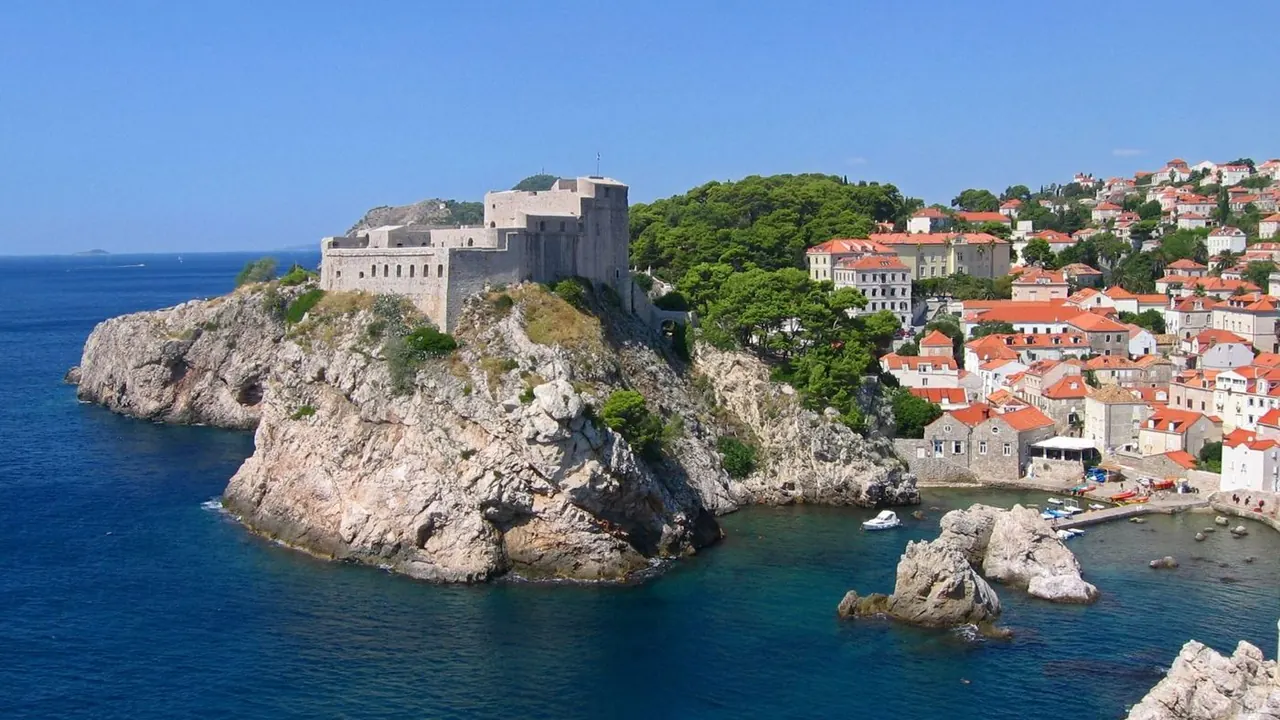
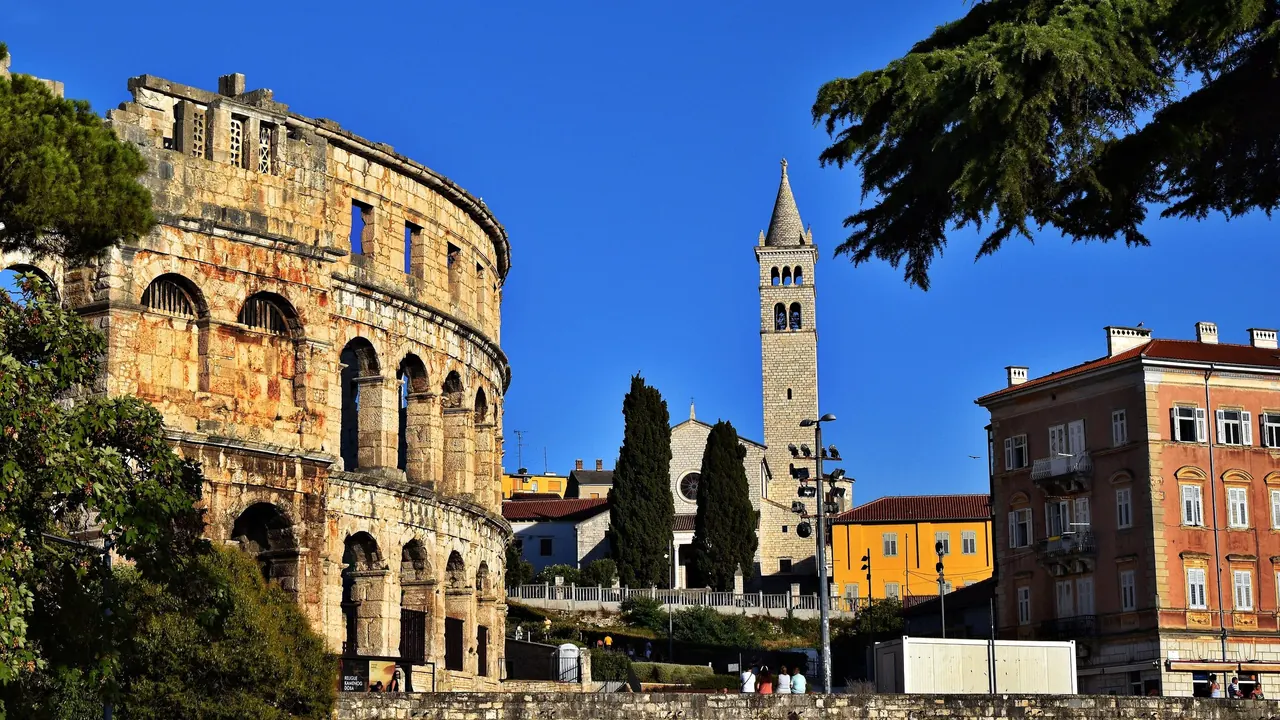
Photos: Dubrovnik by Natalia Semenova, CC BY 3.0, cropped; Pula by Miroslav.vajdic, CC BY-SA 4.0, cropped.
Dubrovnik or Pula?
Our verdict in twelve categories, each scored against the same fixed benchmark cities, and the climate month by month, so you can choose for your trip.
Choose Dubrovnik for
- culture and sights
- getting around
- nature and the outdoors
Dubrovnik is the one for travellers who want a single remarkable sight to build a trip around. The walled Old Town, with its marble Stradun, palaces and monasteries, is more complete and more striking than anything in Pula, and the islands and mountains around it give a more dramatic setting. It suits a short, well-funded stay in which you walk the walls, take a boat to Lokrum or the Elafiti islands and accept summer crowds and high prices as part of the deal.
Choose Pula for
- prices
- day trips
- families
Pula makes more sense as a base than as a destination in itself. The Arena and the Roman town fill a day or two, and then Istria opens up: Rovinj, the hill towns, truffle and wine country, Kamenjak's coves. It costs noticeably less, eats better, and is easier with children, which makes it a better fit for a longer, slower trip with a hire car.
Scoreboard
Twelve categories on one fixed scale from 0 to 100. The shaded stretch is the gap between the two.
Your match
Pick a travel style or drag the sliders, and both match scores follow your weighting.
Wins on culture and sights and getting around with your weighting.
Wins on prices and day trips with your weighting.
What matters to you?
Category by category
What the scores mean for a trip.
Beaches & swimming
Neither city has a proper sandy beach, and the swimming is much the same quality: clear Adriatic water entered from rocks, pebbles and concrete platforms. The difference is in setting. Dubrovnik's swimming is right under the city walls, at Banje and around Lapad, with boat rides to Lokrum and the Elafiti islands for quieter bays.
Pula's coast is lower and pine-shaded, with the best spots spread around Verudela, Medulin and the wild coves of Cape Kamenjak. It rewards anyone with transport, while Dubrovnik's most memorable swims come with a view of the Old Town.
Food & drink
Pula eats better. Istrian cooking adds truffle-sauced fuži and pljukanci, pršut, game and a full olive oil and wine country to the usual grilled fish, and the hinterland taverns are within easy reach.
Dubrovnik's Dalmatian kitchen is good but narrower, centred on seafood, black risotto and Ston oysters, with fine Peljesac reds. Its Old Town restaurants lean hard on cruise trade, so eating well means heading out to Lapad, Gruz or Konavle.
Culture & sights
Dubrovnik has the finer historic ensemble. A full circuit of walls, the Rector's Palace, the Franciscan and Dominican monasteries and Fort Lovrijenac make a complete walled city that justifies a trip on its own.
Pula's strength is Roman rather than medieval: the Arena is among the best preserved amphitheatres anywhere, and the Temple of Augustus still stands on the Forum. Beyond those and the Austro-Hungarian naval legacy, though, there is less to see, and it fits comfortably into a day or two.
Nightlife
Both are quiet, summer-only scenes, and neither is a place to choose for going out. Dubrovnik's evenings revolve around cliffside bars outside the seaward walls and a club in the Revelin fortress, all within a few Old Town streets. Pula spreads out more, from Forum terraces to beach bars on Verudela and in Medulin, with a few student bars keeping some life in winter.
Nature & outdoors
Dubrovnik's landscape is more dramatic, with limestone mountains falling straight into an island-strewn sea. Mount Srd, kayaking to Lokrum and the lakes and pine forest of Mljet national park give it the edge.
Pula's southern Istria is gentler: low macchia coast, olive groves and the car-free Kamenjak headland with its dinosaur footprints. It is good cycling country and offers windsurfing and wreck diving, but the nearest real hills at Učka are an hour and a half away.
Day trips
Pula has the richer choice close by. Rovinj, the mosaics of Poreč, the hill towns of Motovun and Hum and the Brijuni islands are all within about an hour, and Piran and Trieste are reachable further afield.
Dubrovnik's day trips are fewer but more exotic, crossing borders to Kotor and Perast in Montenegro or Trebinje and Mostar in Bosnia. Summer border queues can eat into those days, which makes Istria the easier region to explore.
Good for families
Pula is the easier choice with children. Sheltered, shallow bays around Medulin, an aquarium in a fort, the Arena to explore and a water park and dinosaur park within reach add up to more to do, and prams manage the flat centre.
Dubrovnik has fun moments, the walls, the cable car and boat rides, but its steep stairways and crowded summer streets are hard going with small children, and little is designed for them.
Getting around
Dubrovnik is simpler once you are there. The car-free Old Town, a straightforward bus network to the Pile gate and regular ferries to the islands cover most of what visitors want, even if the stairs make walking tiring.
Pula's flat centre is easy on foot, but much of its appeal lies beyond the city, and with slow trains and infrequent regional buses, a car or scooter becomes close to essential.
Shopping & style
Shopping is a sideline in both. Dubrovnik leans towards crafts, Konavle embroidery, coral and filigree jewellery and candied orange peel, among plenty of souvenir shops. Pula's best buys are things to eat and drink, truffle products, olive oil and wine, and its main street adds everyday chain stores.
Affordability
Pula is considerably kinder on the wallet. Apartments and konobas keep it mid-priced for most of the year, and only July and August push costs towards Western European levels.
Dubrovnik is expensive in every season and very expensive in summer, with rooms near the Old Town priced like a major capital and the walls, cable car and boats adding up.
Live music & performing arts
Neither has a year-round scene, but Pula offers a little more. Its Arena hosts pop, rock and classical concerts and the long-running film festival screenings each summer, backed by the Istrian National Theatre the rest of the year.
Dubrovnik's offer rests almost entirely on the Summer Festival in July and August, when theatre and concerts fill Fort Lovrijenac and the Rector's Palace. Outside it there is little to attend.
Wellness & relaxation
Both cities lack any bathing tradition, so spa time means hotel facilities in either. The calm comes from different places: in Dubrovnik from escaping to Cavtat or the Elafiti islands, in Pula from slow coffees on the Forum, pine-shaded coastal paths and the Istrian countryside.
When should you go?
Pick your month. The climate figures are measured averages, not a forecast.
Dubrovnik in July
Pula in July
Daytime high, °C
Rainfall in the month, mm
Where the figures come from
Dubrovnik has no rain gauge within 25 km of the centre, so its rainfall comes from a gridded climate dataset read at the city rather than from a gauge further away.
Dubrovnik's sunshine is measured 83 km from the centre, at Mostar.
Pula's temperatures are measured 87 km from the centre, at Trieste.
Pula has no rain gauge within 25 km of the centre, so its rainfall comes from a gridded climate dataset read at the city rather than from a gauge further away.
Temperature and rainfall are climate normals, averaged over the years shown. Dubrovnik: 1999-2020 (sunshine 1991-2020, rainfall 1991-2020) normals, Dubrovnik / Cilipi (15.3 km from centre). Pula: 1991-2020 normals, Trieste (87 km from centre).
Both cities share a summer of hot, sunny days and a sea warm enough for swimming from June to September, with highs around 29°C in July and August. Dubrovnik runs a little warmer and sunnier, and its sea holds on slightly longer into early October, reaching about 26°C in August. Pula's sea is only marginally cooler. In both, midsummer is too hot for comfortable walking at midday, so May, June and September are the best months for combining sightseeing with a swim.
The real difference comes in autumn and winter. Dubrovnik turns very wet from October, with around 179mm of rain in November, though its winters stay milder. Pula is cooler in winter, with January highs near 9°C, but far drier through the year, so a spring or late autumn visit there is less likely to be rained off.
Which traveller are you?
A short city break is where Dubrovnik shines. You can be up on the walls within hours of arriving, take a morning boat to Lokrum and end with a sunset drink on the rocks below, all without the car that Pula's best corners need.
On a tight budget, the money goes further in Pula. Many of its best moments cost little: a swim off the Verudela rocks, the Arena lit up at dusk, a picnic of market pršut and olive oil. In Dubrovnik, nearly every view comes with a ticket.
Families with young children will find Pula the gentler base. You can stay by the water on Verudela or near Medulin and keep sightseeing to short outings. In Dubrovnik the main sight is the hard part, with its stairs and packed summer lanes.
Before you go
| Measure | Dubrovnik | Pula |
|---|---|---|
| Official language | Croatian | Croatian |
| Currency | Euro (EUR) | Euro (EUR) |
| Sockets | CF230 V, 50 Hz | CF230 V, 50 Hz |
| Driving side | Right | Right |
| Time zone | UTC+1, UTC+2 in summer | UTC+1, UTC+2 in summer |
| Emergency number | 112 | 112 |
| Elevation | 10 m | 5 m |
| Main airport | Dubrovnik Ruđer Bošković Airport (DBV)16 km from centre76 non-stop destinations | Pula Airport (PUY)7 km from centre34 non-stop destinations |
| Public holidays this year | 14 days | 14 days |
By the numbers
| Measure | Dubrovnik | Pula |
|---|---|---|
| City population | 41,562 | 52,220 |
| People per km² | - | 971 |
| Museums within 10 km | 7 | 4 |
| UNESCO World Heritage sites within 50 km | 3 | 1 |
| Swim season, months above 21 °C | 5 months | 4 months |
Where else could you go?
Every comparison below shares a destination with this one, so you can follow Dubrovnik or Pula somewhere new.